Saint-Bertrand-de-Comminges Cathedral: A Romanesque, Gothic, and Renaissance Church


Site at a Glance
- Rating
- 4.6
- Popularity
- Medium
- Country
- France
- Primary era
- Medieval
- External website
- Open
- Eras represented
- Medieval, Early Modern
- Civilizations
- French
- Site type
- Religious
- Remains
- Cathedral
On this page19 sections
History
Saint-Bertrand-de-Comminges Cathedral, also known as Sainte-Marie, is a Romanesque church in Saint-Bertrand-de-Comminges, France, begun around 1100 on the acropolis of an earlier settlement. It stands on the site of a Celtic oppidum, a fortified settlement on defensible high ground, which developed into the Roman city of Lugdunum Convenarum. The cathedral’s history is closely connected with Saint Bertrand, the medieval bishop whose tomb made the town a destination for pilgrims.
From the Roman city to the medieval cathedral
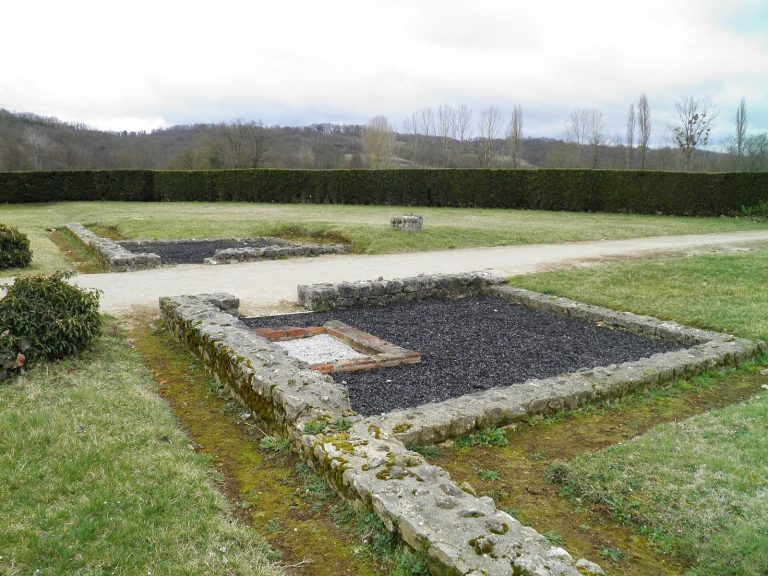
Lugdunum Convenarum was devastated during the Vandal invasion of 409. After Clovis defeated the Visigoths, the city came under Frankish control. It disappeared in 585 during the conflict between Gondovald, a claimant to Frankish royal lineage, and Gontran, a Frankish king. The ruins of the Roman city remain in the surrounding plain, while the cathedral occupies the elevated settlement above it.
The town began to recover after Bertrand de l’Isle, a member of a noble family and a canon of Toulouse, became bishop of Comminges in 1083. He restored communal life among the cathedral canons, rebuilt the church, and established its cloister. Bertrand died in 1123, after which pilgrims venerated him at his tomb. He was formally canonized under Pope Clement V, further strengthening the cathedral’s religious importance.
Construction of the Romanesque cathedral began around 1100. Growing pilgrim numbers during the second half of the twelfth century prompted an enlargement, including the construction of a bell tower within the nave. The cloister was also rebuilt in a richer form during the twelfth and thirteenth centuries. Its south and east galleries, together with the chapter house, were added during the first half of the thirteenth century, while the north gallery followed in the fourteenth century.
The Gothic rebuilding
Bertrand de Goth, bishop of Comminges from 1294 to 1299 and later archbishop of Bordeaux, became Pope Clement V in 1305. He initiated a Gothic rebuilding campaign, a phase of medieval architecture characterized by pointed arches and ribbed vaults. The first stone was laid in the early fourteenth century. The plan retained the Romanesque nave but replaced the apse and choir with five radiating chapels and four lateral chapels.
The work continued under Bishops Scot de Linières and Hugues de Castillon, as well as the canon Adhémar de Saint-Pastou. Hugues de Castillon, bishop from 1336 to 1352, completed the cathedral and saw the construction of his funerary chapel. Bertrand de Cosnac, bishop from 1352 to 1374, added the Chapel of Saint Margaret so that pilgrims could reach the relics of Saint Bertrand more easily. The new chapels placed pressure on the fourth bay of the nave, and powerful flying buttresses were added to the existing supports to address the resulting structural damage.
The mausoleum of Saint Bertrand was begun by Cardinal Pierre de Foix and completed by his nephew Jean de Foix-Béarn. It covered the place associated with Clement V’s translation and exaltation of the saint’s relics on 16 January 1309. The relics were placed in the mausoleum in 1476. Their location before 1309 remains uncertain.
Renaissance furnishings and later changes
During the episcopate of Jean de Mauléon, from 1523 to 1551, the cathedral received a southeast sacristy, new stained glass, a canons’ choir, an organ, a high-altar retable, new liturgical furnishings, and seven Flemish tapestries. The Renaissance choir furnishings, belonging to the artistic tradition that revived classical forms in sixteenth-century Europe, were inaugurated on Christmas night in 1535. Together, these works created a richly furnished wooden choir within the older stone building.
The Wars of Religion, a series of conflicts between Catholics and Protestants in sixteenth-century France, brought severe violence to the cathedral. In 1586, Huguenot troops under Captain Sus seized the upper town, killed ecclesiastics, looted the cathedral’s ornaments, sacred vessels, silverware, and relics, and burned the town archives. The relics of Saint Bertrand were hidden in a well, ransomed by canons from Lectoure, and returned in 1591 after the chapter paid 10,000 livres. A second seizure in 1593, led by the Viscount of Larboust, caused further abuses in the church. The reliquary of Clement V had already been destroyed in 1586.
Bishop Barthélemy de Donnadieu de Griet planned a replacement reliquary in 1627, but it was completed only in 1748. Bishop Antoine de Lastic then transferred the relics into it. The high altar made for Jean de Mauléon was replaced in 1737 by an altar of Sarrancolin marble. On 30 November 1793, revolutionaries seized the cathedral’s silverware. The relics of Saint Bertrand were hidden once more and recovered after the Revolution.
Parish church and protected monument
The cathedral remained the seat of the Diocese of Comminges until the ecclesiastical reorganization associated with Pope Pius VII’s 1801 bull Qui Christi Domini. The former diocese was divided between the Archdiocese of Toulouse and the Diocese of Bayonne, and the former cathedral became the parish church of Sainte-Marie. France placed the cathedral on its first list of protected historic monuments in 1840, followed by separate protection for the cloister in 1889. Since 1998, the cathedral has formed part of the UNESCO World Heritage property called “Routes of Santiago de Compostela in France.” Its surviving fabric brings together a twelfth-century Romanesque church, a fourteenth-century Gothic rebuilding associated with Clement V, and a Renaissance choir shaped by Jean de Mauléon.
Remains
The cathedral occupies a promontory approximately 515 metres above sea level at the foot of the Pyrenees. Its position overlooks the Garonne basin and is associated with views toward Cagire, Gar, and Mount Sacon. The settlement historically controlled approaches toward Spain, Toulouse, and Tarbes along routes derived from Roman roads. Within the building, Romanesque, Gothic, and Renaissance elements remain joined beneath one roof.
Romanesque fabric and cloister
Nave and fortified bell tower
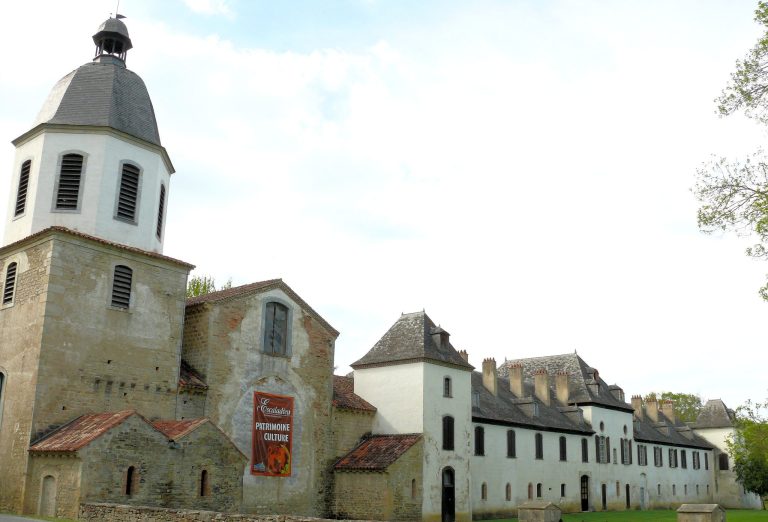
The Romanesque church survives in the foundations of the walls of the first four bays, the nave façade, and capitals from the eleventh and twelfth centuries. The primitive bell tower was later raised and converted into a fortified keep with a hoarding, a projecting timber defensive structure. It reaches 33 metres in height. Its roof and hoarding were reconstructed at the end of the nineteenth century, and the earlier roof had a lower pitch than the present one.
The entrance to the bell tower has a Romanesque tympanum showing the Adoration of the Magi, with the twelve apostles carved on the lintel. The west portal also preserves medieval sculpture in its tympanum and capitals, including a twelfth-century representation of the Adoration of the Magi. A white-marble Gallo-Roman funerary slab is embedded in the south façade, linking the medieval building with the ancient city below.
Cloister and funerary monuments
The cloister served the canons as a place for prayer, meetings, and relaxation. Three galleries are Romanesque, with openwork timber roofs and round arches resting on double rows of columns whose capitals carry carved decoration. The most elaborate support is the Pillar of the Evangelists. The south gallery opens toward the neighbouring hill. The cloister also contains a Gallo-Roman marble funerary cippus.
The north gallery, rebuilt in the fifteenth and sixteenth centuries, is more austere and is known as the Gallery of the Tombs. It contains the tombs of seven canons and is vaulted. Five stone funerary slabs belonging to canons of the thirteenth, fourteenth, and fifteenth centuries are associated with the cloister, as is a stone slab traditionally attributed to Don Sanche, the first lord of Labarthe, who died in 1086.
Gothic interior and chapels
Narthex and parish chapel
The narthex, the entrance space at the western end of a church, contains pointed arches supported by two massive pillars. They rest on a circular base measuring 11.45 metres around and carry an eight-ribbed vault. The bell tower rises above this area, while Romanesque arcades remain on its north and south walls.
The parish altar occupies a chapel added outside the original plan in 1621 by Bishop Gilles de Souvre. Its position in the narthex allowed parishioners to follow services without seeing them only through the choir screen, reflecting a directive associated with the Council of Trent.
Notre-Dame Chapel
The Chapel of Notre-Dame contains the white Saint-Béat-marble tomb of Bishop Hugues de Castillon, attributed to the Master of Rieux, an artist whose personal name is not securely known, together with a fourteenth-century effigy. Its eighteenth-century furnishings include a pink-and-white marble altar, a monumental retable, a tabernacle carved in the form of a church, miniature icon panels, and a painting of the Holy Family. A circular stained-glass window depicts a Pietà with Mary Magdalene and Mary of Clopas. The retable also includes a painting of the Woman of the Apocalypse and a fresco of the Assumption of Mary.
Gothic nave and chapels
The Gothic interior forms a single nave in the southern Gothic tradition of southern France. Grey-stone walls enclose a rib-vaulted space 16 metres wide. The vault rises 28 metres and extends from the chevet, the eastern end of the church, to the bell tower, reaching a total height of 55 metres. A large eastern vault forms the chevet. Eleven chapels belong to the building, including five radiating chapels and six lateral chapels. The former sacristy built by Jean de Mauléon is attached to the apse of the Chapel of Saint Bartholomew, while the sacristy itself lies on the southeast side of the cathedral.
Treasury and furnishings
Treasury objects
The former chapter house contains the cathedral treasury, with sacred vessels and liturgical ornaments. Among its medieval objects are a thirteenth-century processional staff known as Saint Bertrand’s unicorn, a twelfth-century silver episcopal ring set with rough corundum, a thirteenth-century gilt-copper tower reliquary, and a silk reliquary purse containing relics of Saint John Chrysostom. The treasury also preserves a fifteenth-century reliquary containing relics of Saint Bartholomew and a twelfth-century mitre traditionally associated with Saint Bertrand.
Other works include a cope donated by Clement V, liturgical sandals, an alb embroidered with five apostles, and a wooden and repoussé-copper casket from the fourteenth century. A fourteenth-century Passion cope, a fifteenth- or sixteenth-century silver and rock-crystal cross, a seventeenth-century embroidered silk reliquary chest, and a white-silk chasuble are also preserved. Later objects include an eighteenth-century German leather chasuble with gilt decoration, liturgical gloves associated with Cardinal Pierre de Foix and Saint Remy, an eighteenth-century statue of the Virgin and Child restored in 2010, and a seventeenth-century silver chalice and paten made by Jean I Lacère.
The collection further includes two sixteenth- or seventeenth-century reliquaries, a sixteenth-century Pietà formerly placed in an exterior niche of a house in Saint-Bertrand-de-Comminges, eighteenth-century statues of a bishop and Saint Anthony the Great, two rock-crystal reliquary fragments, and a seventeenth-century statue of the Virgin and Child from the Chapel of Saint Julian.
Organ and choir screen
The narthex contains the organ in an unusual corner position. Its Renaissance case stands on five fluted columns and carries secular carvings, including rural scenes and episodes from the labours of Hercules. The instrument was altered in 1835, 1901, and 1975. A seventeenth-century pulpit is also preserved in the cathedral.
The Renaissance choir woodwork creates an enclosed “wooden church” within the stone structure. It includes a richly carved sixteenth-century jubé, a substantial choir screen separating the narthex from the liturgical choir, restored in 1972. Sixty-six stalls are arranged in two rows, with an episcopal throne beginning the high-stall row on the epistle side.
Choir retable and stained glass
The sixteenth-century choir retable, an ornamental panel behind an altar, is carved from wood and covered with paint and gilding. Its lower section depicts Saint John the Baptist, Saint Bertrand, the Virgin and Child, Saint Sebastian, and Clement V, with statuettes of Saint Anne and the Virgin and Child. The predella, or lower platform of the retable, contains twenty-seven bas-reliefs showing scenes from the lives of Mary and Jesus.
The upper section represents God the Father, a carved wooden dove symbolizing the Holy Spirit, Elijah, Gabriel, Peter, Moses, Mary, and Paul. The eighteenth-century high altar is made of Sarrancolin marble. Five fifteenth- and sixteenth-century stained-glass windows are associated with the choir.
Mausoleum and wall tapestries
The choir contains the mausoleum of Saint Bertrand. Its side facing the chevet carries seventeenth-century paintings on stone that reproduce miraculous episodes from the saint’s life. The side facing the choir has an opening containing the large eighteenth-century reliquary of silver and ebony with the saint’s body. Three reliquary niches stand behind the mausoleum, with the central niche containing the saint’s tomb.
Two surviving Flemish wool tapestries measure 1.80 by 2.97 metres. They depict the Adoration of the Magi and the Presentation in the Temple and belong to a series of nine scenes from the life of Mary. Jean de Mauléon commissioned the series between 1525 and 1551 from the Flemish artist known as the Master of Montmorency. Nadège François restored the surviving tapestries in 2010.
Later devotional works
The cathedral contains a sixteenth-century Christ on the Cross from the Chapel of Saint Julian, an eighteenth-century statue of the Virgin and Child kept in the sacristy for ceremonial use, and a seventeenth-century reliquary bust of Saint Bertrand or Saint Blaise. The sacristy also preserves a 1767 portrait of the Feuillant abbot Don Dorat, identified as Nicolas de Saint-Hilarion. Other representations associated with the cathedral include scenes from the Song of Roland, including Oliver, and a crocodile puppet displayed inside the building.