Cave of Tuc d’Audoubert: A Magdalenian Sanctuary in France
Site at a Glance
- Rating
- 3.3
- Popularity
- Very Low
- Country
- France
- Primary era
- Stone Age
- Eras represented
- Stone Age
- Civilizations
- Unclassified
- Site type
- Religious
- Remains
- Sanctuary
On this page12 sections
History
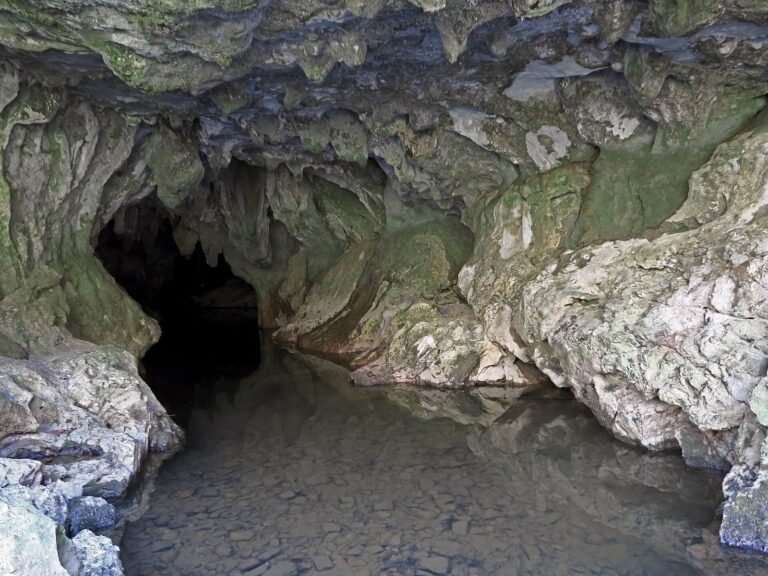
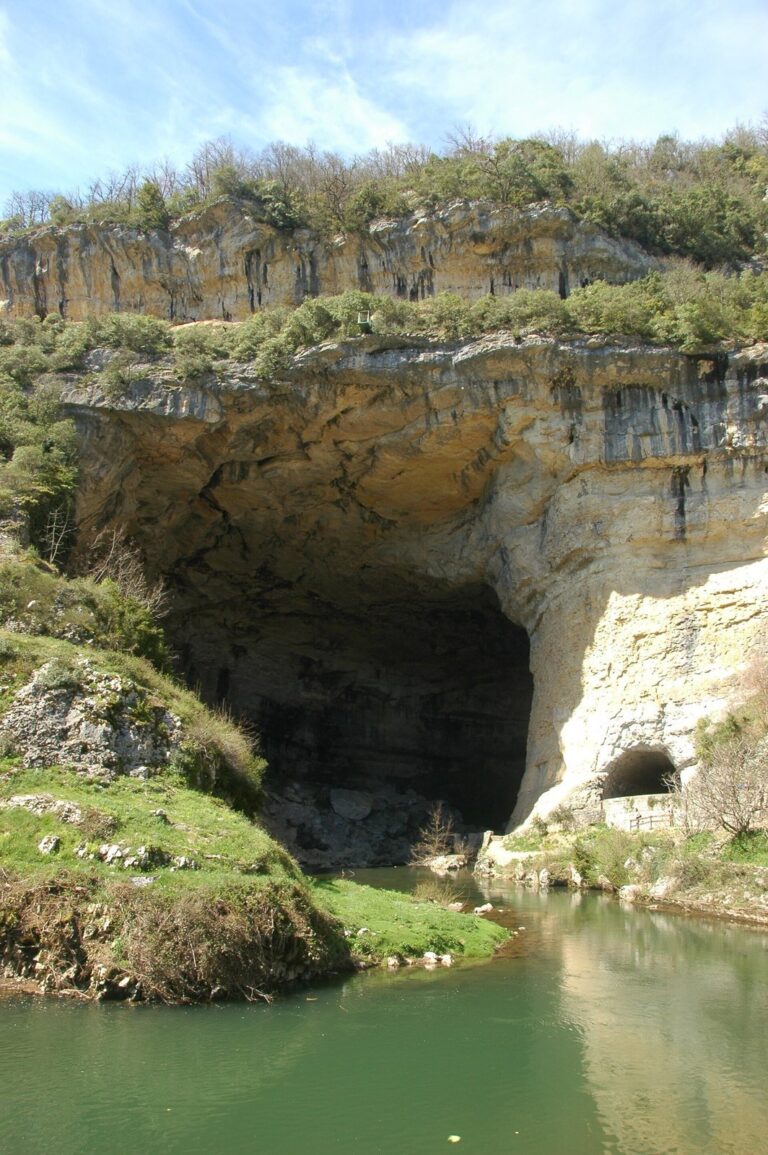
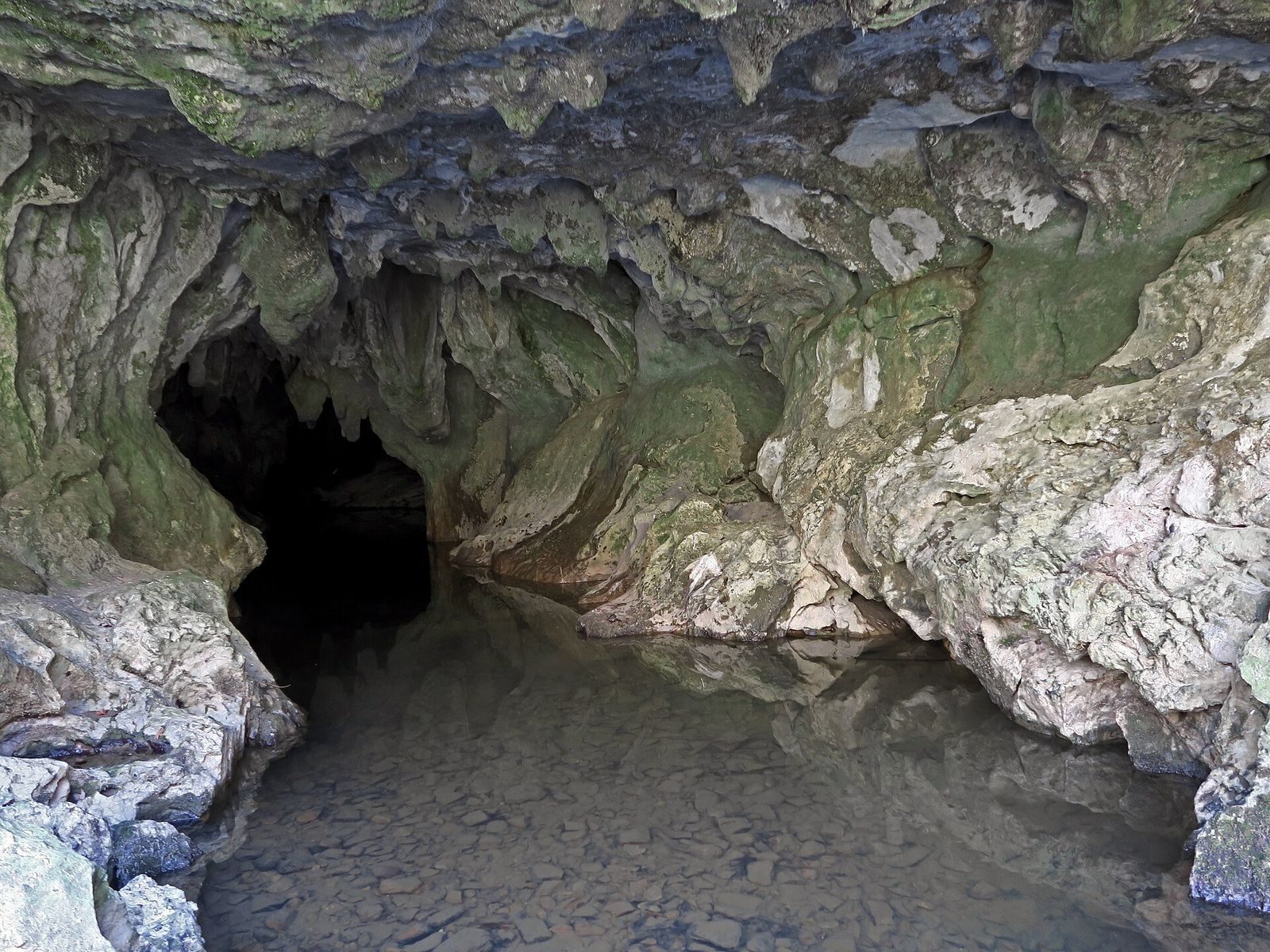
The Cave of Tuc d’Audoubert is a prehistoric cave in France, at the emergence of the Volp River from a karst system, a landscape formed as water dissolves rock. Used during the Mousterian, Aurignacian, and Magdalenian periods, its main phase of human activity belongs to the later Middle Magdalenian, around 13,000 years BP. The Mousterian and Aurignacian are earlier Paleolithic traditions; the Magdalenian is a later Upper Paleolithic tradition. BP means years before 1950. The cave served chiefly as a Magdalenian sanctuary, while its middle galleries also supported seasonal camps over many generations.
Prehistoric use and art
Twenty radiocarbon dates associate the principal period of activity with the later Middle Magdalenian. People could reach the cave on foot when the river was low, generally in the warmer season. The dating of its art has been interpreted in different ways. Henri Breuil placed art in this part of the Volp caves in Middle Magdalenian IV, while André Leroi-Gourhan argued for a late Magdalenian date. The clay bison group has been dated to about 14,000 years ago.
The cave belongs to the Volp group, which also includes the Cave of the Three Brothers and Enlène Cave, though the three are not physically connected. Some interpretations propose that Tuc d’Audoubert once formed a single unit with the Cave of the Three Brothers and had several prehistoric entrances. Leroi-Gourhan instead considered them separate caves that people used at the same time.
Exploration and research
People knew of the cave by the late seventeenth or early eighteenth century, but it had not been scientifically explored. On 16 July 1912, Henri Bégouën and his sons Max, Jacques, and Louis began exploring it and found the first wall engravings. Reaching some chambers required them to break cave formations and widen a narrow passage. After these early finds, the municipal cave was leased to Émile Cartailhac, an archaeologist acting for the Ministry of Public Instruction’s historic-monuments service.
The main clay bison group was discovered on 10 October 1912. Local residents worried that a monetary treasure might be removed from the commune. On his first visit, on 21 October, Cartailhac found a small bison sculpture. It was shown to the municipal council and residents to demonstrate the cave’s scientific value; museum curator Salomon Reinach soon offered 100 gold francs for it.
On Cartailhac’s advice, Bégouën limited visits to selected scientists, established a single route, and marked and protected areas containing footprints. He rejected commercial exploitation and installations, and left most archaeological material in place. Cartailhac led the first scientific excavations. Later researchers included Breuil, Jean Clottes, and Henri Rouzaud. After a fifteen-year research program at Enlène, work at Tuc d’Audoubert resumed in 1992, with another phase beginning in 2004. Study was still unfinished when a monograph appeared in 2009.
In 1989, Louis Bégouën’s children founded an association to own, conserve, and study the Volp caves. Robert Bégouën became its conservator, assisted by his son Éric. In 2013, the 1,928-hectare Volp karst basin and its associated landscape were classified as a natural site. The designation covers the landscape containing the cave as well as the wider basin.
Remains
Layout and access
The cave has three gallery levels and is the deepest of the three Volp caves. Its present entrance is reached through the Volp riverbed, and access depends on low water. A chimney 12 metres in diameter leads to the upper network, whose passages extend 597 metres from the vertical projection of the entrance porch to the end of the final passage. One corridor is about 500 metres long. The middle galleries lie roughly 3 metres above the river, while the lower level follows the Volp’s underground course.
Decorated upper galleries
Images and signs
The cave contains 371 figures, including 103 animal representations from 11 species. Bison, represented 41 times, and horses, represented 16 times, are the most numerous. Other animals include ibex, hinds, reindeer, lions, bears, and snakes. Five depictions show bison in pairs. The figures also include nine imaginary creatures, a humanlike mask, a vulva, and abstract signs, many of them club-shaped forms known as claviform signs. About three quarters of the signs are engraved. Two indistinct animals roughly 100 metres farther into the cave were called monsters by Leroi-Gourhan. A bison and a horse are also shown before a narrow passage.
Images and signs occur at several points along the upper corridor, continuing to the Bison Ceiling beyond a low, flattened passage. Drawings in the chimney between the middle and upper levels link decorated areas in those parts of the cave. The figures share recurring themes, including paired bison and claviform signs. The figurative art has parallels at Montespan, Fontanet, and Bédeilhac, while similar abstract signs occur at Covaciella, Pindal, Cullalvera, and Altamira in Cantabria.
Clay Bison Chamber
The principal clay sculptures stand in the deepest chamber of the upper network, 587.5 metres from the vertical projection of the entrance porch. Two large, naturalistically modeled bison occupy a fallen rock deeply embedded in the floor clay. The rock is 1.52 metres long, 80 centimetres wide, and 58 centimetres high; its front end slopes down toward the rear. The bison face away from the entrance, with the male following the female, slightly behind her and to her left. Two other bison were originally part of the group.
The female is 61 centimetres long and 29 centimetres high, measured from the underside of the belly to the top of the hump. Her horn and tail are broken and lie near her feet; the tail was originally raised. She has no left hind leg, which she apparently never had. Her ears and horns project clearly, and her eye is a clay ball with a small central hole. The nostrils and vulva are modeled. Her posture has been interpreted as a pre-mating position.
The male measures 63 centimetres long, 13 centimetres thick, and 31 centimetres high, from belly to hump. His heavier build, larger hump, and more pronounced tuft between the horns distinguish him from the female. He has one horn and one ear, with nostrils only faintly marked; his pose may represent him sniffing the air. Damp clay has preserved fingerprints and marks left by modeling tools on the sculptures, as well as prints on clay pellets between them. Both large figures have cracks attributed to an episode when the cave dried out.
A small, unfinished bison was found in front of the pair. It measures 12 centimetres long, 10.2 centimetres high, and 3.9 centimetres thick. It was badly damaged because it had not been fixed to the floor, and Bégouën thought it was intended to stand upright. Its head and forequarters are oversized. Cartailhac removed it for safekeeping on 21 October 1912. At the Bégouën family’s request, a copy made with cave clay was placed beside the main group on 25 July 1976. The original was held by the National Museum of Archaeology at Saint-Germain-en-Laye in 2019.
A separate bison in low relief appears on the same stone in front of the pair. It is 51 centimetres long and 24 centimetres high. A groove, 2 centimetres wide, separates its back from the clay. Its tail and hind leg are clearly formed, while the belly, foreleg, and head are faintly sketched. Bégouën described its head as formed but crushed by a fallen stone. At least one horn, and possibly both, had been attached. The chamber also has two engraved wall bison and a small bison head incised into a natural relief. Fingerprints remain in several floor depressions where clay was removed.
Heel Room
The Heel Room is a 48-square-metre chamber a few metres from, and slightly below, the Clay Bison Room. It lies at the foot of a clay wall bearing bear scratches and traces of fur. Excavation marks in the floor suggest that people obtained sculpture clay there. A stalactite served as a lever to detach a slab of clay. Fingerprints form patterns of points and lines, and claviform signs were made in the same way.
The clay floor preserves many human heel impressions. A count made in 2009 identified 183 impressions attributed to five people, with no complete footprint in that count. Three San trackers, Indigenous people of southern Africa, examined the traces and identified three additional complete footprints and seven knee impressions. They distinguished right from left, noting a right-knee impression associated with a left-foot impression. Some knee marks lie beside freehand lines in positions consistent with drawing them.
The trackers interpreted the heel marks as evidence that a 38-year-old man and a 14-year-old boy made two journeys to collect clay, moving mainly on their heels. In their reading, they first went to a hole without loads, then returned toward the bison carrying clay. They estimated that each person carried about 45 kilograms in total over the two trips, roughly the combined weight of the bison group. Their discussion was relayed through an interpreter who could provide only a summary, so the interpretation remains qualified.
Middle galleries and animal traces
Seasonal living areas and finds
Henri Bégouën’s 1914 excavations identified several seasonal living areas and hearth remains in the middle galleries. Finds include flint tools and weapons, ornaments, and portable art. Two horse-head outlines were cut from horse hyoid bones, small bones in the throat, and another object bears an engraved Pyrenean chamois. Paintings and engravings occur on nearby walls. People also drove bone fragments deep into fissures, including in the Ibex Gallery.
Bears and deep passages
Cave bears left claw marks on some walls and the skeletons of animals that died underground. Human activity overlapped with the bears’ presence in time, though they probably did not use the cave at the same time. A carnivore’s tooth marks occur on an object made by people. People moved bear bones and systematically removed teeth, especially canines, from bear skulls. One broken skull surrounded by footprints lay more than 600 metres from the entrance. In the deep part of the cave, long bones and cave-bear ribs were arranged to mark out paths.
The cave’s unusual underground climate helped preserve traces in the clay. In the Drawings Passage and the A5 passage, evidence points to use during the Mousterian and Aurignacian periods. Clottes also noted broken stalactites thrown against walls, including where they did not obstruct passage, and upright stones that partly blocked a gallery near the first engravings.