Castle Ruthie: Historic Castle and Town Hall in France

Site at a Glance
- Rating
- 4
- Popularity
- Very Low
- Country
- France
- Primary era
- Early Modern
- Eras represented
- Medieval, Early Modern
- Civilizations
- French
- Site type
- Domestic
- Remains
- Castle
On this page9 sections
History
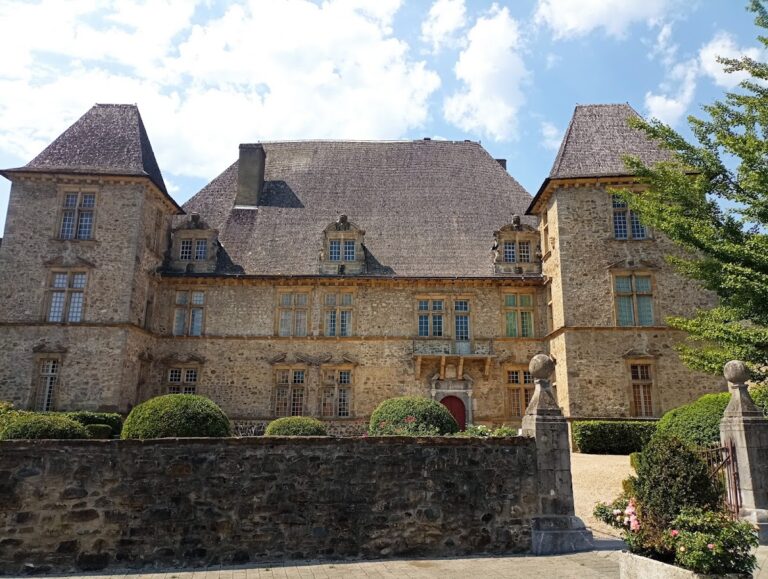
Castle Ruthie, also known as the Urrutia Palace, is a historic castle in Aussurucq, France. Built in the eleventh century and rebuilt during the fifteenth, seventeenth, and eighteenth centuries, it developed through several phases of construction and remains associated with the Urrutia family.
The Urrutia family
The family name Urrutia was rendered in French as “De Ruthie.” In 1256, a member of the family was selected to undertake a pilgrimage on behalf of the nobility and to atone for crimes committed by Auger Miramonte, Viscount of Soule. A song linked with Urrutia and Ahetze also recalls a lord of Urrutia who married Domenge Ahetze in 1422 and portrays him as a harsh man.
Peyrot and the sixteenth-century rebuilding
In 1506, Peyrot served as a counsellor of the chamber and as an esquire, a gentleman attached to a noble or royal household, in the service of Louis XII, one of the successive kings of France. He later held several offices, including captain and lord of the castles of Soule and Saint-Germain-en-Laye. Peyrot built the oldest part of Castle Ruthie, linking the building’s early surviving fabric with the family’s service to the French crown.
Peyrot’s brother Bernard became a counsellor and chaplain to Francis I. At the request of Henry II, Pope Julius II, who served from 1503 to 1513, consecrated Bernard as a court bishop, meaning a bishop attached to a royal or princely court.
Later ecclesiastical connections
The family’s religious connections continued through the following centuries. Juan, Peyrot’s nephew, was arrested in Gipuzkoa in 1546. Pierre Urrutia became abbot of Sainte-Engrâce in 1677 and later served as bishop of Rieux from 1705 to 1709. In 1714, Juan Urrutia became the last abbot of Sainte-Engrâce and later served as vicar general of Saint-Bertrand-de-Comminges, a senior cleric exercising delegated administrative authority for a bishop.
Protection and civic use
The castle was rebuilt in the seventeenth and eighteenth centuries after the earlier phases of its development. On 30 April 1925, it received protection as a French monument historique, a heritage designation that gives legal protection to historically or architecturally important buildings and sites. The protection specifically includes the interior decoration.
Castle Ruthie is owned by the commune, the local administrative municipality, and serves as the town hall of Aussurucq. In 2002, the commune staged Peirot, a pastoral associated with the Urrutia Palace. A pastoral is a traditional Basque-language theatrical performance combining drama, music, and historical or legendary subjects.
Remains
Multi-phase structure
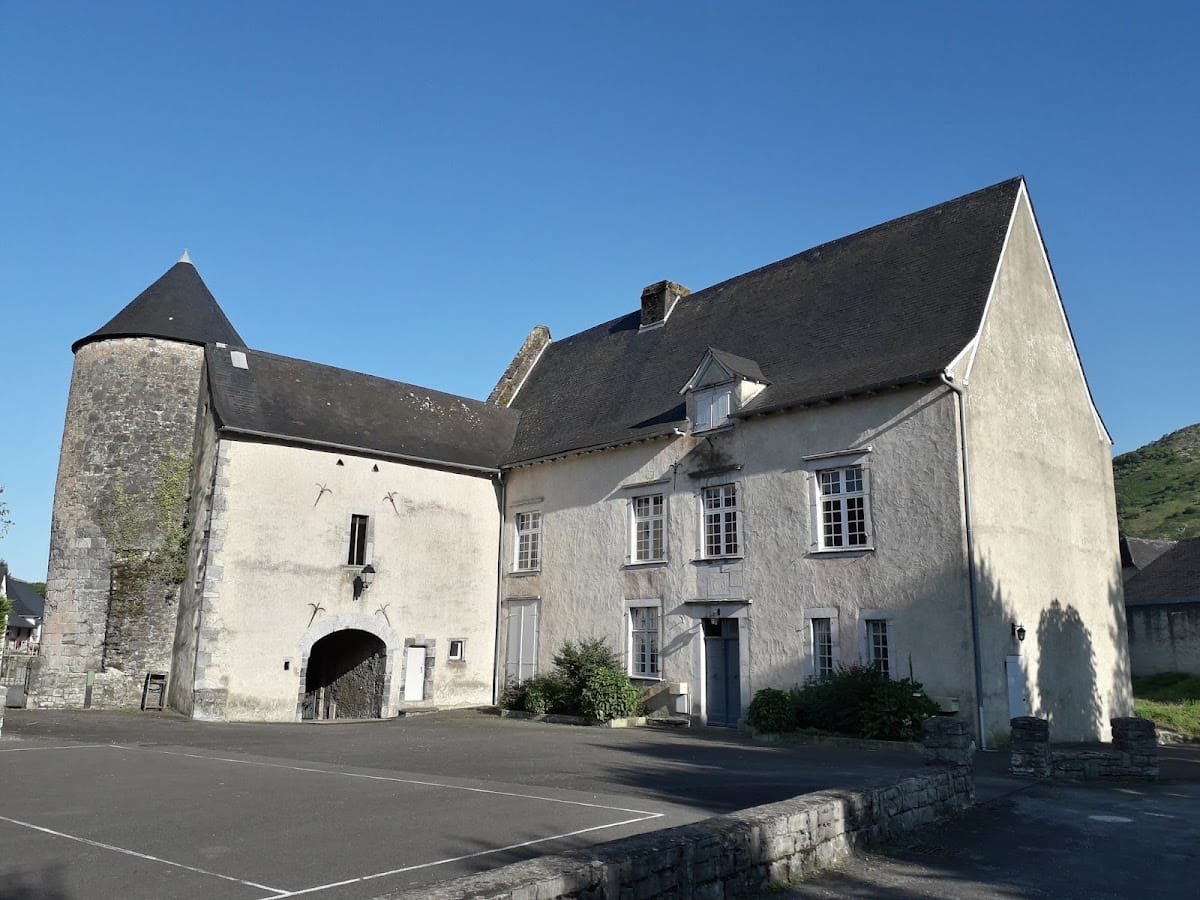
Castle Ruthie is a multi-phase building whose fabric reflects construction and rebuilding from the eleventh through the eighteenth centuries. The oldest part was built by Peyrot in 1506, while later work during the seventeenth and eighteenth centuries contributed to the form that survives today.
Surviving towers
Two circular towers are the only surviving remains of the original sixteenth-century building. They preserve a physical connection with the phase associated with Peyrot and form the clearest surviving elements of the castle’s earlier structure.
Interior decoration
The castle’s interior decoration is included within its protected historic-monument status. This protection recognizes the interior as part of the building’s heritage value alongside its successive architectural phases.