Castle Ropperhausen: A Medieval Hilltop Castle in Germany


Site at a Glance
- Rating
- 5
- Popularity
- Very Low
- Country
- Germany
- Primary era
- Medieval
- Eras represented
- Medieval
- Civilizations
- Holy Roman Empire
- Site type
- Military
- Remains
- Castle
On this page8 sections
History
Castle Ropperhausen is a medieval castle in Germany, probably built in the thirteenth century on a rocky spur above the north bank of the Ohebach. The Lords of Heimbach probably constructed it and temporarily held the castle and the local court alongside their ancestral Heimburg near Heimbach.
Origins and Early Ownership
The circumstances in which the Lords of Heimbach acquired Ropperhausen are unknown. The Lords of Gilsa are also possible builders, since they were recorded as landowners at Raporgehusen in 1232. The early history of the site therefore connects two noble lineages with the castle and the surrounding territory.
The Gilsa Lordship
From 1354, the Gilsa family held the Heimbach portion of the Ropperhausen court and its associated villages. In that year, Werner von Gilsa purchased Ludwig von Heimbach’s share of the court and its villages. The Gilsa family remained lords of the castle and court until 1699.
The Baumbach Estate and the End of Castle Use
In 1699, the brothers Philipp Wilhelm and Georg Christoph von Gilsa sold three-quarters of the castle and court to Hans Ludwig II von Baumbach (1664–1734). Baumbach acquired the remaining quarter from Johann Ludwig von Gilsa in 1719, bringing the entire property under his control.
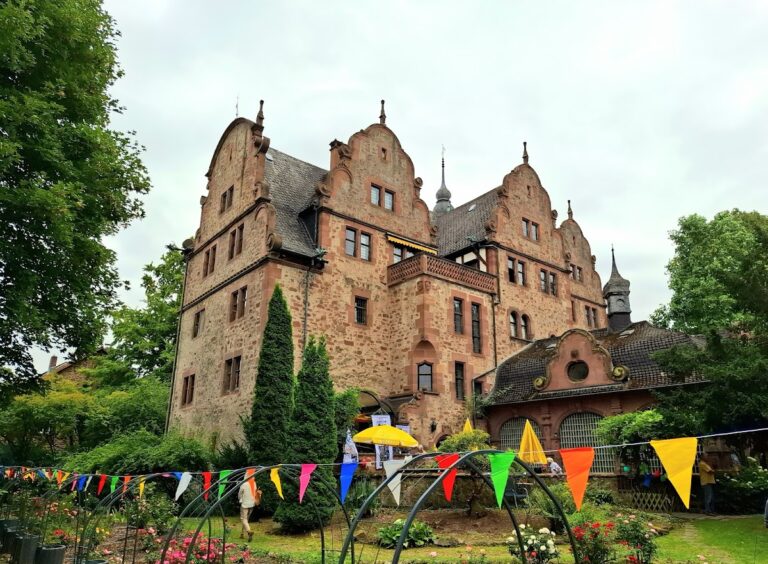
Between 1711 and 1724, Hans Ludwig II von Baumbach renewed and fortified the manor-estate complex southeast of the village. The older castle was no longer used, was partly dismantled, and gradually became a ruin. The Baumbach family’s patrimonial jurisdiction, a form of local judicial authority exercised by a territorial lord, continued at Ropperhausen until 1814.
Remains
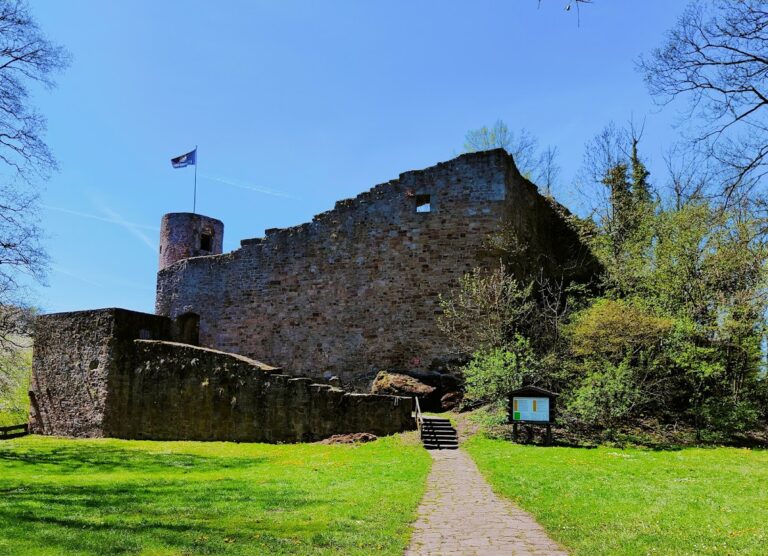
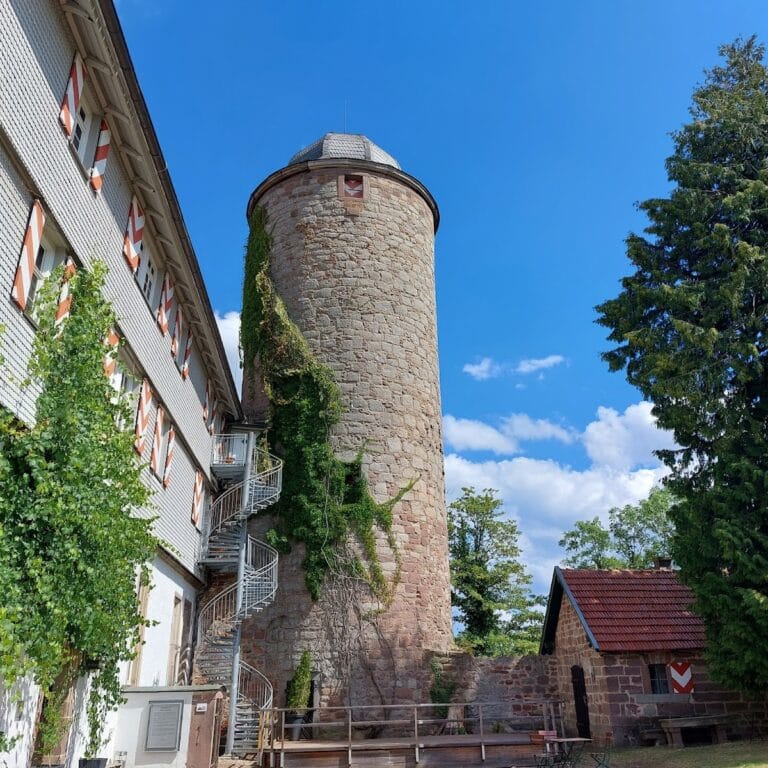
The ruin occupies the edge of rocky terrain northeast of Großropperhausen, in the municipality of Frielendorf in the Schwalm-Eder district of northern Hesse. It is a hilltop spur castle, meaning a fortified site built on a projecting ridge or rocky spur, with the surviving structures positioned above the Ohebach. The remains include part of the residential area, sections of the enclosure, and an eastern ditch across the landward approach.
Castle Structures and Defenses
Residential Tower
Part of the residential tower survives within the ruin. This was a fortified tower that also provided domestic accommodation, combining a defensive role with living space. Its surviving fabric represents the residential element of the medieval castle.
Enclosing Wall and Eastern Neck Ditch
Sections of the enclosing wall remain around the former castle area. On the eastern side, the neck ditch, a ditch cut across the landward side of a projecting spur, survives as part of the site’s defensive layout. Together, these features express how the castle used the rocky terrain and a dug barrier to protect its approach.