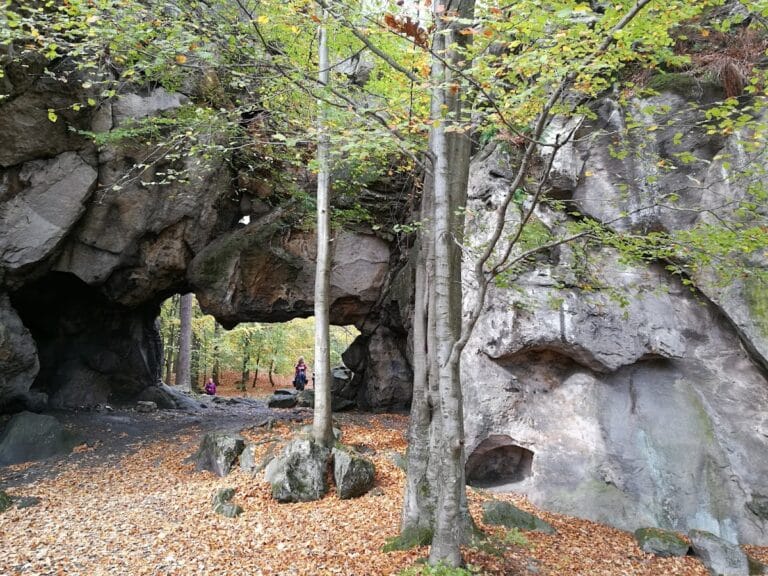
Castle of Ronow: A Medieval Fortress in Poland
Visitor Information
Google Rating: 3.8
Popularity: Very Low
Official Website: www.goryizerskie.pl
Country: Poland
Civilization: Medieval European
Site type: Military
Remains: Castle
History
The Castle of Ronow stands near the village of Trzciniec in the municipality of Bogatynia, Poland. It was built in the early 13th century by a branch of the Hronovice family, known as the Sittaw (or Zittau) line, named after their ancestor Hron.
The first written mention of the castle dates to 1262, naming Conrad of Rhonawe as its burgrave, a title given to the castle’s governor or keeper. From its inception, the fortress played a key role in protecting important trade routes connecting towns such as Görlitz, Zittau, and Friedland. Nearby lay the manor of Unterronow, which belonged to the castle’s estate, situating the site as part of the Ronow lordship and vogtei, an administrative region tied to the larger Zittau domain, with Hirschfelde serving as the main settlement.
The castle’s ownership shifted through several prominent hands during the 13th and 14th centuries. In 1268, it was held by Zdislaw von Leipa and Agnes von Zoyna. Shortly after, around 1270, the Leipa family transferred ownership to the Bohemian crown. Following the death of King Prämysl Ottokar II, the fortress was pawned to Otto IV of Brandenburg but returned to Bohemian control by 1283. In 1310, King Heinrich VII returned Ronow to Heinrich von Leipa. In 1319, the castle became a dowry gift to Heinrich I of Jauer.
By 1332, the castle’s leadership included Jaroslais von Schlieben, who served as castellan, or commander. After Heinrich I died without heirs in 1346, Bohemian royal authority reclaimed the property. In 1389, King Wenceslaus IV granted the castle to Anselm von Leipa. This marked a separation in governance from Zittau, as Ronow began its distinct ownership path. Soon after, Anselm sold the fortress to Margrave Jobst of Moravia, who in turn transferred it to Hinko Berka von Dubá. Under Berka’s control, the castle gained notoriety as a robber baron stronghold, from which raids targeted merchant caravans and neighboring towns.
The growing threat posed by banditry prompted decisive action. In 1398, Margrave Prokop ordered the fortress destroyed. A siege followed in January 1399, lasting a week, after which the castle was captured and demolished down to its foundations. It was never reconstructed after this event.
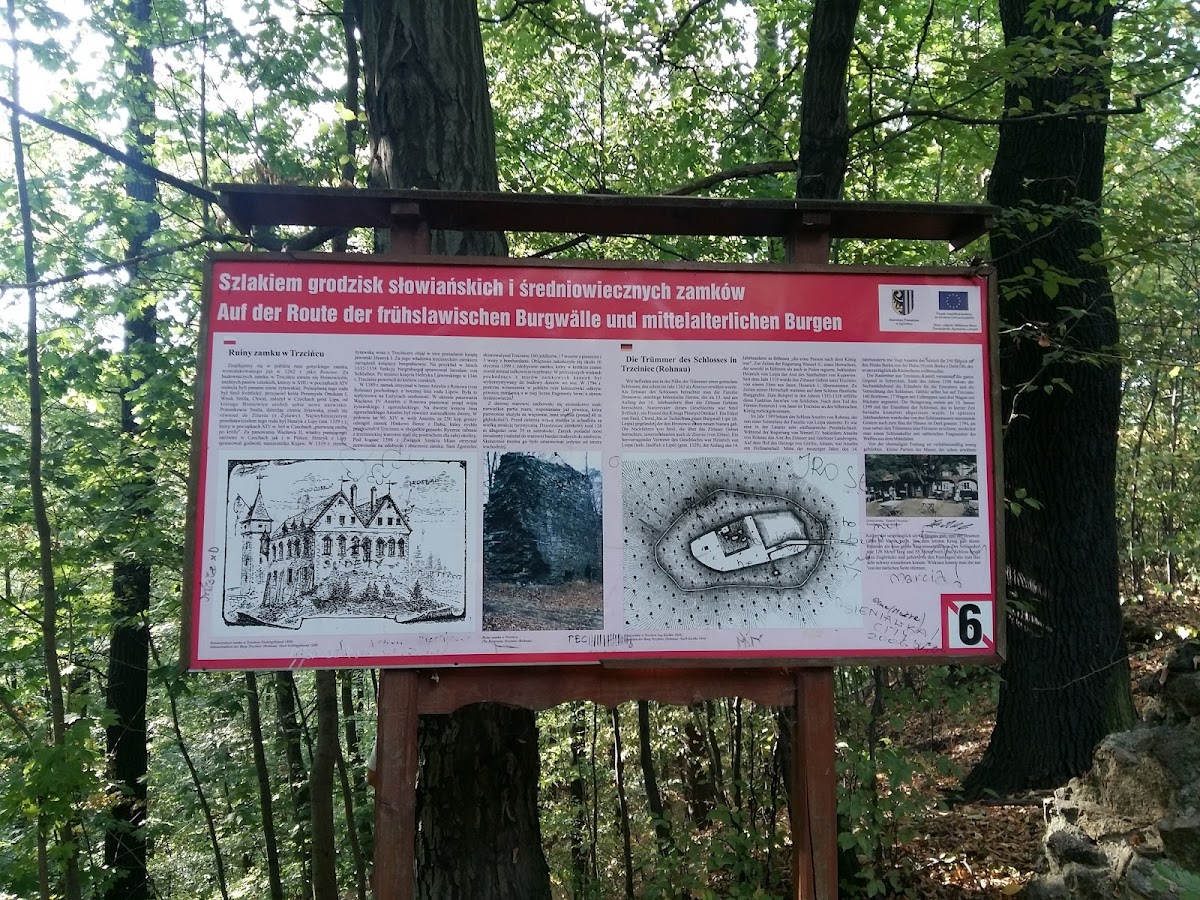
Centuries later, interest in the site revived with excavation efforts beginning in 1794 during the construction of a forester’s lodge inside the castle grounds. These digs uncovered a vaulted cellar, believed to have served as a dungeon. Additional archaeological work occurred in 1840. After World War II, the forester’s lodge, which had also functioned as a guesthouse, was destroyed by fire around 1980. Since Poland joined the European Union in 2004, the ruins have seen partial restoration and have been incorporated into a route highlighting early Slavic and medieval fortifications, complemented by informational panels installed in 2006.
Remains
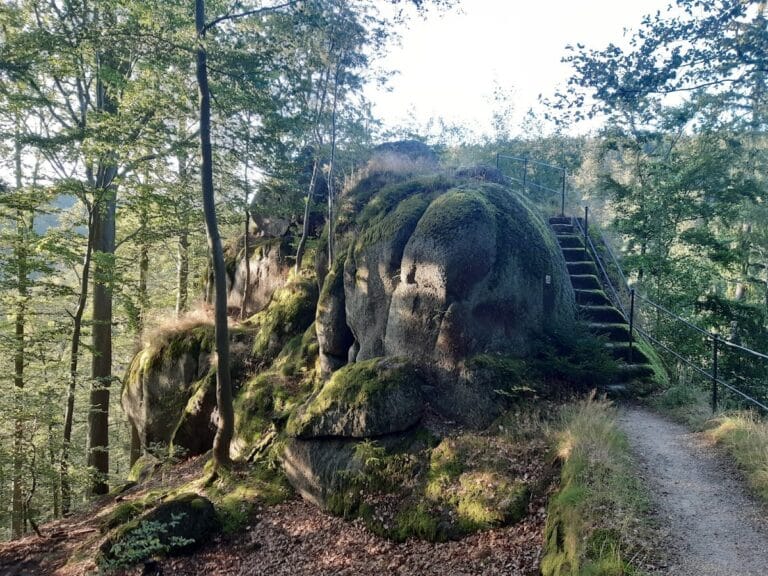
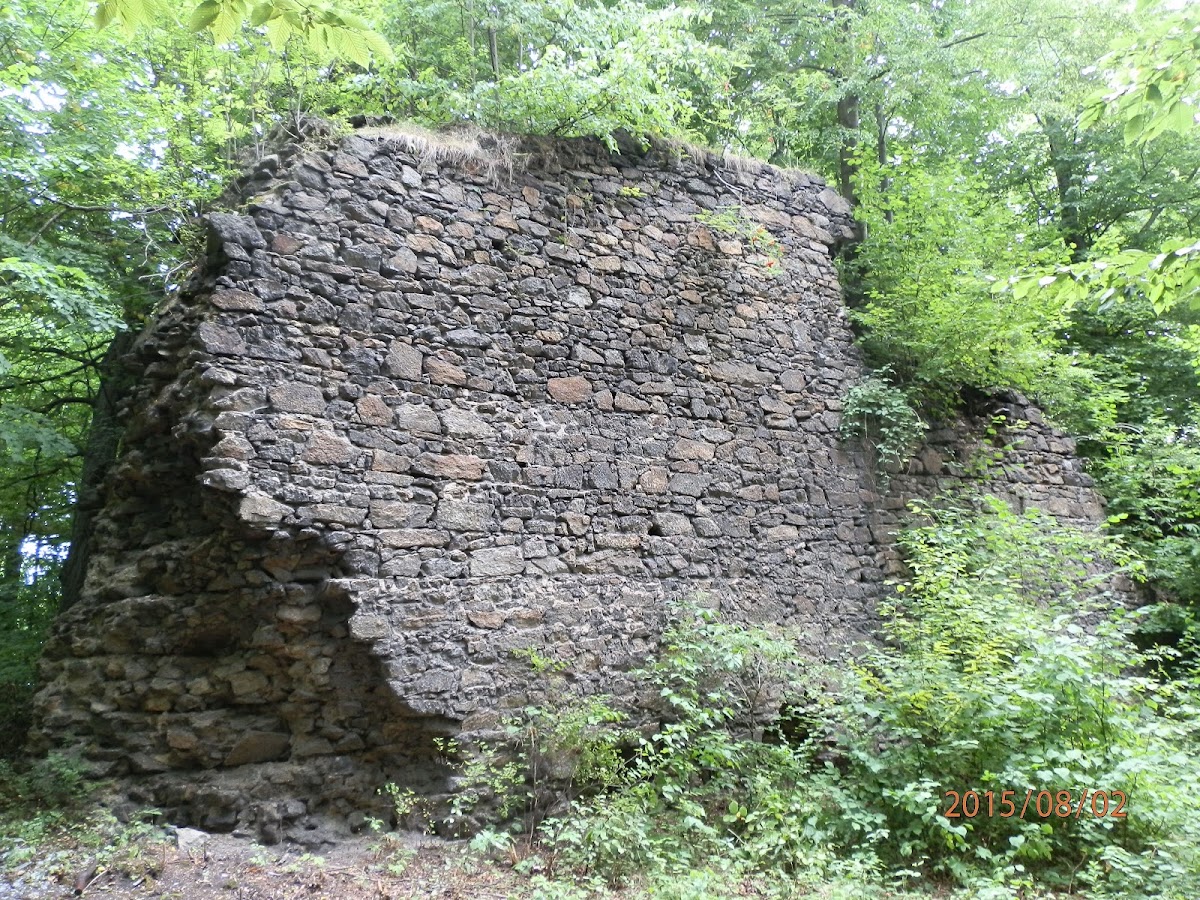
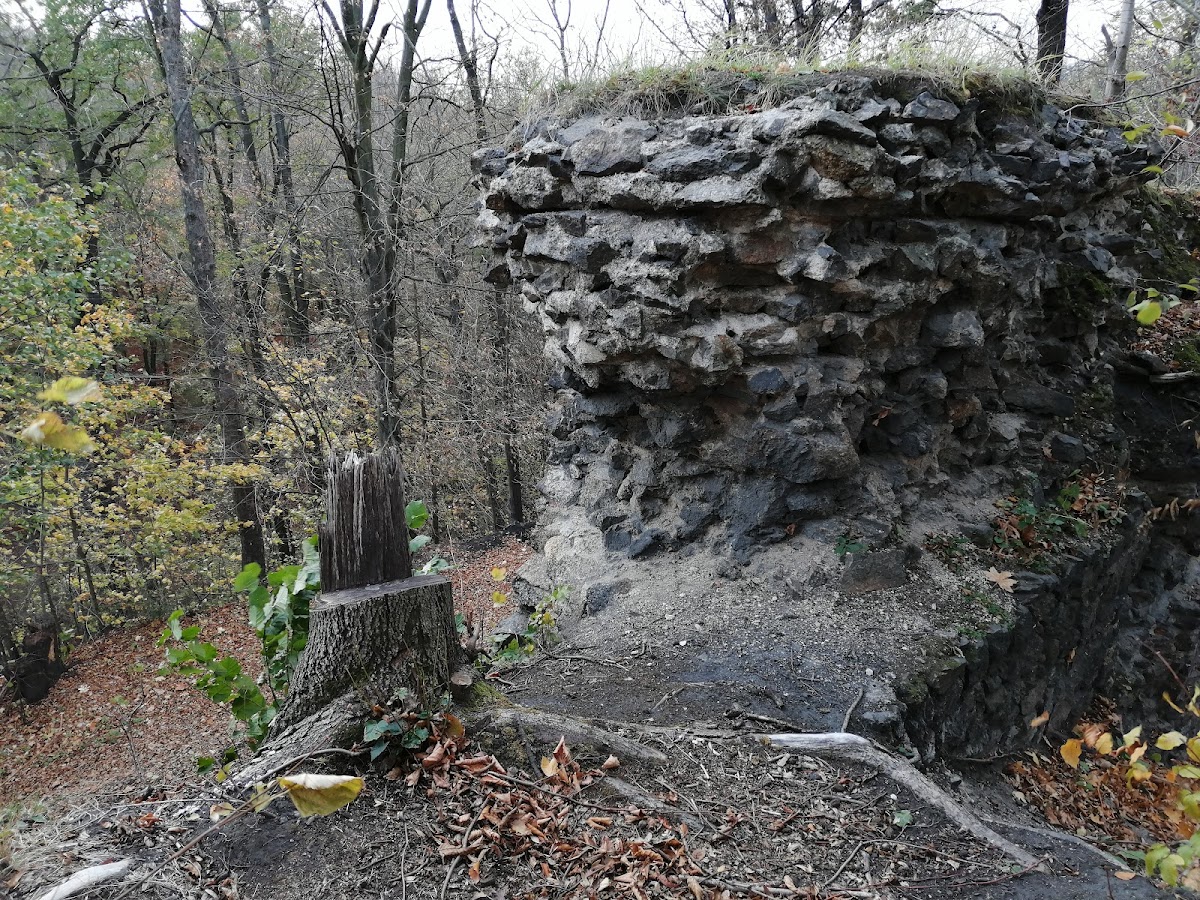
The ruins of the Castle of Ronow occupy a rocky hilltop near the Lusatian Neisse River. The site’s layout reveals a rectangular courtyard approximately 125 meters long and 55 meters wide, enclosed by defensive walls and once surrounded by a moat. Parts of the original moat remain visible despite being filled in over time.
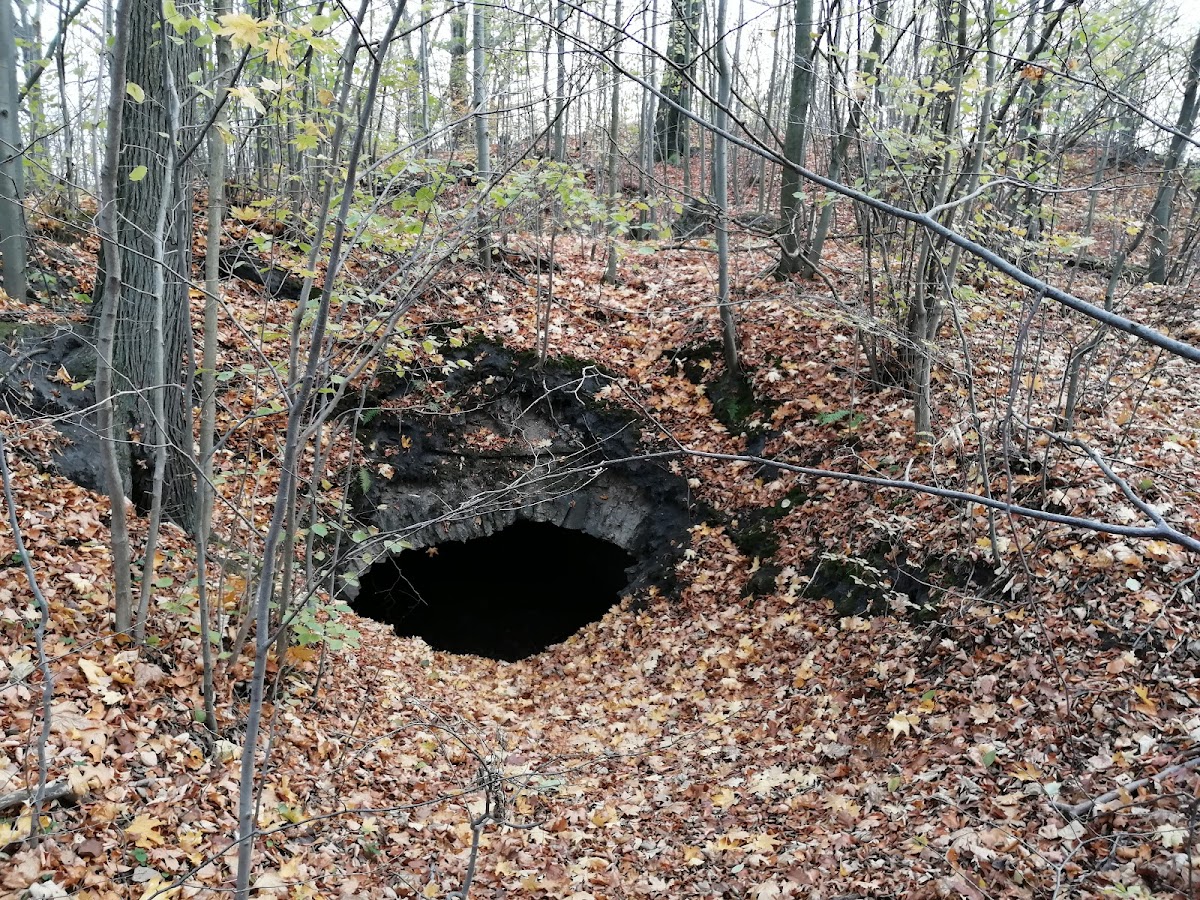
The fortress structure was divided into two main sections by an internal defensive wall. The northern section contained the primary buildings, including the remains of two structures. One of these retains a vaulted cellar measuring about 7 by 6 meters and rising 3.5 meters high; this underground vaulted space is interpreted as the dungeon where prisoners may have been held.
Adjacent to the main part, the southern section connected to a lower bailey—a fortified courtyard area often used for auxiliary purposes—located to the south of the main compound.
A distinctive feature of the castle was its deep well, hewn directly into the rock. This well extended some 45 meters into the ground, with the water level found 18 meters down. Historical records indicate that the city of Zittau cleared the well in the past. Following restoration around 2006, the well was sealed with a concrete cover to ensure safety. The original well house — the structure that sheltered the well — no longer stands.
Excavations carried out during the 18th and 19th centuries uncovered various artifacts, including sandstone window sills and weapons, as well as human bones, which provide tangible connections to the fortress’s turbulent past.
The castle’s ruins continue to offer panoramic views across the surrounding landscape, with vistas stretching to the nearby Iser, Lusatian, and Zittau Mountains, as well as the Neisse valley below.
Within the ruins, a forester’s lodge was constructed in the late 1700s, incorporating parts of the old structure. This building was later repurposed as a guesthouse until its destruction in a fire around 1980.
Since the early 21st century, bilingual information panels in Polish and German have been installed at the site to educate visitors about the history and significance of the castle. Despite these efforts, the ruins remain exposed to natural wear and, at times, vandalism.
Nearby sites