Fortezza Orsini: A Fortified Noble Residence and Military Stronghold in Sorano


Site at a Glance
- Rating
- 4.5
- Popularity
- Low
- Country
- Italy
- Primary era
- Medieval
- External website
- Open
- Eras represented
- Medieval, Early Modern
- Civilizations
- Unclassified
- Site type
- Military
- Remains
- Castle
On this page8 sections
History
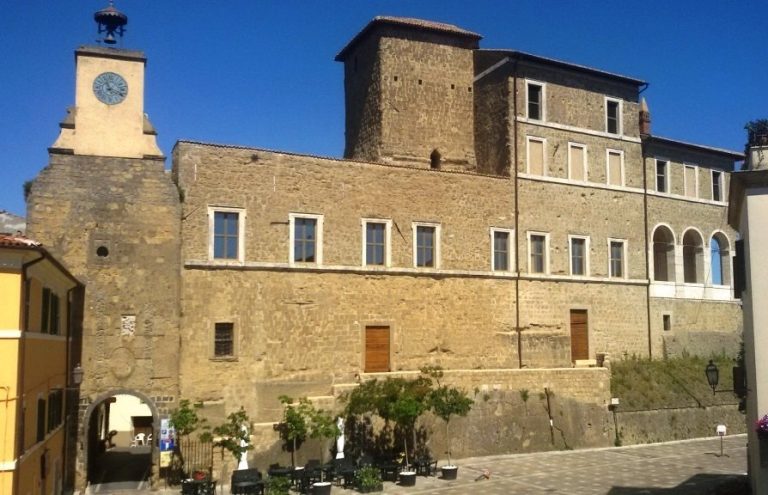
Fortezza Orsini is a fortified residential complex in Sorano, Italy, whose origins lie in a twelfth-century fortress built by the Aldobrandeschi, a powerful medieval family with territories and strongholds in southern Tuscany. Rising in the upper part of the settlement, it controlled the town and the surrounding territory. After the division of the Aldobrandeschi possessions, the fortress passed to the County of Sovana and was inherited by the Orsini at the end of the thirteenth century.
Orsini residence and county stronghold
The Orsini transformed the complex into one of their principal residences and an important center of authority within their county. It operated alongside Palazzo Orsini in Pitigliano as a seat of Orsini power. Its defenses endured repeated attacks. Orvietan forces besieged the fortress in the fourteenth century, while the Sienese attempted to take it in 1416–1417 and again in 1454–1455. Troops of the Papal States also made several attempts to conquer Sorano and annex it to their territory, but the fortress was not conquered in these assaults.
Medici military use
During the sixteenth century, extensive building works enlarged and strengthened Fortezza Orsini. The political fall of the County of Orsini then brought a change in its role. After the county’s territories were annexed to the Grand Duchy of Tuscany, the fortress became a Medici military garrison, meaning that it was occupied and used for military purposes by the Medici state. The garrison was decommissioned during the first half of the eighteenth century.
Decline, restoration, and museum use
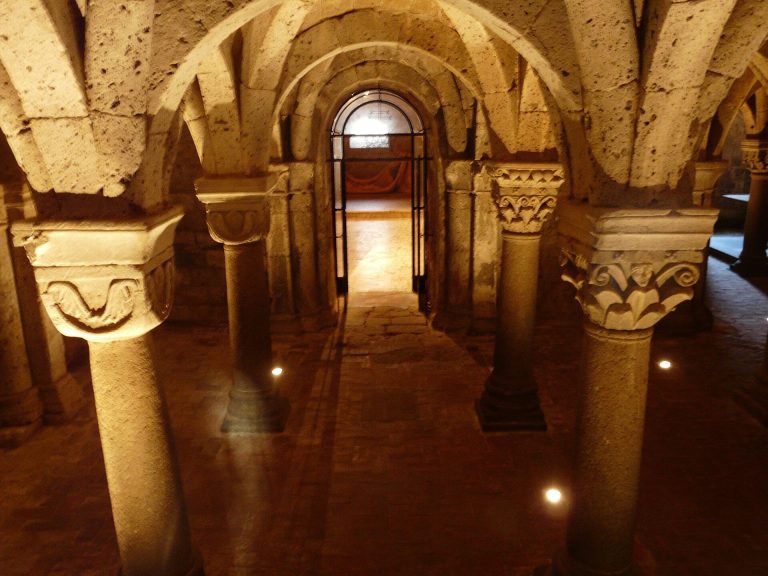
After its military decommissioning, the complex entered a long period of decline, during which parts of the structure were damaged. Restoration campaigns undertaken between the end of the twentieth century and the beginning of the twenty-first century repaired the fortress and returned it to a restored state. The entire complex now functions as a museum area. It houses the Sorano Civic Archaeological Museum, including exhibitions, displays, and a collection of medieval ceramics preserved within the fortress.
Remains
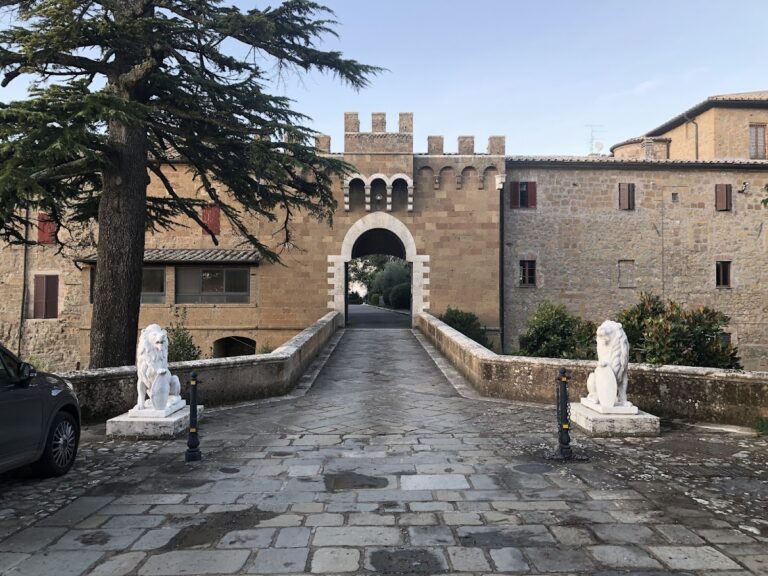
Fortezza Orsini is arranged as a connected fortified complex with a central body, a circular tower, two internal courtyards, and three separate forts named Castelvecchio, Castellaccio, and Rocchetta. Entry from the lower part of Sorano passes through a gate that originally had a drawbridge. Above the entrance to the main body, beyond the access bridge, an Orsini coat of arms remains in place. A partly covered stairway leads from the entrance between two courtyards set at different levels. These spaces are organized around the oldest part of the complex.
The original fortified core
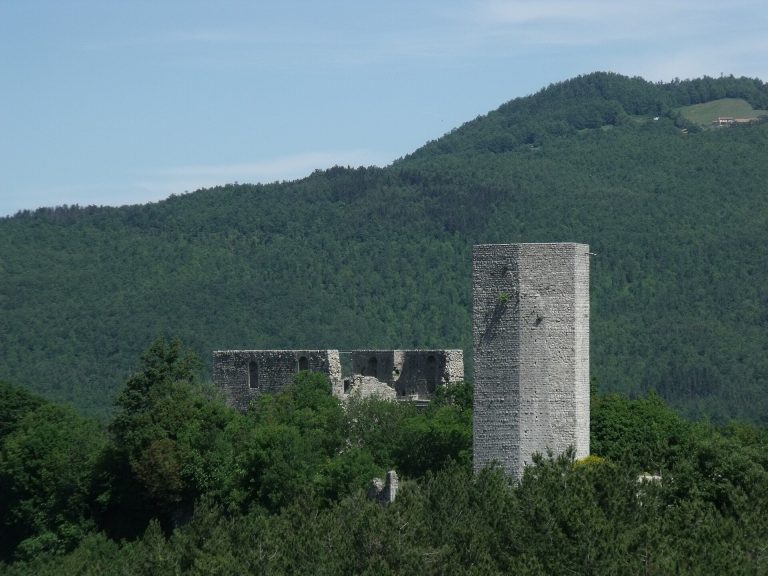
The castle forms the first core of the stronghold and contained the former lordly residence. A moat and steeply rising curtain walls, the defensive walls connecting fortified points, enclosed and protected it. The oldest area also includes a circular-section tower that belonged to the original Aldobrandeschi fortress. Together, the castle, tower, courtyards, moat, and walls preserve the central arrangement around which the later complex developed.
Sixteenth-century defenses
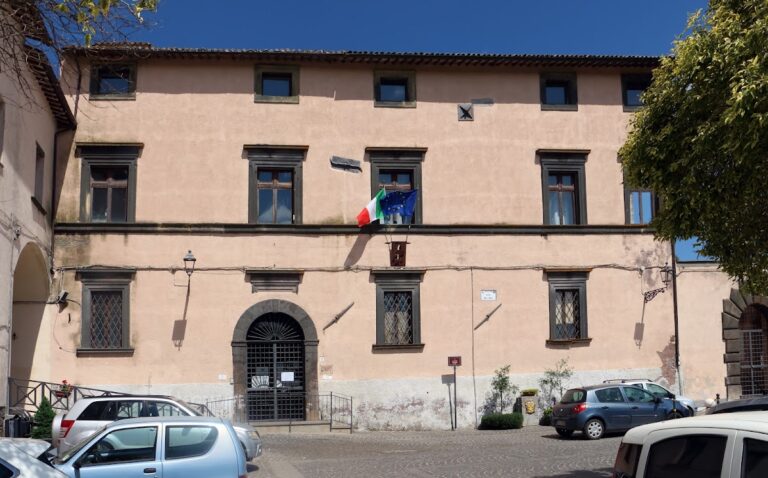
The sixteenth-century expansion includes a building running along the western side of the walls. It was later remodeled in the Neoclassical style, while centuries of deterioration compromised much of its fabric. The building is linked to two pointed corner bastions, projecting defensive structures that strengthened the walls and provided positions for defensive fire. The San Marco Bastion stands to the east and the San Pietro Bastion to the west. A large corner coat of arms is placed at San Pietro. Its heraldic design combines symbols of the Aldobrandeschi and Orsini: rampant lions represent the Aldobrandeschi, while bars, roses, and a heraldic bear represent the Orsini.
Frescoes and museum collections
Restoration inside the castle brought sixteenth-century frescoes associated with the Sienese school to light. Some were commissioned by Niccolò IV degli Orsini, a member of the Orsini noble family. They include scenes depicting Giovanni Boccaccio’s song Io mi son giovinetta from the ninth day of the Decameron, the fourteenth-century collection of stories by Boccaccio. The restored interiors and the medieval ceramics collection are now part of the museum area housed within the fortress.