Castle of Old Wick: A Ruined Coastal Castle in Scotland


Site at a Glance
- Rating
- 4.4
- Popularity
- Low
- Country
- United Kingdom
- Primary era
- Medieval
- External website
- Open
- Eras represented
- Medieval
- Civilizations
- Kingdom of Scotland
- Site type
- Military
- Remains
- Castle
On this page8 sections
History
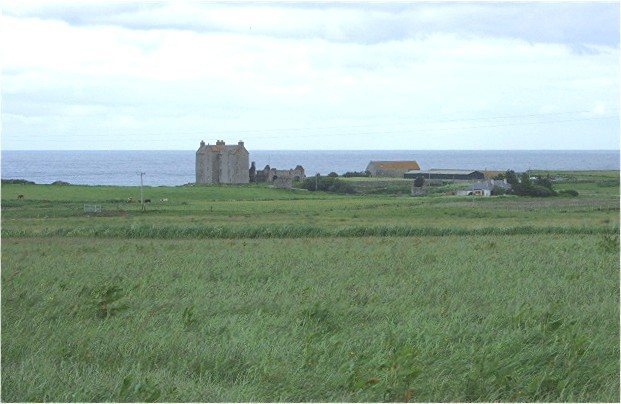
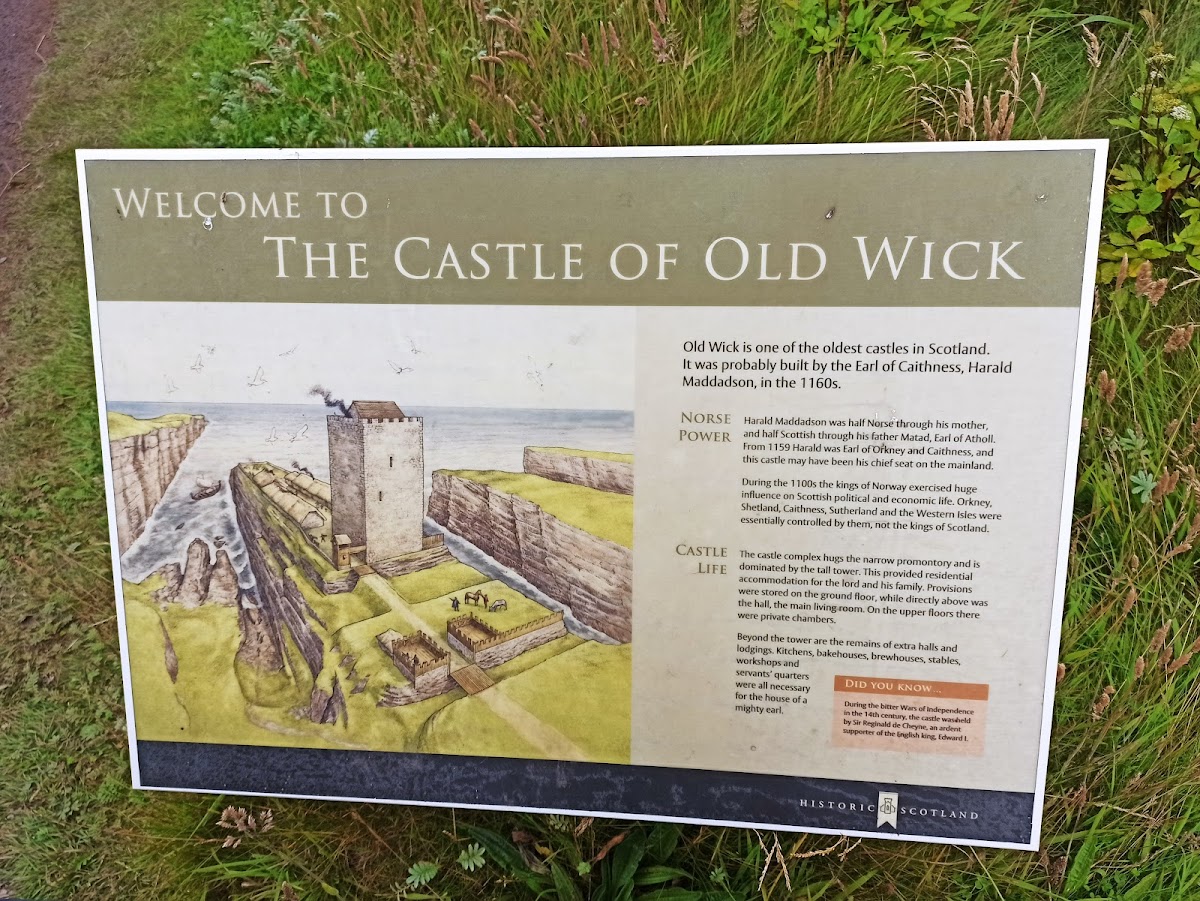
Castle of Old Wick is a ruined coastal castle in the United Kingdom, about 1 km south of Wick in Caithness, Scotland. It was built under the rule of the Norse earls of Orkney, and its origins are dated either to the twelfth or early thirteenth century. The castle is traditionally attributed to Harald Maddadsson, a medieval Norse nobleman who held the earldom of Caithness and was associated with the earldom of Orkney. The surviving structure appears to date from the fourteenth century, so the castle’s earliest history remains uncertain.
Medieval Ownership
In the early fourteenth century, Castle of Old Wick was held by Reginald le Chen of Inverugie and Duffus. In 1345, it passed through the marriage of his daughter Mary to Nicholas Sutherland. During the fifteenth century, Christian, daughter and heiress of Alexander Sutherland of Duffus, carried the property by marriage to William Oliphant. Andrew Oliphant of Berrideale sold it to his uncle, Lord Oliphant, in 1526.
The Siege of 1569
In July 1569, Laurence Oliphant, Lord Oliphant, and his servants were besieged at the castle by John Sinclair, Master of Caithness. The attack lasted eight days and ended when Sinclair captured the stronghold.
Later Ownership and Protection
The castle came to the Sinclair family in 1644. After George Sinclair, Earl of Caithness, died without issue, ownership passed to John Campbell, Lord Glenorchy, who also acquired the title Earl of Caithness. By 1679, Castle of Old Wick was already a ruin. Lord Glenorchy sold it to the Dunbars of Hempriggs in 1690, and the Dunbar family retained it until 1910.
Castle of Old Wick has been protected as a scheduled monument in the United Kingdom since 1935. This legal status applies to archaeological and historic sites judged to have national importance. Historic Environment Scotland administers the site as part of Scotland’s protected historic environment.
Remains
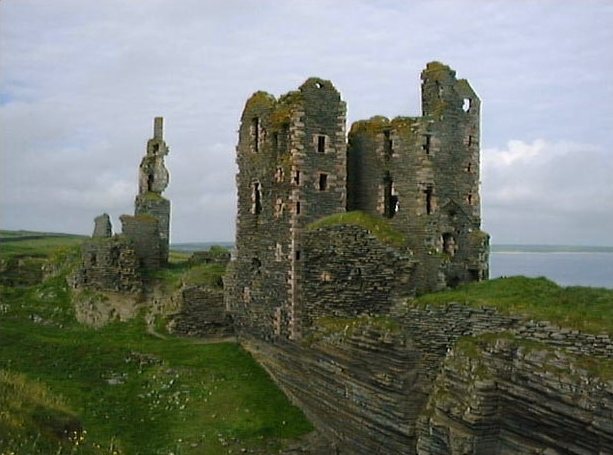
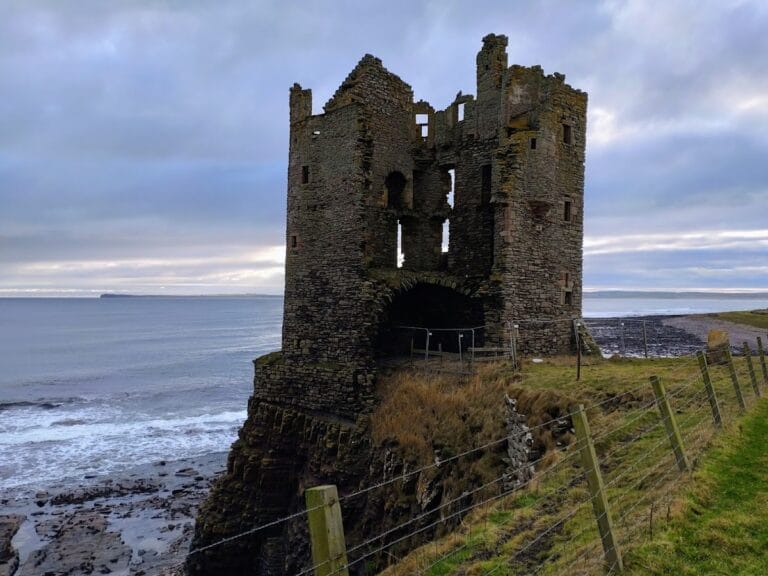
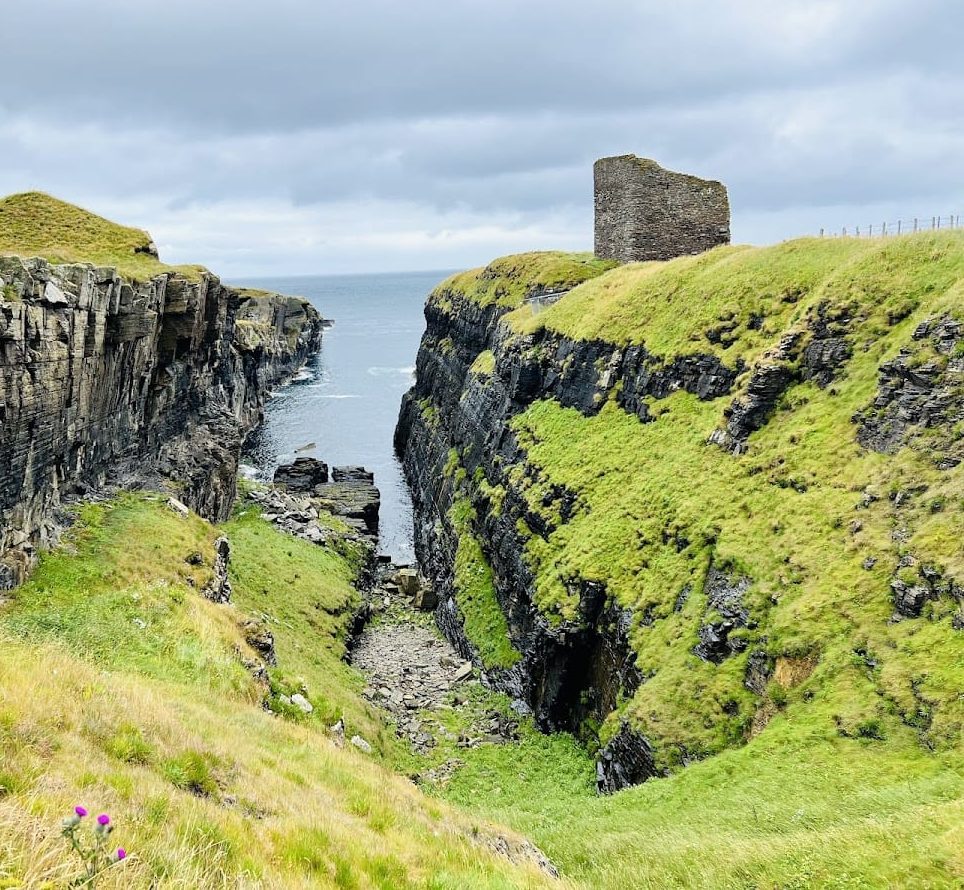
The castle occupies a rocky peninsula southwest of Wick, with sea cliffs surrounding the headland. Two moats, or defensive ditches, separated it from the mainland. An outer defensive wall also served as the rear wall of several buildings, combining the castle’s perimeter protection with its internal structures.
Mainland Approach and Defences
The approach from the mainland crossed a broad ditch cut into the rock by a drawbridge, a movable bridge used to control passage across a defensive ditch. A gatehouse and defensive wall protected this entrance. The headland itself is also classified as a possible earlier hillfort or promontory fort, meaning a fortified enclosure placed on a projecting headland or peninsula, although that interpretation remains uncertain.
Surviving Tower
The principal surviving structure is a square tower that originally had four storeys, of which three remain. The ground floor held the kitchen and storage areas. The first floor contained a hall entered from the southeast, while the upper levels provided the lord’s private quarters. Ladders appear to have connected the storeys.
Courtyard Buildings
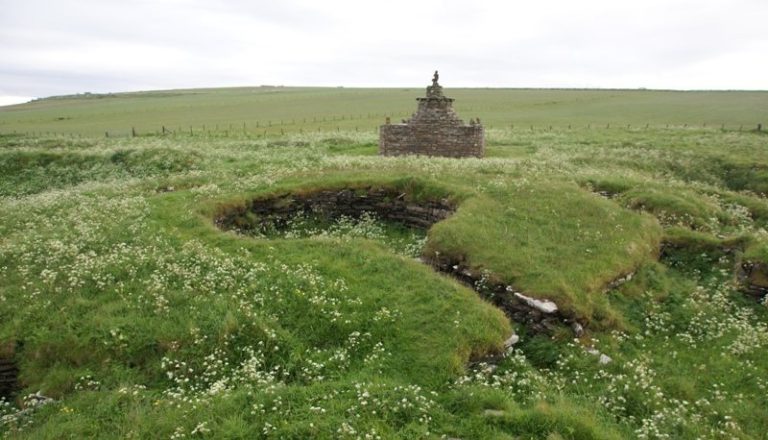
A narrow courtyard extended towards the centre of the peninsula. Buildings stood on both sides, including barracks, a brewery, and a chapel. Their foundations survive alongside the tower and help define the arrangement of the castle beyond its main residential structure.