Certosa di Casotto: A Former Carthusian Monastery in Italy
Site at a Glance
- Rating
- 4.6
- Popularity
- Medium
- Country
- Italy
- Primary era
- Early Modern
- External website
- Open
- Eras represented
- Medieval, Early Modern
- Civilizations
- Unclassified
- Site type
- Domestic
- Remains
- Castle
On this page11 sections
History
Certosa di Casotto is a former Catholic Carthusian monastery in Italy, near Garessio in Piedmont. Founded in 1171 during the medieval period, it became one of the earliest documented Carthusian foundations in Italy and belonged to the Lombardy Carthusian province and the Diocese of Alba.
Foundation and early development
The community grew from a group of hermits who adopted the Carthusian way of life around 1170. Among them was Guglielmo da Fenoglio, a religious figure associated with the early community and recognized as one of its founders. The earliest surviving act connected with the monastery dates to 1172, when the Bishop of Asti granted it grazing rights. The lords of Garessio and the municipality were also recognized as founders after making a substantial donation in 1183.
The monastery was consecrated in 1172 and received recognition from the Holy See in 1199. It helped spread Carthusian life in Italy and then possessed four monastic granges, agricultural estates operated to support the monastery, at Gartalona, Capella, Mondino, and Castellino. The name Casotto is traditionally connected with eight small houses where hermits lived about 200 metres from the later monastery, although this explanation of the name remains uncertain.
Expansion and rebuilding
From 1313, the Carthusians of Casotto occupied the former Benedictine-Columbanian Abbey of Saint Peter of Varatella on Mount Varatella after the forced withdrawal of its Benedictine community. The foundation at Albenga became autonomous in 1320 and was later moved into the valley in 1495.
A transfer of Casotto was considered in 1568 but was not carried out. Instead, the older monastery was restored, and its church was consecrated in 1592. Further rebuilding took place during the eighteenth century, with the church consecrated again in 1770.
War, suppression, and transformation
During the Battle of Dego in August 1794, the monastery was burned. French troops used it as a billet in 1795 and 1796 during the first Italian campaign. The French Republican government decreed the suppression of religious orders and congregations on 16 August 1802. The abolition process began on 31 August, and monastic life at Casotto ended in December of that year. The former monastery was later sold at auction during the Napoleonic period, when Piedmont had been annexed to France.
The buildings were temporarily occupied by the Turin glassworks Società Venini, Campioni e Polti. After a newspaper article drew attention to the poor condition of the complex, Charles Albert, King of Sardinia, acquired the property in 1837 for the House of Savoy. His son Victor Emmanuel II later converted Casotto into a castle-like hunting residence and organized large hunting expeditions there. Victor Emmanuel spent several summers at the residence with his children, including Princess Marie-Clotilde, who married the brother of Napoleon III.
Recent archaeological excavations by the Polytechnic University of Turin revealed foundations and possible cellars belonging to the fifteenth-century charterhouse, as well as a cemetery for monks. Restoration of the chapel and kitchens by the Piedmont region forms part of the continuing conservation of the former monastic complex.
Remains
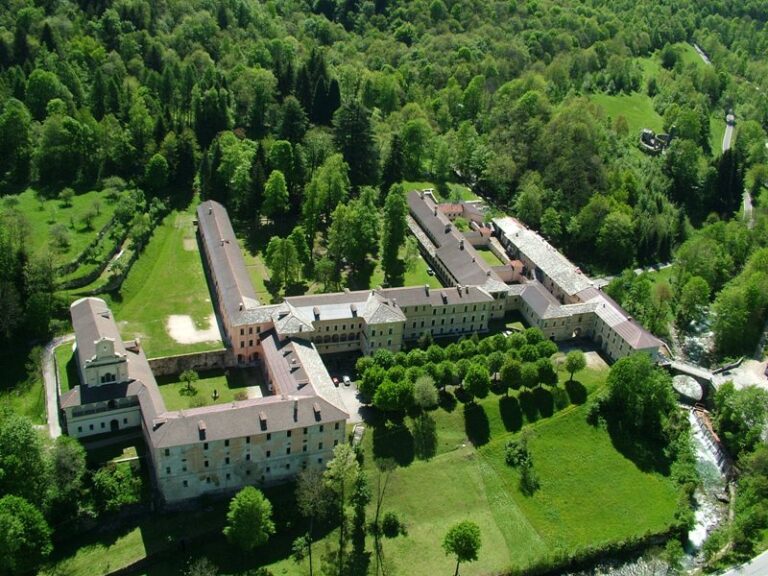
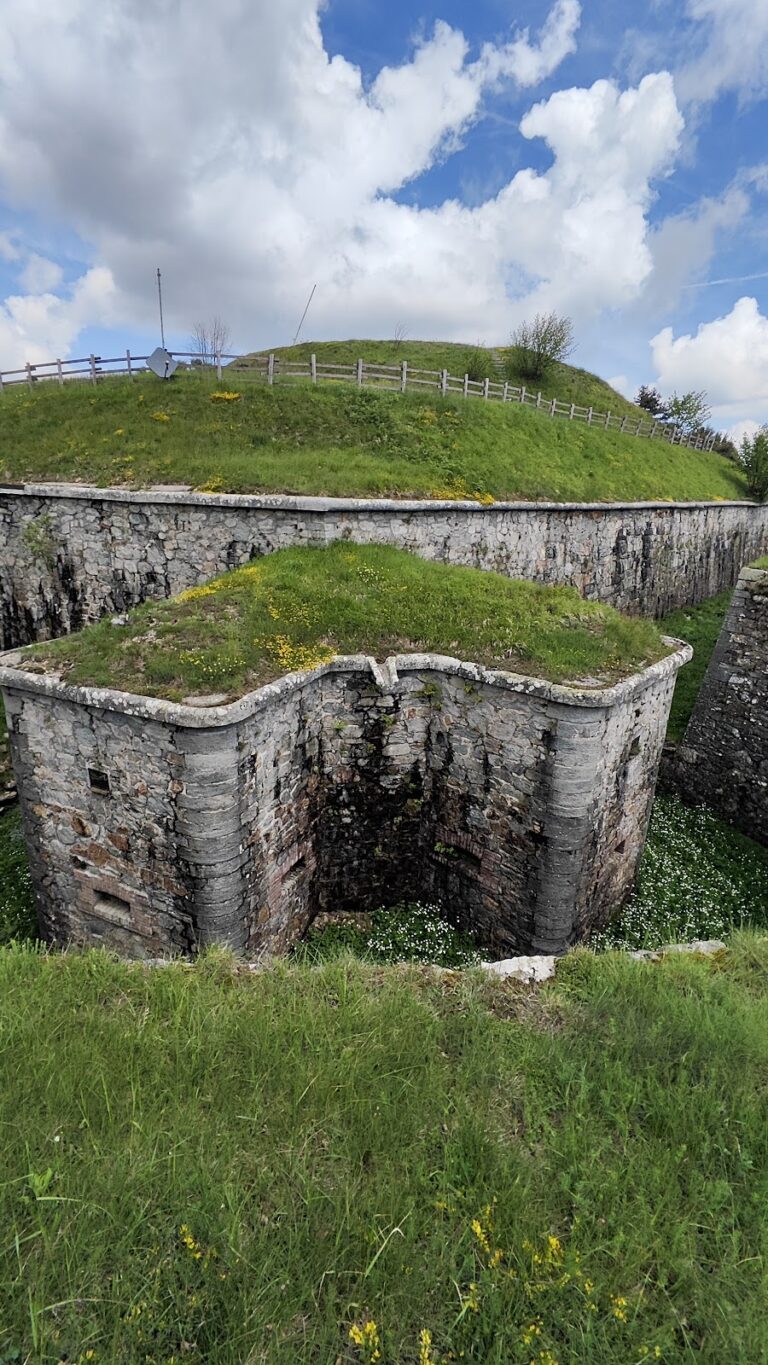
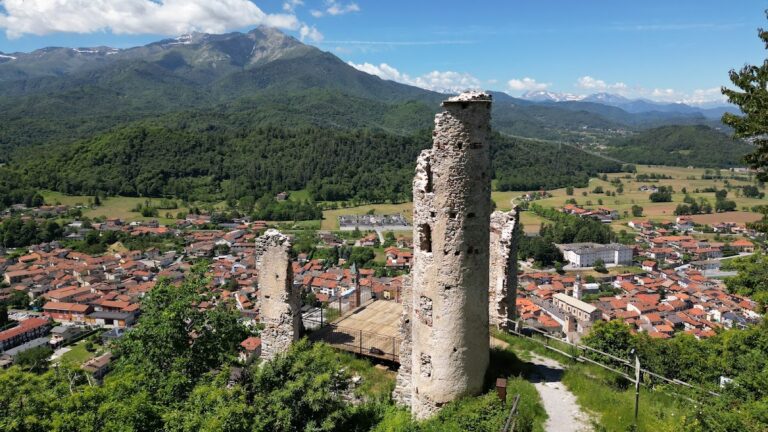
The complex stands in Val Casotto, in the municipality of Garessio between Pamparato and Garessio. It developed near the earlier group of eight hermit dwellings and includes the former monastery, its church, cloister, bell tower, chapel, kitchens, and several rooms. The cloister was associated with the living quarters of the hermits and monks.
Monastic buildings and archaeological remains
Church and cloister
The former monastic complex is organized around buildings associated with Carthusian communal and eremitical life. Its church, cloister, bell tower, chapel, kitchens, and rooms survive as parts of the later property. The cloister was connected with the monks’ living quarters, reflecting the arrangement of a charterhouse, a Carthusian monastery in which communal religious life was combined with residence in separate cells or small dwellings.
Fifteenth-century charterhouse
Excavated foundations and possible cellars belong to a fifteenth-century phase of the charterhouse. Archaeological work also exposed a cemetery for monks, placing burial space among the surviving physical evidence of the earlier monastic complex.
Hunting residence and displaced furnishings
Castle-like residence
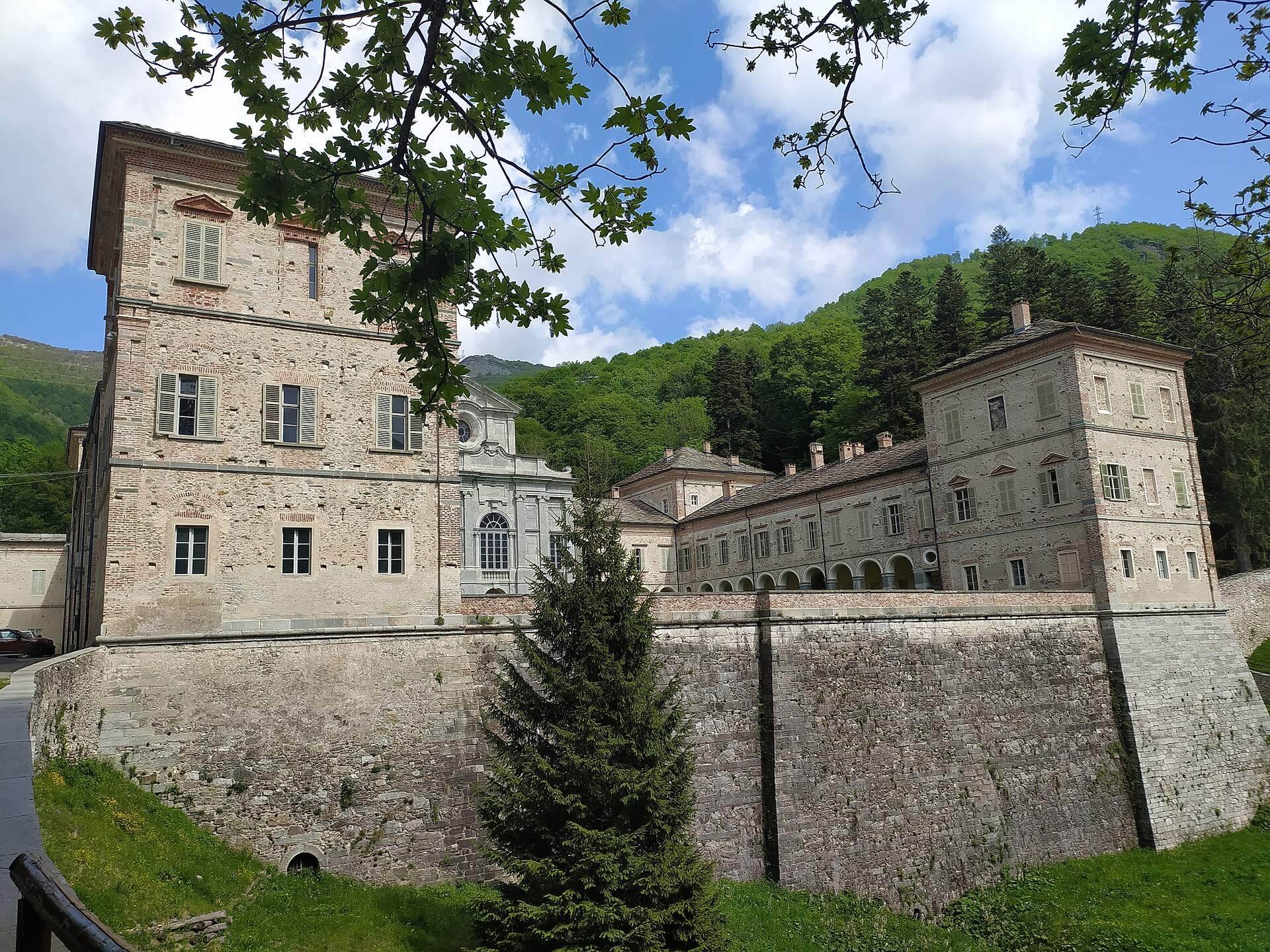
After the monastery passed to the House of Savoy, the property was adapted as a castle-like hunting residence. The number 1754 is carved in Roman numerals on the façade, marking the year when the Italian architect Bernardo Antonio Vittone renovated the castle.
Former monastic furnishings
A Renaissance-style wooden choir that formerly belonged to Casotto is now in the Cathedral of Saint Donatus in Mondovi. A Baroque altar dedicated to Saint Eligius is now in the Collegiate Church of Saint Martin in Ormea.