Castle of Montaigne: Renaissance Philosopher’s Residence in France


Site at a Glance
- Rating
- 4.3
- Popularity
- Low
- Country
- France
- Primary era
- Early Modern
- External website
- Open
- Eras represented
- Early Modern, Modern
- Civilizations
- French
- Site type
- Domestic
- Remains
- Castle
On this page9 sections
History
Castle of Montaigne is a fourteenth-century fortified residence in Saint-Michel-de-Montaigne, France, at the boundary of Périgord and the Bordelais. Built as a medieval residence and later transformed, it became the family home of Michel de Montaigne, the sixteenth-century French philosopher, magistrate, and writer whose Essays became a foundational work of Renaissance humanism.
The Eyquem Family Residence
In 1477, Ramon Eyquem, a Bordeaux merchant and Michel de Montaigne’s great-grandfather, acquired the residence. The purchase brought him the hereditary lordship of Montaigne, which passed to his descendants. Michel’s father, Pierre Eyquem, subsequently settled at the castle with his family.
Montaigne spent his childhood there before continuing his education at the College of Guyenne in Bordeaux. In 1554, Pierre Eyquem informed his suzerain, the Archbishop of Bordeaux, that he had built a castle and planned to fortify it and equip it for defense. This statement reflects the residence’s continuing connection with the responsibilities of a fortified lordship.
Montaigne at the Castle
Montaigne withdrew to the castle in 1571 and worked there on his Essays until his death. In 1577, Henry of Bourbon, then King of Navarre, appointed him a gentleman of his chamber, a member of the royal household holding a position of courtly honor. In 1584, Montaigne received Henry at the castle, together with Condé, Rohan, and Turenne. Henry became King Henry IV of France in 1589 and was a major political figure during the French Wars of Religion, a period of conflict between Catholics and Protestants in France.
Montaigne died in a room at the castle on 13 September 1592. His widow, Françoise de La Chassaigne, continued to live there and hosted Marie de Gournay for fifteen months. Marie had received an annotated copy of the Essays and had been asked to supervise their publication.
Fire, Reconstruction, and Protection
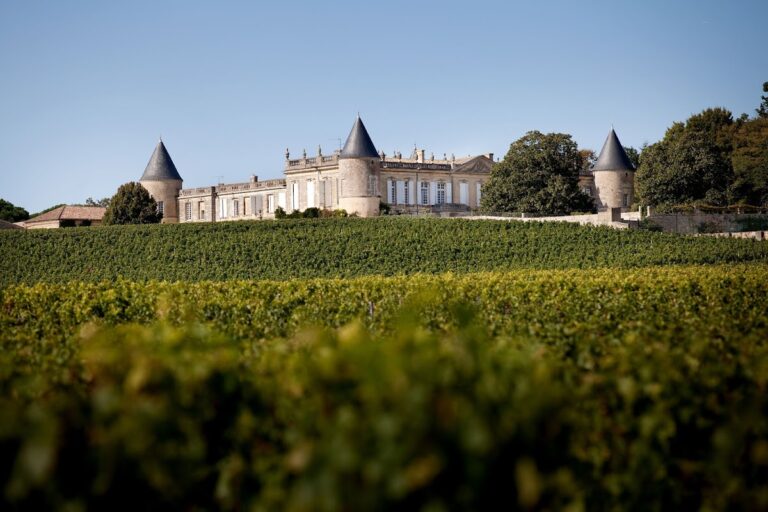
Pierre Magne, a minister under Napoleon III, purchased the castle in 1860. He retired there after the political crisis of 16 May 1877 and died at the residence on 17 February 1879. A major fire in January 1885 devastated the castle. The residence was then rebuilt in the neo-Renaissance style, which reinterpreted Renaissance architectural forms through nineteenth-century design. Only the library tower complex survived from the residence associated with Montaigne.
The library tower was designated a French historic monument in 1952. Protection was extended in 2009 to the rest of the castle, its courtyard, enclosing buildings, former mill, parts of the park, walls, terraces, garden gate, and path toward the village. The site also bears the Maisons des Illustres heritage label, recognizing places that preserve collections associated with notable figures. Since 2002, a project has pursued the digital reconstruction of the castle. In 2015, the Archéovision laboratory of Bordeaux Montaigne University made a digital version of the tower library available online through the “Montaigne at Work” project.
Remains
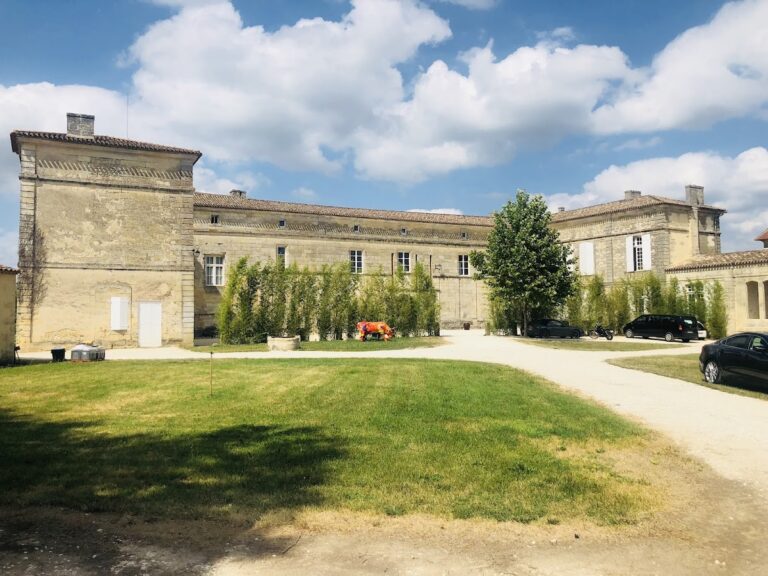
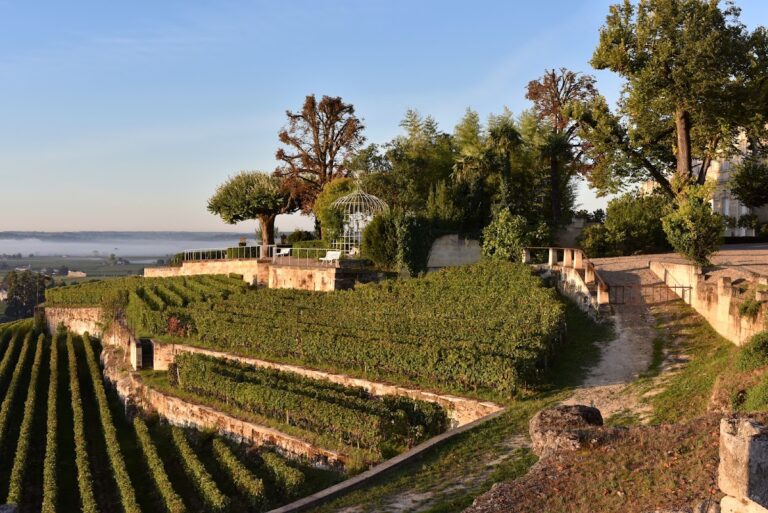
The castle has a neo-Renaissance appearance and is entered through a gateway leading into a square courtyard enclosed by ramparts. Within the surrounding park are walls, terraces, a garden gate, a former mill, and a path toward the village. The surviving library-tower complex consists of a large round tower, a smaller round tower containing a spiral staircase, and a small square residential wing.
The Library-Tower Complex
Chapel and Chamber
The ground floor of the tower contains Montaigne’s private chapel, where he baptized his children. His chamber occupies the first floor. A small trapdoor linked the room with a hidden staircase, allowing him to hear Mass without leaving the chamber.
Cabinet and Painted Decoration
Beside the chamber, the square tower contains a cabinet with traces of painted decoration. The room is associated with surviving fragments depicting Roman Charity and with a fresco of a bird pecking grapes, a reference to the ancient painter Zeuxis.
Library
The library occupies the third floor of the round tower. Montaigne described it as a circular room measuring sixteen paces across inside, with three windows that provided distant views. Five-tiered bookstands followed the curved walls, leaving floor space only for his table and chair.
Fifty-six maxims are painted on the library’s oak ceiling beams. They include Latin sentences, proverbs, and reflections connected with Montaigne’s reading and thought, arranged as a path to be read in an “S” shape. The most legible inscriptions were restored during the 1940s, while the others are original and were written by Montaigne’s secretary. Above the secretary’s worktable, one beam bears the inscription “Nothing human is foreign to me.” The tower also contains a hiding place that Montaigne used to avoid unwanted visitors.