Castle of Monfragüe: A Strategic Medieval Fortress in Spain


Site at a Glance
- Rating
- 4.7
- Popularity
- Medium
- Country
- Spain
- Primary era
- Medieval
- External website
- Open
- Eras represented
- Medieval
- Civilizations
- Crown of Castile, Umayyad
- Site type
- Military
- Remains
- Castle
On this page8 sections
History
Castle of Monfragüe is a consolidated medieval ruin in Spain, within the municipality of Torrejón el Rubio in Cáceres Province, built by Arab forces in 811 over an earlier fortification. Its elevated position above the rugged terrain beside the Tajo River made the hill useful for defense and observation, and the stronghold later became a Spanish Asset of Cultural Interest.
Earlier Fortifications and Arab Rule
The hill was first occupied by a fortification used primarily by the Celts in their defense against the Romans. The Romans later used the position as a strategic lookout. Arab forces conquered the area in 713 and called it Al-Mofrag, meaning “the abyss.” In 811, they built the castle over the earlier defensive works.
Military orders, Christians, Arabs, Romans, and Celts all used the hill at different stages because of its commanding position above the Tajo and the surrounding irregular landscape. The castle functioned as both a defensive stronghold and an observation post.
Christian Reconquest and Later Reconstruction
Christian control was established between 1169 and 1180. The campaign began under Geraldo Sempavor, a Portuguese military leader, and ended under Alfonso VIII of Castile, the medieval king who ruled Castile from 1158 to 1214. The castle was subsequently reconstructed during the twelfth and fifteenth centuries.
A later hermitage beside one of the towers became associated with the Virgin of Monfragüe. Crusader knights of the Order of Monte Gaudio, a medieval military-religious order linked to the Crusades, brought the Byzantine carving from Jerusalem in the twelfth century. The knights founded the Order of Monsfrag, another medieval military-religious order.
The castle is now preserved as a consolidated ruin and has been described as a candidate for inclusion on the UNESCO World Heritage List. Its surviving fabric reflects repeated military use and rebuilding across several historical periods.
Remains
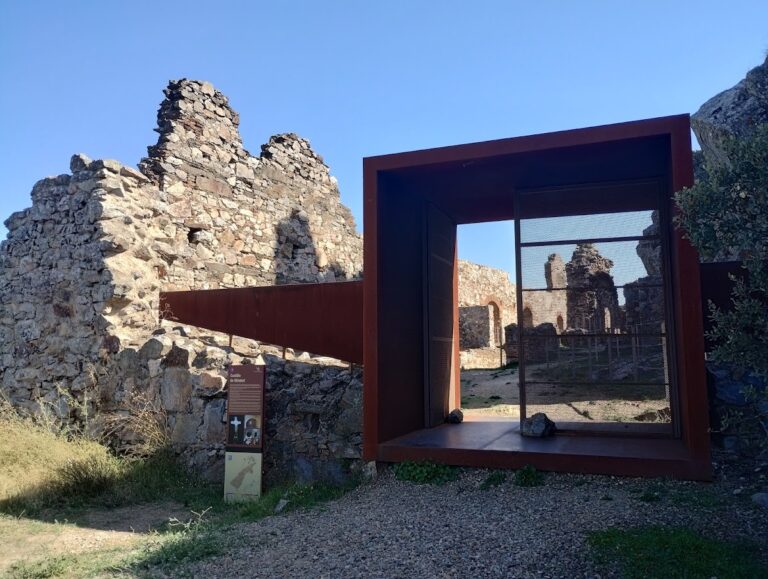
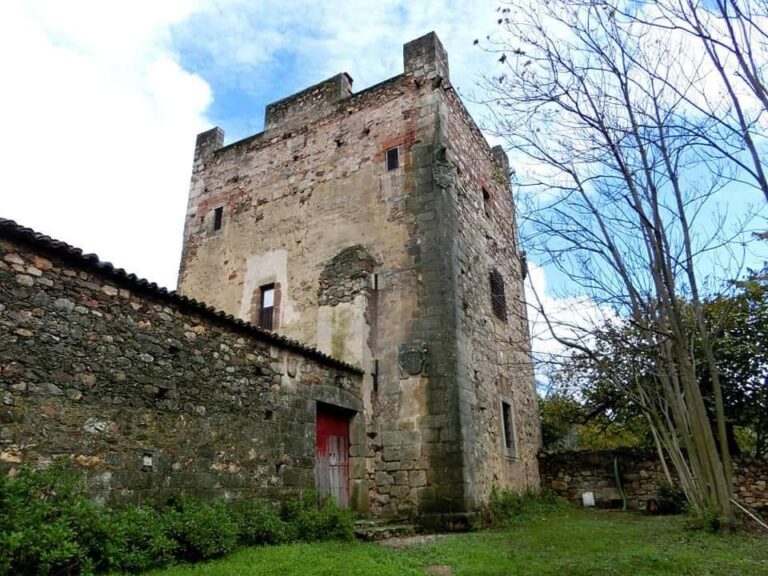
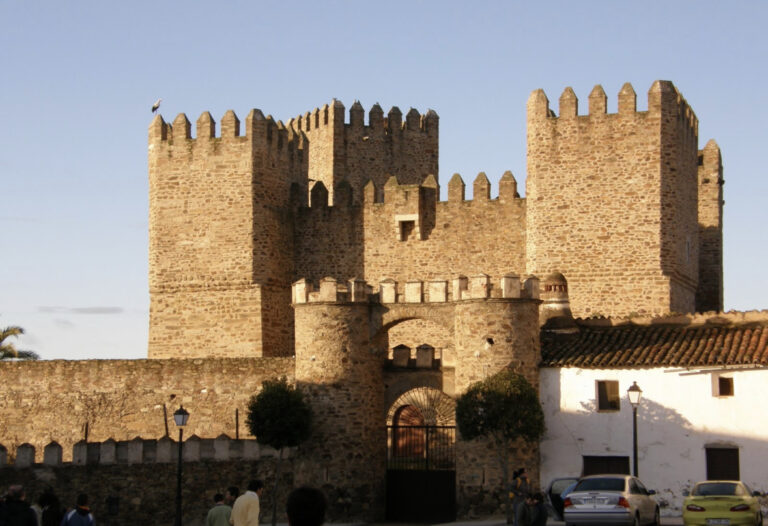
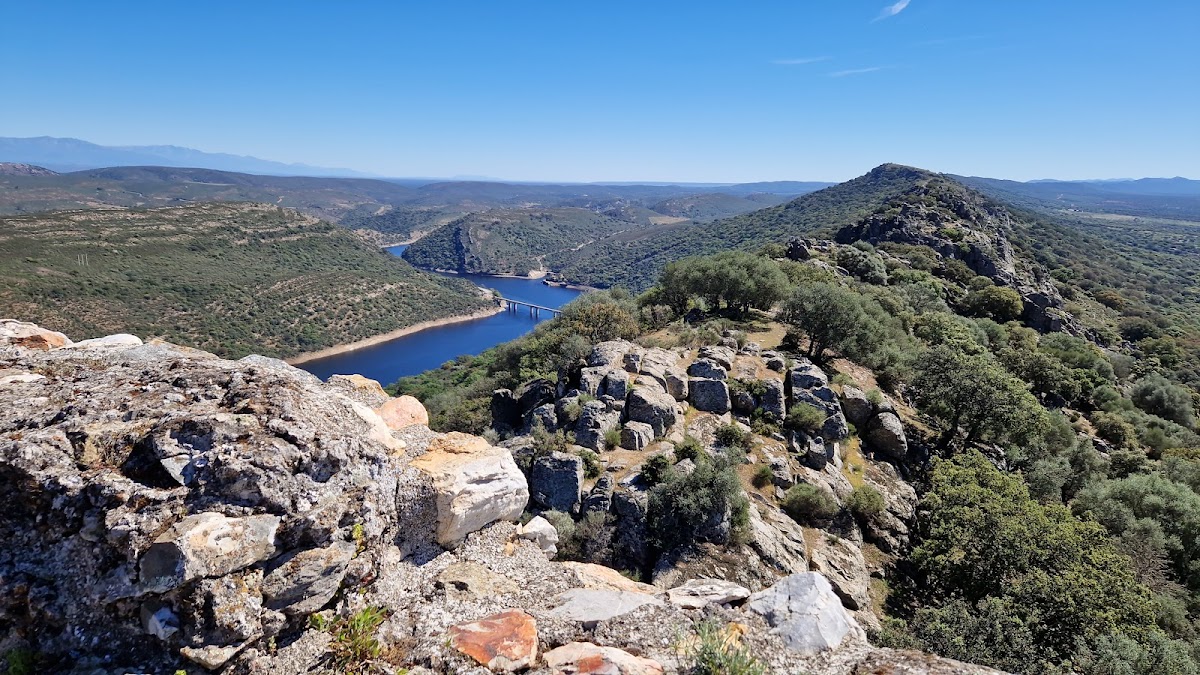
The castle occupies a steeply elevated hill beside the Tajo River. Its surviving layout includes parts of the curtain wall, a barbican, an Arab cistern, two Christian towers, and a later hermitage closely attached to one of the towers. From the keep, the principal fortified tower, views extend across much of Monfragüe National Park and over many inlets formed by the Tajo’s impounded waters in the Alcántara reservoir.
Defensive Structures
Walls, Barbican, and Cistern
Sections of the curtain wall survive with a barbican, a fortified outer defense protecting an entrance or wall. An Arab cistern, a reservoir for collecting and storing water, is also preserved within the complex. Together, these remains represent the castle’s defensive enclosure and water-supply arrangements.
Christian Towers
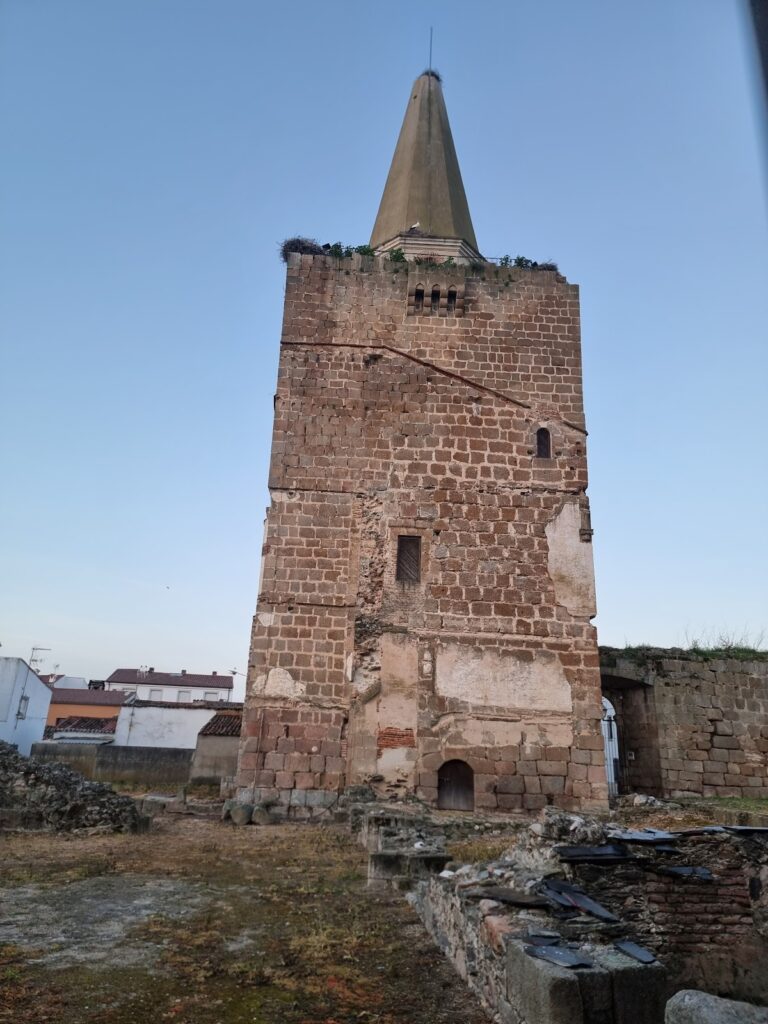
The best-preserved tower is pentagonal. It was erected in the fifteenth century, later reconstructed, and remains accessible. A second tower is cylindrical and has also been rehabilitated. Both belong to the Christian phase of the castle’s surviving architecture.
Hermitage and Religious Sculpture
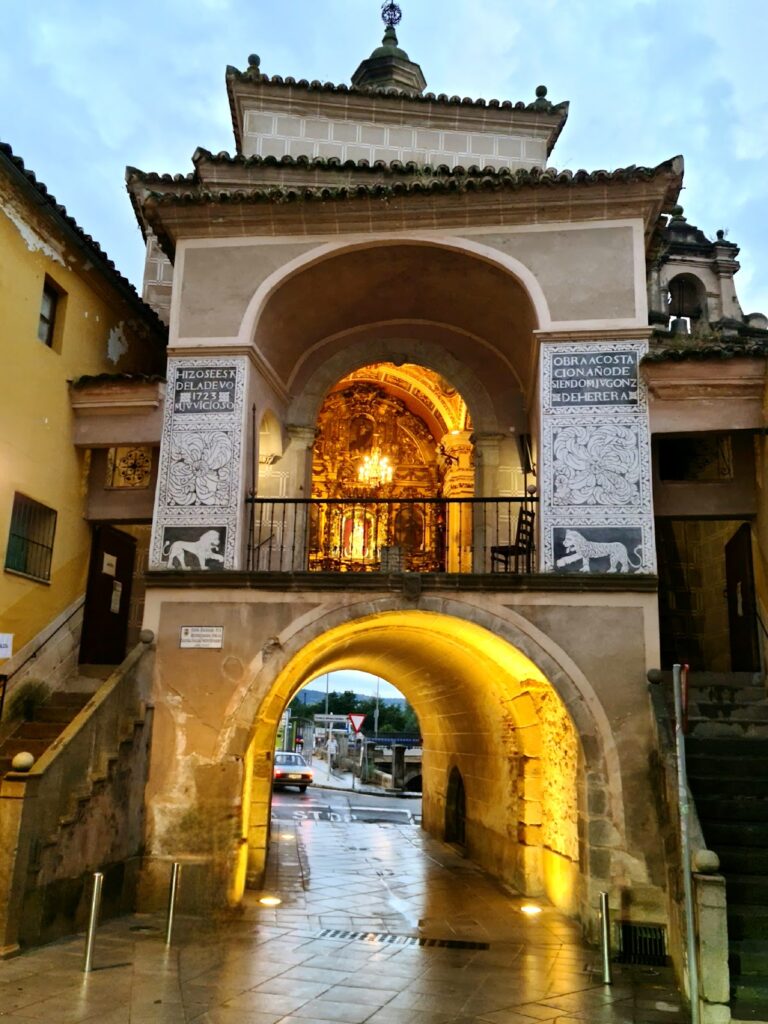
A hermitage of later construction stands almost attached to one of the castle towers. It houses the Virgin of Monfragüe, a Byzantine sculpture associated with the castle complex. Byzantine art belongs to the artistic tradition of the Byzantine Empire and its eastern Christian cultural sphere.