Rocca Albornoziana: Papal Fortress and Residence above Spoleto
Site at a Glance
- Rating
- 4.5
- Popularity
- Medium
- Country
- Italy
- Primary era
- Medieval
- External website
- Open
- Eras represented
- Medieval, Early Modern
- Civilizations
- Papal States
- Site type
- Military
- Remains
- Castle
On this page7 sections
History
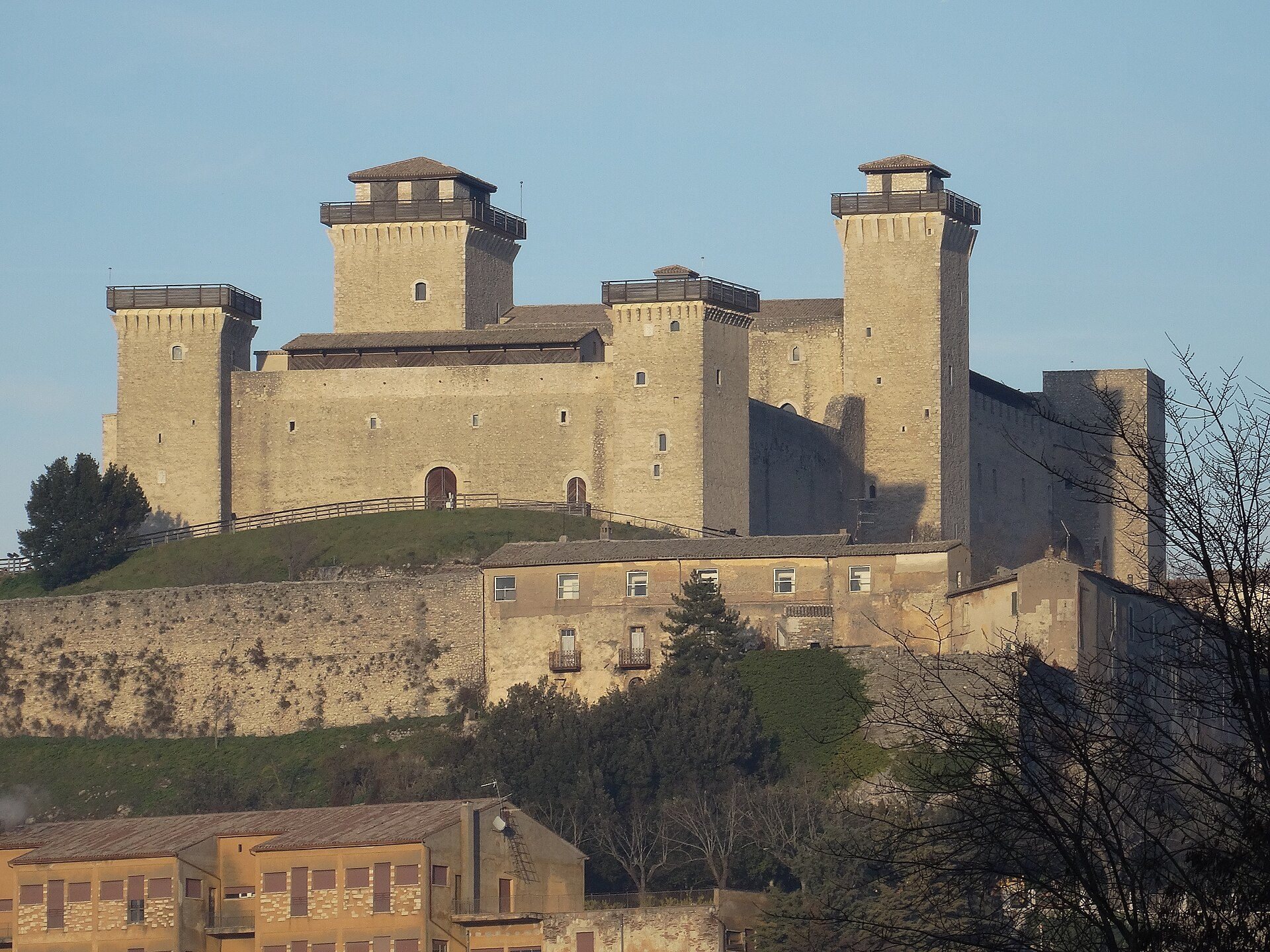
Rocca Albornoziana is a medieval fortress in Italy on Sant’Elia Hill above Spoleto, built between 1363 and 1367 under papal authority during the wider period of 1359 to 1370. Rising 453 metres above the city, it was commissioned by Pope Innocent VI to reinforce military control and make papal rule more visible in central Italy before the papacy returned to Rome after about seventy years based in Avignon. Construction was organized by Egidio Albornoz, a Spanish cardinal and papal representative, while the design was entrusted to Matteo Gattaponi, an architect from Gubbio in Umbria.
A Fortress and Papal Residence
The Rocca formed the principal stronghold of a broader defensive system. Its military purpose was combined with that of a comfortable and imposing residence, and it became the home of Spoleto’s governors. The fortress also received distinguished guests. Pope Boniface IX stayed there in 1392, Pope Nicholas V used it as a residence in 1449 during the plague in Rome, and Lucrezia Borgia visited on several occasions.
Decline and New Uses
After the sixteenth century, the fortress gradually lost its administrative importance. From 1764, Spoleto’s governors preferred to live inside the city walls. Between 1817 and 1982, the Rocca served as a prison. Its closure was followed by a period of abandonment, before an extensive restoration campaign began in the 2000s.
After the restoration, the fortress became the permanent home of the National Museum of the Duchy of Spoleto in 2007. It also houses a diagnostic laboratory for cultural heritage and the European School for the Conservation and Restoration of Ancient Books. The Italian state owns the Rocca, which is recognized as Italian national heritage.
Remains
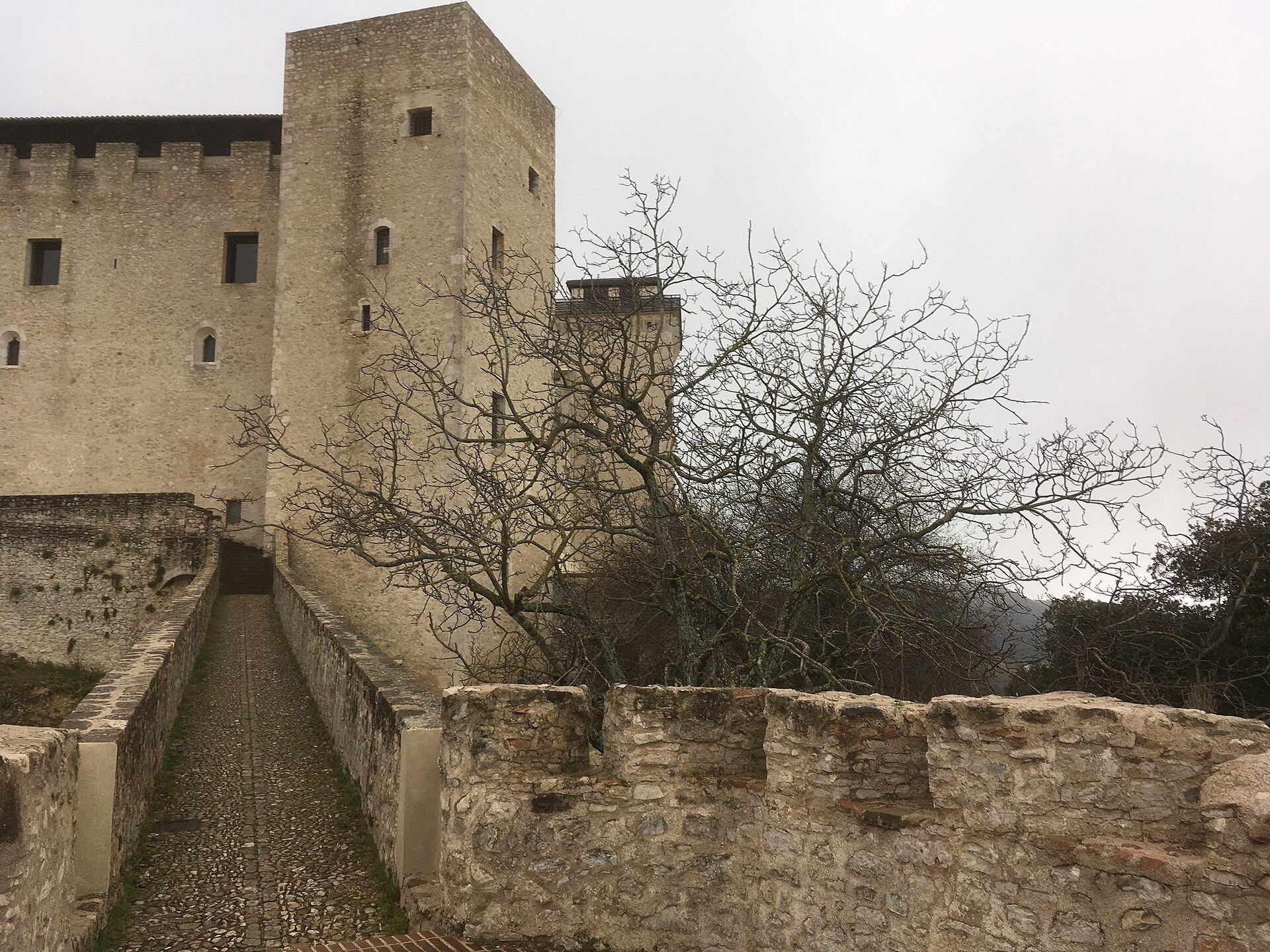
Rocca Albornoziana has a rectangular plan approximately 133 metres long and 33 metres wide. Built in medieval style with ashlar masonry, it is enclosed by six substantial towers, four at the corners and two linked to the central dividing structure. Inside, a central body separates two courtyards with different functions, preserving the distinction between the fortress’s military and administrative uses.
The Courtyards and Connecting Passage
The Cortile delle Armi served the troops, while the Cortile d’Onore was bordered by buildings for the governors and administrative offices. The latter courtyard is enclosed by a double loggia attributed by Vasari to Bernardo Rossellino, a fifteenth-century architect and sculptor associated with Renaissance architecture. A hexagonal well stands at its centre above a large cistern designed to collect rainwater.
A passage connects the two courtyards. Its vault was frescoed between 1572 and 1575 with the coat of arms of Pope Gregory XIII. The side walls depict cities of the Papal States, territories governed by the pope as a temporal ruler, including Porto d’Anzio, Perugia, Orvieto, Ripatransone, Spoleto, and a sixth city.
The Ceremonial Rooms
A ceremonial staircase rises to the piano nobile, the principal upper floor of a historic building. A sixteenth-century stone doorway opens onto the Salone d’Onore, the fortress’s largest room. Designed for banquets and major ceremonies, the hall retains a vaulted roof and painted decoration that were never completed. Fifteen rooms now contain the National Museum of the Duchy of Spoleto, while the Salone d’Onore continues to serve for ceremonies and banquets.
The Main Tower and Camera Pinta
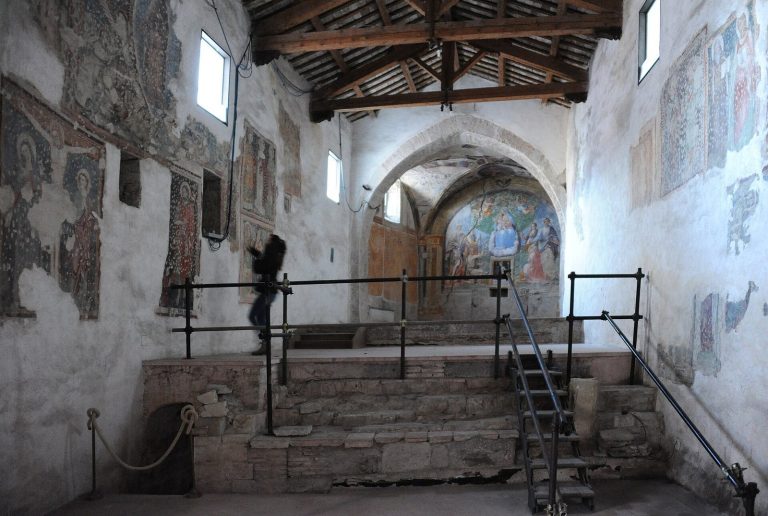
The Salone d’Onore leads to the Camera Pinta, a chamber within the main tower that served as the castellan’s lodging. A castellan was the official responsible for governing and defending a castle. The chamber preserves two fresco cycles, one dating from the final decade of the fourteenth century and the other from the first decades of the fifteenth century.