Csővár Castle: A Historic Hungarian Fortress and Residence
Visitor Information
Google Rating: 4.7
Popularity: Low
Country: Hungary
Civilization: Early Modern, Medieval European
Site type: Military
Remains: Castle
History
The Castle of Csővár is located near the village of Csővár in Hungary. It was originally established by the Hungarian kingdom, with its earliest form dating back to the mid-13th century, likely during the reign of King Béla IV. Evidence suggests that the wealthy Csői and Nézsai noble families, who owned estates in the region, were responsible for constructing the initial smaller fortress, as indicated by silver coins discovered on the site.
During the early 14th century, the castle suffered destruction following a siege by Máté Csák, a powerful feudal lord of the time. The fortress lay in ruins until it was rebuilt roughly a century later, though records do not clearly identify its owners during this rebuilding phase. In 1423, King Sigismund planned to grant the castle to János Garai, a prominent noble; however, this transfer was ultimately prevented by the king’s influential adviser, András Chapy.
In 1444, as the fortunes of the original noble families declined, the impoverished Csői and Nézsai clans allied themselves with the Hussite forces led by the military commander Giskra. Together, they captured the castle, which subsequently became infamous as a refuge for bandits who launched raids on surrounding villages. By 1470, Csői Miklós lost his estates after committing fratricide and engaging in disorderly behavior. The castle remained in the hands of the Nézsai family until 1474, when, following the deaths of the last male heirs, ownership reverted to the royal treasury.
Under King Matthias Corvinus, the castle entered a new phase. Matthias initially pawned the property to György Parlaghy before transferring it to his son, Corvin János. After King Matthias’s death, János retained possession for a period. Later, Ráskay Balázs, who held a high-ranking position in Matthias’s court, acquired the castle. During Ráskay’s tenure and the subsequent decades, substantial renovations transformed the site from a medieval fortress into a Renaissance-style residential castle.
The military significance of the castle increased dramatically after the fall of Buda in 1541, prompting enhancements to its defenses. Strengthened walls, an outer bailey (an enclosed courtyard typically used for additional defense), and a large circular tower known as a rondel, measuring about 20 meters in diameter, were constructed. The rondel was specifically designed to mount artillery to defend the castle against attacks.
In 1551, a small Ottoman force captured Csővár, and it remained under Ottoman control for several decades. After the Ottoman withdrawal, the castle was returned to the descendants of the Ráskay family. Subsequently, ownership transferred through marriage to the Károlyi family. Around 1730, the site was exchanged to the Prónay family, who maintained possession until the mid-20th century. During the 1730s, portions of the castle were dismantled, and stones from the ruins were repurposed to build the Prónay mansion in the nearby town of Acsa. The Prónay family also inserted Gothic-style windows into the former chapel walls of the castle.
Scholarly attention to Csővár began in the 18th and 19th centuries, including detailed drawings and descriptions by Lajos György Arányi in 1875. Later, between 1954 and 1961, restoration and stabilization efforts led by Lajos Jakus focused on shoring up a collapsing tower, clearing vegetation, and uncovering a cistern. Despite these undertakings, no extensive archaeological excavation has yet been conducted to fully explore the site’s history.
Remains
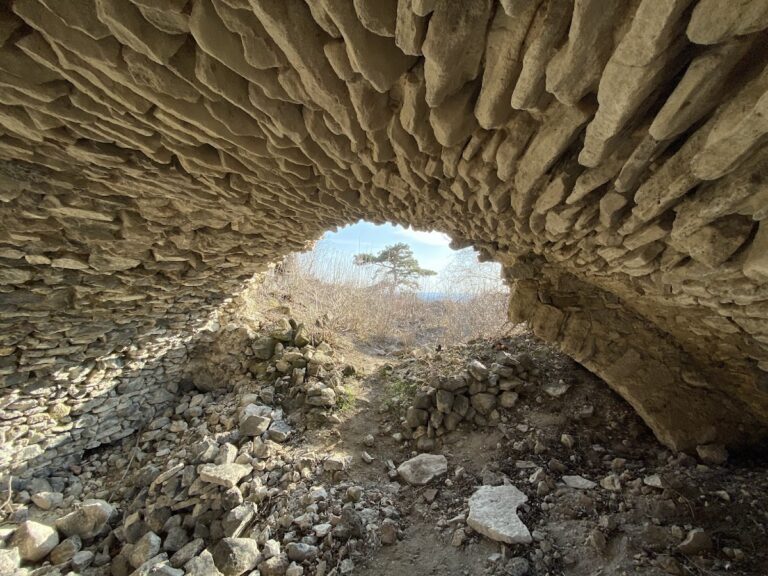
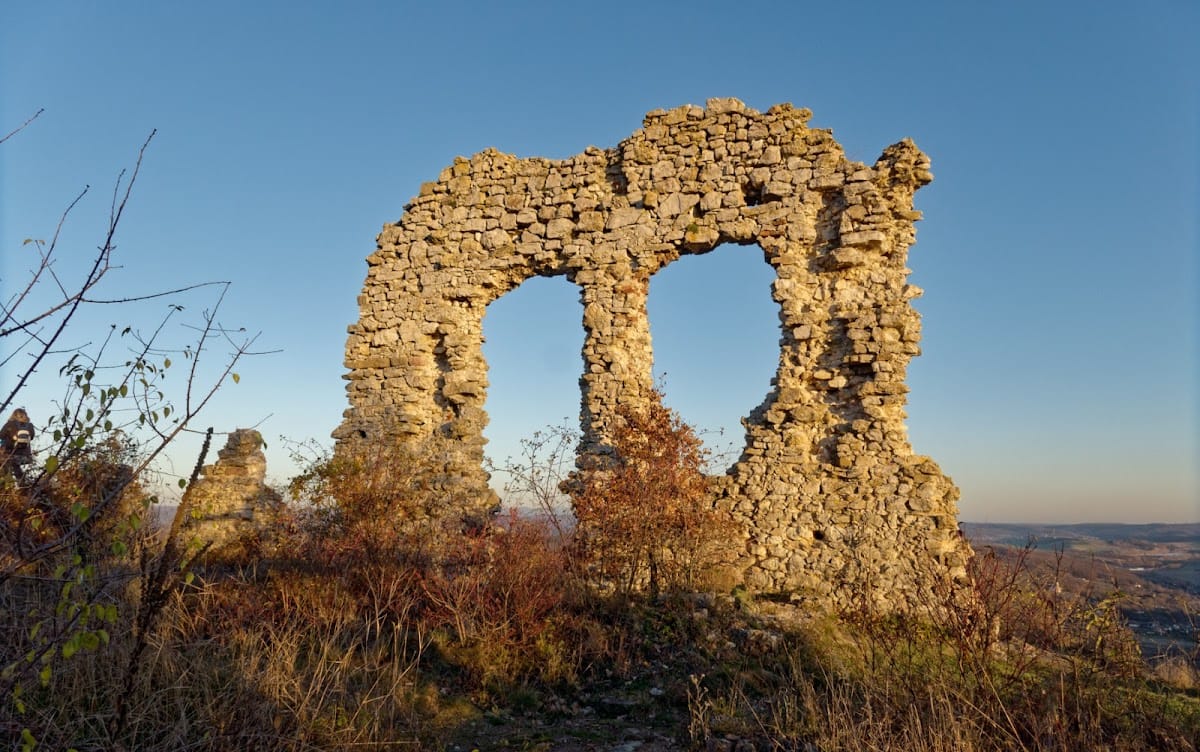
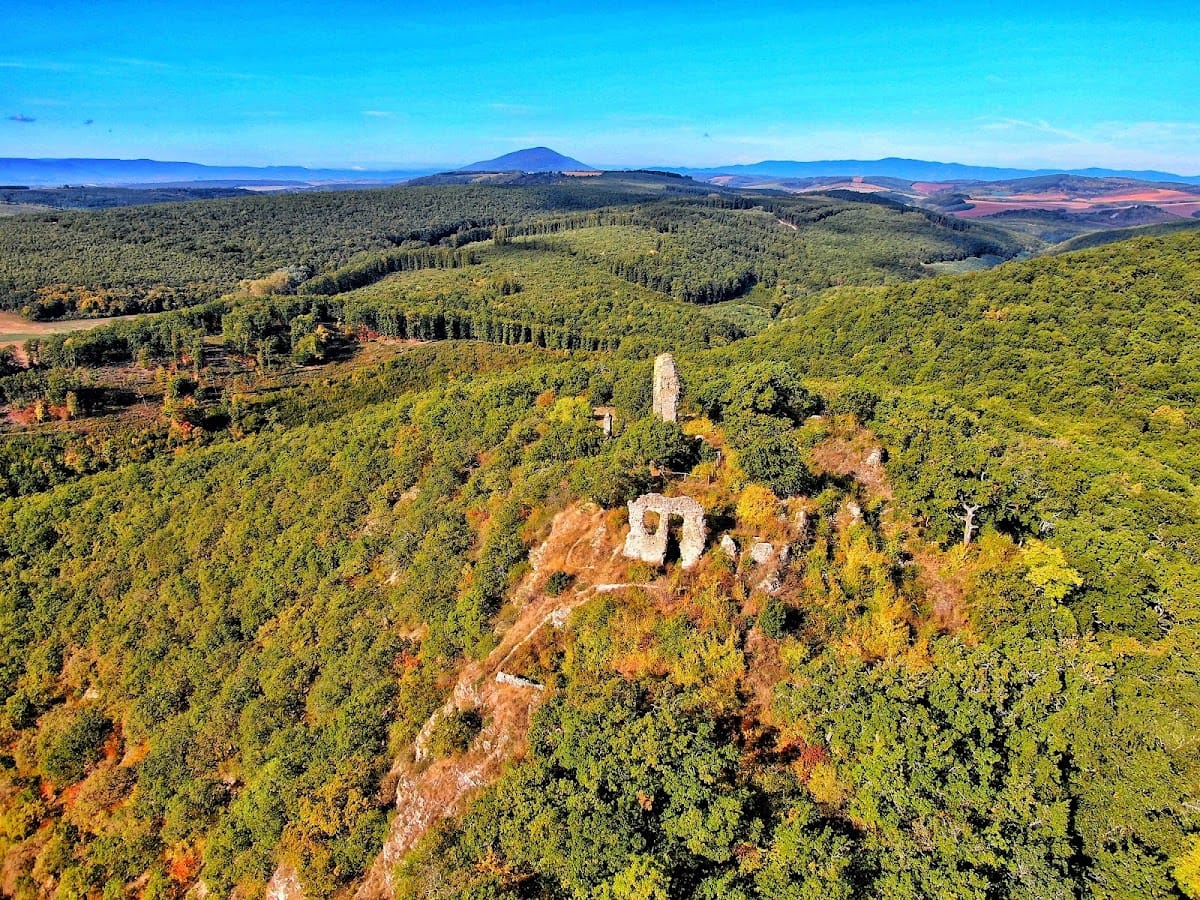
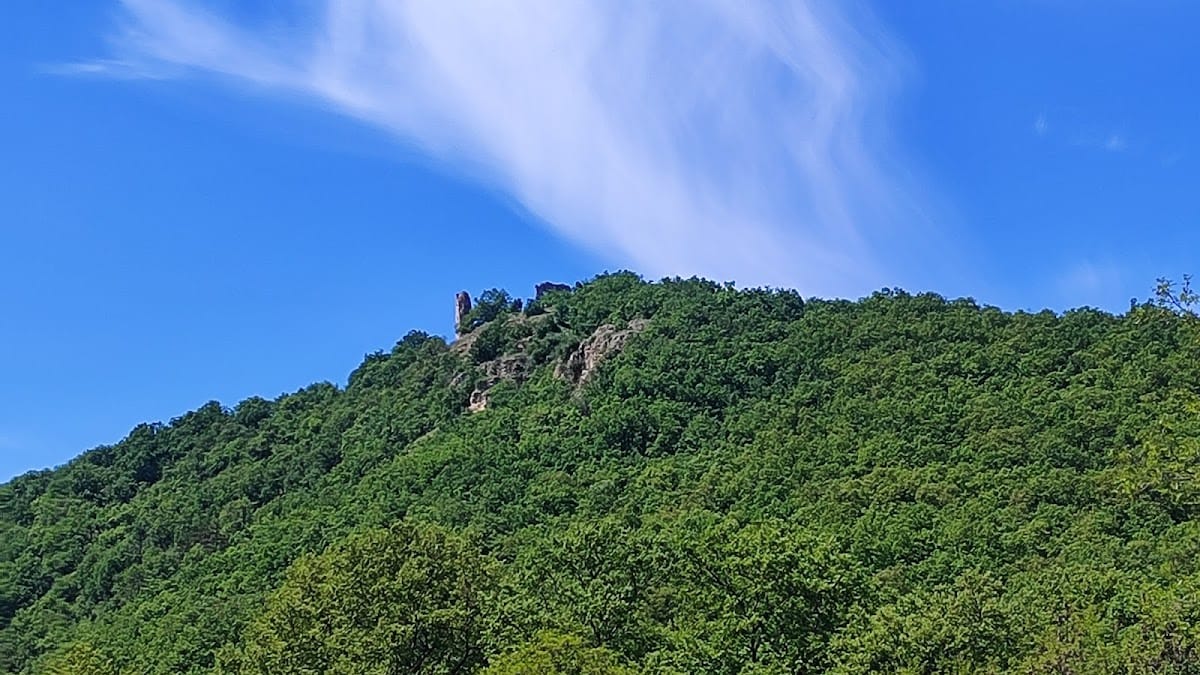
The ruins of Csővár occupy a rocky hill approximately 20 kilometers east of Vác, accessible by a hiking path that ascends about 125 meters. The original medieval fortress, initially a smaller stronghold, evolved over time into a Renaissance-style residence through significant rebuilding in the late 15th and early 16th centuries. The layout reflects this transformation, combining defensive features with elements suited to a residential castle.
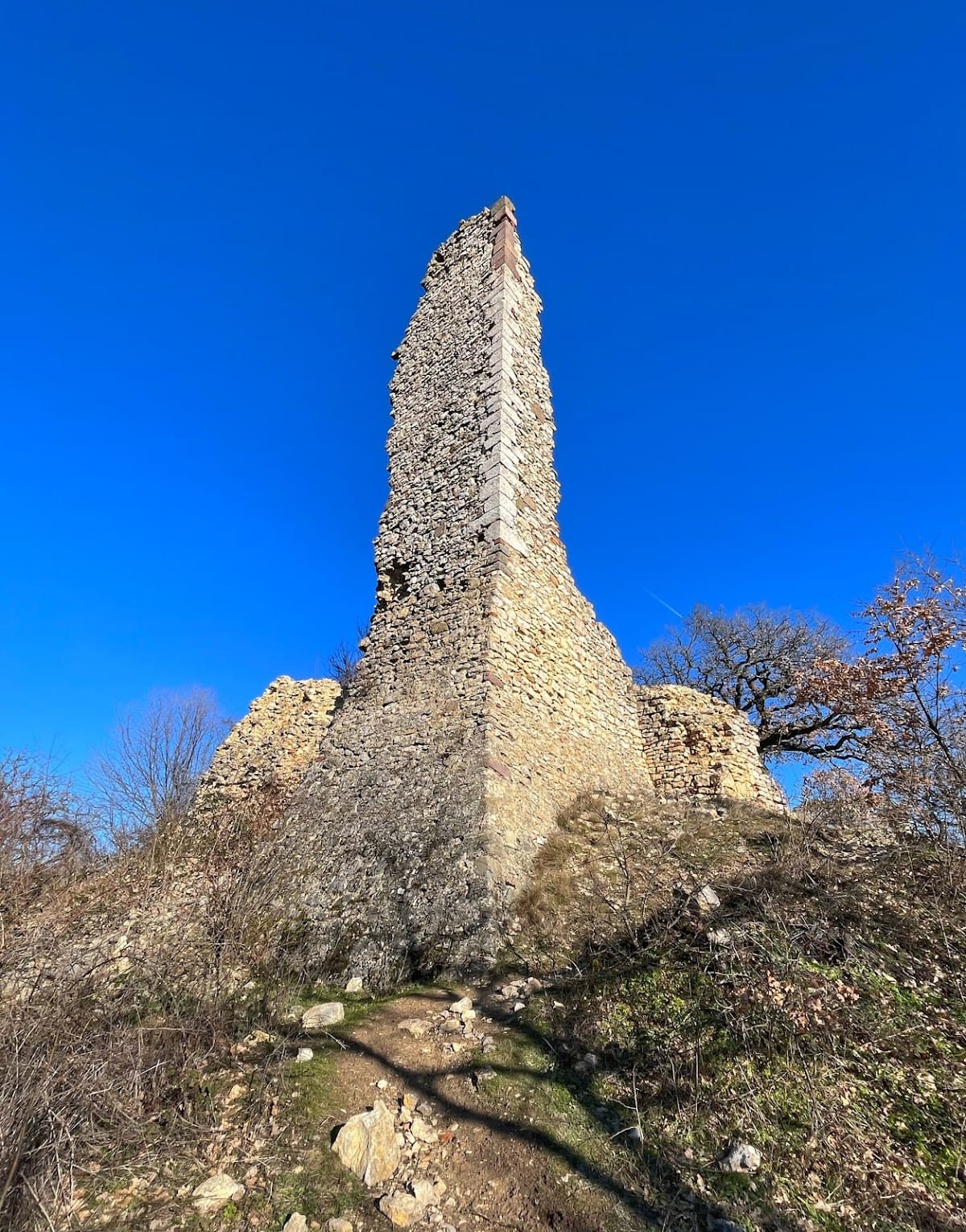
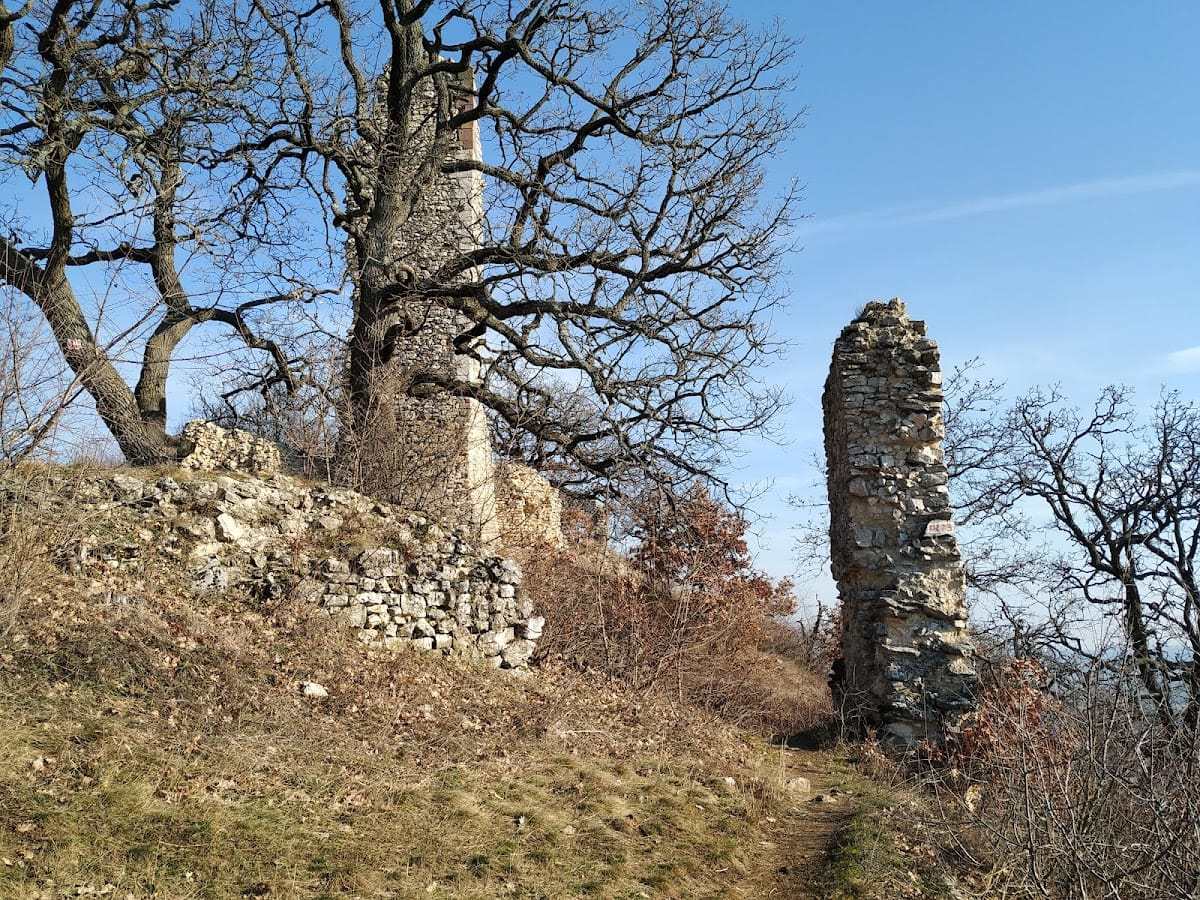
One of the most prominent surviving structures is a tower that was stabilized in the mid-20th century to prevent its collapse. This tower formed part of the castle’s defensive system and now stands as one of the clearest indicators of the site’s historical architecture. During the same period, a cistern—an underground reservoir used for collecting and storing water—was excavated within the castle grounds. For safety reasons, the cistern is fenced off, though it provides valuable insight into the castle’s infrastructure.
During the Renaissance modifications, several defensive enhancements were added, including an outer bailey, which is a fortified courtyard that provided additional protection around the main buildings. The most notable fortification from this period is the rondel, a large, round tower approximately 20 meters in diameter. This structure was specifically designed to accommodate cannons and defend the section of the castle facing the more vulnerable, gently sloping entrance side. Such artillery fortifications were typical of the era when castles had to adapt to the increasing use of gunpowder weapons.
Building stone from the original medieval castle was partially removed and reused in the 18th century by the Prónay family for constructing their mansion in nearby Acsa. This practice altered the castle’s original stonework but also connected the older fortification to the region’s later architectural heritage. Additionally, the Prónay family introduced Gothic-style windows into the walls of the former chapel within the castle complex, blending historic elements with newer architectural details.
The castle grounds today contain narrow, uneven paths that require care due to natural hazards such as pits, collapsed sections, and steep cliffs adjacent to the site. These conditions limit extensive exploration but underscore the rugged defensive position chosen for the castle. The surviving ruins offer tangible reminders of the castle’s layered history through their varied construction phases and adaptation to changing military and residential functions.
Nearby sites