Castle of Carbonera: A Frontier Fortress in Valencia, Spain
Site at a Glance
- Rating
- 4.3
- Popularity
- Very Low
- Country
- Spain
- Primary era
- Medieval
- Eras represented
- Medieval
- Civilizations
- Umayyad
- Site type
- Military
- Remains
- Castle
On this page6 sections
History
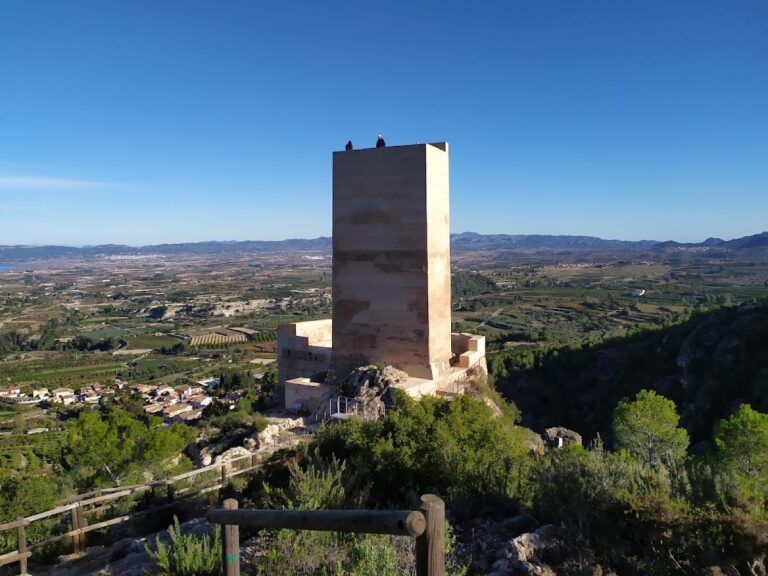
Castle of Carbonera is a ruined fortress in Spain, standing on a hill in the Sierra de Benicadell between Beniatjar and Otos. Its origins are considered Islamic, and it held major importance in the thirteenth century, when castles in the Albaida Valley governed surrounding farmsteads and settlements.
Islamic origins and frontier warfare
Carbonera may have occupied an earlier site because it was already in use during the early Muslim conquest of the Iberian Peninsula. It became an important center for nearby communities and, because of its strategic position, the focus of the area’s fortifications. Its domain included Bélgida, Otos, Beniatjar, Ráfol de Salem or Salem, and other settlements.
The castle stood on the frontier between the taifa states of Valencia and Denia. These were independent or semi-independent Muslim kingdoms that emerged after the fragmentation of the Umayyad caliphate of Córdoba. Its position brought Carbonera into armed conflicts before the Christian reconquest, including campaigns associated with Rodrigo Díaz de Vivar, commonly known as El Cid, between 1091 and 1099, Peter I of Aragon in 1094, and Alfonso I of Aragon in 1126.
Christian conquest and feudal decline
After the Christian occupation, Carbonera retained its military importance. The castle lies on the Camino del Cid, a historical and literary route associated with the campaigns attributed to El Cid. The Cantar de Mio Cid, a major medieval Spanish epic about his career, states that he conquered the castle from the Muslims.
During the thirteenth century, Carbonera became a center of conflict between James I of Aragon, the king associated with the Christian conquest of much of eastern Iberia, and Al-Azraq, a Muslim military leader who opposed that expansion in the Valencian region. The castle maintained a permanent garrison and may have formed part of a defensive system with the fortified sites at Carrícola and Rugat.
In 1288, the Bellvís family received the surrounding lands, and Carbonera became their feudal property. Its decline began after the new lords moved into palaces in settlements on the valley floor. The defenses were allowed to deteriorate beyond ordinary repair, reducing the possibility that rebels or invaders could use them. By 1339, the castle was no longer usable without more than routine repairs. Difficult terrain, which hindered transport, and its distance from economically, militarily, or demographically important population centers further accelerated its deterioration. Castle of Carbonera is recognized as a Bien de Interés Cultural, a protected cultural-interest property.
Remains
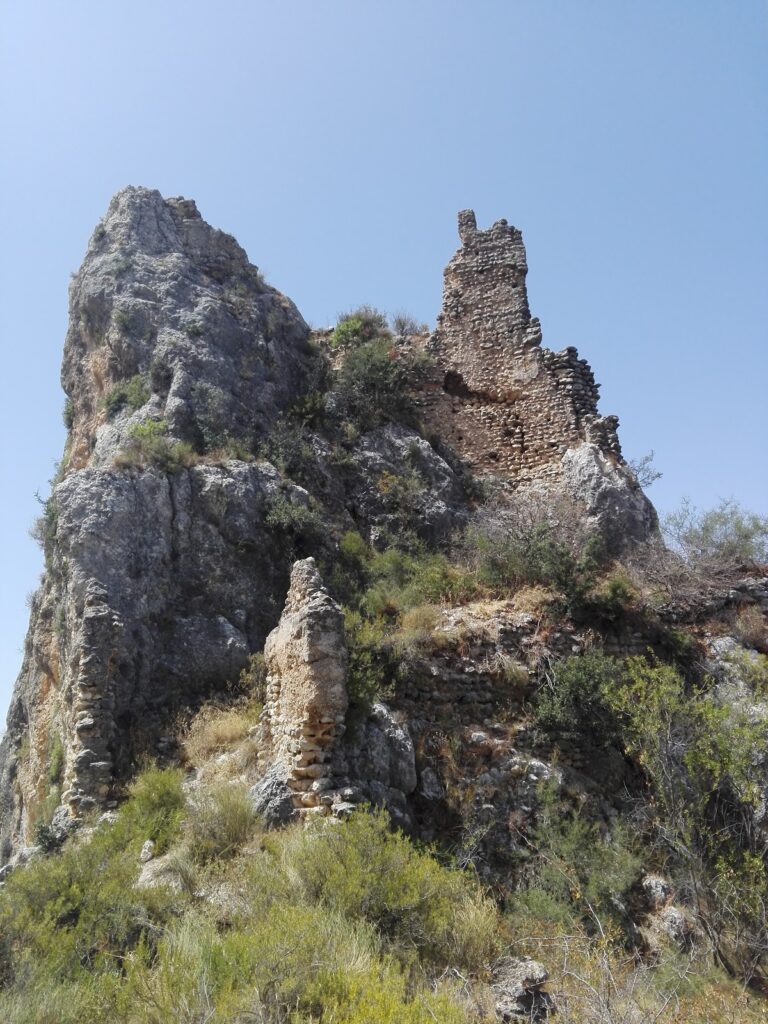
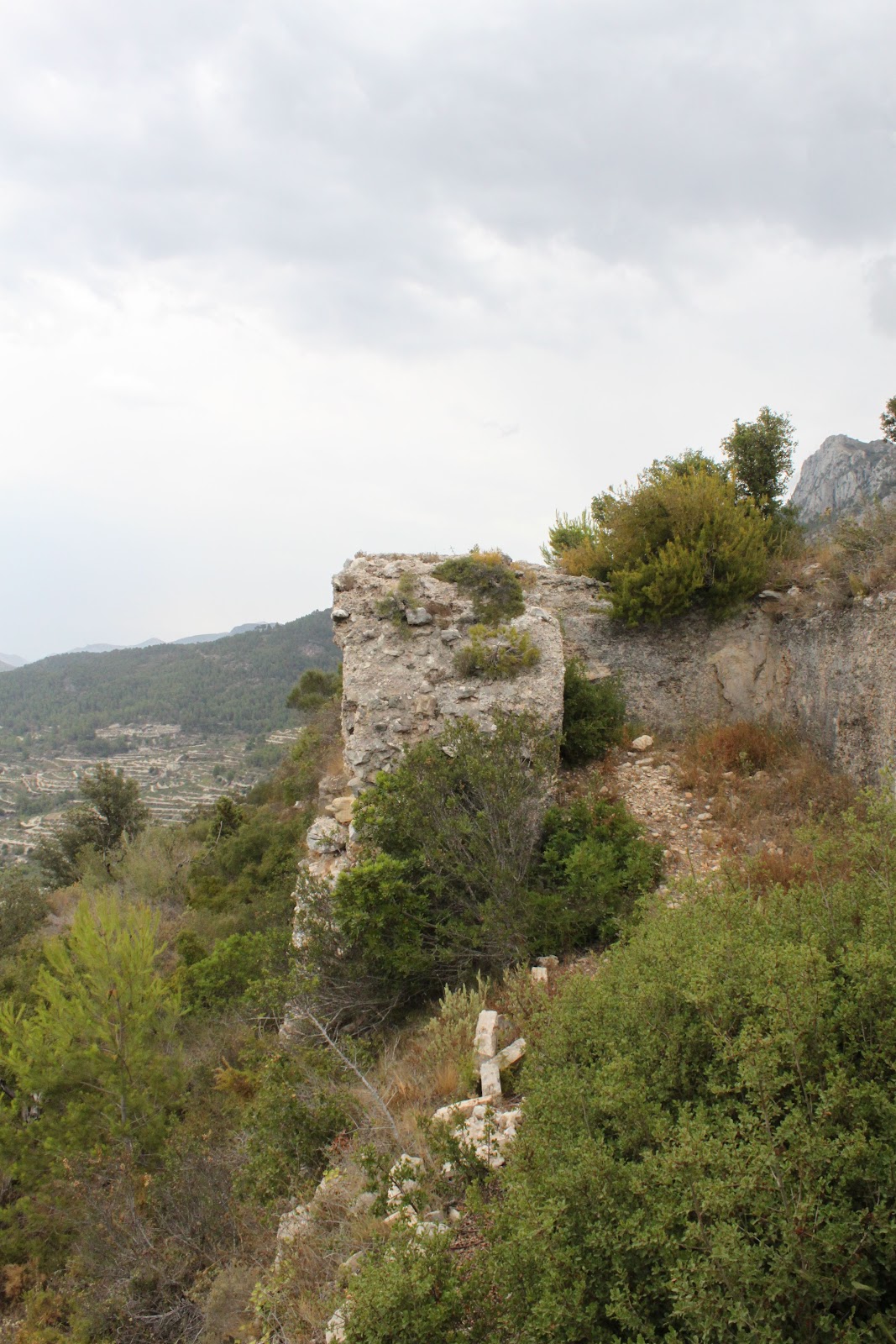
Castle of Carbonera occupies a rocky hill in the Sierra de Benicadell, where its ruined fabric is difficult to distinguish from the surrounding landscape. The fortress was built mainly with rammed earth, made by compacting earth inside forms, and rubble masonry, which uses irregular stones set in a binding material. Its walls extended for almost 300 metres.
Enclosure and defensive works
The enclosure had an elongated, double, polygonal plan. Wall sections alternated with rectangular towers, and the entrance gate faced west. The best-preserved stretches stand on the northern side. Surviving defensive elements include sections of the walls and a tower that served as a buttress.
Central area and refuge enclosure
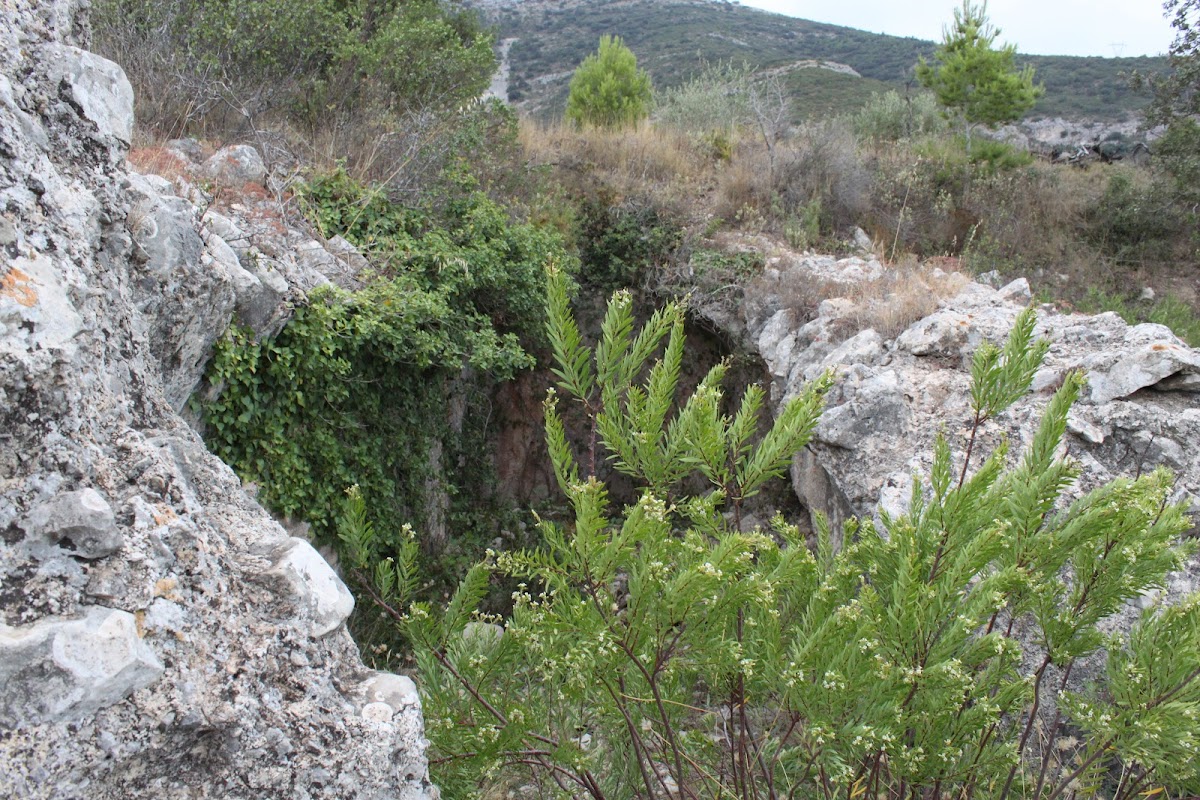
A very large cistern formed part of the fortress. The interior had few buildings outside its central area, a layout consistent with its use as an albacar, a fortified open enclosure used chiefly as a refuge. The surviving walls, buttress tower, and cistern provide the principal physical evidence of the stronghold’s construction and organization.