Château de Longevergne: A Medieval Castle in France
Site at a Glance
- Rating
- 4.9
- Popularity
- Very Low
- Country
- France
- Primary era
- Medieval
- External website
- Open
- Eras represented
- Medieval, Modern
- Civilizations
- French
- Site type
- Domestic
- Remains
- Castle
On this page7 sections
History
Château de Longevergne is a medieval castle in France, at Anglards-de-Salers in the Cantal region of historic Auvergne. Its exact construction date is uncertain, but it was built as a seigneurial residence, a noble household and administrative center. The castle was known as Longuevergne in earlier records and is recorded as existing in 1612.
The Longevergne and Bort families
Marguerite de Longevergne brought the castle into her marriage to Hugues de Bort in 1409. Hugues was the son of Jean, lord of Pierrefitte, and Marguerite de Floyrac, who had served as captain of Claviers Castle. Their sons were Georges and Bertrand.
Georges de Bort became lord of Longevergne and Puechpany. He married Claudine de Belvezer de Beauvoir and made his will in 1499. Their son Géraud de Bort died without children, while their daughter Lucque de Bort became lady and heiress of Longuevergne.
Marriage alliances and later inheritance
Lucque de Bort brought Longevergne into her marriage to Bertrand d’Anglars in 1493. Bertrand, a damoiseau, meaning a nobleman who had not yet attained full knightly status, was lord of Soubrevèze and Vède. He was the son of Jean, lord of Saint-Victour, and Philippine de Lubertès. Their children included Pierre and Jacques d’Anglars, together with Jeanne, Marguerite, and Françoise.
Jeanne d’Anglars, also known as Jeanne de Bort and lady of Longevergne, married Guynot de Montclar in 1515. He was the son of Guillaume, lord of Montbrun, and Marie d’Espinchal. Their descendant Jean de Montclar, lord of Montbrun at Méallet and of Lavergne, married Anne de Miremont in 1555. Their son Guy II, also called Guinot de Montclar, married Renée de Chaslus on 8 October 1586.
A later Jean de Montclar, lord of Montbrun and Longuevergne, married Marguerite de Saint-Martial on 5 September 1615. Their daughter Gilberte de Montclar was heir to Longuevergne and lived there in 1663. She married Pierre de Murat de Rochemaure in 1666, apparently without children. By 1760, the castle included a principal residential building, towers, and a chapel.
Rebuilding and protection
Château de Longevergne was partly rebuilt in 1904 and subsequently restored in the troubadour style, a revival style that reinterpreted medieval and Renaissance forms for modern buildings. The architect is unknown, although Bobin is associated with work dated 1905. The intervention shaped much of the castle’s present appearance.
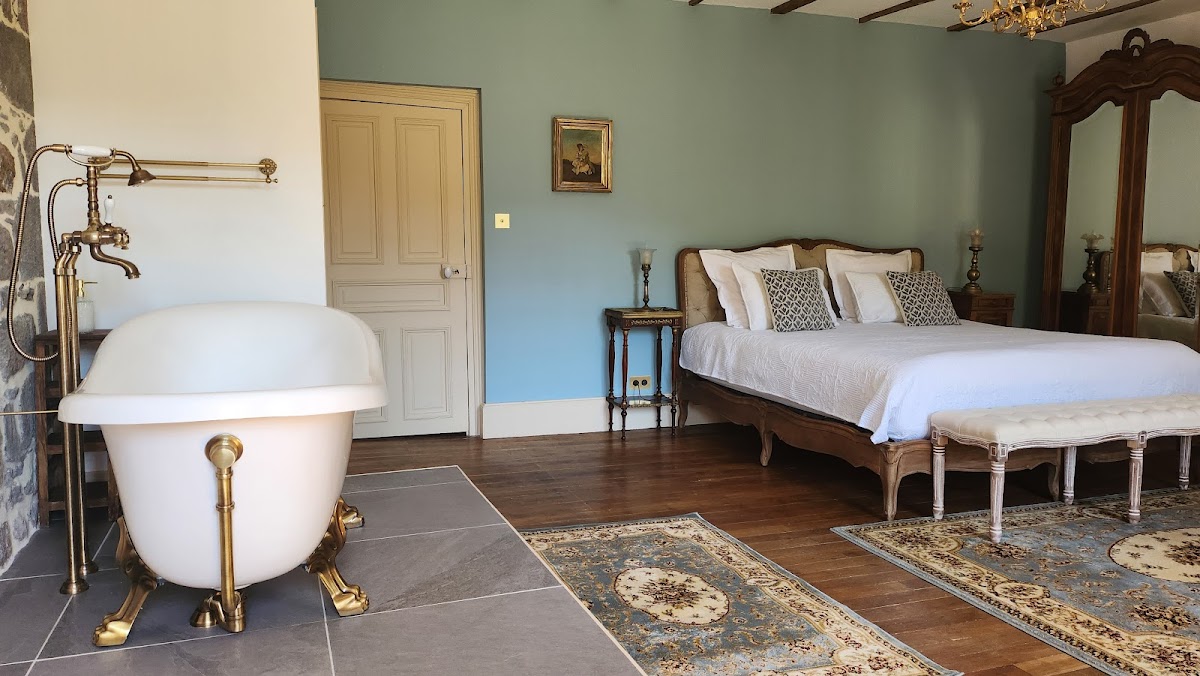
The castle has been listed as a French historic monument since 18 November 2002 under reference PA15000015. This status places it on France’s official register of protected historic monuments. Since 2022, it has belonged to C. Capossela and V. Jonard and has been used as a residence and guesthouse.
Remains
Layout and setting
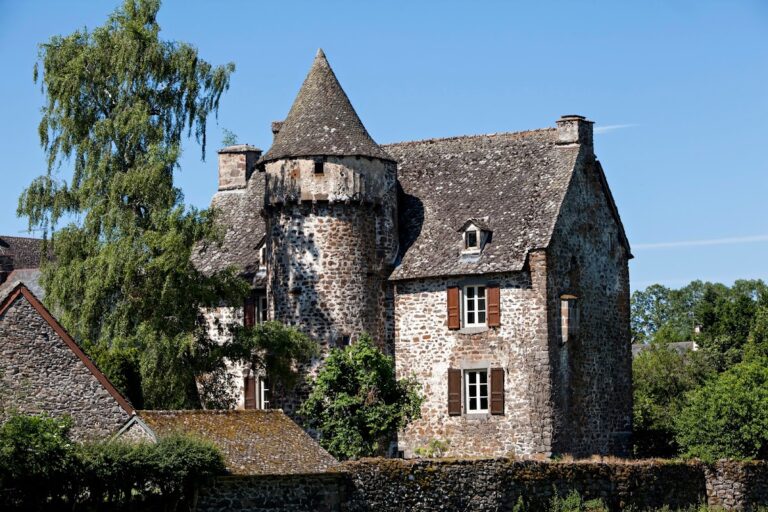
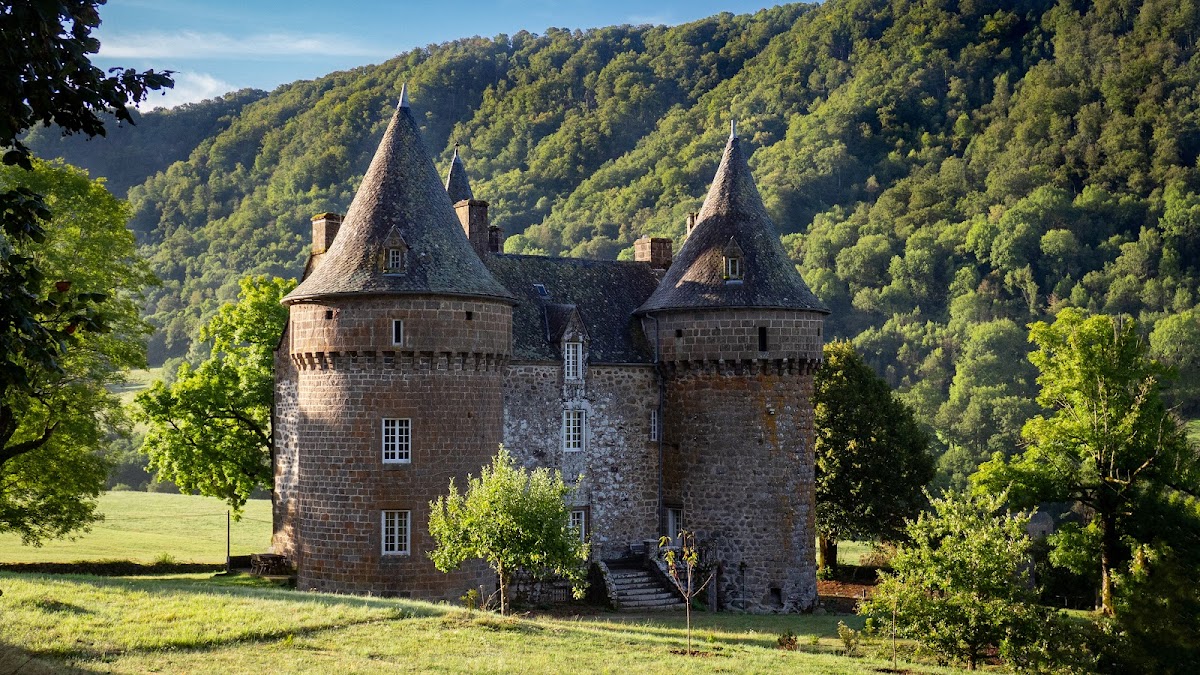
The castle stands in the Mars valley at an altitude of 530 metres, about 15 kilometres from Mauriac. Its principal structure is a rectangular building rising through three levels. The surviving complex combines the form of a residential castle with several towers and defensive elements.
Towers and defensive features
One facade is marked by an octagonal tower, while the opposite facade has two large round towers. A wall-walk, a passage along a fortified wall or tower used for movement and defense, accompanies this side of the building. The complex also included a chapel by 1760, alongside the residential building and towers.
The architectural character brings together rustic, neo-medieval, neo-Renaissance, and troubadour-style features. The 1904 partial rebuilding and the later restoration account for the mixture of historical references visible in the present castle, including the residential building with its octagonal tower.