Castle of Beduzzo: A Medieval Defensive Fortification in Italy

Site at a Glance
- Rating
- 3.9
- Popularity
- Very Low
- Country
- Italy
- Primary era
- Medieval
- Eras represented
- Medieval
- Civilizations
- Holy Roman Empire
- Site type
- Military
- Remains
- Castle
On this page7 sections
History
Castle of Beduzzo is a ruined medieval fortification in Italy, near Beduzzo, a hamlet of Corniglio in Parma Province. Built in the fourteenth century as a defensive and residential stronghold, it controlled and defended the area while protecting the fief of Corniglio in the Upper Parma Valley.
Early Lordship and the Terzi Family
Beduzzo may earlier have been influenced by the Canossas, a powerful medieval noble family whose territories extended across parts of northern Italy. Nearby Antesica had belonged to the Attoni until the twelfth century. The castle was established at Beduzzo in the fourteenth century, and the Terzi family held the fief after receiving a formal grant from Wenceslaus I of Luxembourg in 1387. Wenceslaus was a king of Bohemia and King of the Romans from the Luxembourg dynasty.
Rossi Control and Reassignments
The Terzi lordship ended in April 1448, when Pier Maria II de’ Rossi invaded the territory and captured the castle. Francesco I Sforza, founder of the Sforza ducal dynasty in Milan, confirmed the Rossi family’s grant of Beduzzo and its contado, the territory governed from a town or fortified center. This arrangement was confirmed again in 1470.
The war between the Rossi family and Ludovico Sforza, a later duke of Milan, ended in 1483 with Guido de’ Rossi’s definitive defeat and the confiscation of the Rossi fortresses. Beduzzo was then assigned to the Visconti of Saliceto, who already ruled Berceto. Galeazzo Pallavicino held the castle briefly before Filippo Maria de’ Rossi, Guido’s son, reconquered the territory in 1521.
From Ducal Property to Ruins
After Filippo Maria de’ Rossi died in 1529, the fief passed first to his son Camillo and then to his grandson Filippo Maria. Filippo Maria was imprisoned in Parma in 1593 and died without heirs. That same year, the castle was confiscated and transferred permanently to the ducal treasury of Parma, the fiscal and property authority of the Duchy of Parma.
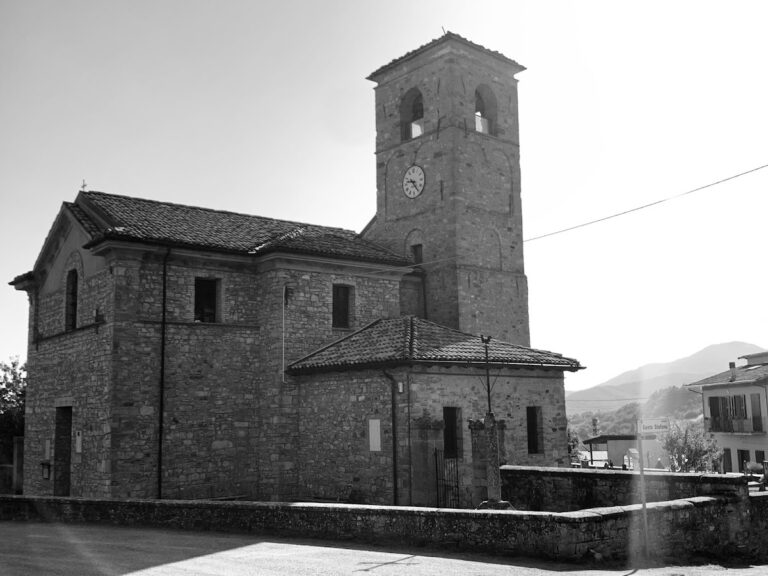
After Beduzzo lost its defensive role, the castle declined into ruin. Part of the fortification was demolished during the eighteenth century to create space for the present parish church of San Prospero, and castle materials were reused during the church’s renovation in 1783. The surviving portion of the large tower was demolished in the mid-1950s. The abandoned ruins now stand near Beduzzo at approximately 572 metres above sea level.
Remains
Walls and Tower
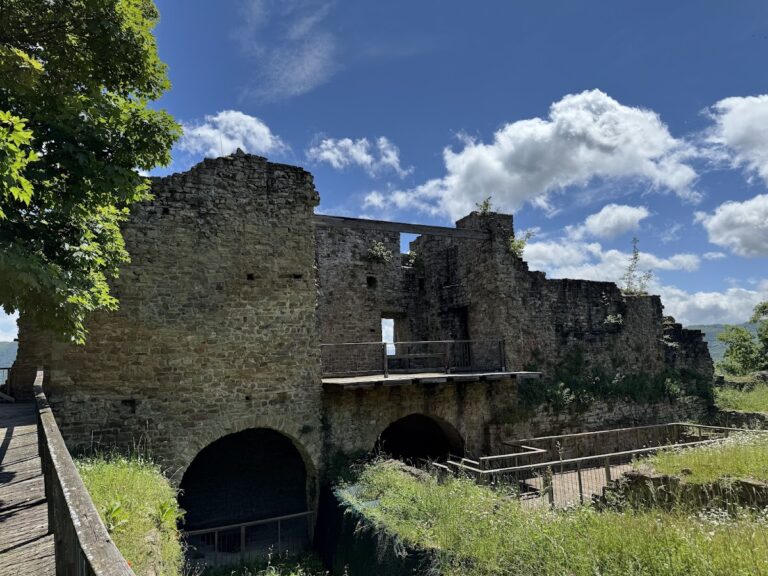
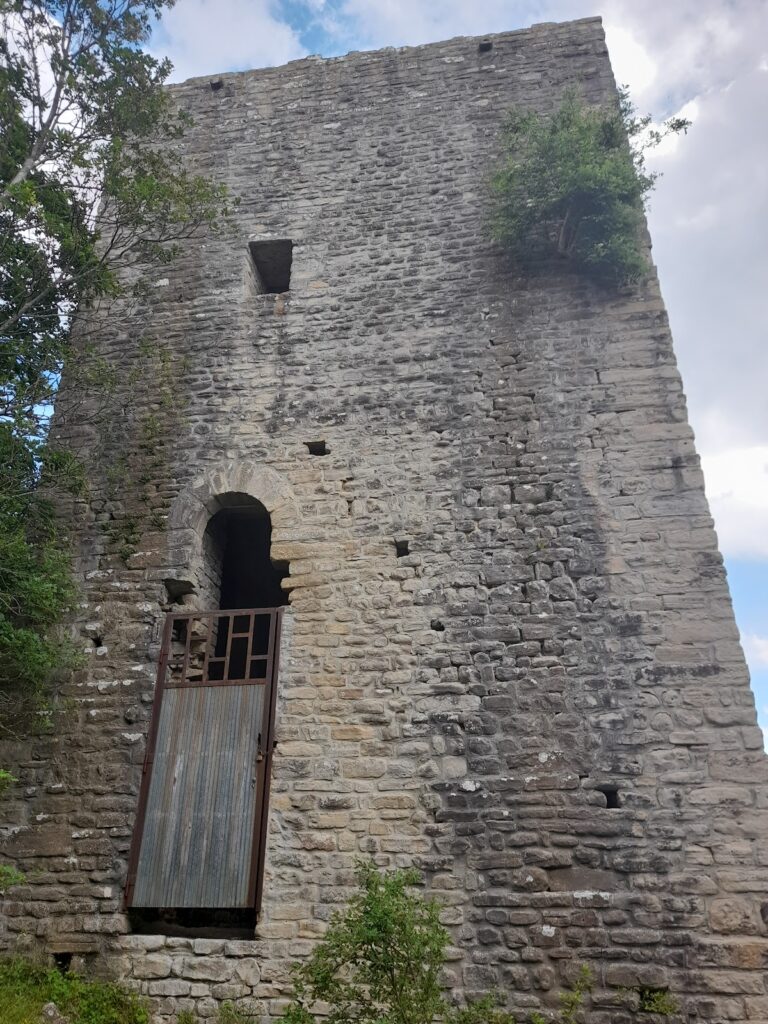
The castle was built from rubble stone as a defensive and residential complex. A late-fourteenth-century description calls it a “walled tower with walls inside,” indicating a tower divided by internal masonry walls. A 1691 account by the parish priest Giovan Battista de Uccelli describes two circuits of walls. The first enclosed the large tower and the parish church, while the second enclosed the large tower, which was described as belonging to the county. The surviving masonry is surrounded by dense vegetation, with an angular buttress or corner support from the tower still visible among the ruins.
Church and Incorporated Medieval Fabric
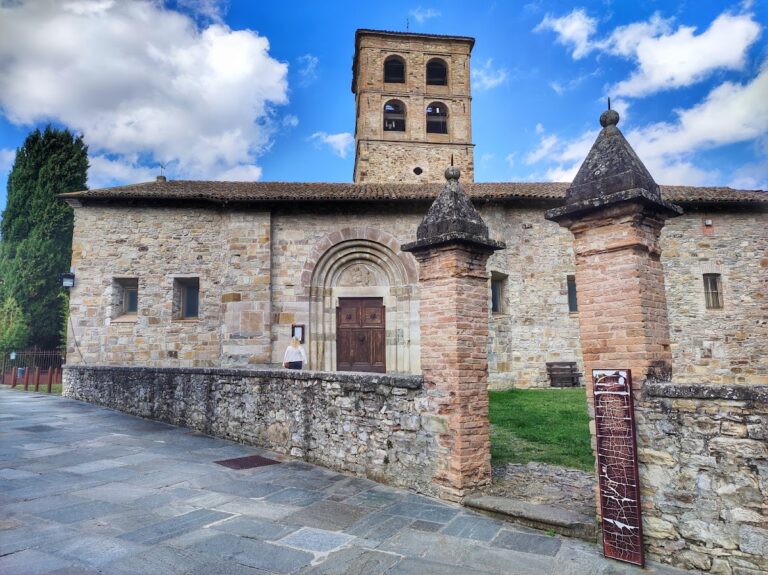
The parish church of San Prospero stood within the castle’s walls. Its present position partly occupies ground created by the eighteenth-century demolition of the fortification, and building material from the castle was reused in the church’s 1783 renovation. Slightly lower down, toward the Parma stream, Casa Jattoni incorporates a truncated medieval tower into its present building.
The castle also has a surviving documentary connection with local property and administration. In 1462, a notarial document concerning a dowry was drawn up inside the castle before Giovanni de Jattoni and the notary Banzi. The document is preserved in the State Archive of Parma. Later descriptions of San Prospero in the Diocesan Archive of Parma refer to the castle because the church stood within its walls, including Uccelli’s 1691 account of the two wall circuits and large tower.
Nearby sites