Área Arqueológica do Freixo: The Roman City of Tongobriga in Portugal
Site at a Glance
- Popularity
- Medium
- Country
- Portugal
- Primary era
- Classical
- Eras represented
- Classical, Medieval
- Civilizations
- Roman
- Site type
- City
On this page15 sections
History
Área Arqueológica do Freixo is an archaeological site in Portugal containing the remains of a Roman city founded during the Augustan period, probably under Augustus, after an earlier fortified settlement. Augustus, Rome’s first emperor, ruled from 27 BC to AD 14. The Roman city is widely identified as ancient Tongobriga. Its name has been interpreted as Celtic, combining tong, meaning “to swear,” and briga, meaning “fortified settlement.”
Pre-Roman settlement and Roman city
A fortified settlement existed before the Roman city, and occupation continued into the sixth century. An inscription discovered at Freixo in 1882 supports the identification with Tongobriga. The second-century geographer Claudius Ptolemy also described a settlement between the Douro and Minho rivers, using the name Tuntobriga.
Tongobriga lay near the Bracari, a Celtic people of the Iberian Peninsula, and close to Roman roads linking major population centers in Lusitania, a Roman province in western Iberia. The principal route is thought to have connected Bracara Augusta, now Braga, with Emerita Augusta, now Mérida. From the late first to the second century AD, the city grew in economic importance and developed as an organized civic center. In Roman usage, a civitas was a civic community that could also serve as an administrative unit.
After Roman imperial rule
Occupation persisted after Roman imperial authority collapsed in the fifth century. Under the Suebi, a Germanic people who established a kingdom in parts of Iberia as Roman rule weakened, Tongobriga became a parish. It was among the early parishes of the newly formed Diocese of Porto. The parish’s development eventually gave rise to the village of Freixo.
Excavation and protection
Excavations began in 1980 at a place locally known as Capela dos Mouros, directed by Lino Augusto Tavares Dias, and have since covered more than 30 hectares. The Professional School of Archaeology, established at the site in 1990, continued the investigations. An area of about 50 hectares has been protected as a National Monument since 1986.
Remains
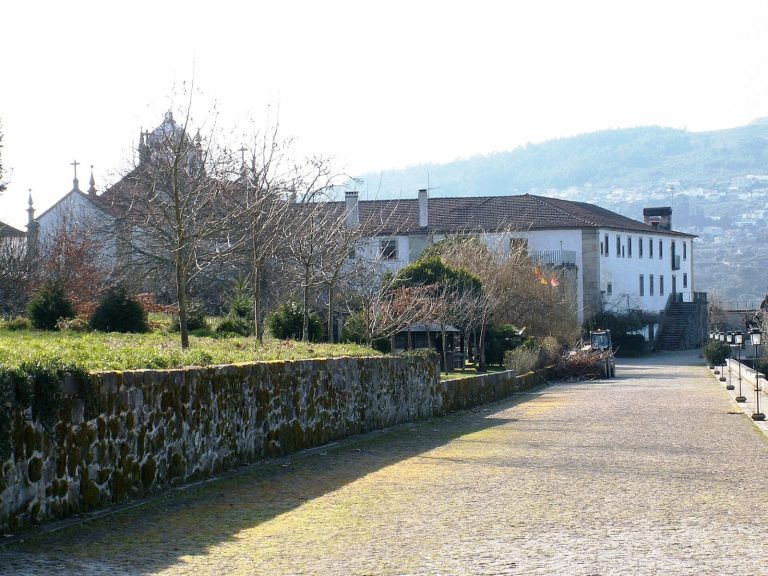
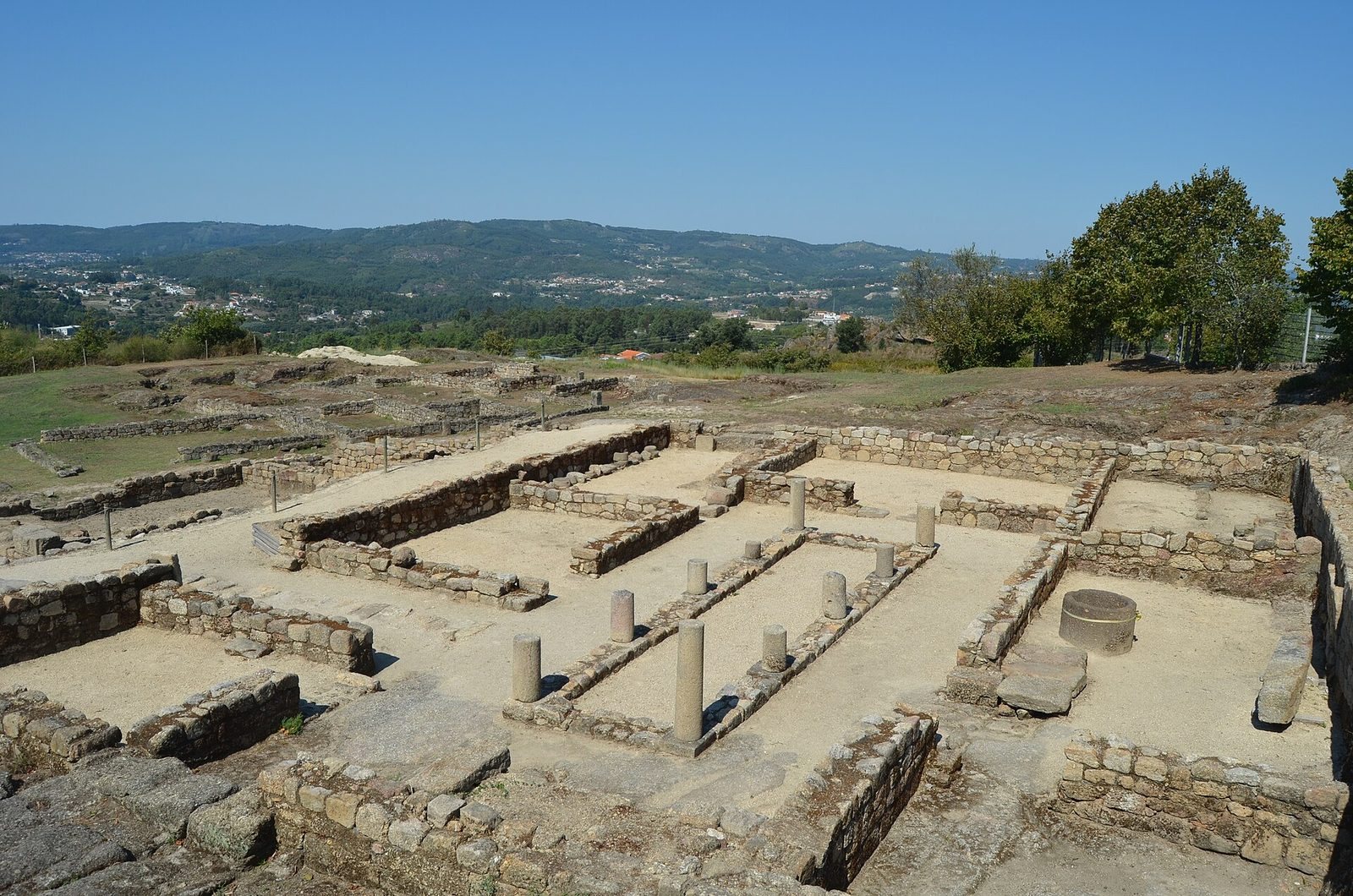
The settlement occupies a roughly north–south ridge in a landscape shaped by the Tâmega and Douro rivers. Its maximum extent is estimated at about seven hectares, around and partly beneath the present village of Freixo. The remains include pre-Roman houses, Roman residences and public buildings, later burial grounds, and early Christian structures.
Residential areas
Northern settlement
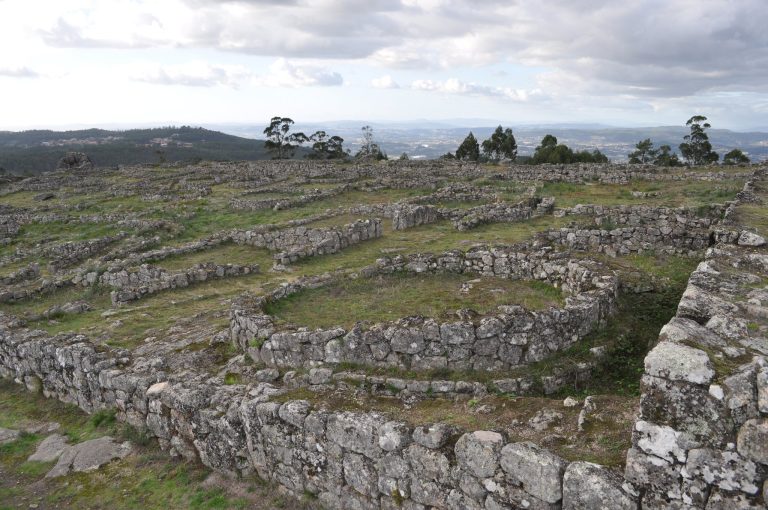
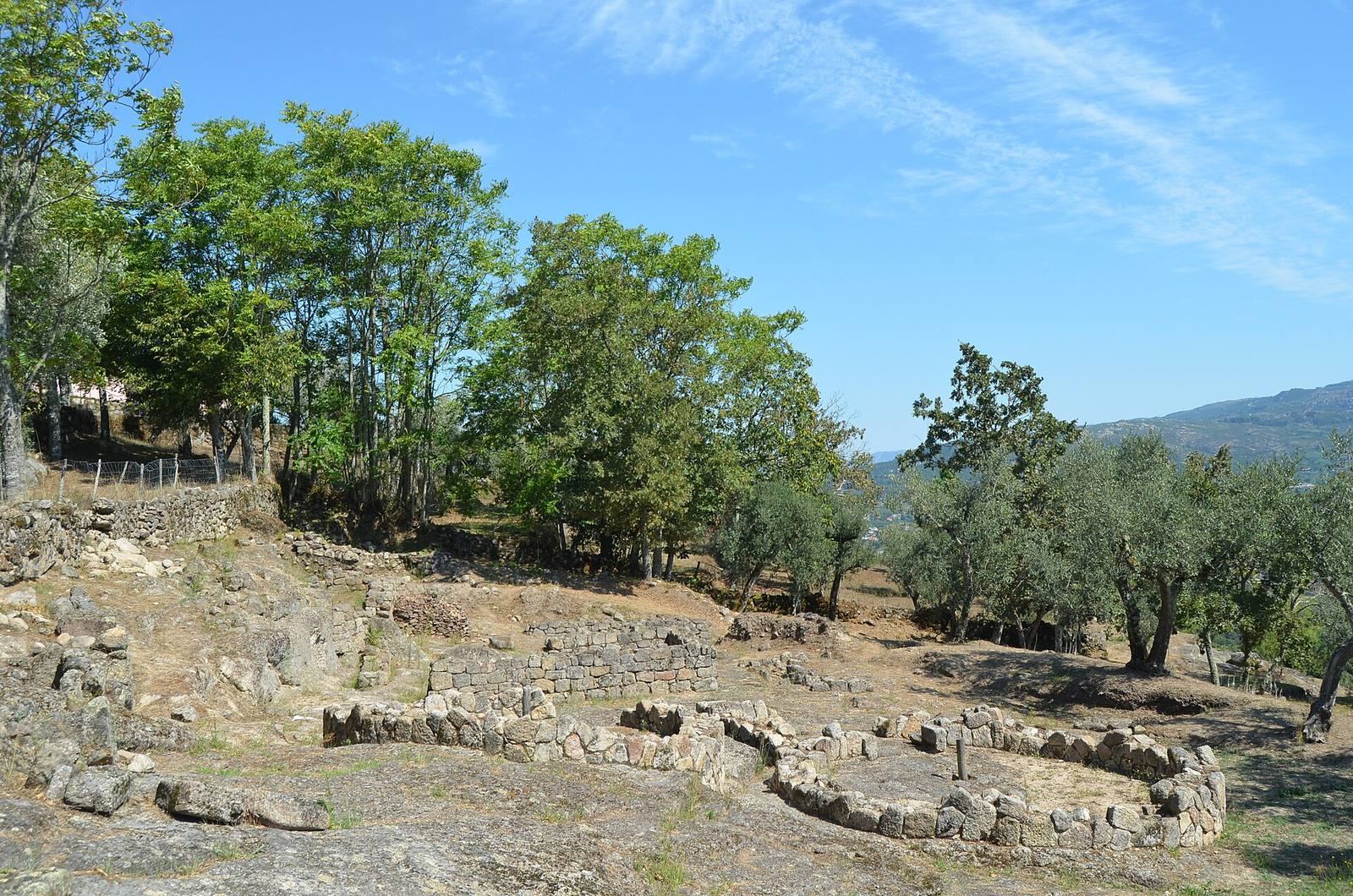
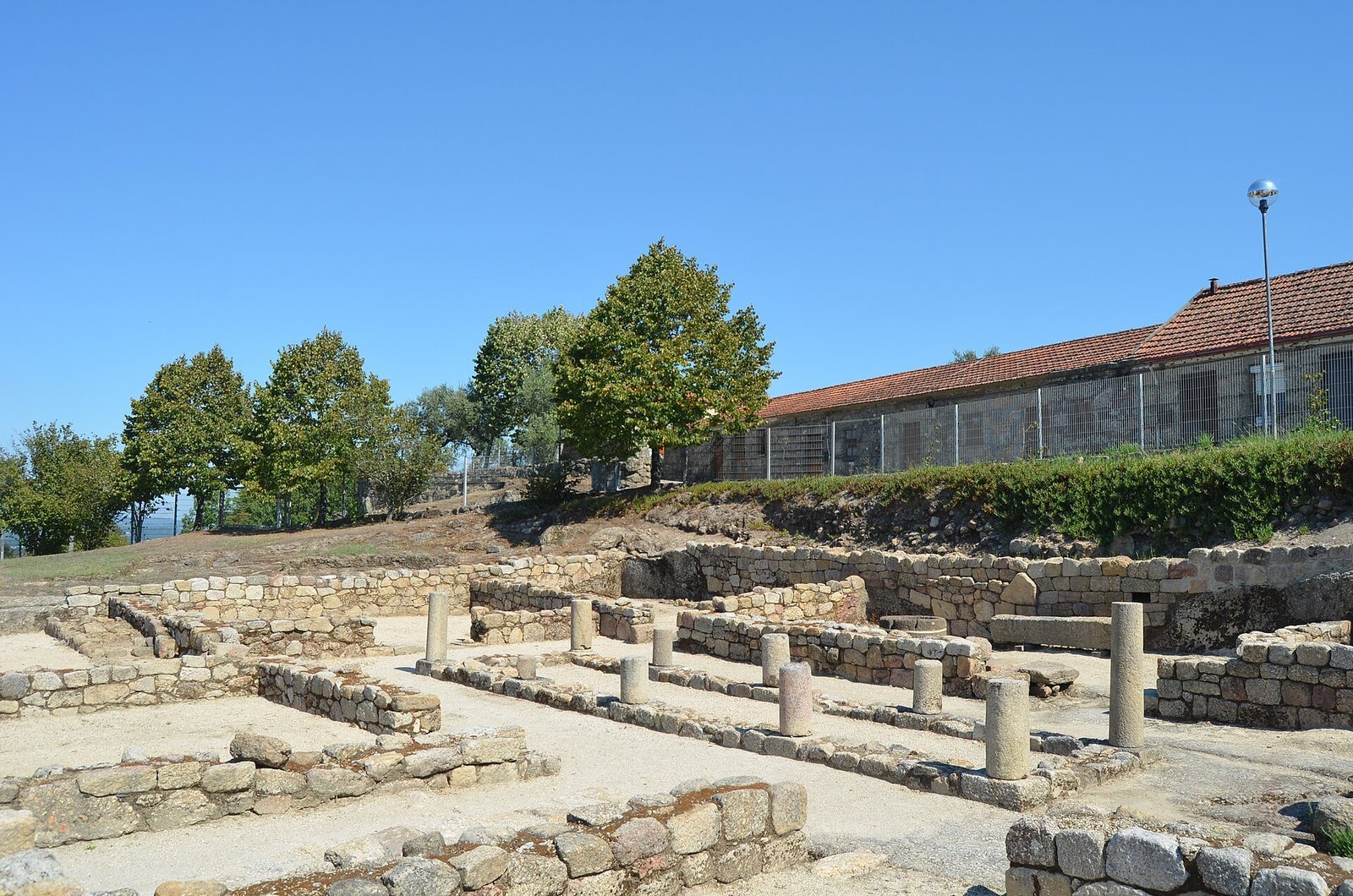
At the center of the present village, an extensively eroded plateau preserves individual round and rectangular houses built according to local pre-Roman traditions. Roman urban villas, or town residences, stand close to these houses. Some have atria, central halls or courtyards, and are arranged along an orthogonal street system.
Southern slope
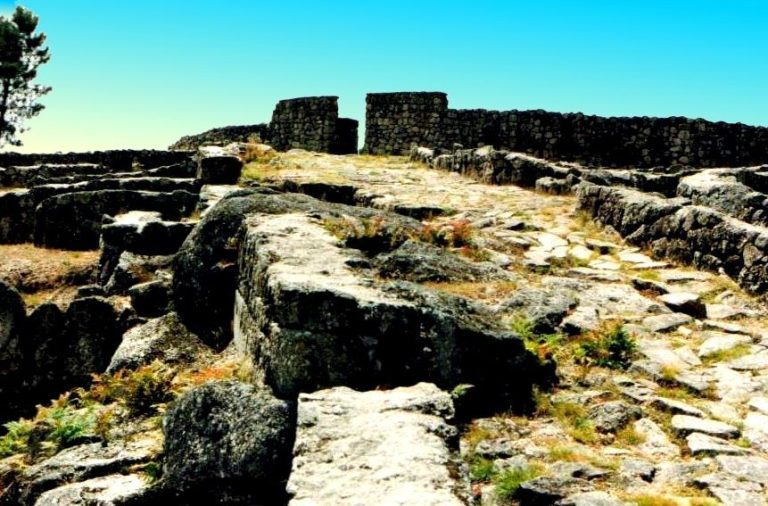
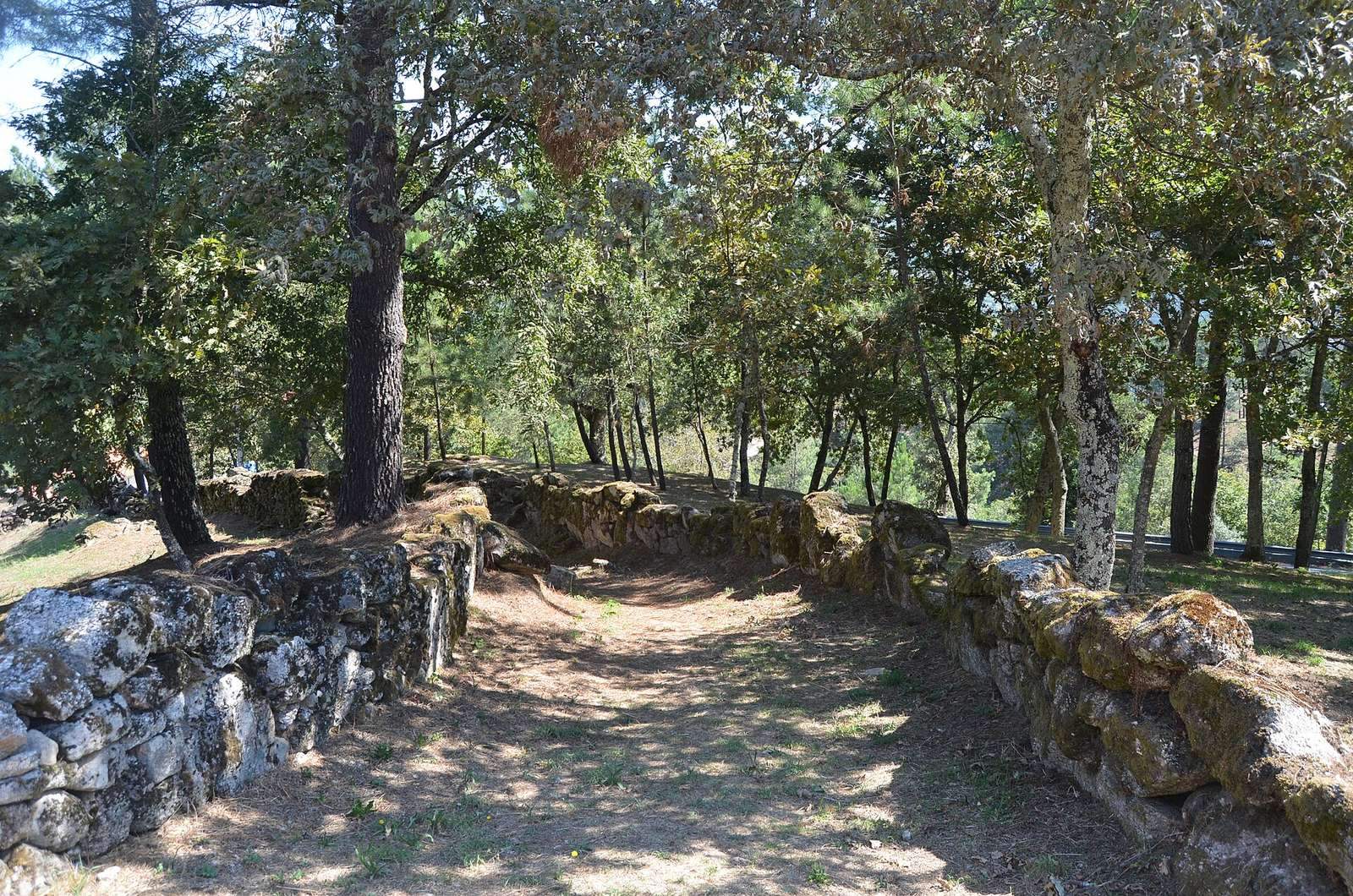
Farther south, on the eastern slope before the southern city wall, another settlement area contains round houses. Parts of the wall to their south have been reconstructed.
Forum, baths, and Pedra Formosa complex
Forum
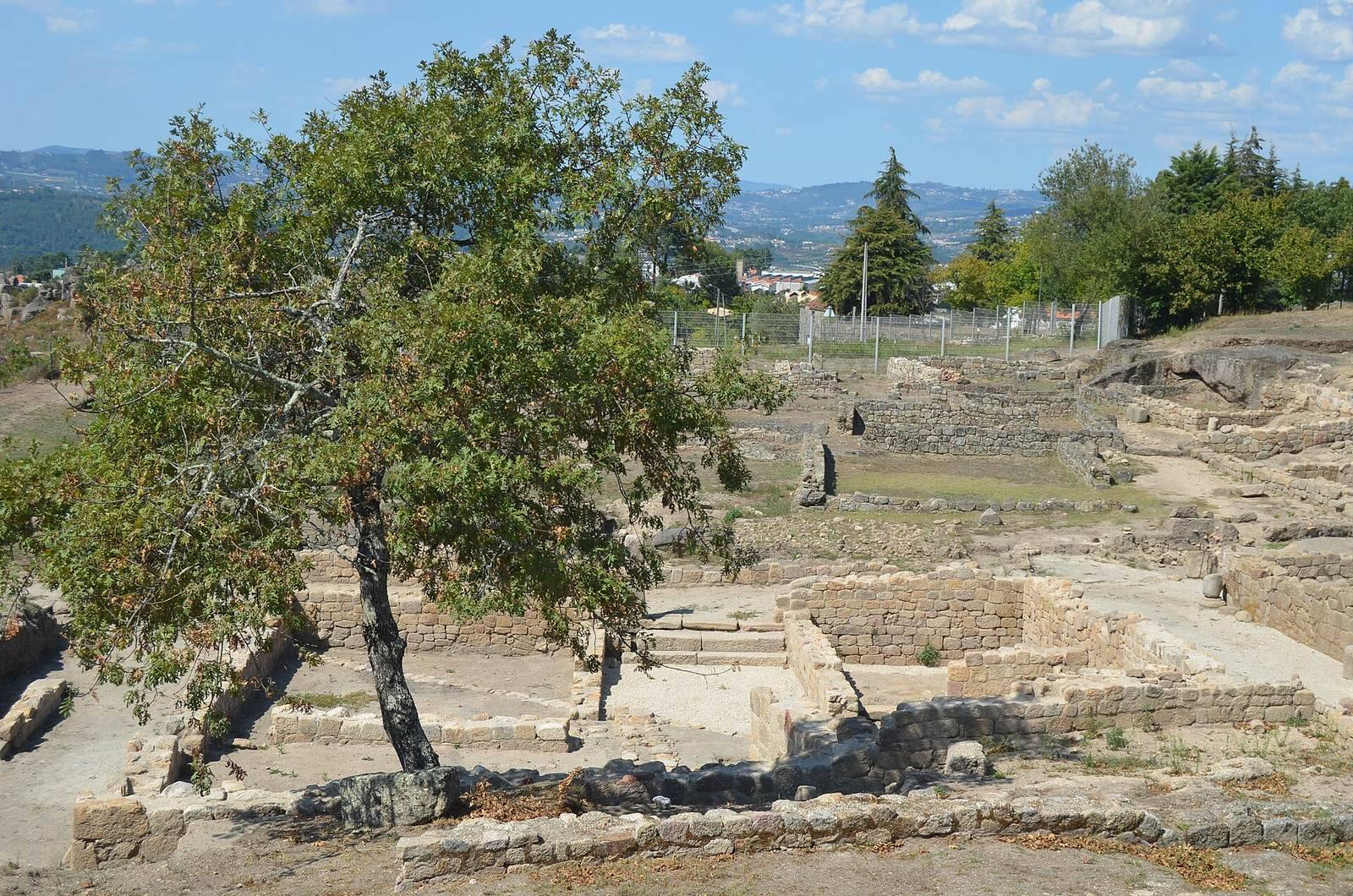
The long, rectangular forum measures 112 by 75 metres and stands where Roman roads intersect. Developed during the first half of the second century, it was used from the first through the fifth century AD. Monumental public buildings and facilities were associated with the space, and a temple may also have stood there.
Bath complex
Immediately northwest of the forum, a bath complex covers about 1,400 square metres and was probably used until the fifth century. Surviving features include a furnace that heated the baths, along with areas for cold and warm water. Some of the standing masonry reaches about five metres in height.
Pedra Formosa complex
Immediately west of the baths, the pre-Roman Pedra Formosa complex consists of two rooms and an entrance chamber. A stone slab closes the entrance from that chamber, while a small opening in the slab gives access to the inner room. Comparable installations are known at Briteiros and Sanfins, but this one was cut directly into bedrock. Its purpose remains disputed, with interpretations ranging from a secular steam bath to a sacred installation.
Burial and Christian remains
Cremation graves
Cremation graves dating to the third and fourth centuries were excavated just outside the southern wall, on the eastern slope.
Early Christian basilica
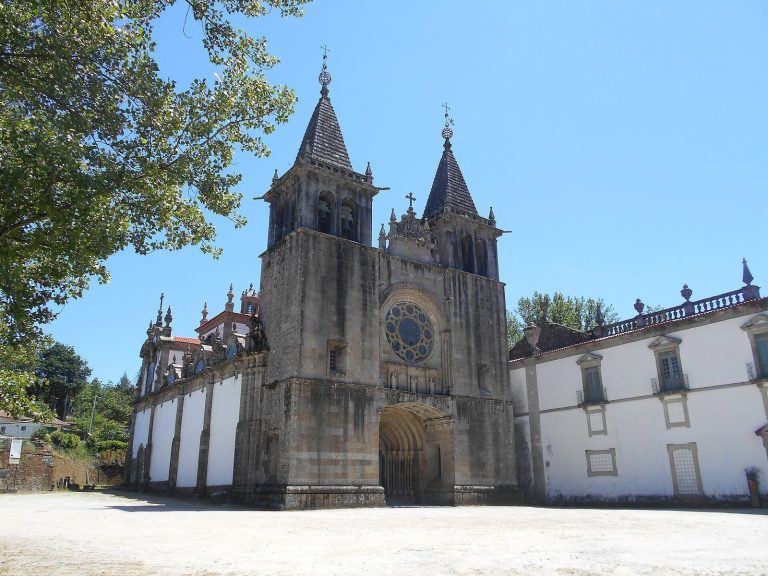
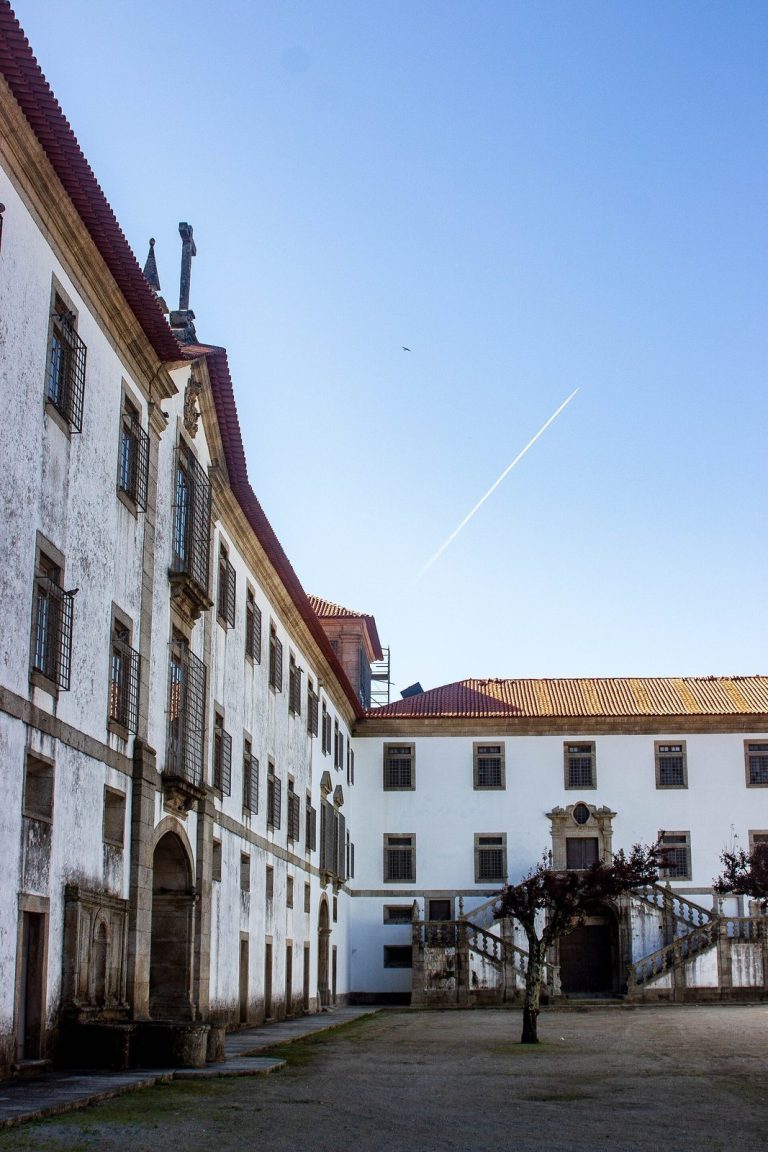
Remains of a basilica dating to the fifth and sixth centuries lie beneath the present Church of Santa Maria de Freixo. Excavations in the church atrium also uncovered a mosaic floor.