Castle Keukenhof: A Historic Country Estate in the Netherlands


Site at a Glance
- Rating
- 4.6
- Popularity
- Medium
- Country
- Netherlands
- Primary era
- Early Modern
- External website
- Open
- Eras represented
- Early Modern, Modern
- Civilizations
- Dutch
- Site type
- Domestic
- Remains
- Castle
On this page12 sections
History
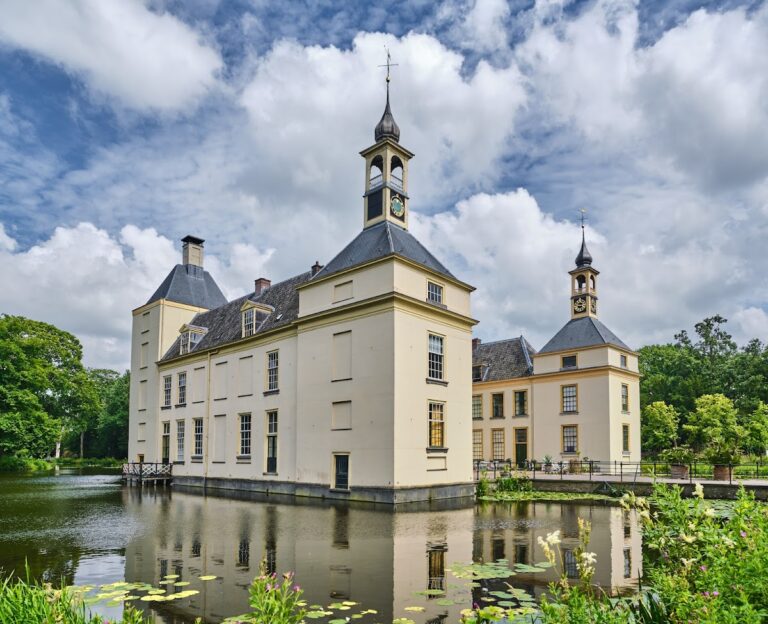
Castle Keukenhof in Lisse, the Netherlands, is a country house built in 1642 by Adriaen Maertensz. Block, a former commander of the Dutch East India Company in the Moluccas. The original building followed Classicism, an architectural tradition based on the forms and proportions of ancient Greek and Roman architecture. Whether Block ever lived at the house is uncertain.
Owners and inheritance
Later owners included Professor Willem Röell, an anatomist, and Johan Steengracht van Oostcapelle, an art connoisseur who saved the castle from ruin in 1809. Steengracht van Oostcapelle’s only daughter, Cecilia Maria, married Carel Anna Adriaan van Pallandt, a baron of the old Van Pallandt family. She inherited Keukenhof, which was then rented to Mr. Hugo Gevers. After a marriage in 1861 involving Cornelia Johanna, Baroness van Pallandt, the property passed by inheritance to the Van Lynden family.
Nineteenth-century enlargement
At the request of the Van Pallandt family, the castle was enlarged between 1861 and 1863 under the architect Elie Saraber. The work introduced Neo-Gothic elements, a nineteenth-century revival of medieval Gothic forms, and added corner towers to the earlier Classicist country house.
The Van Lynden legacy
Jan Carel Elias, Count van Lynden, who lived from 1912 to 2003, was the castle’s last owner. He left Castle Keukenhof and its approximately 230-hectare estate of grounds, woodland, and farmland to the Kasteel Keukenhof Foundation. The foundation restored the castle and the estate’s 18 other national monuments to approximately their early-twentieth-century condition.
The name Keukenhof comes from Keukenduin, an area that belonged to Teylingen Castle. Its produce, including game, livestock, herbs, and berries, was intended for the household, or “kitchen,” of Teylingen Castle, where Jacoba of Bavaria lived among others. Part of the estate is used for the Keukenhof flower exhibition. Castle Keukenhof forms part of the Historic Country Estate Keukenhof national-monument complex and is itself a Dutch national monument, a legally protected heritage site of national importance.
The castle reopened at the end of 2012 after a restoration that lasted almost two years. The work preserved historical stylistic elements, including the original English horse stables, while the gardens were redesigned. Frederiks Hof, the walled garden opposite the castle, was also fully restored.
Remains
Castle Keukenhof stands within an approximately 230-hectare estate of landscaped grounds, woodland, and farmland. The surviving complex combines the 1642 Classicist country house with the Neo-Gothic enlargement of 1861 to 1863, its corner towers, restored outbuildings, gardens, and the walled garden known as Frederiks Hof.
Castle buildings and interiors
Main building and rooms
The castle contains several salons and named interior spaces, including the Hall, Blue Salon, and Red Room. Its rooms retain fireplace mantels and a wooden arms rack. The interior also contains furniture and portraits, including portraits by Nicolaes Maes, a seventeenth-century Dutch painter known especially for portraits and genre scenes.
Porcelain cabinet
Chinese and Japanese porcelain is displayed in a specially built cabinet arranged in a seventeenth-century manner. The cabinet has an elaborate mantelpiece in the style of Daniël Marot, a French-born architect and designer whose work influenced late Baroque interior design in the Netherlands and England. Its walls are covered with gilt leather.
Coach house
The coach house was built in 1857 and has been restored. It forms part of the surviving group of estate buildings associated with the castle.
Gardens and walled garden
Castle gardens
The gardens contain walking routes and landscaped areas. They have also provided a setting for art exhibitions, including Cobra Buiten in 2012, an outdoor sculpture exhibition held in cooperation with the Cobra Museum that displayed works by Karel Appel.
Frederiks Hof
Frederiks Hof is a walled garden positioned diagonally opposite the castle. It takes its name from Frederik, a boy from one of the noble families who lived at Keukenhof. In 1850, a foundation stone was laid there for a Swiss-style playhouse where he could withdraw with a governess when the bustle became overwhelming. The building was intended to become his residence after he completed his law studies. The account of his life describes him as suffering from schizophrenia. Frederiks Hof has been fully restored.
Nearby sites