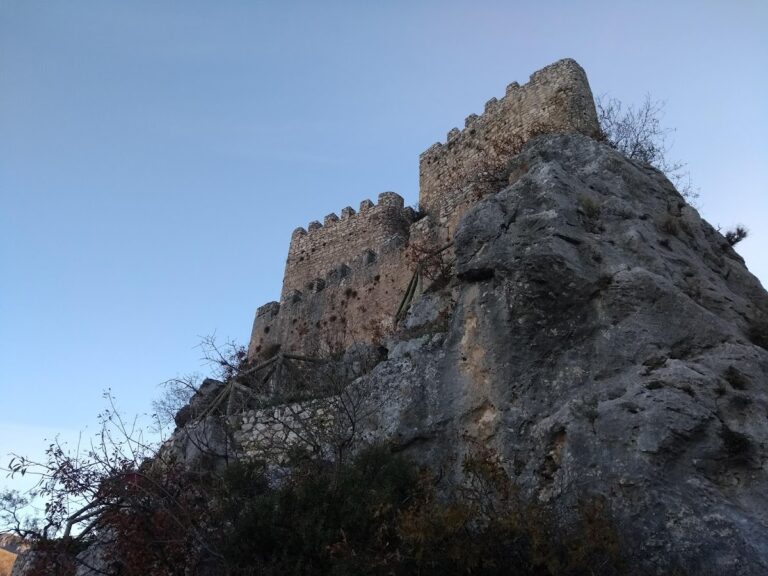
Castillo de Ríez: A Fortified Surveillance Site in Spain


Site at a Glance
- Rating
- 3.8
- Popularity
- Very Low
- Country
- Spain
- Primary era
- Medieval
- Eras represented
- Iron Age, Medieval
- Civilizations
- Crown of Castile, Iberian, Visigothic
- Site type
- Military
- Remains
- Castle
On this page6 sections
History
Castillo de Ríez is a historic fortified site in Spain, north of Mancha Real in Jaén Province, whose known history extends from possible ancient occupation to medieval defensive use. It stands beside routes linking Jaén with Baeza and Guadix with Cástulo, an ancient settlement associated with the conflict between Rome and Carthage. The castle’s principal documented function was control and surveillance of the surrounding countryside.
Ancient and Visigothic phases
The site may represent an ancient fortress in the countryside of Auringi, an ancient place-name associated with the Jaén area. This interpretation remains uncertain, but it places the proposed stronghold in the setting of Rome’s campaigns against Carthage. Roman legions commanded by Scipio, a Roman military leader in the western Mediterranean wars against Carthage, captured Jaén while the Carthaginians were defeated at the Battle of Cástulo.
The proposed fortress was later destroyed during the barbarian invasions. It was rebuilt in the final years of Visigothic rule, when the Visigoths, a Germanic ruling group, governed much of the Iberian Peninsula. Following the Arab conquest, the rebuilt site was looted.
Medieval defensive role
During the reign of Ferdinand III, the medieval king whose conquests included Jaén, Castillo de Ríez was rebuilt after the capture of the city. The reconstruction supported the defence of the Jaén countryside against repeated incursions and raids from al-Andalus, the name used for Muslim-ruled territories in Iberia.
In the early twentieth century, the castle served as a refuge for Los Botijas, a band that had terrorized the surrounding region. Its later history therefore continued to reflect the site’s defensible position, even after its medieval military role had ended.
Archaeological protection
Surface prospecting during the 1980s identified remains from an Iberian phase, Roman-period material, and an undetermined medieval phase. The site became an Asset of Cultural Interest, Spain’s statutory designation for protected cultural heritage, through a declaration dated 29 June 1985. The medieval Dehesa de Ríex, also called the Dehesa del Rey, was a separate large estate beside the present urban centre of Mancha Real rather than land surrounding Castillo de Ríez.
Remains
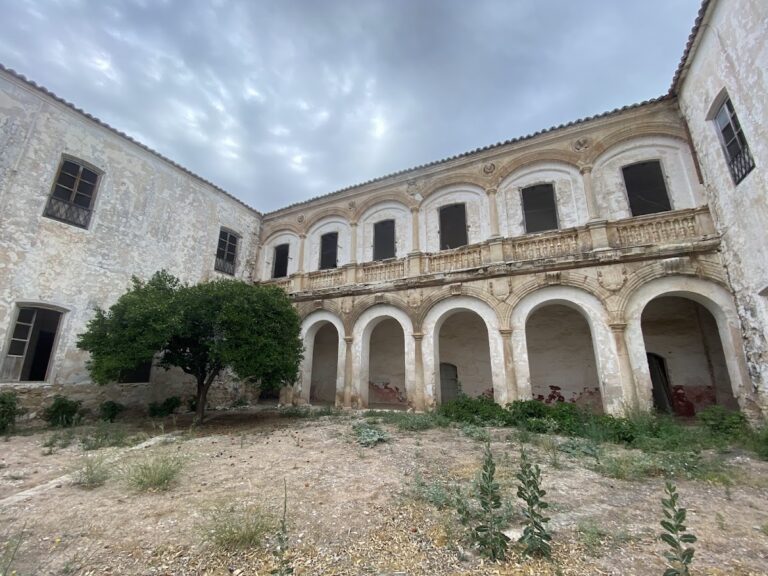
Castillo de Ríez stands at approximately 450 metres above sea level, east of the road now called the Ríez-to-Risquillo road. The surviving castle fabric is partially preserved and incorporated into the Cortijo de Ríez, a traditional rural estate complex combining a farmhouse with agricultural buildings and land. Its construction includes ashlar masonry, formed from regularly cut stone blocks laid in building courses.
Archaeological evidence
Surface survey revealed habitation structures together with Roman pottery. The finds include Italic, South Gaulish, Hispanic, Clara A, and Early Christian sigillata, a fine Roman or Late Antique tableware with a smooth, often red-slipped surface. The Roman material belongs mainly to the first and early second centuries, with additional material from the fifth century. These finds accompany the Iberian and medieval occupation evidence identified across the site.
Nearby sites