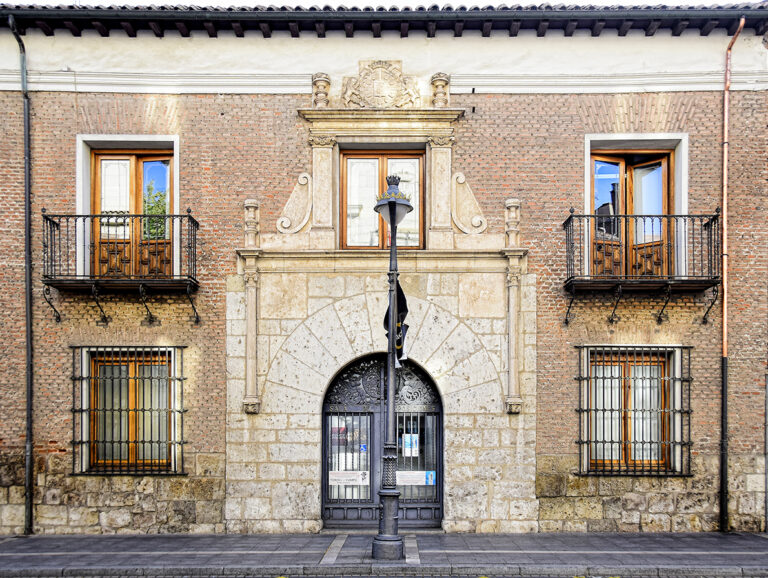
Castillo de Mucientes: A Palace-Castle in Valladolid, Spain
Site at a Glance
- Rating
- 3.6
- Popularity
- Very Low
- Country
- Spain
- Primary era
- Medieval
- External website
- Open
- Eras represented
- Medieval
- Civilizations
- Crown of Castile
- Site type
- Military
- Remains
- Castle
On this page7 sections
History
Origins and the Counts of Ribadavia
The Castillo de Mucientes is a palace-castle in Mucientes, Spain, whose first written reference dates to 1326. In that year, Alfonso XI of Castile granted Mucientes and its castle to Alvar Núñez Osorio, his chief steward, a high-ranking royal official. The modest fortress later served as a residential palace for the successive Counts of Ribadavia, who held lordship over Mucientes. It remained in use in this role until the seventeenth century.
Across at least four centuries, the castle witnessed royal visits, confinements, and assaults. Its most prominent political episode came during the first week of July 1506, when it functioned as a Royal Palace and consequently as the capital of the kingdoms of Castile. Philip I of Castile, the husband of Juana I of Castile, tried unsuccessfully to persuade the Castilian procurators, representatives of the cities in the Cortes, to remove Juana from governmental duties. Chronicles describe Juana isolated in a dark room, seated at a window, dressed in black, and wearing head coverings that concealed her face.
War, Ruin, and Stone Removal
During the War of the Communities of Castile, a major revolt against the government of Charles I in 1520 and 1521, troops of the Junta captured Mucientes on 5 February 1521. The Junta was the insurgent governing coalition, and its forces acted under the command of Juan de Padilla. Juan de Mendoza was placed in charge of the castle’s defense. The Junta of Valladolid ordered the fortress to be demolished, but the order was not carried out.
By 1751, the Ensenada Cadastre described the fortress as already ruined, with sections of wall still standing around its perimeter. Permission was granted in 1823 to remove stone from two walls for public-utility works. Ashlar blocks continued to be taken in 1932 for construction at the New Fountain washhouses, and by 1942 the stone quarry had been exhausted.
Archaeology and Protection
In 2006, during commemorations of the fifth centenary of the 1506 Cortes of Mucientes, the municipal government protected the hill, moat, and surrounding area through urban-planning measures. These measures supported the intention to create a public park centered on the recovered castle remains. Archaeological excavation began in October of that year. The castle is designated an Asset of Cultural Interest, Spain’s formal heritage status for places recognized as having cultural value, and the municipality of Mucientes is identified as its owner.
Remains
Hilltop Fortress
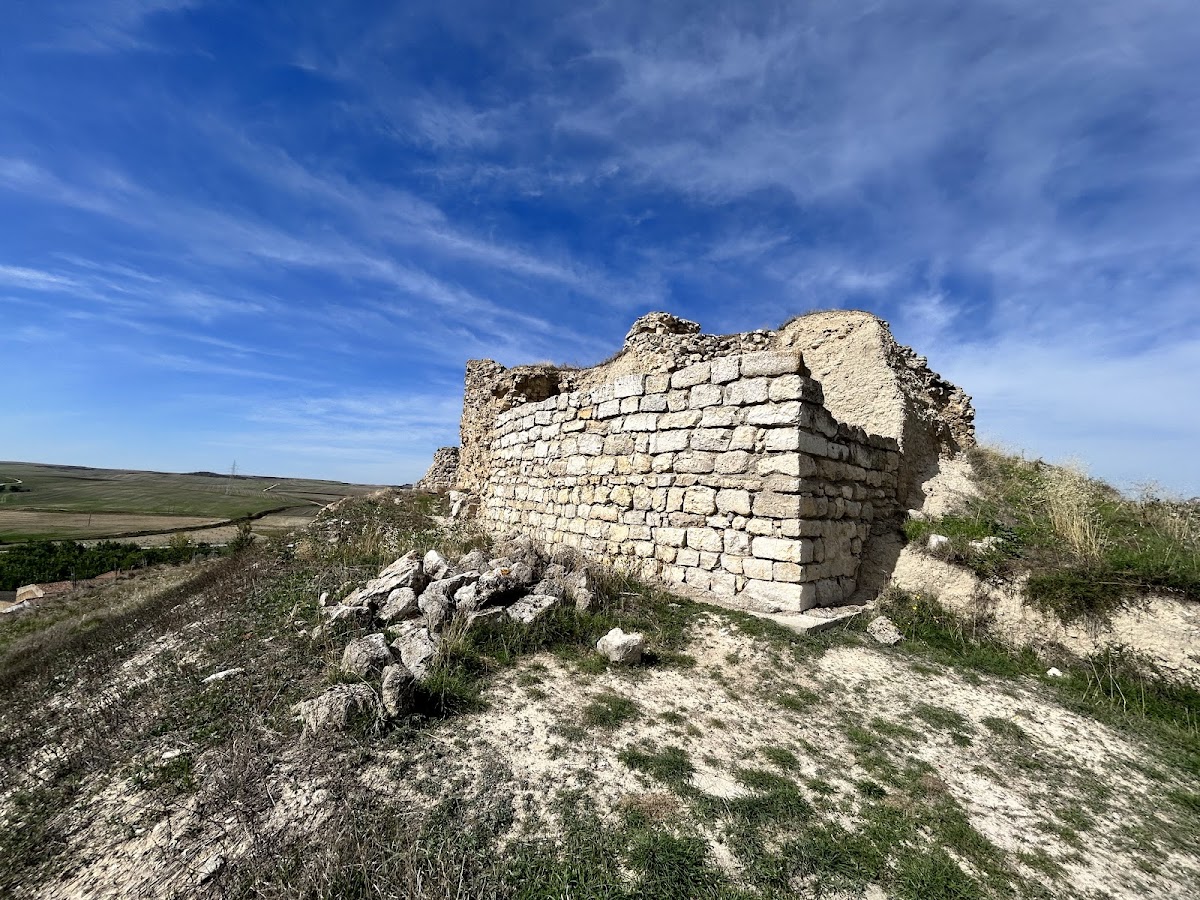
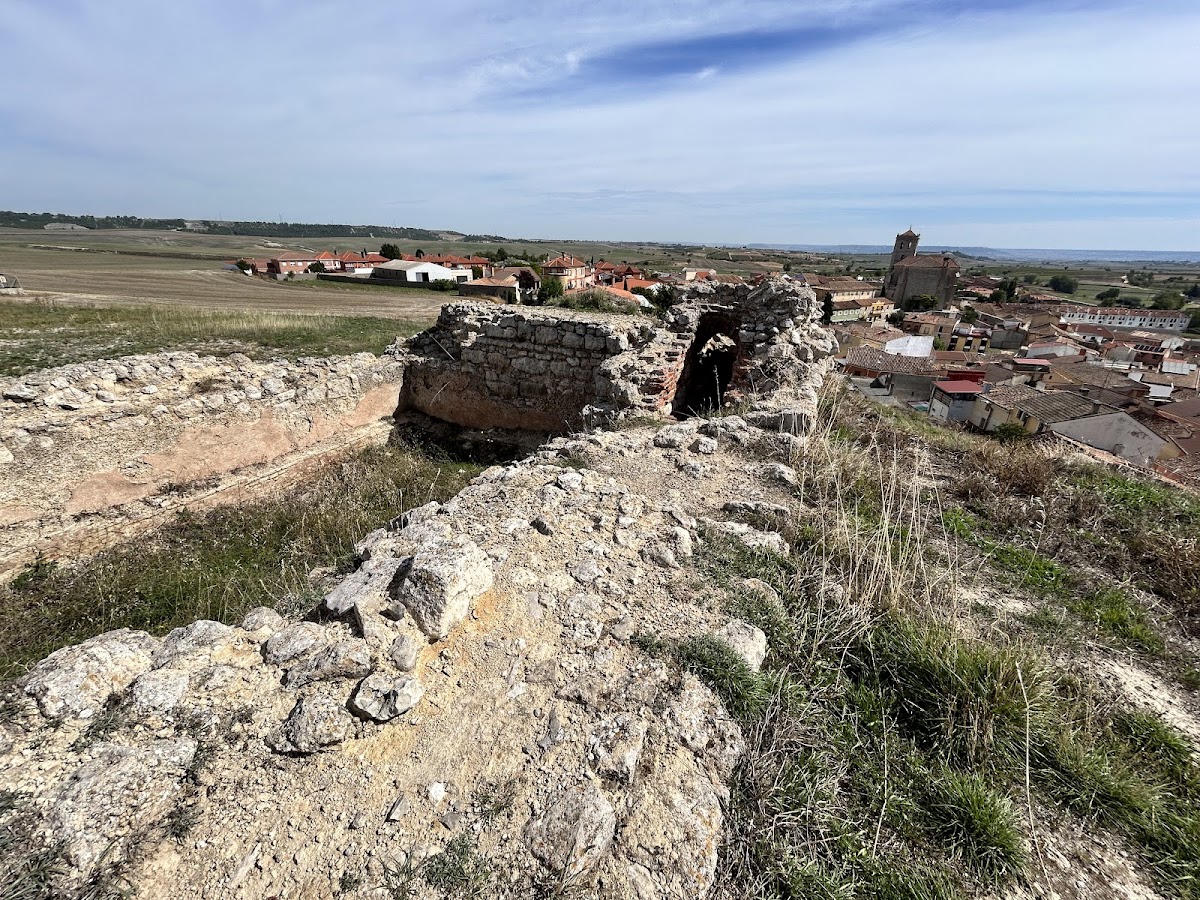
Castillo de Mucientes was built as a stone-and-masonry palace-castle on a hilltop surrounded by a moat. Its ruins are incorporated into a park. The 1751 Cadastre gave the fortress dimensions of 60 varas across by 220 varas in depth, approximately 50 by 185 metres, and noted surviving sections of the surrounding walls.
Excavated Structures and Features
Archaeological excavation uncovered the foundations of the northern and eastern walls, much of the original paving of the parade courtyard, and remains of the keep, the castle’s principal fortified tower. The work also revealed capitals, column drums, and a cistern, a reservoir used for storing water. These features form part of the surviving archaeological remains within the park.