Castle of Santa Catalina, Cádiz: A Coastal Fortress and Military Prison
Site at a Glance
- Popularity
- High
- Country
- Spain
- Primary era
- Early Modern
- Eras represented
- Early Modern
- Civilizations
- Spanish
- Site type
- Military
- Remains
- Fort
On this page7 sections
History
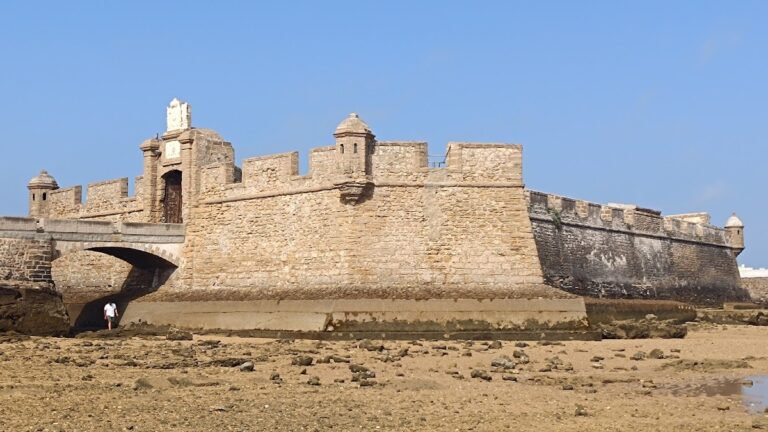
The Castle of Santa Catalina in Cádiz, Spain, is a coastal fortress commissioned by the Spanish crown, with construction beginning in April 1598 and ending on 5 September 1621. Its pentagonal plan drew on Italian fortification design. It was built to defend Cádiz after the Anglo-Dutch attack of 1596 and later became a military prison.
Royal fortress
After the 1596 attack, Philip II ordered military engineer Cristóbal de Rojas to design the fortress by royal decree on 25 October 1597. Rojas died before the work was complete, and the finished castle was less ambitious than his original design.
Chapel and prison
During the reign of Charles II, a chapel and sacristy were built around 1693. In 1769, Charles III converted the castle into a military prison for prominent detainees, including Latin American liberals and independence activists.
Mariano Abasolo, a leader of the Mexican independence movement, was imprisoned there after his capture and exile from New Spain. His death sentence was commuted to ten years’ imprisonment through his wife María Manuela Rojas Taboada’s privileged ties to the viceregal government, though the term may instead have been life imprisonment. After five years in custody, Abasolo died of pulmonary tuberculosis on 14 April 1816, aged 32, with his wife at his side.
British military officer John Downie was imprisoned in 1820 for supporting Ferdinand VII. He was released in 1823, when Ferdinand returned to power.
Twentieth-century imprisonment and reuse
At the beginning of the Spanish Civil War, fought from 1936 to 1939, Spanish military officer José Enrique Varela was briefly held at the castle. From 1965 to 1976, about 300 Jehovah’s Witnesses were imprisoned there for refusing military service on grounds of religious conscience. They were tried and sentenced repeatedly. Some people implicated in the failed military coup of 23 February 1981 were also held at the castle.
The Ministry of Defence ended its use of the castle in 1991 and transferred it to the city of Cádiz. After renovation, the complex became a cultural venue with exhibition spaces, including a permanent exhibition about the munitions explosion in Cádiz in August 1947, as well as temporary exhibitions and cultural events. The castle has Spain’s Bien de Interés Cultural status, a protected cultural-property designation. It is also included in Cádiz’s archaeological zone and the historic site associated with the Cortes of Cádiz, Spain’s national assembly that adopted the Constitution of 1812, in San Fernando, Cádiz, and the Bay.
Remains
Coastal defenses
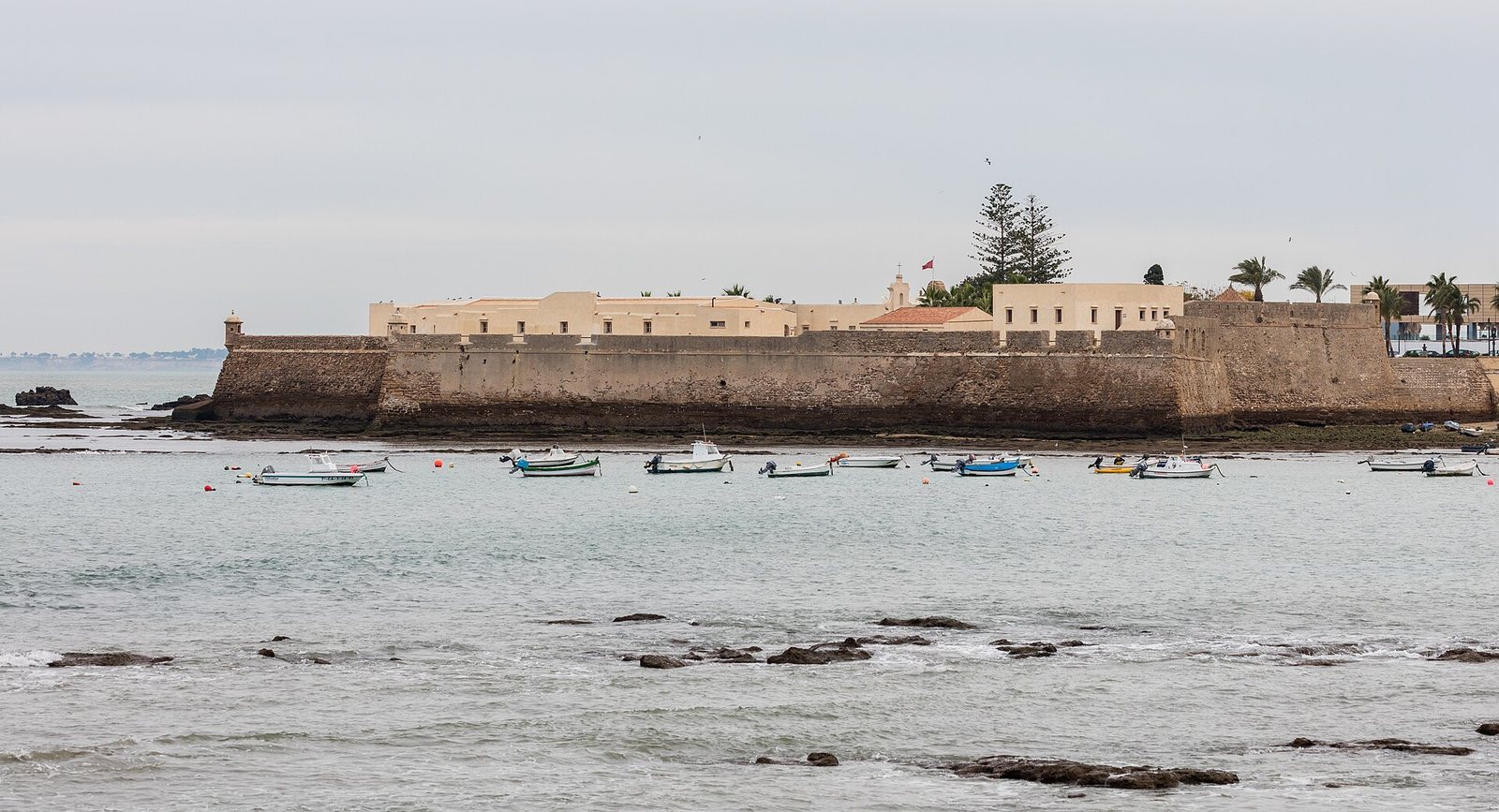
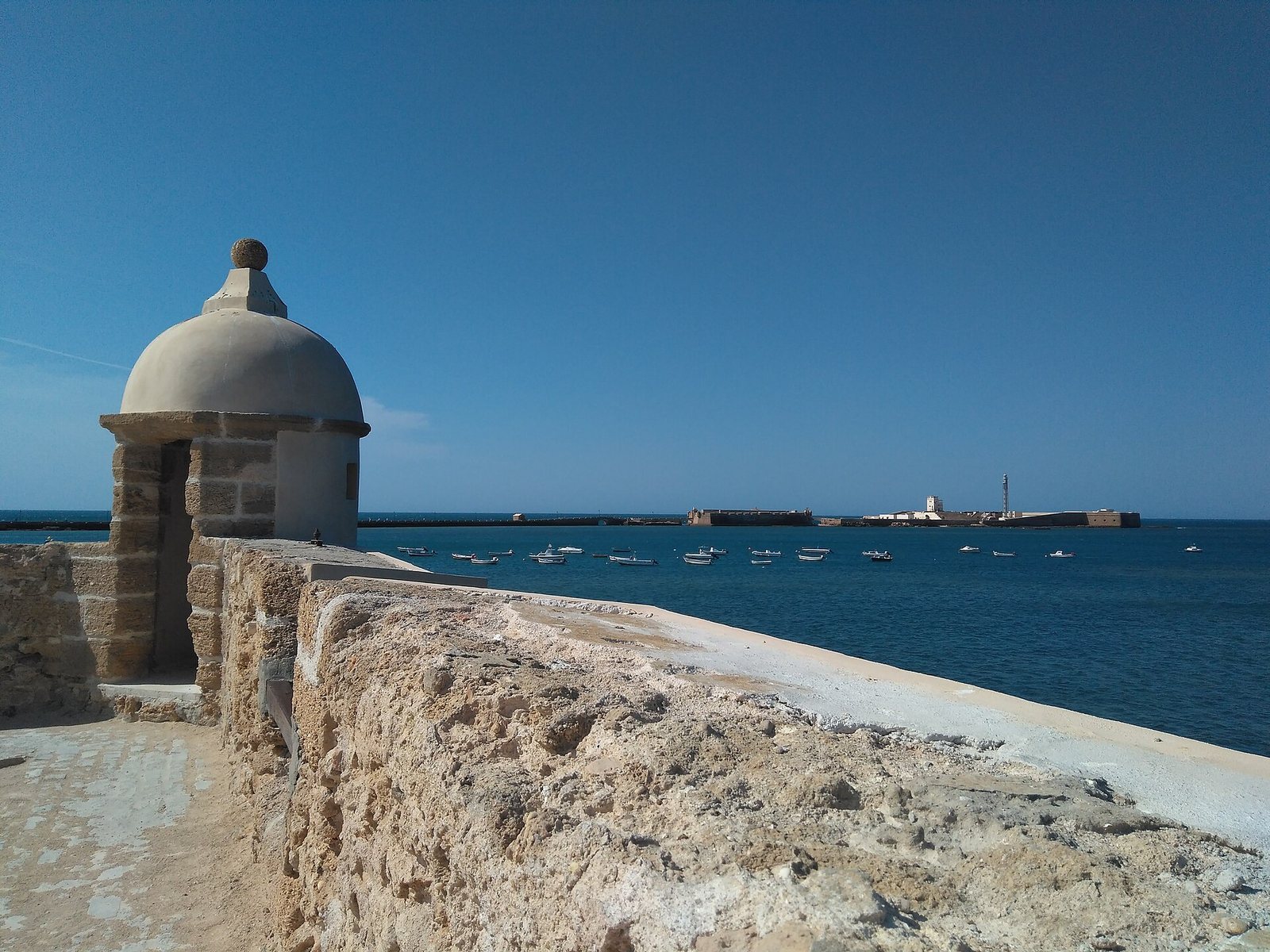
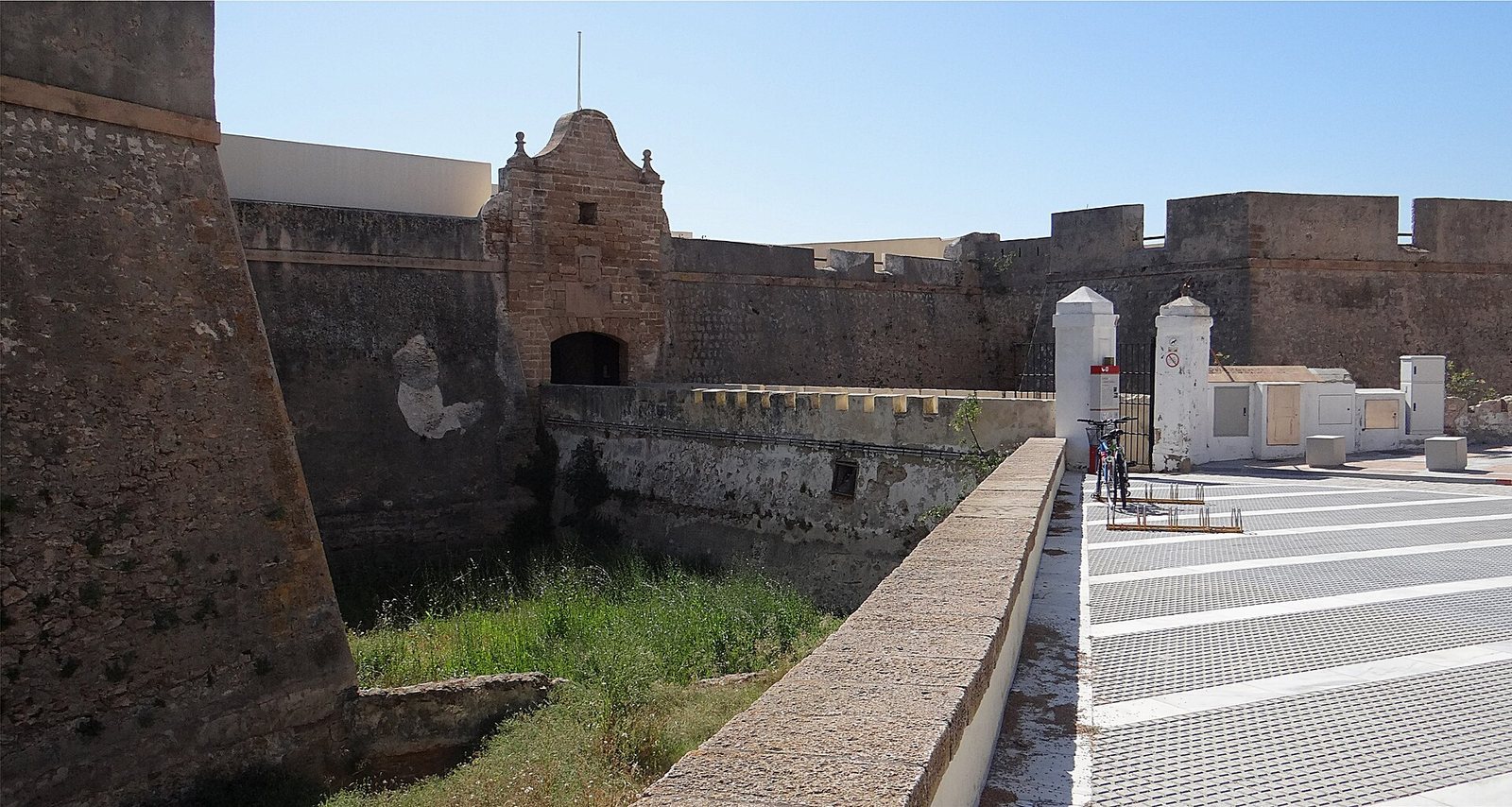
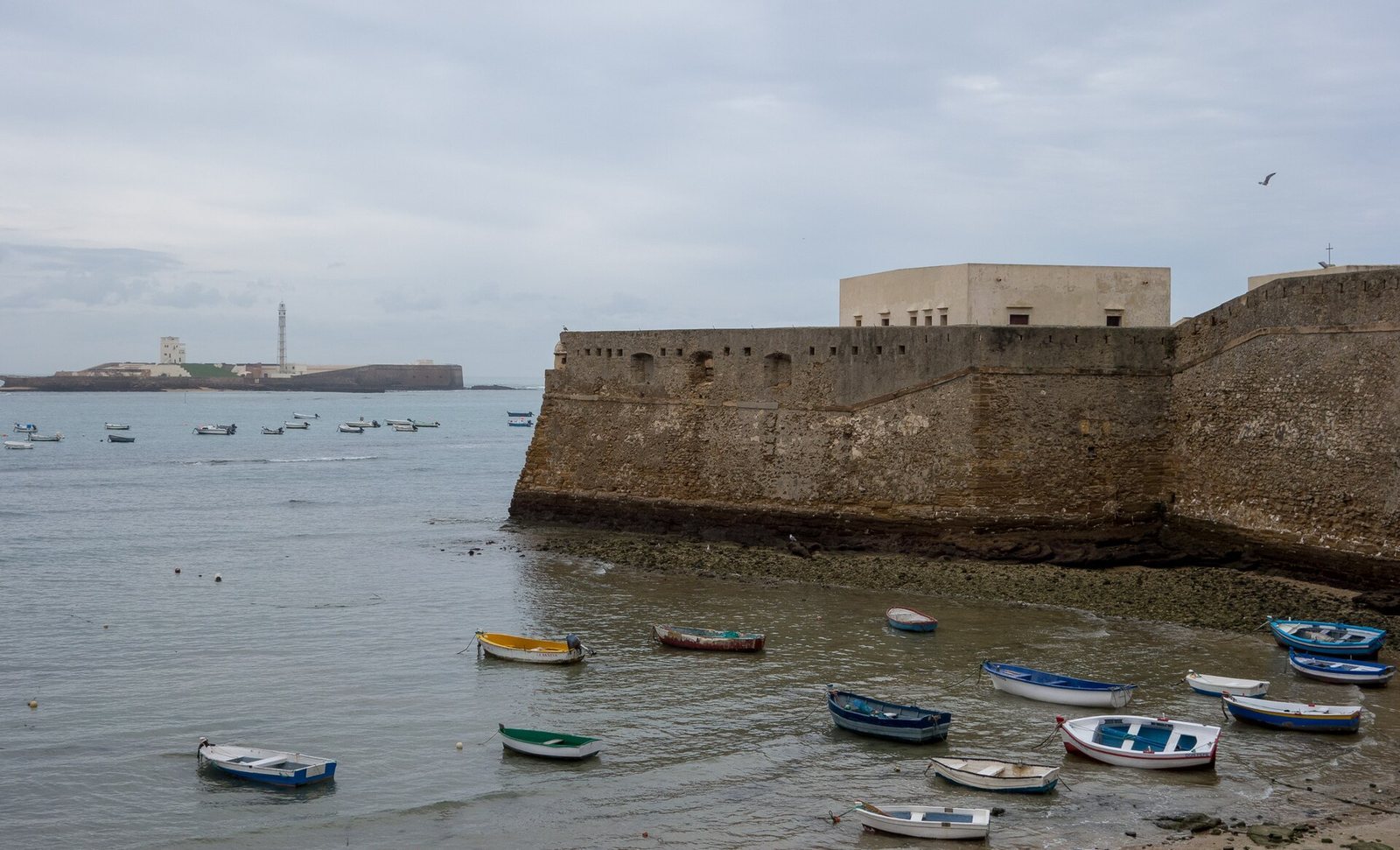
The fortress occupies a rocky slope beside the Atlantic, on the northern side of La Caleta beach. Built of natural stone, its pentagonal plan extends toward the sea in three projecting points. Breakwaters carry the fortification out into the water, while the Castle of San Sebastián stands at the southern end of the beach. A parapet with gun positions runs around the fortress. On the landward side, a moat and drawbridge defend the entrance, with a half-bastion, a projecting work with one face and one flank, on each side of the gate. Sluices retained water in the moat at low tide.
Inner buildings
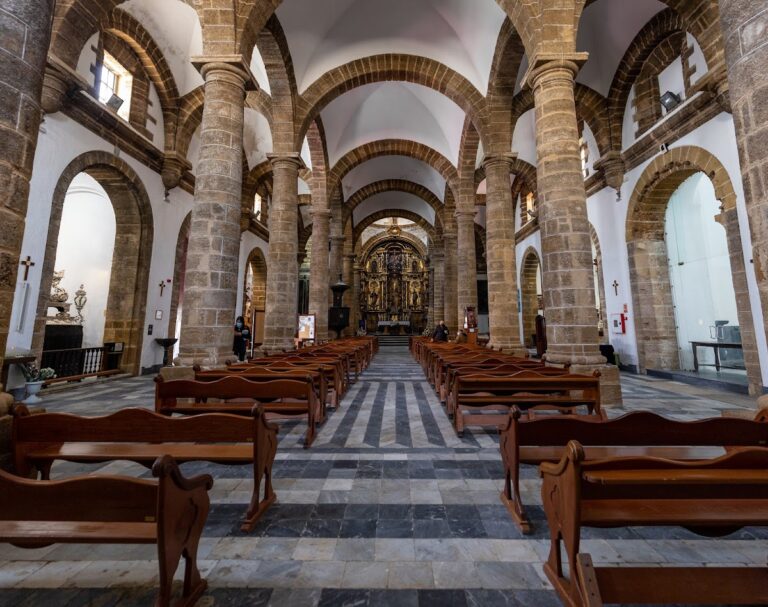
Within the defenses, a level open area is accompanied by several buildings. The complex includes a small chapel dedicated to Saint Catherine of Alexandria and the Immaculate Conception, along with a sacristy. Exhibition spaces occupy buildings on and around the inner courtyard. The castle also has a sentry box, and an associated feature is Viento No. 4, the fish-salting factory of Santa Catalina Bastion.