Castillo de Boltaña: A Frontier Fortress in Spain


Site at a Glance
- Rating
- 4.2
- Popularity
- Low
- Country
- Spain
- Primary era
- Medieval
- External website
- Open
- Eras represented
- Medieval
- Civilizations
- Umayyad
- Site type
- Military
- Remains
- Castle
On this page9 sections
History
Castillo de Boltaña is a military fortification in Boltaña, Spain, built by Muslim forces in the ninth century as part of the frontier defenses of al-Andalus, the Muslim-ruled territory of the Iberian Peninsula. It guarded the Ara Valley and this section of the Pyrenean frontier during the Reconquista, the long expansion of Christian polities into lands ruled by Muslim states. The fortress is sometimes incorrectly called the Castle of the Counts of Sobrarbe, although it was never the official residence of the lords of Sobrarbe, a historic administrative area in the Pyrenees of present-day Aragon.
Muslim Frontier Fortress
The castle’s position above Boltaña gave it a role in defending an important settlement and the surrounding valley. The town had extended up the hillside since Roman times, linking the fortress to a settlement with a long history before the castle was built.
The caliphs of al-Andalus regarded the fortress as important to frontier defense. Abd al-Rahman III, the Umayyad caliph of Cordoba who ruled al-Andalus from 929 to 961, appointed Amrus ibn Muhammad as its governor. This appointment places Boltaña within the administrative and military organization of the Muslim frontier in the tenth century.
Christian Rule and Regional Change
By 941, King García Sánchez I of Pamplona counted Boltaña among his possessions in Sobrarbe. During the eleventh century, the settlement continued to hold strategic value in the early phases of the Reconquista. Gimeno Garcés, a nephew of King Sancho III of Navarre, governed Boltaña from 1028 to 1031. Sancho Galíndez governed it from 1036 to 1080 under King Ramiro I of Aragon.
Boltaña’s regional importance declined during the twelfth century as Aínsa became more prominent, especially after Alfonso I of Aragon granted Aínsa a settlement charter in 1124. In later centuries, Boltaña’s privileges were reduced, and it was legally incorporated as a dependent village of Aínsa without its own fueros, the charters or bodies of local legal rights that shaped municipal government.
In 1430, Juan de Bardají held the lordship of Boltaña. Opposition from local infanzones, members of the lower nobility in medieval Aragonese society, led Alfonso V of Aragon to revoke the town’s grant of fueros and return its powers to the Crown of Aragon, the composite monarchy ruled by the kings of Aragon.
Protected Heritage
Castillo de Boltaña was declared a Property of Cultural Interest in Spain through a resolution dated 17 April 2006, published on 22 May 2006. The designation recognizes the surviving fortress as part of the historical heritage of Aragon.
Remains
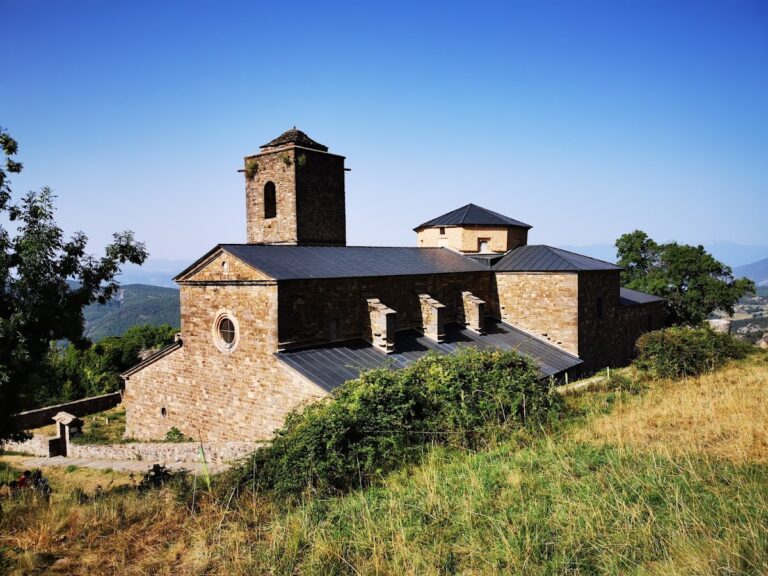
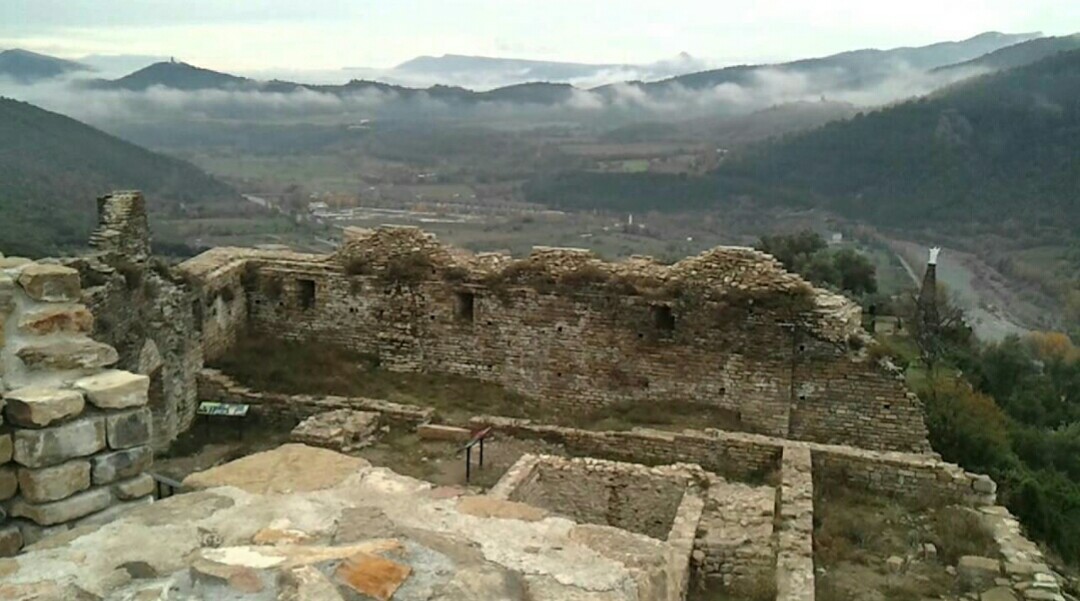
The castle occupies the upper platform of the hill above Boltaña. Its enclosure follows the irregular shape of the hill, producing a compact defensive layout whose narrowing upper end accommodates the tower. The fortification is formed by a pentagonal curtain wall, a defensive wall enclosing the fortified area, with access from the east.
Fortified Enclosure
Curtain Wall and Entrance
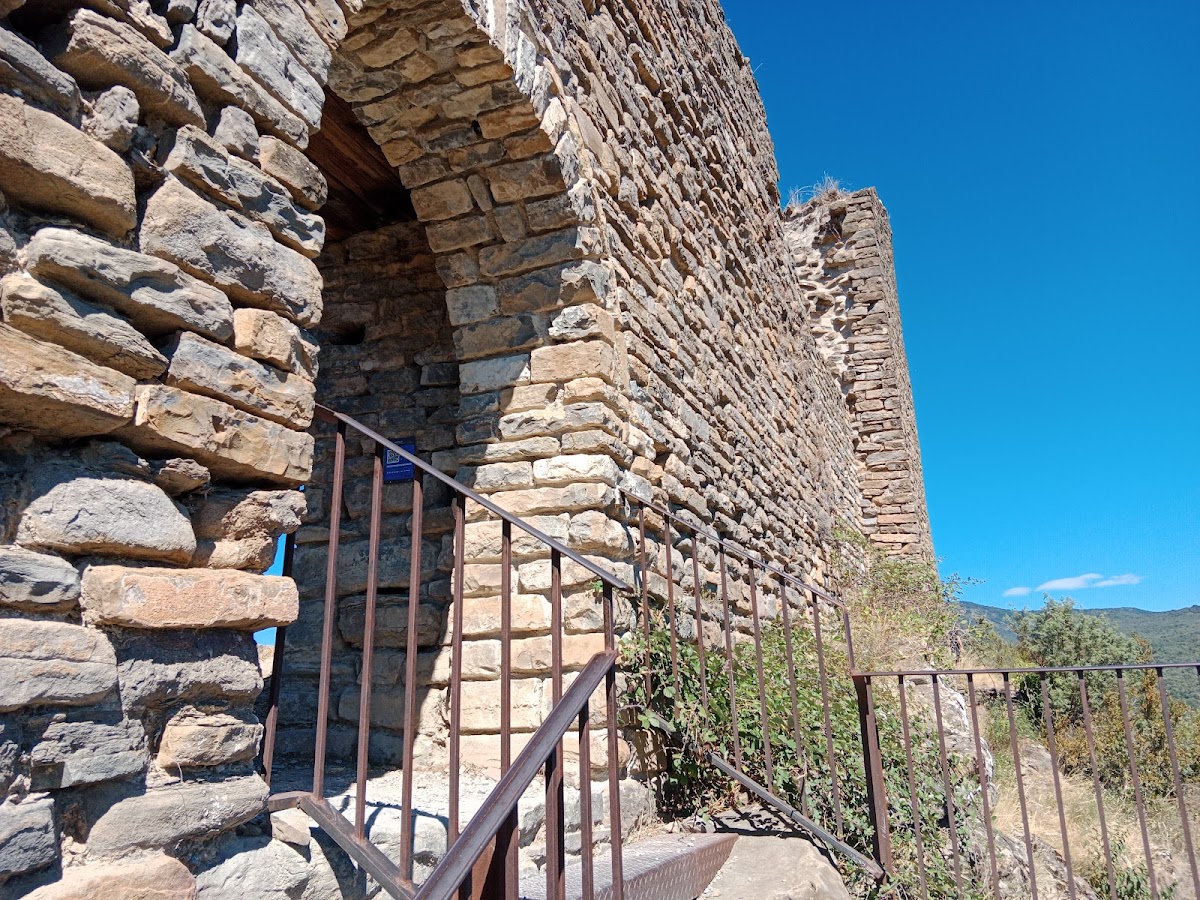
The pentagonal enclosure adapts directly to the hilltop. Its eastern entrance passes through a gateway with a semicircular arch. An arrow slit, a narrow opening through which archers could shoot, is set in each of the eastern and southern walls, providing defensive openings within the wall circuit.
Northern Tower
Surviving Tower Structure
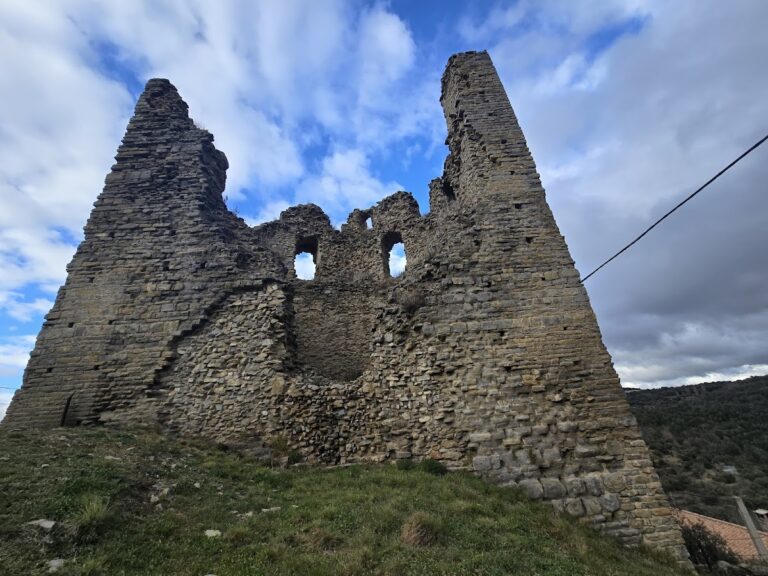
A tower stood at the northern end of the enclosure, where the available space narrows considerably. It was built of roughly dressed stone and had a hexagonal exterior plan with a square interior. The tower is now largely gone, but its position and surviving construction details remain part of the fortress’s physical plan.