Castle of Montalvão: A Medieval Fortress in Nisa, Portugal
Visitor Information
Google Rating: 4
Popularity: Low
Country: Portugal
Civilization: Early Modern, Medieval European
Site type: Military
Remains: Castle
History
The Castle of Montalvão stands in the municipality of Nisa, Portugal, and was constructed by Christian forces during the medieval period. It served as a strategic military site guarding the border with the Kingdom of Castile amid the Christian Reconquest of the Iberian Peninsula.
The site’s defensive function dates back to at least the 12th century, when earlier fortifications were established, indicating its long-standing military importance. Between 1279 and 1325, under the reign of King D. Dinis, the castle was built or significantly rebuilt under the direction of the Order of Christ, a military and religious organization linked to the defense and expansion of Christian territories in Portugal.
By the early 16th century, the castle was documented by Duarte d’Armas, a Portuguese squire known for his illustrated survey of border fortresses. He described the fortress as consisting mainly of a long curtain wall without towers, pierced by a single entrance gate. In 1512, King D. Manuel I reinforced the administrative importance of the settlement by granting a foral, or charter, affirming the village’s municipal rights.
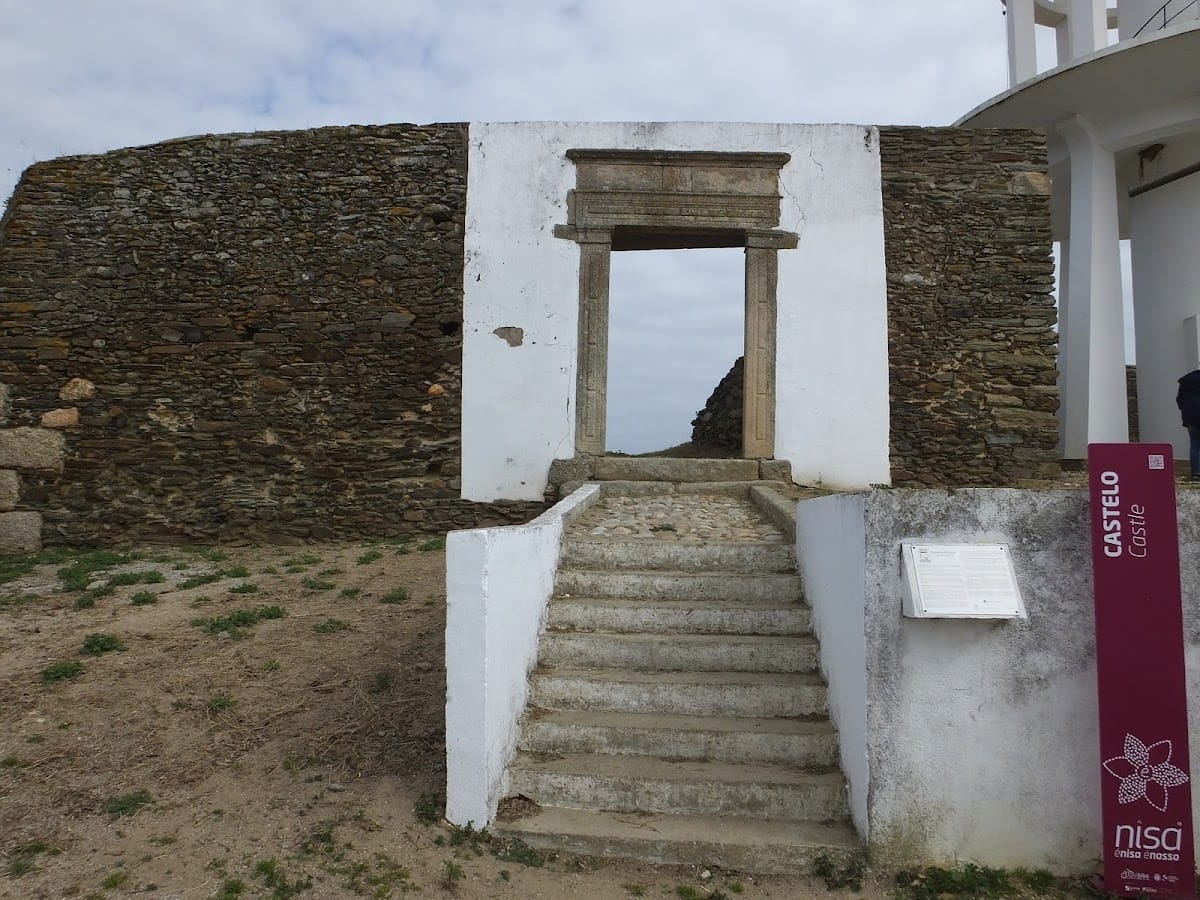
During the upheavals of the 17th century, particularly the Portuguese Restoration War beginning in 1640, Montalvão’s castle remained part of the crucial defensive line protecting the frontier from Castilian incursions. It was in this period that the castle’s main gate was rebuilt, adopting classical elements such as pilasters and an architrave.
Following the loss of its military significance, the municipality of Montalvão was dissolved in 1834. Centuries later, in recognition of its historical and cultural value, the castle was officially protected as a Monument of Public Interest in 2012, with additional safeguards established through a Special Protection Zone.
Remains
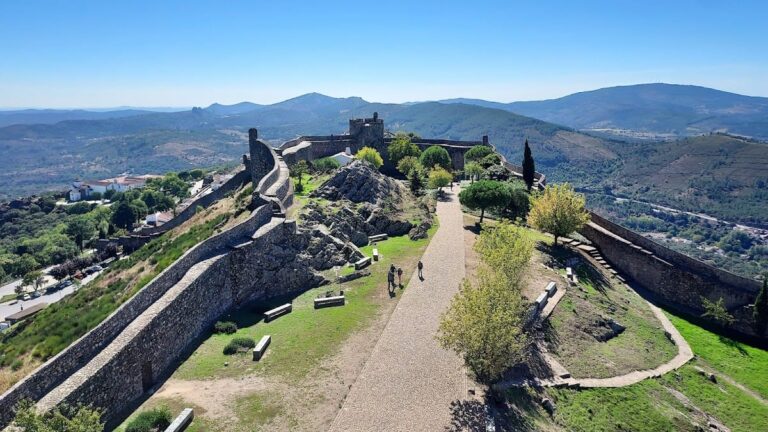
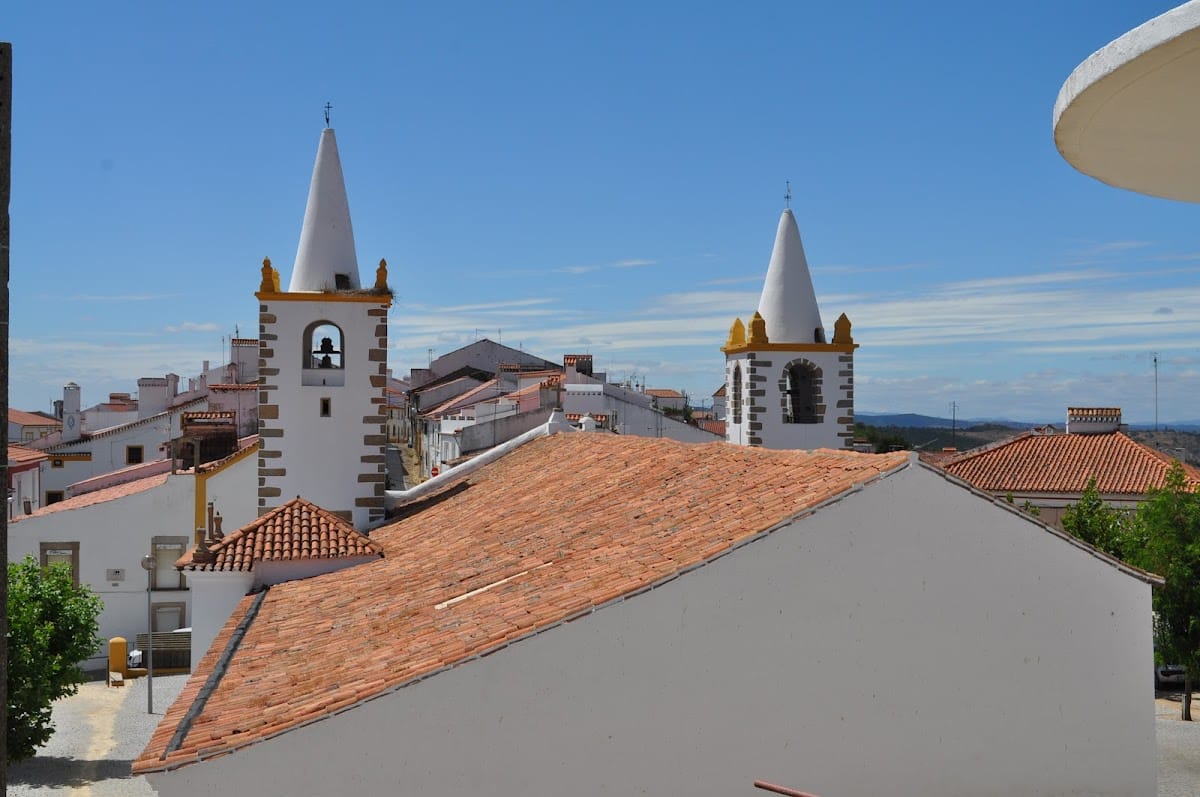
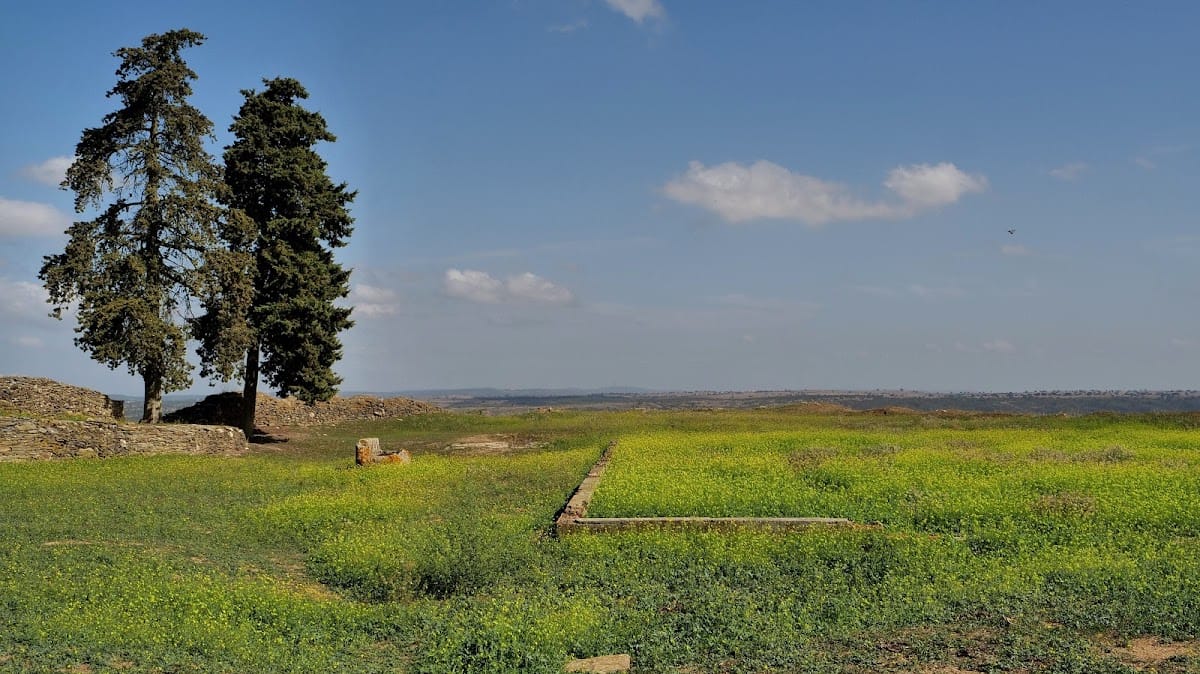
The Castle of Montalvão occupies a hilltop overlooking its surroundings, positioned near the local church in an isolated part of the former village center. Its plan takes on an approximately oval shape, encompassing what was once the heart of the fortress.
Extensive foundations remain, revealing outlines of defensive walls and towers built primarily from shale stone, a common local material. These remains suggest a fortress originally composed of a continuous curtain wall lacking towers, consistent with early 16th-century descriptions. Within the enclosure, cisterns excavated into the rock attest to the castle’s capacity for water storage, a vital feature for withstanding sieges.
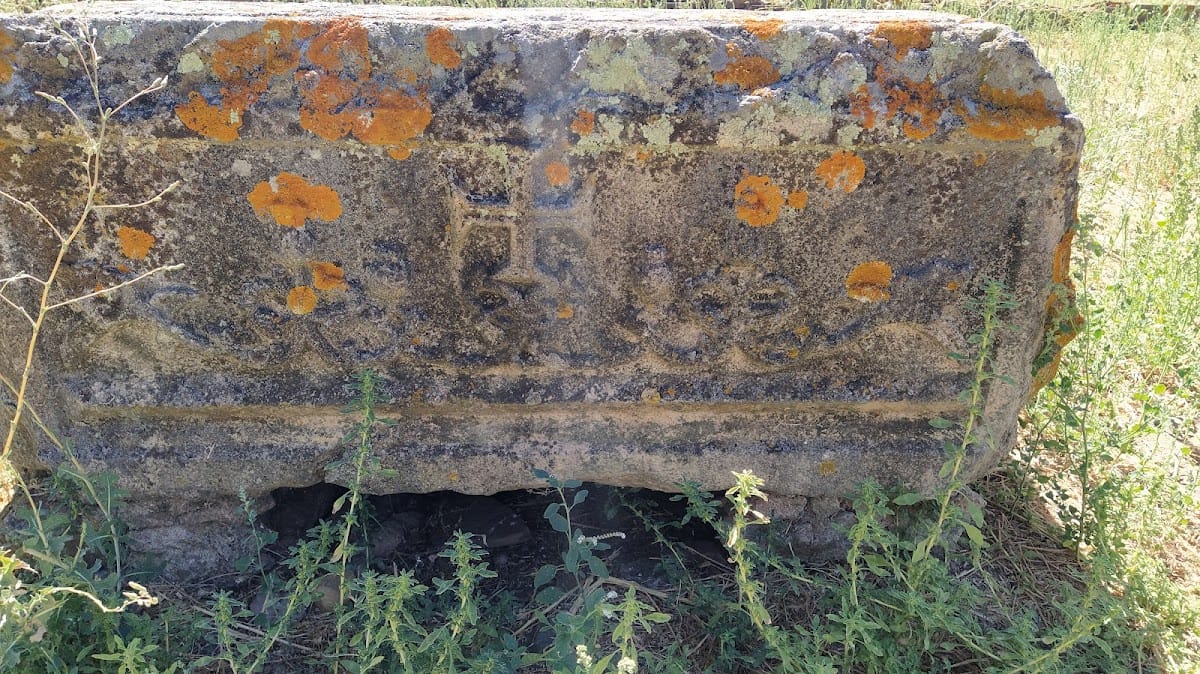
A notable interior artifact is a rectangular stone sepulchral ark, likely a tomb, which bears carved decoration on one face. This includes vegetal motifs and a central cross of Christ, linking the castle to its Christian military custodians.
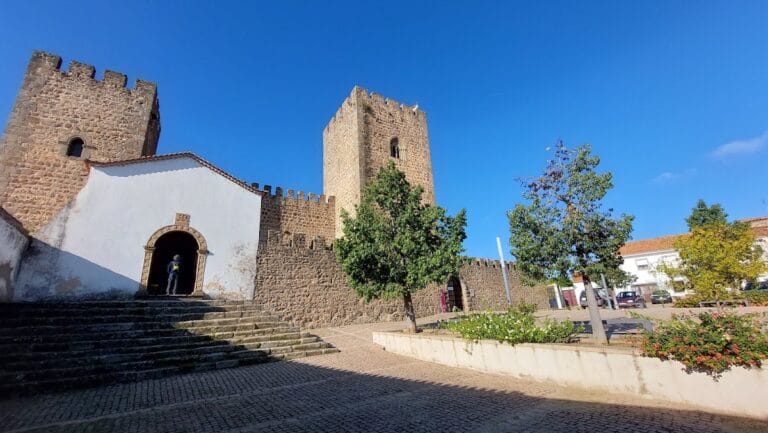
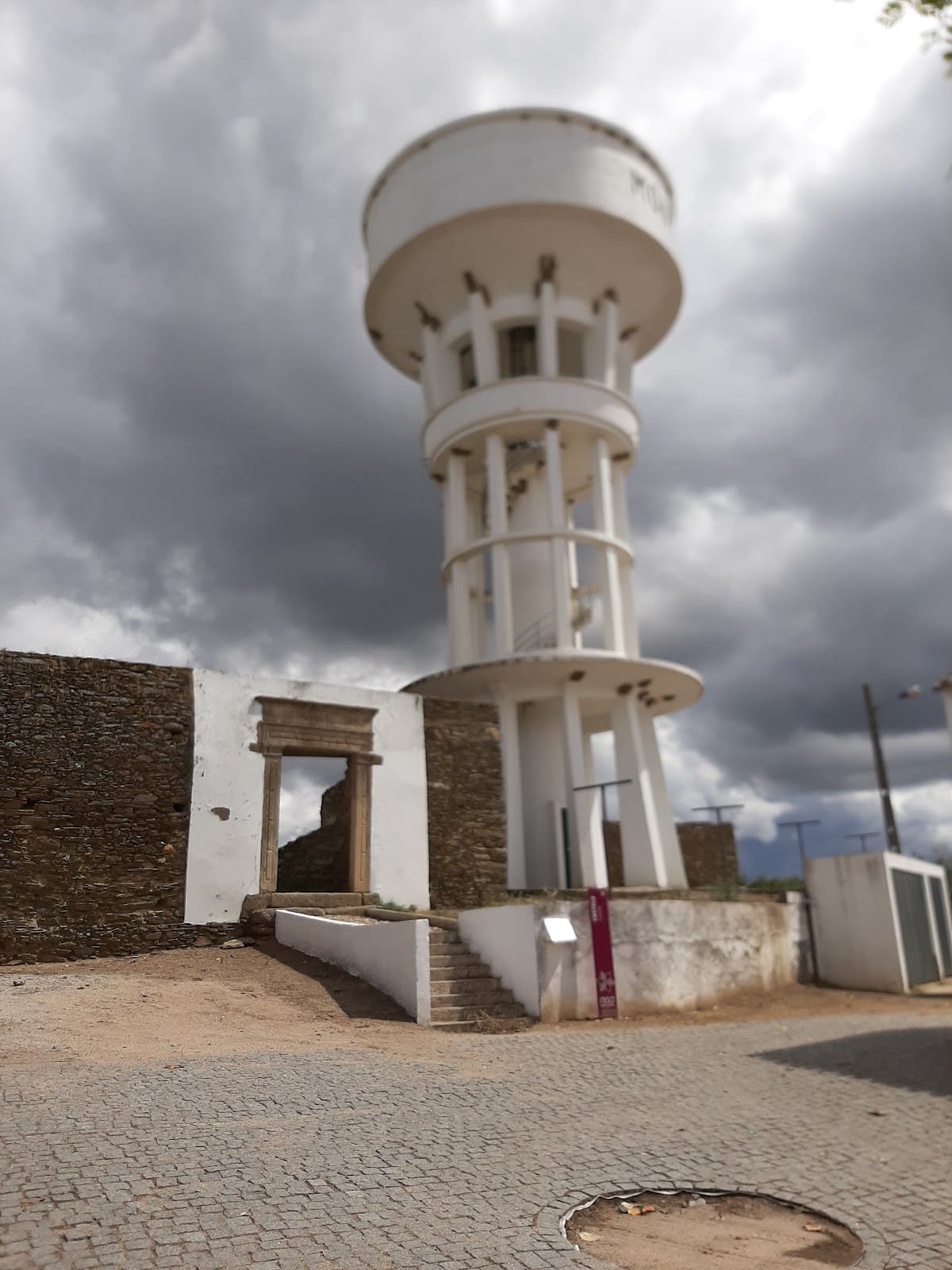
The entrance to the castle, originally a simple gate in the medieval curtain wall, underwent a significant transformation in the 17th century. It was rebuilt with classical architectural elements, including a rectangular lintel supported by pilasters and topped by an architrave, reflecting stylistic trends of the period and possibly a renewed defensive or representative function.
In recent times, a large concrete structure functioning as a water tower and bunker was constructed on the site of the old gate. This modern addition strongly modifies the castle’s historic visage and dominates the enclosure. The former military parade ground within the walls is now deserted and has been used informally to shelter local livestock, marking a shift from defensive use to agrarian reuse.
Together, these remains reflect the castle’s long history as a fortified site adapted over centuries to meet evolving military and administrative needs.
Nearby sites