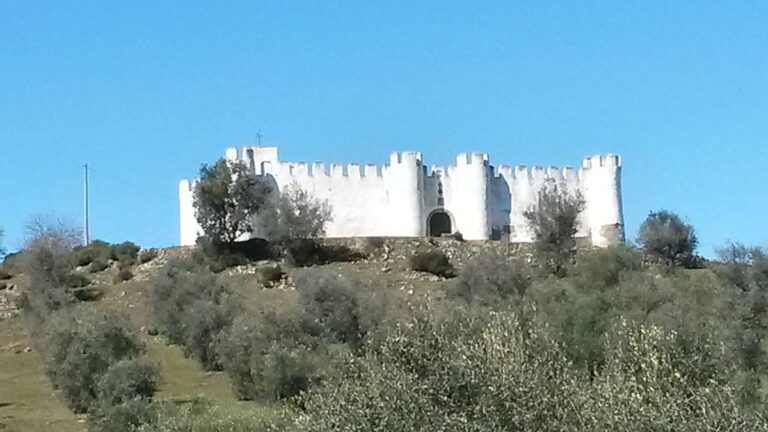
Castelo de Assumar: A Medieval Defensive Fortification in Portugal

Site at a Glance
- Rating
- 3.9
- Popularity
- Very Low
- Country
- Portugal
- Primary era
- Medieval
- Eras represented
- Medieval
- Civilizations
- Portuguese
- Site type
- Military
- Remains
- Castle
On this page9 sections
History
Castelo de Assumar is a small medieval defensive fortification in Portugal, built under King Afonso IV in 1332 to protect the inhabitants of Assumar. The region had already been occupied since the Neolithic, and the settlement passed through the changing control of Christian and Muslim rulers before being definitively recovered by King Sancho I at an uncertain date.
From settlement to royal fortification
Assumar received privileges during the reign of King Dinis in 1298 and became administratively independent of Monforte in 1314. In 1332, Dinis’s son and successor, Afonso IV, ordered the construction of the small fortification. A stone inscription commemorating that work was placed in connection with the building and is now preserved on the south facade of the Church of Nossa Senhora dos Milagres.
During the Portuguese dynastic crisis of 1383 to 1385, Nuno Álvares Pereira, the leading Portuguese commander and constable of the period, is traditionally said to have stopped at the Church of Nossa Senhora dos Milagres after the Portuguese victory over Castile at the Battle of the Atoleiros.
Lordship and military damage
In 1482, King João II granted Gonçalo Alvarez the chief wardenship of Assumar and its castle. The grant also included possession of the reguengo, land or revenue belonging to the Crown, together with the right to collect tolls on people or goods passing through the place. Around 1509, during the reign of King Manuel I, Assumar and its castle were depicted by Duarte de Armas in the Book of Fortresses, an illustrated survey of Portuguese fortifications. Gonçalo Álvares de Abreu, who lived from 1480 to 1512, was then the castle governor.
The castle suffered extensive damage in 1662, when Spanish troops commanded by John of Austria occupied Assumar during the Portuguese Restoration War, the conflict through which Portugal defended its restored independence from the Spanish monarchy between 1640 and 1668. Enemy troops occupied the settlement again in 1701, causing further damage to the defenses.
Demolition and survival
Part of the fortification remained standing in the nineteenth century, but the surviving standing structures were later demolished. A short section of the original curtain wall endured, while the construction inscription was transferred to the south facade of the church tower. The surviving remains are not classified by Portuguese public authorities.
Remains
Castelo de Assumar survives as fragmentary physical evidence of a small defensive enclosure. Its original layout included a curtain wall, a defensive barrier enclosing or connecting parts of the fortified site. The surviving wall section and the transferred construction inscription provide the principal material evidence associated with the medieval fortification.
Surviving fortification and inscription
Curtain wall
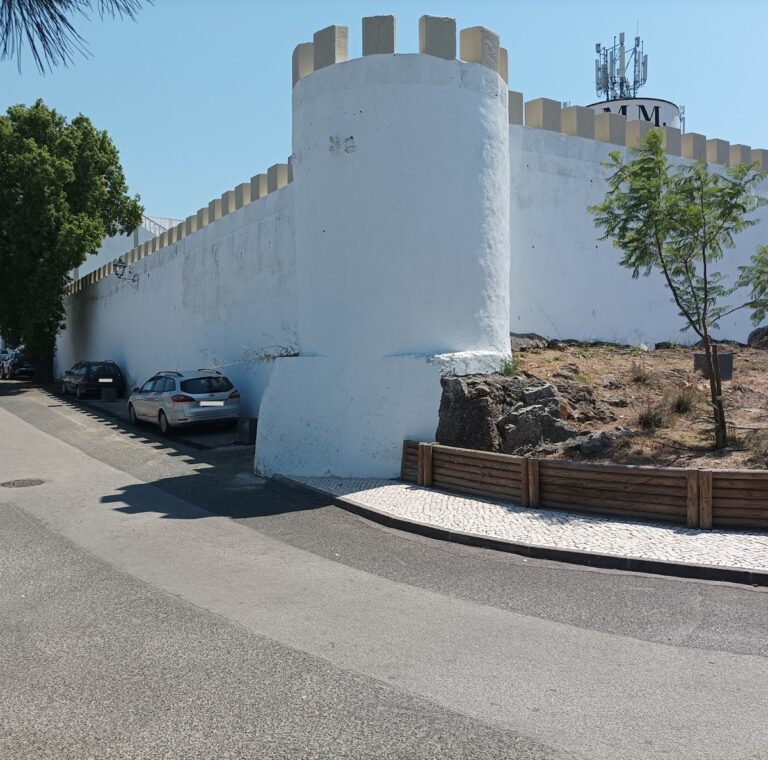
A short section of the castle’s original curtain wall remains. It formed part of the defenses built in 1332 for the protection of Assumar’s inhabitants. The surviving fragment is the remaining visible portion of the fortification after the standing structures were demolished.
Construction inscription
The inscription that commemorated the construction of the fortification is an epigraphic inscription, meaning a text fixed onto durable material to record an event or construction. It was transferred to the south facade of the Church of Nossa Senhora dos Milagres in the nineteenth century and remains associated with the history of Castelo de Assumar.
Historical representation
Duarte de Armas’s depiction of Assumar and its castle in the Book of Fortresses provides a sixteenth-century visual record of the town and its defenses, made around 1509. It belongs to the period when Gonçalo Álvares de Abreu served as governor and complements the surviving wall and inscription as evidence for the castle’s later medieval form.