Castello di Santimento: A Medieval Lowland Castle in Italy


Site at a Glance
- Rating
- 4.2
- Popularity
- Very Low
- Country
- Italy
- Primary era
- Medieval
- Eras represented
- Medieval
- Civilizations
- Holy Roman Empire
- Site type
- Military
- Remains
- Castle
On this page7 sections
History
Castello di Santimento is a medieval lowland castle in Santimento, Italy, built during the thirteenth century in the open Po Plain near the Po River. It was first documented in 1291, when the wealthy merchants Giovanni and Umberto Palmieri owned the castle and financed work on the local church.
From the Palmieri to the Scotti
In 1299, the castle and its associated lands passed to Alberto Scotti as repayment of a debt owed by the Palmieri. Alberto later transferred the property to Giovanni Scotti, the son of Rinaldo Scotti, in exchange for 2,500 lire. In 1303, Alberto negotiated a much wider exchange with Alberico, bishop of Piacenza. The agreement transferred the fortress of Varsi and its possessions in return for Castello di Santimento, 3,000 Piacenza pertiche, numerous tithe districts, several vassal holdings, and the villages of Troia, Soprarivo, Calendasco, and Rottofreno. It also gave up the patronage claimed over Santimento’s parish church. A pertica was a historical land-measurement unit whose size varied by locality.
Conflict under the Visconti
In 1313, mercenaries paid by Galeazzo I Visconti raided the village and castle after the occupation of Piacenza. The operation targeted the local Guelph faction, a political group traditionally aligned with the papacy in conflicts involving papal authority and northern Italian dynastic powers.
During the war between the papacy and the Visconti Duchy of Milan in 1372, the castle was controlled by the Arcelli family. It rebelled against its owners and joined the side supporting the pope. In 1392, the fief of Santimento belonged to Bishop Pietro IV de Manieri, who served as the protomedicus, or chief physician, of Galeazzo II Visconti. In 1412, Filippo Maria Visconti, Duke of Milan and a member of the ruling Visconti dynasty, granted Santimento to the Arcelli family again.
The Arcelli dispute and episcopal control
The Arcelli still owned the castle in 1449. In 1482, it was taken from them and returned to the possessions of the Diocese of Piacenza. The bishop based his claim on the property exchange arranged by Alberto Scotti, while the Arcelli relied on an investiture for which they paid two hunting dogs each year to the Duke of Milan.
After Bishop Fabrizio Marliani paid 1,000 gold scudi to the Duke of Milan to secure ownership of the fief, Francesco Arcelli planned to assassinate him during Christmas Eve Mass in Piacenza Cathedral. The plot was uncovered before it could be carried out. The would-be assassins were arrested, taken to Milan, and sentenced to death, while the Milanese Senate declared the Arcelli deprived of the fief.
Once he had recovered the castle, Bishop Marliani began a series of works because the building was probably in a deteriorated condition. Despite further attempts by the Arcelli to regain Santimento, the castle remained under ecclesiastical control until the second half of the nineteenth century. Bishop Giovanni Battista Scalabrini then initiated its sale and reinvested the proceeds in acquiring a country house at San Polo in Podenzano. The castle was later altered and restored, and it is now privately owned in good condition.
Remains
Brick Plan and Main Facade
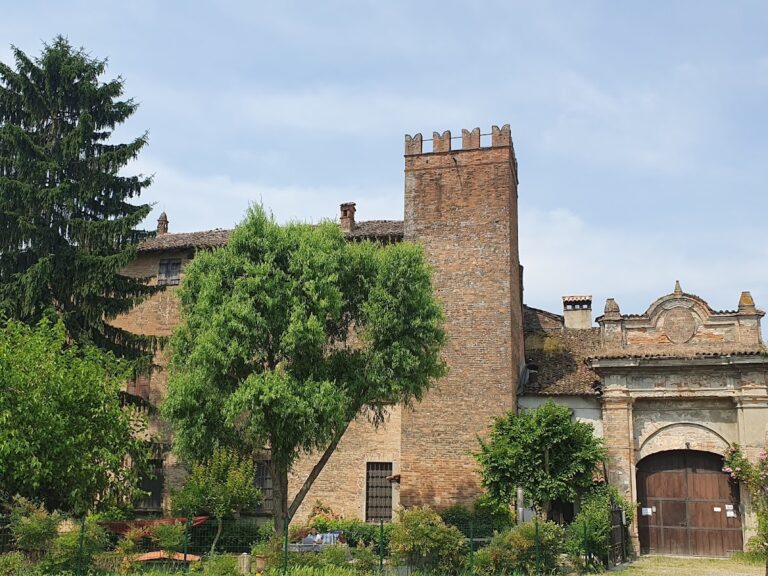
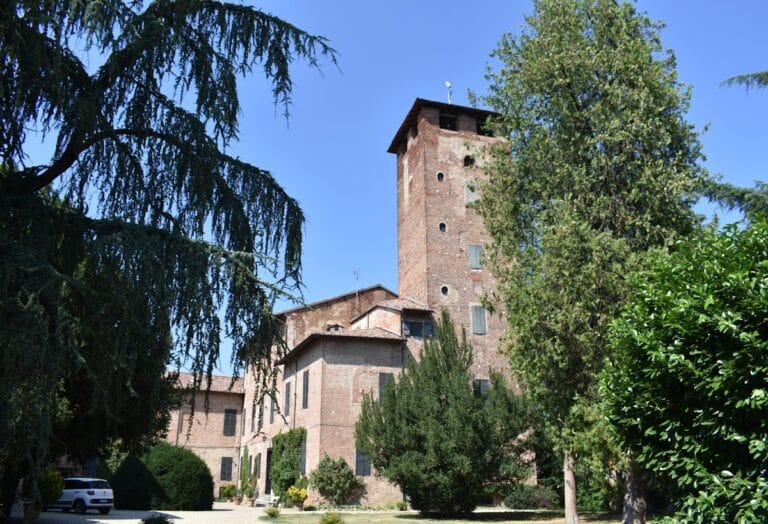
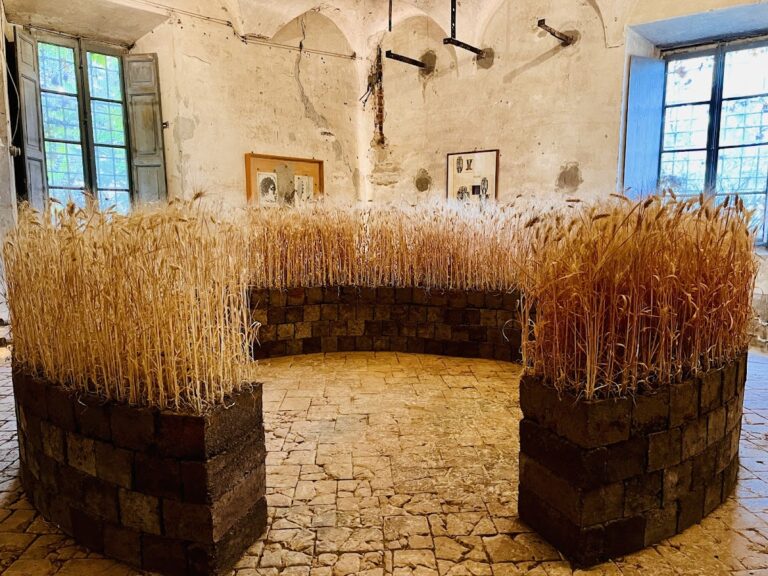
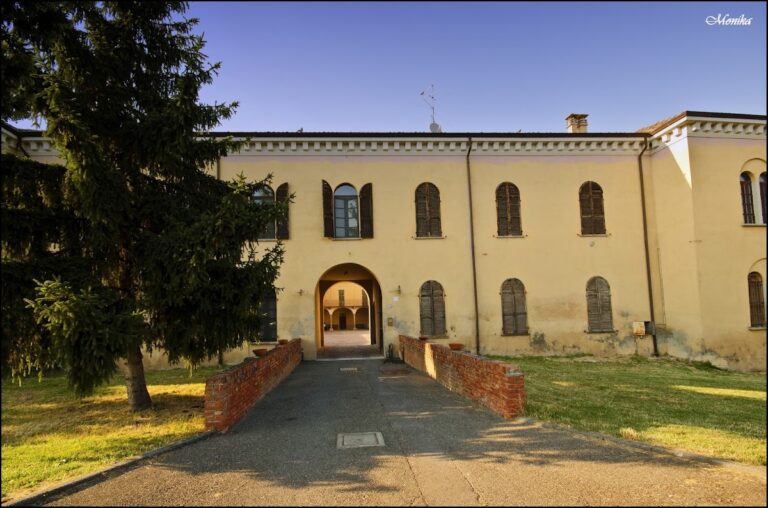
Castello di Santimento is a brick fortification with a rectangular plan. Its present appearance reflects repeated alterations rather than a wholly preserved medieval form. Several original elements remain, particularly on the exterior of the main facade, while the interiors have lost much of their original character.
Towers, Entrances, and Moat
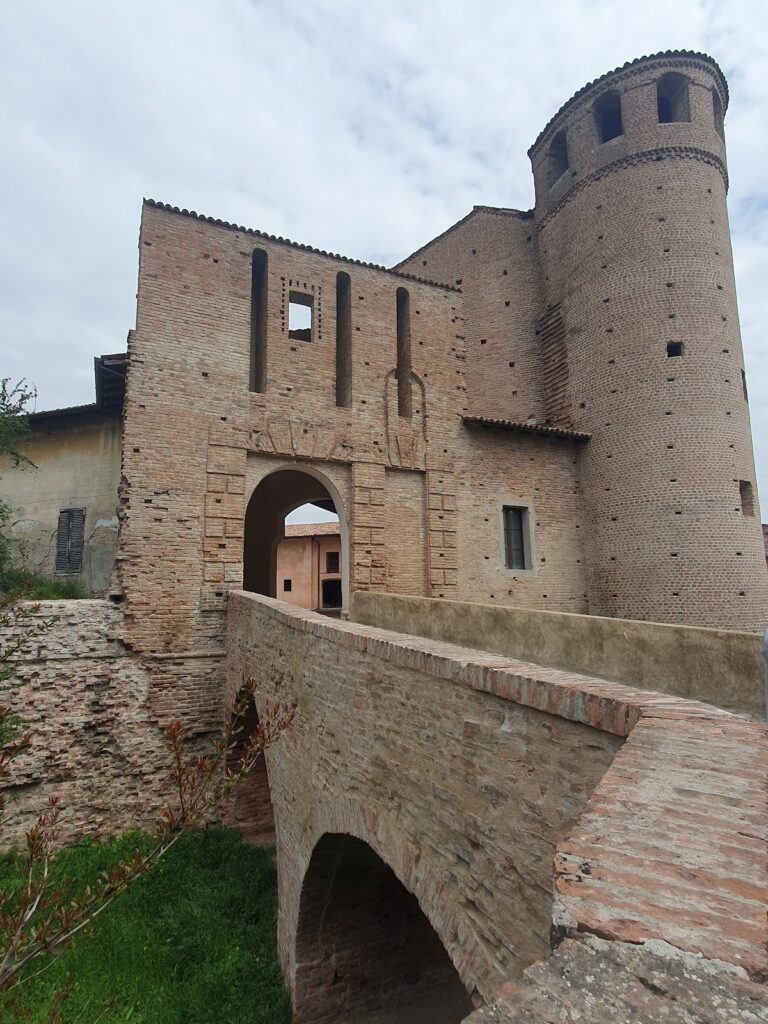
The square-plan keep, the principal fortified tower of the castle, was raised so that it stands flush with the main facade. The adjoining tower was also heightened and served as a postern, or secondary entrance. The main entrance originally crossed the surrounding moat by a drawbridge, with a smaller pedestrian drawbridge alongside it. The moat remains in place. Above the structural recesses for the drawbridge is a decorative brick frieze arranged in a saw-tooth pattern.
Nearby sites