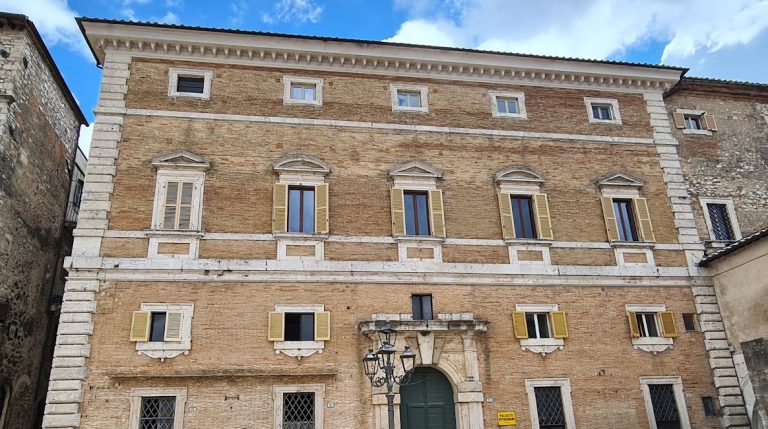
Castello di San Girolamo: A Franciscan Convent near Narni, Italy


Site at a Glance
- Rating
- 3.7
- Popularity
- Very Low
- Country
- Italy
- Primary era
- Modern
- Eras represented
- Medieval, Modern
- Civilizations
- Italian, Papal States
- Site type
- Domestic
- Remains
- Elite Residence
On this page8 sections
History
Medieval foundations and Franciscan use
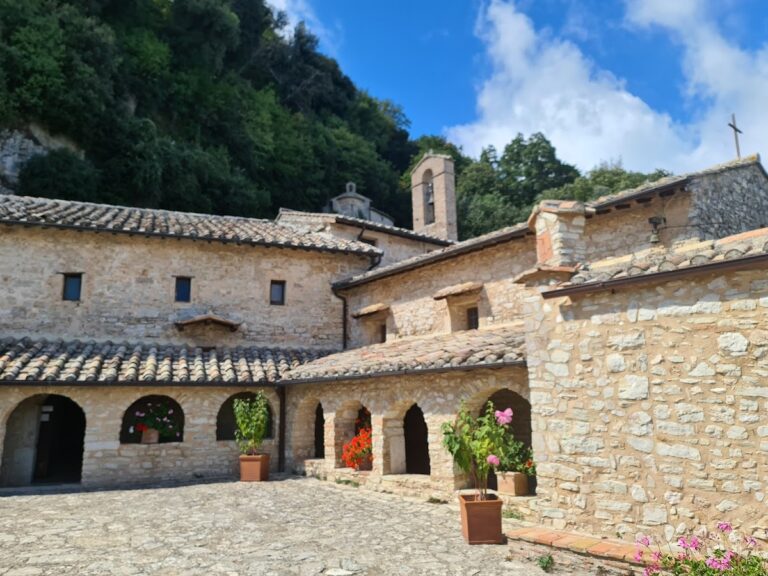
Castello di San Girolamo is an ancient Franciscan convent in Italy, near Narni, whose construction began around 1300. An earlier building on the site belonged to Benedictine nuns, members of a monastic tradition following the Rule of Saint Benedict, from the twelfth or thirteenth century until about 1413.
After that period, the Capococcia family transformed the building into a palace. They altered parts of the complex and removed some of its paintings. In 1471, Cardinal Berardo Eroli, a senior official of the Catholic Church, carried out an extensive renovation and donated the complex to the Friars Minor, the Franciscan order associated with Saint Francis of Assisi. The friars used it as a convent for approximately four centuries.
Palace, municipal property, and religious residence
Italian laws suppressing religious institutions in 1866 and 1867 transferred the convent into municipal ownership. Its movable property, including the choir, was sold at auction. The property was purchased in 1896 by the Count of Valbranca, who reshaped it as a residence for his daughter, Enrica dei conti Weiss di Valbranca (1880–1947). She later married Prince Luigi Alfonso of Bourbon-Two Sicilies, Count of Roccaguglielma (1873–1940), from the dynasty that had ruled the former Kingdom of the Two Sicilies.
From approximately the 1920s or 1930s until the 1960s or 1970s, the complex housed students and priests of the Missionaries of the Sacred Heart of Jesus. This Catholic religious institute devoted to missionary activity operated a college or seminary there, training young men, some of whom later became priests and missionaries. After the missionaries withdrew, the building entered a period of deterioration and abandonment.
Recent ownership
In December 2010, the Municipality of Narni transferred the property to new owners, prominently including the local Diocesan Institute for the Support of the Clergy. The purchasers planned to convert the complex into a four-star accommodation facility with a mainly religious purpose, while also permitting sporting, cultural, and educational uses. The church remains associated with the Catholic tradition and the Diocese of Terni-Narni-Amelia.
Remains
Surviving complex and artworks
Church and incorporated remains
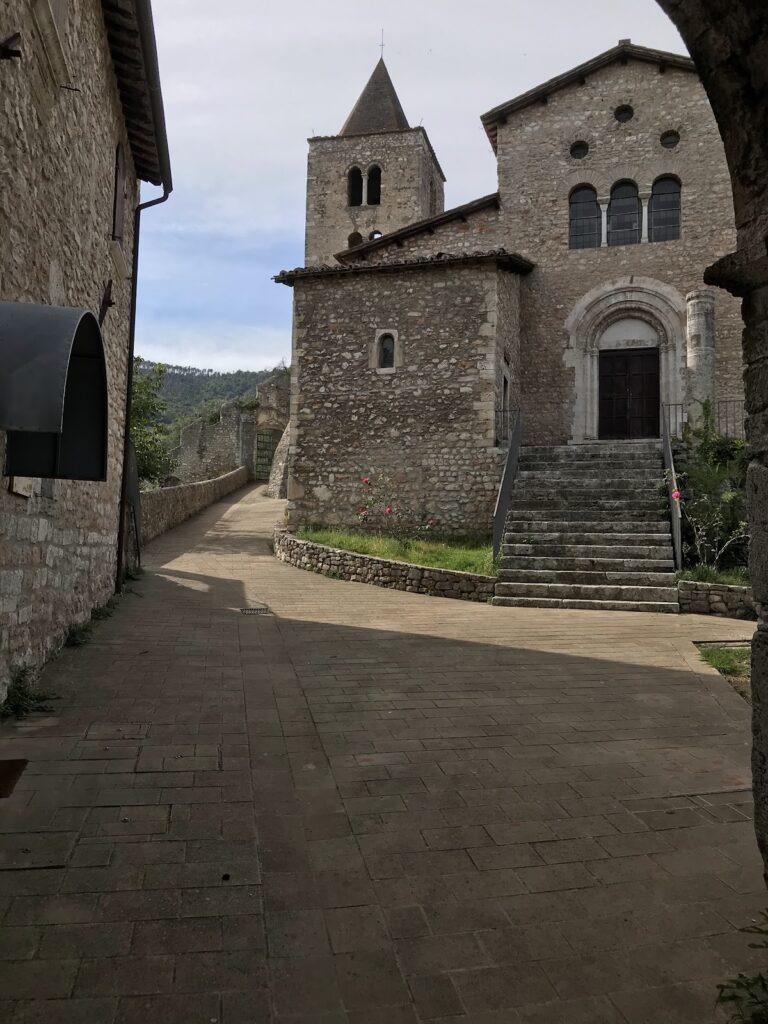
The surviving historic elements include the church, the base of the bell tower, and a few other remains incorporated into the present nineteenth-century building. Together, these fragments preserve parts of the earlier convent within the later residential structure.
Paintings and altarpiece
A large canvas depicting Saint Jerome hangs at the rear of the apse, the rounded or polygonal end of the church sanctuary. It replaced the Coronation of the Virgin of Narni, a celebrated altarpiece by the Florentine Renaissance painter Domenico Ghirlandaio, commissioned for the church by Cardinal Berardo Eroli around 1486. The altarpiece remained in the church until 1871, was then kept for years in Narni’s Municipal Palace, and is now held in the Eroli Museum.
Restoration detached the former frescoes from the building, transferred them onto canvas, and preserved them elsewhere. Their treatment forms part of the complex’s later history of alteration and conservation.