Sacro Speco di San Francesco: A Franciscan Sanctuary near Narni, Italy


Site at a Glance
- Rating
- 4.8
- Popularity
- Low
- Country
- Italy
- Primary era
- Medieval
- External website
- Open
- Eras represented
- Medieval, Early Modern
- Civilizations
- Papal States
- Site type
- Religious
- Remains
- Sanctuary
On this page12 sections
History
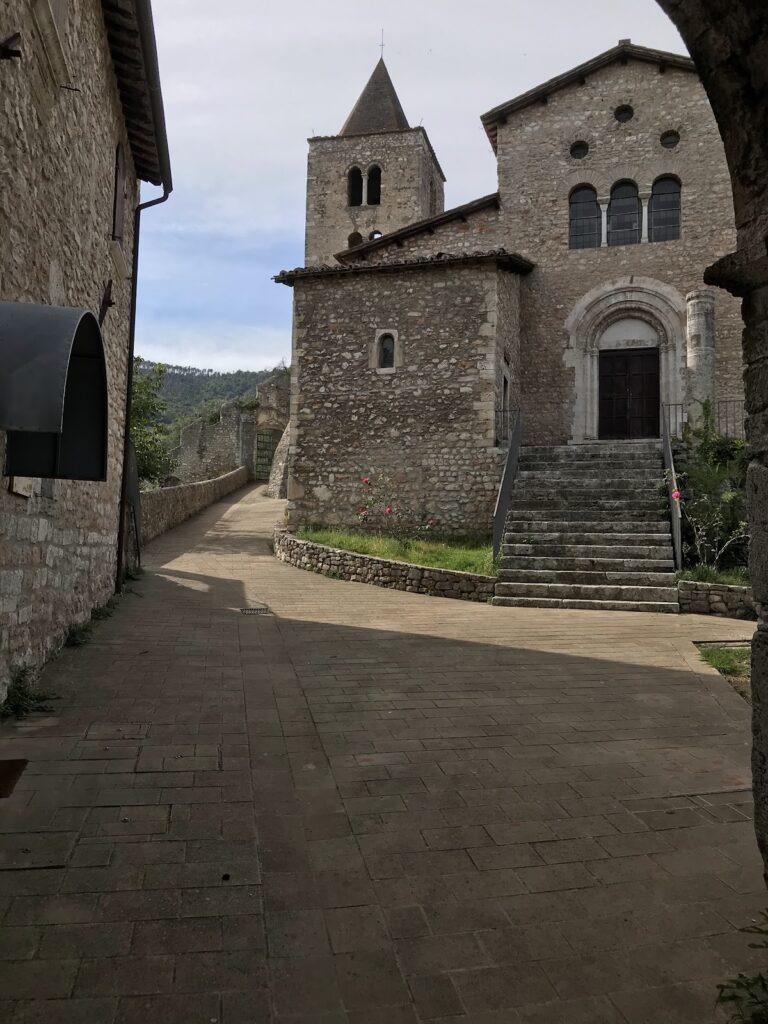
Sacro Speco di San Francesco is a Catholic sanctuary near Narni, Italy, founded by Benedictines around the year 1000 as the Hermitage of Sant’Urbano. Its early religious complex included the Oratory of San Silvestro and several caves, while the sanctuary’s consecration is dated to 1213. Associated with the Franciscan movement and within the Diocese of Terni-Narni-Amelia, it became an important place of pilgrimage and prayer.
The Benedictine hermitage
The Benedictines, members of the monastic order shaped by the Rule of Saint Benedict, established the original hermitage in the woodland near Narni. The early foundation combined the Oratory of San Silvestro with caves in the rocky landscape. This setting later provided the physical and spiritual framework for the sanctuary’s Franciscan associations.
Saint Francis and the sanctuary
Saint Francis of Assisi, whose life and teachings gave rise to the Franciscan movement, arrived at the hermitage in 1213. The site then became a place of meditation and prayer for the Franciscan community. Francis often withdrew there in solitude, using both the small church and a rocky cleft higher in the woodland.
During an illness, Francis remained at the hermitage while the friars built a small stone cell beside the cleft, together with a small oratory. These structures allowed him to pray without returning to the church. Tommaso da Celano, a thirteenth-century Franciscan friar and early biographer of Francis, included accounts of miracles connected with the site in his Treatise on Miracles.
One tradition tells that, when wine was unavailable, Francis blessed water, which then acquired the taste of wine and helped him recover. Another relates that, while convalescing and using a staff, he planted it in the ground as he left the cleft. The staff is said to have sprouted into a large chestnut tree, identified by tradition with the old tree growing in front of his cell.
Later Franciscan development
The complex expanded over the centuries. On 19 March 1654, Father Faostino da Toscolano completed writing the Itinerary of the Holy Land at the site. In the nineteenth century, the convent was first suppressed and later reopened. Following restoration, friars again lived there from 1942.
The Convent of San Bernardino was founded by Bernardino of Siena, a fifteenth-century Franciscan preacher associated with the promotion of observant religious discipline, to accommodate novices of the order. The convent also housed Bernardino, Blessed Giovanni Buonvisi of Lucca, and Blessed Pietro of Rieti.
Remains
The sanctuary stands near Narni at approximately 600 metres above sea level. Its central natural feature is the speco, a rocky fissure about 60 metres long that descends almost vertically toward the valley. A pedestrian way called Viale del Perdono leads into the complex, while a woodland avenue continues from the hermitage toward the fissure and the buildings associated with Saint Francis.
The entrance complex
Entrance church
The small entrance church was built between 1585 and the early seventeenth century. Its single nave contains a sixteenth-century wooden Crucifix and a seventeenth-century tabernacle, a consecrated container used in Catholic churches to reserve the Eucharist. The chapel on the right holds a 1595 painting of the Madonna and Child enthroned between Saints Bernardino and Catherine, attributed to Simone De Magistris. The painting came from the Lucertini Chapel at Attigio near Fabriano and was donated to the sanctuary by private individuals in 1995.
San Silvestro and the cloister
A fifteenth-century cloister, a covered walkway arranged around an open courtyard, adjoins the entrance church and gives access to the Chapel of San Silvestro. The Benedictine oratory was built around the year 1000 and has a fourteenth-century fresco in its apse, the curved end of the chapel, showing the Crucifix, the Madonna, Saint John the Evangelist, Saint Francis, and Saint Sylvester. Other frescoes depict Saint Clare, Saint Jerome, and Saint Catherine of Alexandria.
Behind the apse is an ancient well traditionally identified as the source of the water that Francis transformed into wine. The cloister also leads to the fifteenth-century Refectory of San Bernardino, a communal dining room that preserves old wooden tables and a stone washbasin. The convent’s cells occupy the upper floor.
The rocky cleft and Franciscan buildings
Oratory and cell of Saint Francis
Within the rocky cleft, votive offerings are placed in the area where Francis traditionally withdrew for prayer. An ex voto is a devotional offering made in fulfillment of a vow or in thanksgiving for divine assistance. The Oratory of San Francesco contains two frescoes depicting the miracle of the water transformed into wine. Beside it stands the small stone cell built for Francis, which preserves his wooden bed in a glass case.
Colonna dell’Angelo
In front of the oratory is the tall, isolated rock known as the Colonna dell’Angelo. Tradition holds that an angel appeared there to Francis while playing a zither, giving the rock its name and its place within the devotional landscape of the sanctuary.
Chestnut tree and Bernardino chapel
The meadow is dominated by an ancient chestnut tree traditionally identified with the tree that grew from Francis’s planted staff. Nearby, a chapel with an altar occupies a niche in the rock and commemorates the preaching of Saint Bernardino.