Castello di Pietragavina: Medieval Fortification in Lombardy

Site at a Glance
- Rating
- 4.2
- Popularity
- Very Low
- Country
- Italy
- Primary era
- Medieval
- Eras represented
- Medieval
- Civilizations
- Holy Roman Empire
- Site type
- Military
- Remains
- Castle
On this page8 sections
History
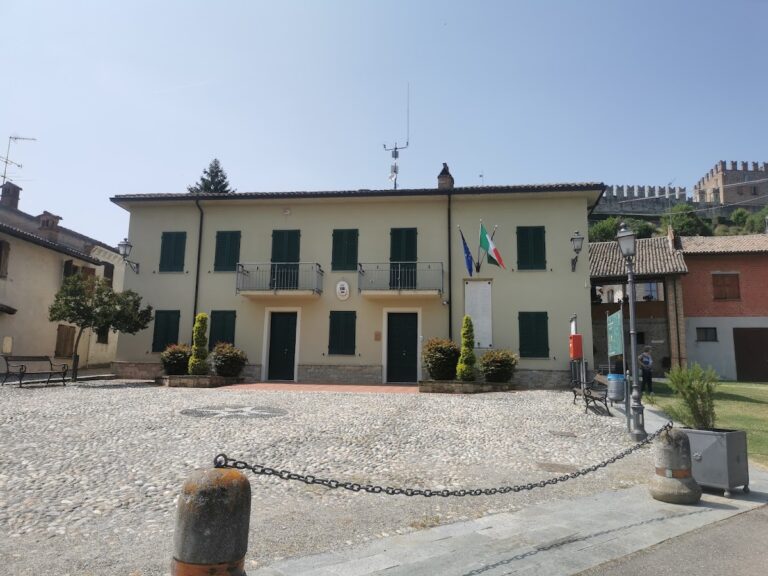
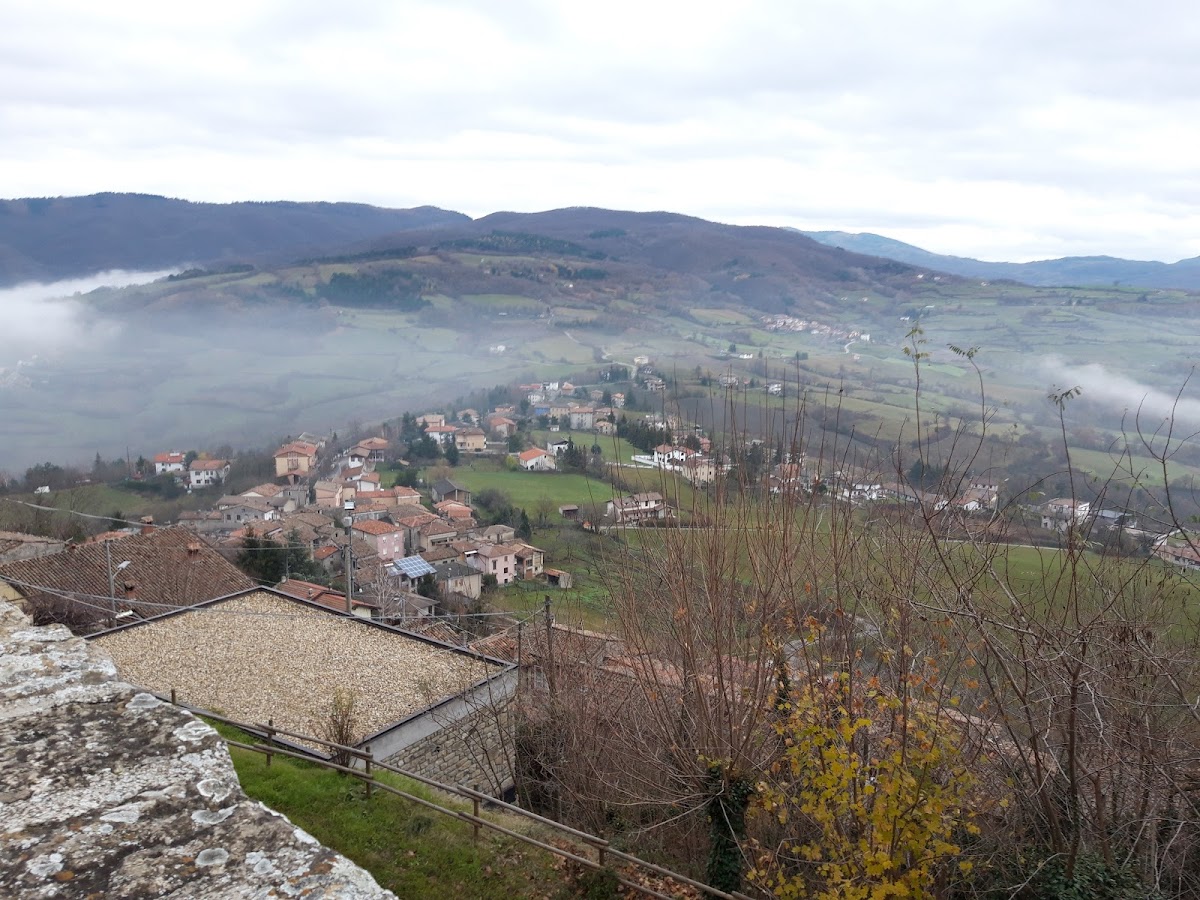
Castello di Pietragavina is a medieval stone fortification in Italy, overlooking the hamlet of Pietragavina, now part of Varzi in Lombardy. Built from the twelfth century, it occupied a strategic defensive position above the village in the Oltrepo Pavese, the part of the Province of Pavia south of the Po River.
Imperial record and Malaspina lordship
The castle is mentioned in an imperial diploma issued in 1164 by Frederick Barbarossa, the Holy Roman Emperor whose Italian campaigns and administration shaped the political framework of northern Italy during the twelfth century. Under the sovereignty of the State of Milan, a major northern Italian polity, the fortress was held as a fief by the Malaspina family of Varzi.
In 1319, Azzolino Malaspina received the castle for one of his sons. This established the Malaspina branch known as the Marquises of Pietragavina. The marquis title was a hereditary rank of nobility below duke and above count. The branch became extinct during the fifteenth century.
Dal Verme ownership and later transformation
In 1449, ownership passed to the Dal Verme family through Pietro Dal Verme, count of Bobbio and Voghera and lord of territories in the Tidone Valley and Castel San Giovanni. The Dal Verme were a noble family associated with territories in the western Po Valley and the Tidone area. The castle remained with this succession of lords until it was sold in 1723 to the Tamburelli family of Bagnaria.
A complete renovation took place in 1965. The work retained the castle’s original appearance while converting the building into a private residence. It is privately owned, remains in good condition, and is identified as Italian national heritage.
Remains
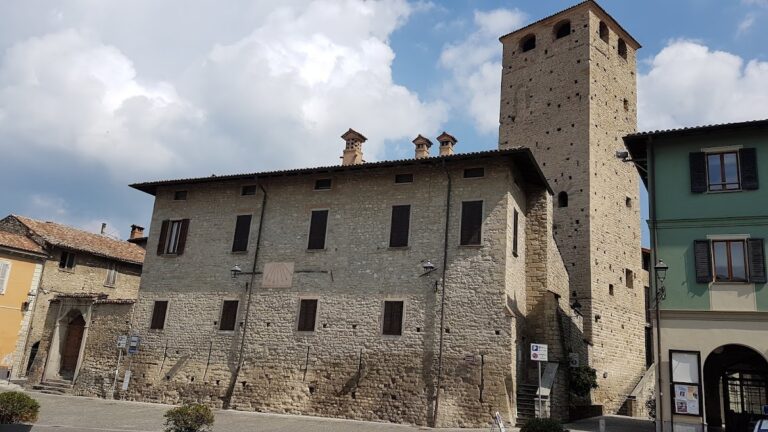
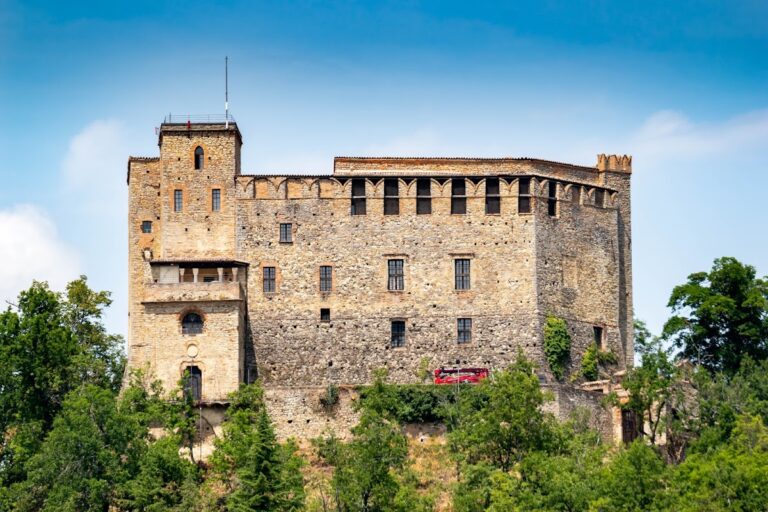
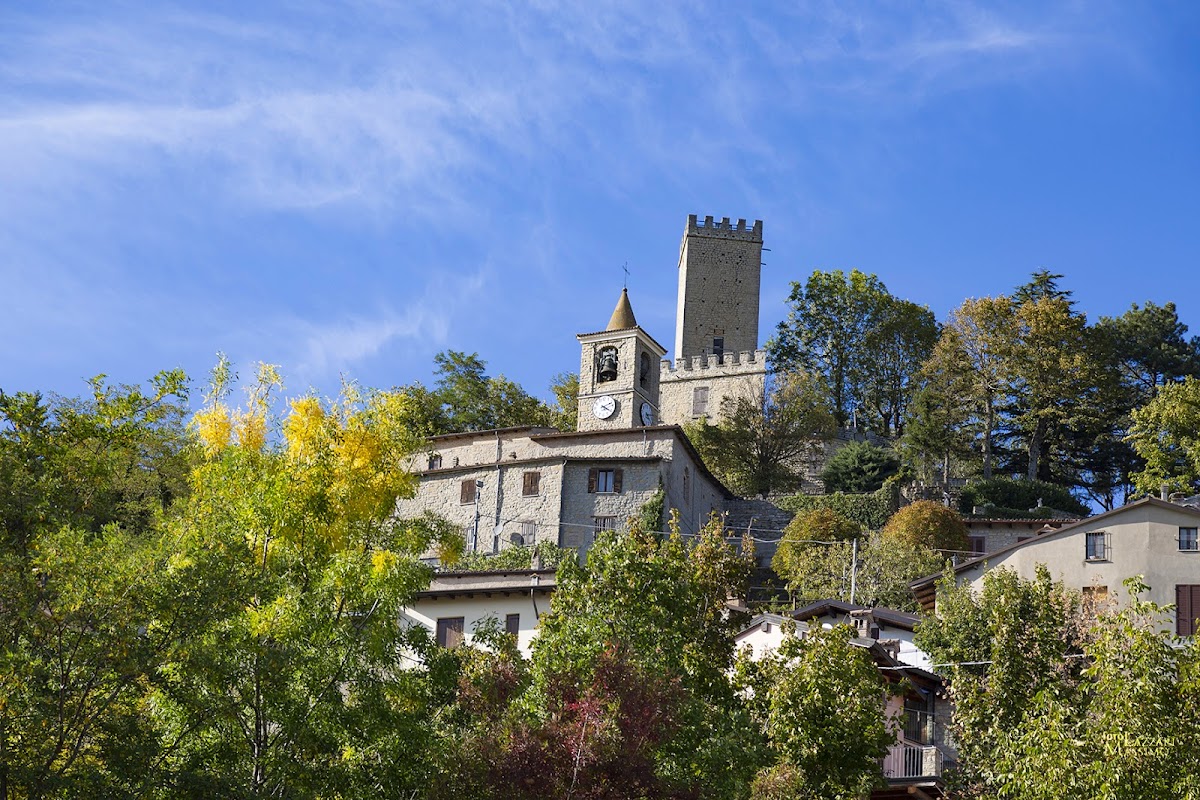
Built in stone at approximately 860 metres above sea level, the castle stands on a hill above Pietragavina, a medieval-planned village on the right side of the Staffora Valley. It lies near the ridge separating the Staffora Valley from the Tidone Valley. The plan is semicircular and curves around a powerful central keep, while a lower structure on the northern side may reflect alterations made in later periods.
Keep and defensive works
Central keep
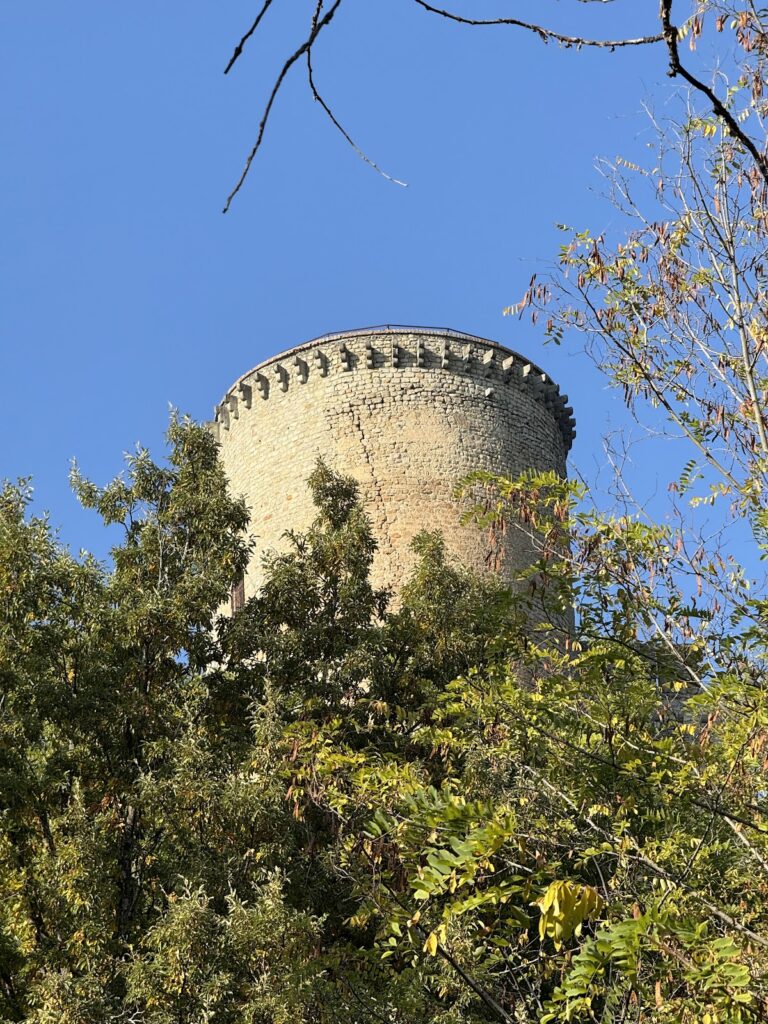
The central mastio, or principal fortified tower, was designed for observation. It retains Guelph-style crenellations, battlements with rectangular merlons traditionally associated with a medieval Italian political faction, together with small loopholes, narrow openings used for observation or firing. Its position at the heart of the semicircular plan gives the keep a central role in the surviving layout.
Bastions and enclosing walls
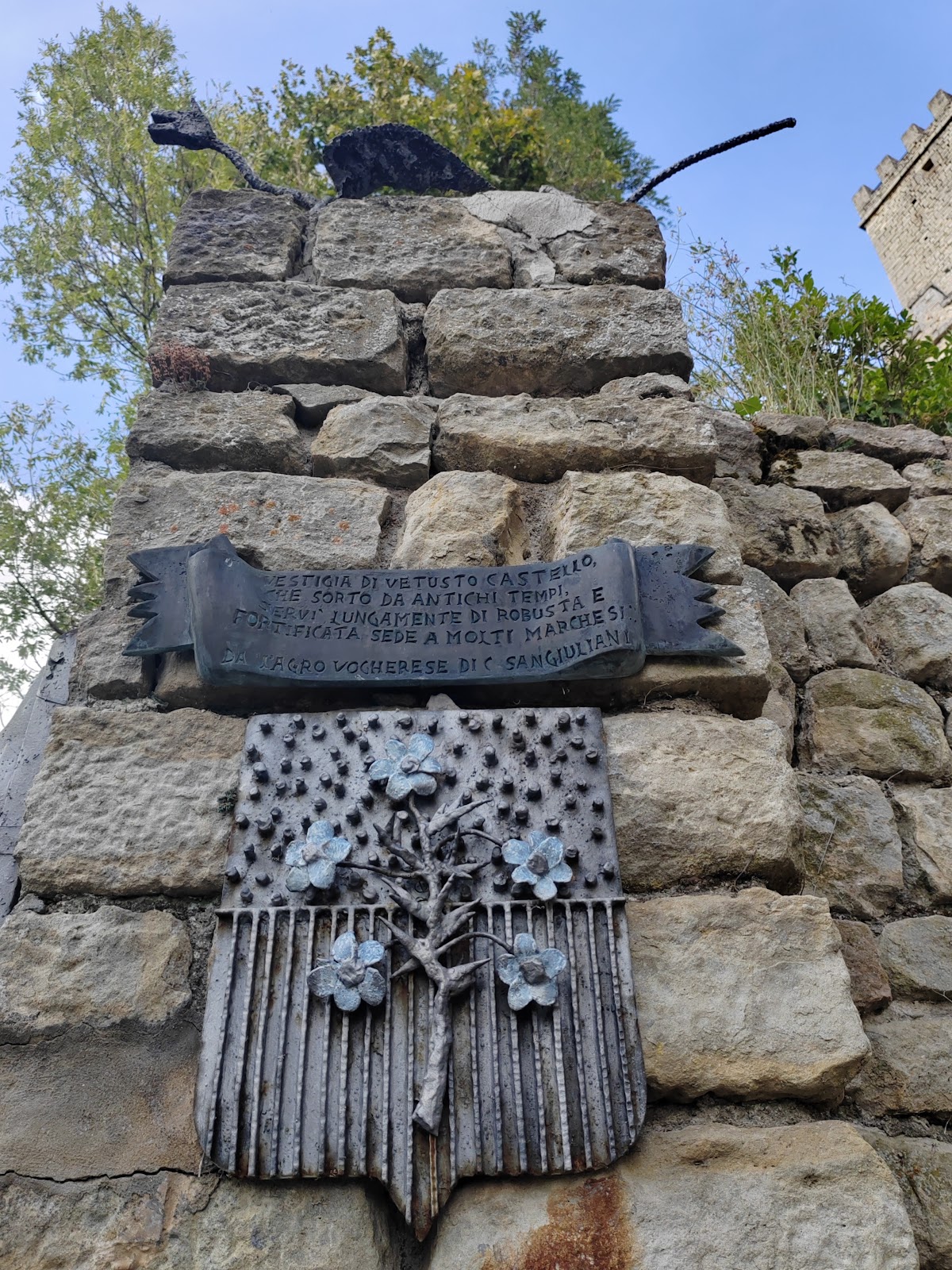
The castle retains its ancient bastions and is surrounded by remains of walls and older fortifications. These surviving elements preserve the defensive framework around the keep and indicate the continued importance of the hilltop position in the castle’s physical organization.
Northern garden
A garden of approximately 1,000 square metres extends along the northern side of the castle. It contains an ancient well and accompanies the lower northern structure, which may belong to later alterations of the complex.