Hermitage of Sant’Alberto di Butrio: A Medieval Monastic Complex in Italy
Site at a Glance
- Popularity
- High
- Country
- Italy
- Primary era
- Medieval
- Eras represented
- Medieval, Modern
- Civilizations
- Duchy of Milan, Holy Roman Empire, Italian
- Site type
- Religious
- Remains
- Monastery
On this page25 sections
History
The Hermitage of Sant’Alberto di Butrio is a Catholic monastic complex in Abbadia Sant’Alberto, within Ponte Nizza in the province of Pavia, Italy. Its origins are dated to 1030, when Alberto of Butrio, an Italian hermit later venerated as a Catholic saint, settled in the nearby Borrione valley. The church of Santa Maria, the complex’s oldest church, dates to about 1050 and is Romanesque, a medieval style characterized by rounded arches and substantial masonry. The hermitage developed into an influential spiritual and temporal institution serving a wide region.
Alberto and the monastery’s foundation
A foundation tradition tells how Alberto miraculously cured the mute young son of the Marquis of Casalasco. In gratitude, the marquis is said to have built a church dedicated to the Madonna for Alberto and his fellow hermits. The church, dated to about 1050, is also attributed to Alberto with assistance from Marquis Malaspina.
The hermits formed a community and established a monastery, with Alberto as its abbot until his death in 1073. A papal bull placed the hermitage directly under Pope Gregory VII by 1074. Its reach extended through cells and dependencies in territories now within the provinces of Piacenza, Pavia, Alessandria, and Genoa. The number of monks and the institution’s influence increased after Alberto’s death, and the hermitage became a spiritual center for the wider area.
The monks followed the Benedictine rule, a tradition of monastic life based on the Rule of Saint Benedict, while maintaining an eremitic practice that valued solitude. Their observance is associated either with the Cluniac reform, a movement to reform Benedictine life, or with a revision connected to Bobbio.
Regional influence and decline
The hermitage is said to have sheltered the fugitive King Edward II of England, who had previously taken refuge at Melazzo Castle near Acqui Terme. A document from 1887 claimed that Edward died at the hermitage and was first buried there. The prevailing scholarly view, however, is that he was murdered at Berkeley Castle in England. Frederick Barbarossa and Dante Alighieri are also believed to have stayed at the monastery.
In the fifteenth century, commendatory abbots took office. These were abbots who held an abbey without necessarily living as members of its community, and their tenure coincided with the hermitage’s decline. In 1516 Pope Leo X joined its abbey with that of San Bartolomeo in Strada in Pavia. A few Benedictine monks from Breme arrived in 1542, but the last Olivetan monks, a Benedictine congregation, left for the Abbey of San Pietro in Breme in 1543. A priest remained to serve local people, and the church of Sant’Alberto became a parish in 1595.
Suppression and renewal
After centuries of near-total abandonment, the monastery and part of its tower had been destroyed. In 1810, under Napoleonic laws, the hermitage was suppressed and requisitioned by the government. In 1900 Alberto’s remains were exhumed and placed inside a wax effigy displayed in the church of Sant’Alberto. That year, responsibility for the hermitage’s care was entrusted to Don Orione. In 1921 he re-established a community there, placing the Hermits of Divine Providence at the site alongside a priest serving as parish priest.
Brother Ave Maria, the religious name of Cesare Pisano, lived at the hermitage from 1923 to 1964. He was known for a life devoted to prayer and penance and for his reputation for holiness. In 1973, marking nine centuries since Alberto’s death, the church of Santa Maria was restored to an earlier appearance. The hermitage is Catholic and belongs to the Diocese of Tortona.
Remains
Setting and layout
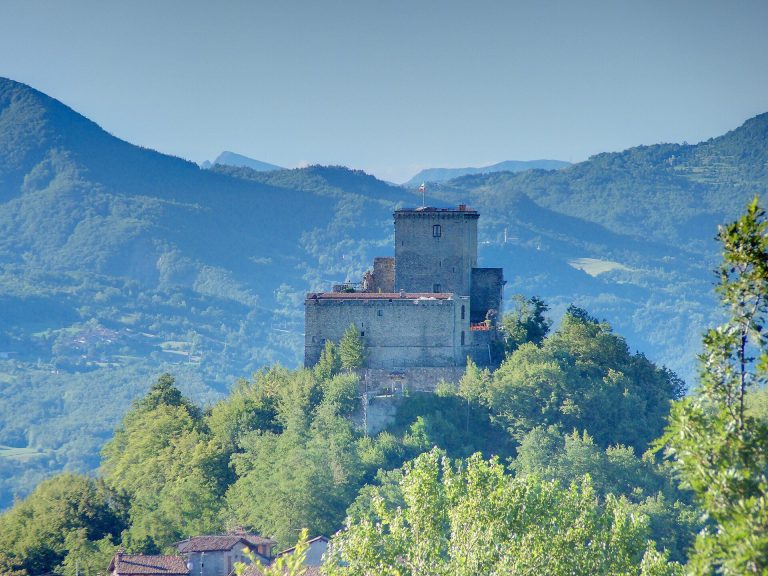
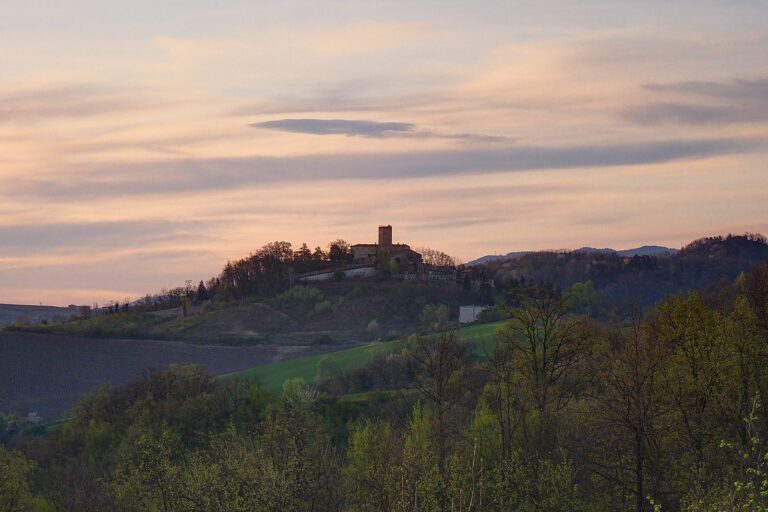
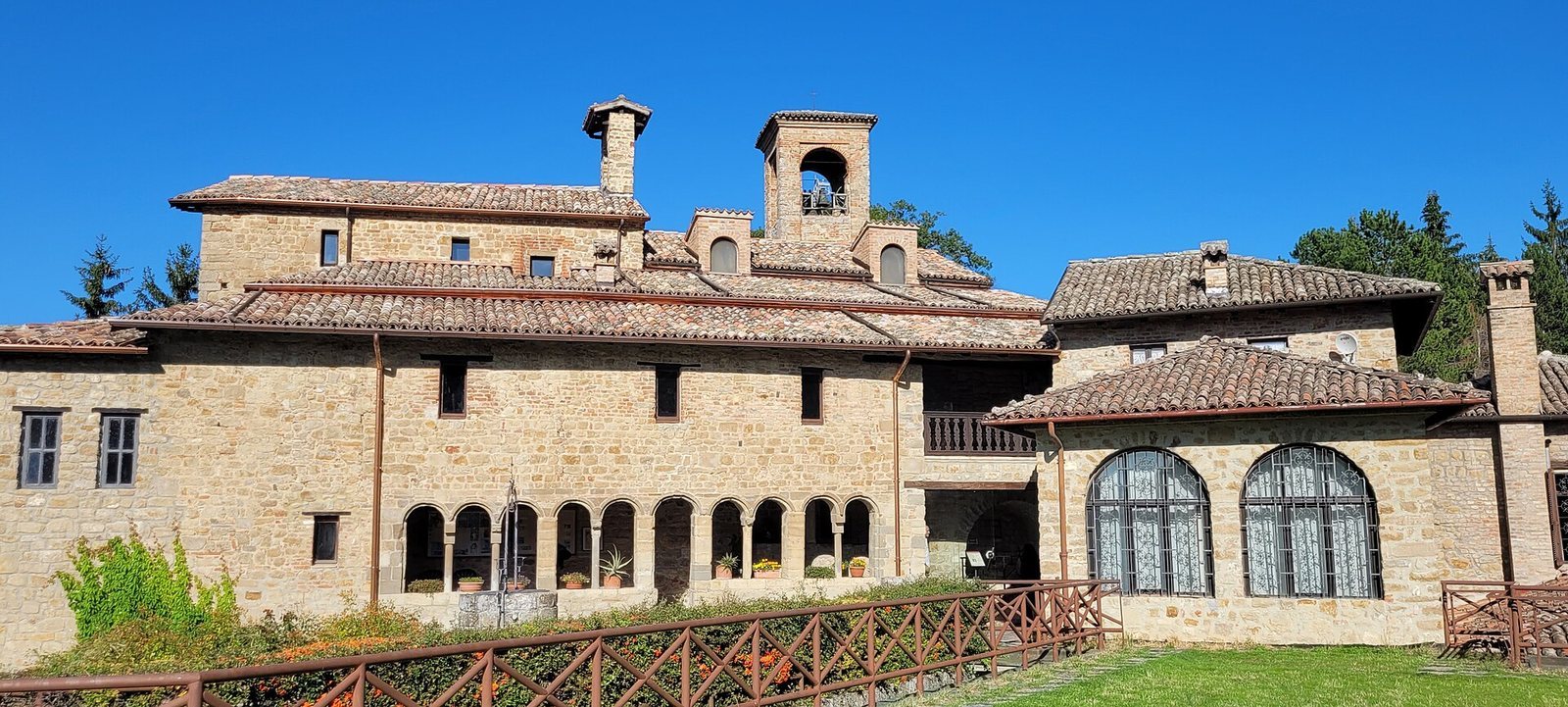
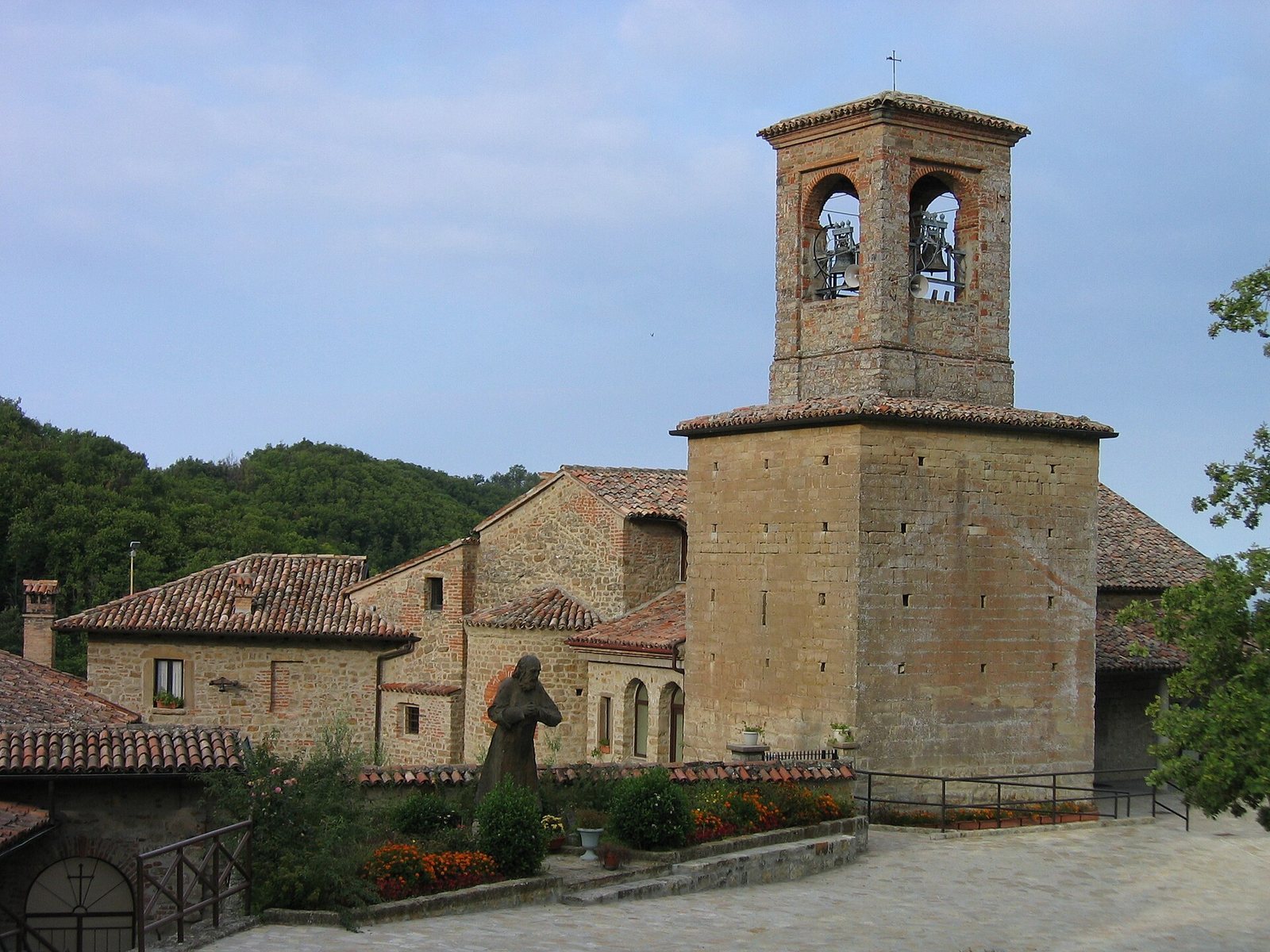
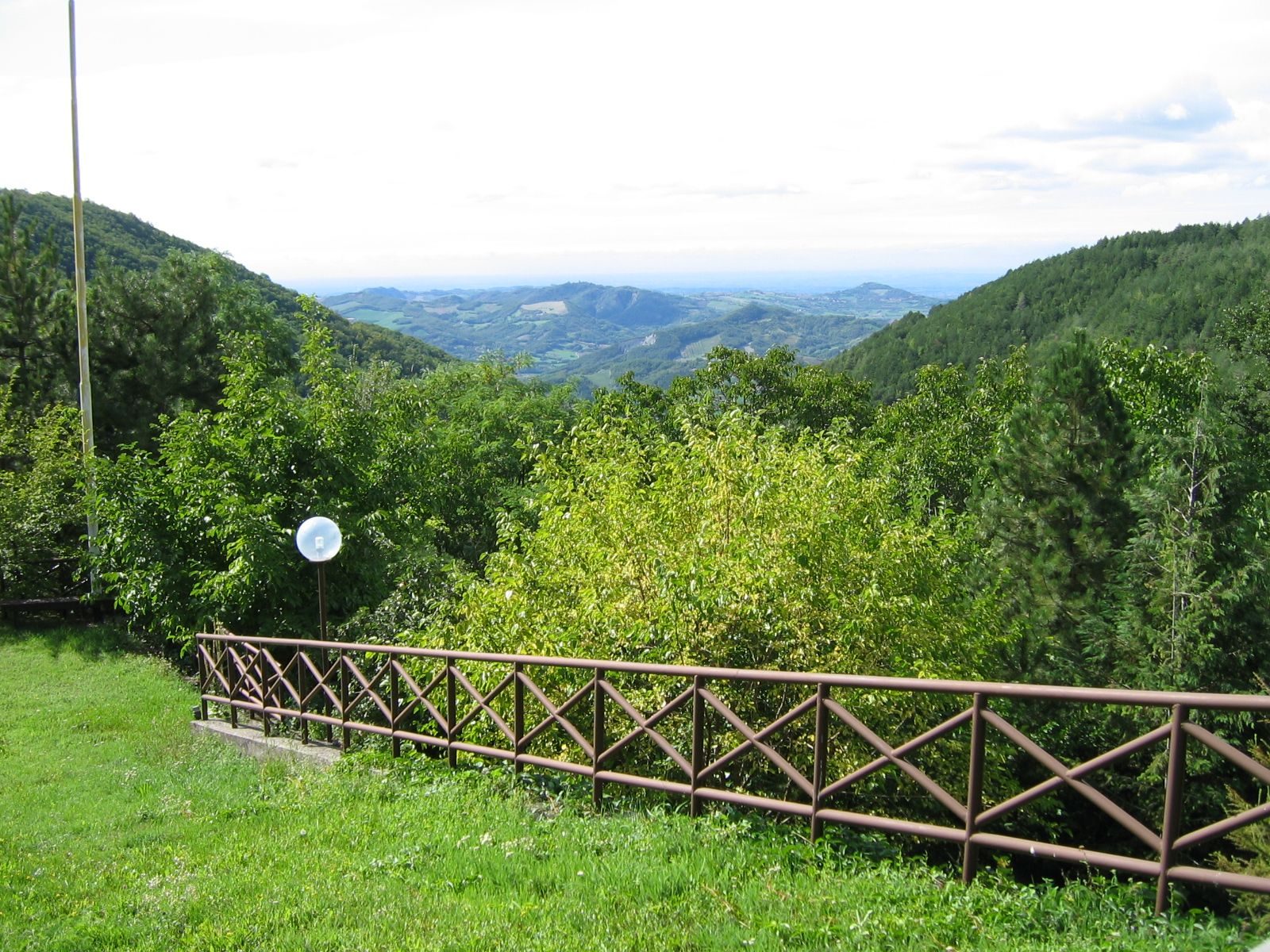
The complex stands at 687 metres in the Staffora valley, in the Oltrepò Pavese, the part of Lombardy south of the Po River. Its isolated setting among the first uplands of the Ligurian Apennines includes mountains, pastures, chestnut trees, oaks, and firs. The buildings comprise the parish church of Santa Maria, three connected oratories, a bell tower, and conventual buildings. The oratory of Sant’Antonio stands immediately inside the entrance and provides access to the other spaces. Facing the altar in Santa Maria, the chapel of the Blessed Sacrament is on the left, while the mausoleum chapel of Sant’Alberto is on the right.
Santa Maria and the Blessed Sacrament chapel
Church of Santa Maria
Santa Maria is the oldest church in the complex and the original church associated with Alberto. Its construction is dated to about 1050. In the fifteenth century, its timber-framed roof was replaced with cross vaults, ceilings formed by intersecting vaulted sections and divided by stone arches. In 1973, restoration work included reopening the single-light windows in the apse, the rounded end of the church.
Chapel of the Blessed Sacrament
Considered approximately contemporary with Santa Maria, this chapel forms the nave on the left when facing the altar. Its dedication refers to the Blessed Sacrament, the consecrated Eucharist in Catholic belief.
Oratory of Sant’Antonio
Built in the fourteenth or fifteenth century, possibly on the site of an earlier canopy or porch, the oratory is trapezoidal in plan. Four divided sections are supported by a central cross-shaped pillar. Its cross-vaulted ceilings are covered with paintings and remain in excellent condition.
Vaults and capitals
Three of the painted vaults have small stars on white grounds, with a radiating sun and a coat of arms at the center; the fourth carries symbols of the Evangelists. Red stars against silver also fill spaces in the arches, a color scheme that may echo a patron’s coat of arms. Romanesque capitals, probably reused from earlier remains, depict confronting lions and other animals. Portraits of major and minor prophets appear beneath the arches. Their names are written on scrolls in Gothic lettering, and their heads turn alternately left and right, with blond and white hair alternating. They are identified as prophets by their lack of halos.
South wall paintings
A semicircular panel on the south wall shows Saint Sebastian tied to a tree and pierced by two archers. A Gothic-lettered inscription dates the painting to 14 August 1484. Below it are Saint Anthony Abbot, dressed as a monk and holding a bell, and Saint Francis of Assisi with a three-armed cross, identified as the emblem of the thirteenth apostle. Saint Peter, holding up a book and carrying keys, appears beyond a round-arched passage leading to the mausoleum.
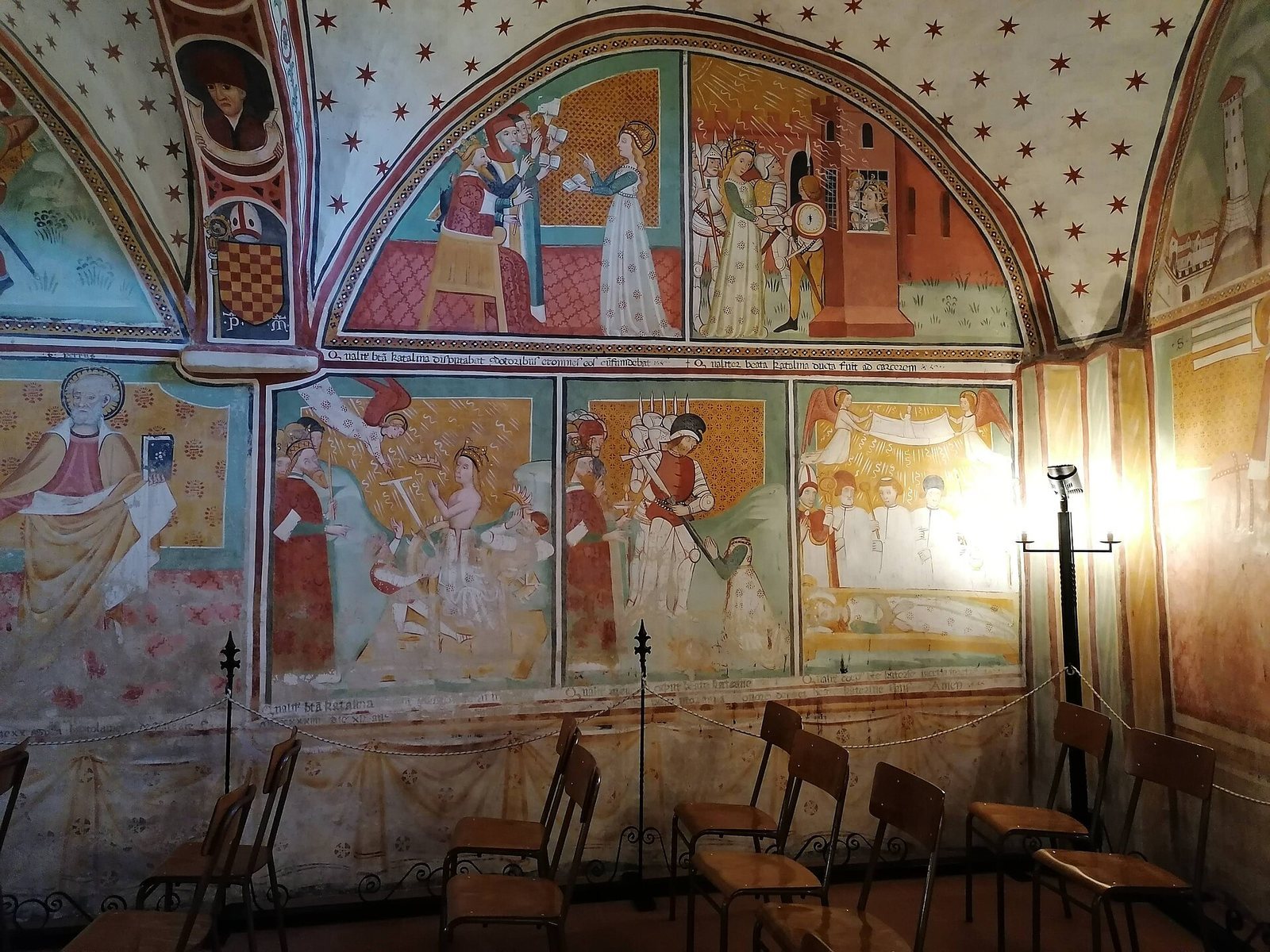
The wall’s most elaborate painted sequence relates the story of Saint Catherine of Alexandria. Captions accompany scenes of her disputing scripture with a king and his attendants, being captured and imprisoned by three armed men, and surviving the breaking of a torture wheel by an angel with a sword. Other scenes show her execution by beheading and her soul carried heavenward on a white cloth by two angels. In the final scene, four clerics and a bishop watch behind her coffin. The castle in the prison scene has side battlements associated with the Guelf faction and central battlements associated with the rival Ghibellines, names used for medieval political factions.
West wall paintings
A paired window separates two castles in a semicircular panel: one stands on a hill, the other on a rocky spur. Below are Saint Bovo, Saint Alberto, and Saint Lazarus. Bovo appears with pairs of dark, unyoked oxen, an unusual image interpreted as a reference to livestock raising and a local artistic tradition. Alberto wears a long cope and tiara, carries a large pastoral staff, and holds a closed, leather-bound book with metal studs. Lazarus, shown with sores and leaning on a staff, wears a short laborer’s tunic while dogs and greyhounds lick his wounds.
Another panel, also above a paired window, depicts Saint George spearing a dragon. A princess in white and green holds the dragon with a gold chain, while a king and courtiers watch from palace windows.
North wall paintings
One panel depicts God as an elderly, white-bearded figure holding the scroll of the Last Judgment, his right hand raised. Two angels sound trumpets, and red figures representing souls appear behind him. The figures below include Saint John the Baptist in furs and open sandals, Saint Jerome in a red cardinal’s headdress with an open book, Saint Anthony, Emperor Sigismund of Luxembourg, and Saint Stephen, shown struck by stones and holding a closed Gospel book. Sigismund is identified by his short robe, sword, crown, and a globe topped by a cross, described as Constantine’s emblem.
A second panel shows Christ with his hands bound behind his back and wounds on his body. Two badly damaged figures flank the entrance portal below.
East wall paintings
The east wall has one section, with the second occupied by the entrance to Santa Maria. Its semicircular painting shows the Coronation of the Madonna: two angels present a crown to the Virgin Mary, seated on a throne with the child on her lap. Smaller kneeling donors appear below, men on the left and women on the right. The lower register contains four female saints with signs of their martyrdom: Agatha, Lucy, Apollonia, and another figure possibly identifiable as Catherine.
Mausoleum chapel of Sant’Alberto
Burial place
The chapel contains Alberto’s burial place, his bones, and two tombs associated with him. The earliest tomb was cut directly into the rock. The chapel also preserves some of the hermitage’s finest wall paintings.
Paintings of Mary and the child
A painting on the left shows Mary and the child with Saints Lucy, Apollonia, and Anthony Abbot, alongside a kneeling donor, Marquis Bertramino. Its frame bears the date 1484, and the arms of Bertramino and the Malaspina family appear below.
Painting of Alberto at a banquet
On the right, Alberto changes water into wine at a banquet. Dressed in black and carrying a pastoral staff, he gives a blessing with two raised fingers. Three cardinals and Pope Alexander II sit at the table, while two attendants serve wine and a third draws it from a well.
Bell tower
The bell tower is dated to the 1300s and is now truncated. Some steps cut directly into its wall remain visible. Its square base, built from squared sandstone blocks, is attributed to Comacine masters, a traditional term for medieval Lombard builders and stoneworkers. The base is dated either to the second half of the twelfth century or to the beginning of the thirteenth. The original upper part was lost, and the present bell chamber was built above the base in the nineteenth century.
Monastic remains and the nearby valley
Small cloister
One surviving wing of the monastery is known as the small cloister and is dated to the twelfth century.
Well
A well also survives among the monastic remains.
Chapel in the Borrione valley
In the nearby Borrione valley, where Alberto lived as a hermit, a small chapel is dedicated to him.
The hermitage’s 1484 paintings
The frescoes throughout the hermitage are dated to 1484 and were painted between July and September. None is signed. They were once attributed to the school of the brothers Manfredino and Franceschino Boxilio of Castelnuovo Scrivia; a current tendency assigns them instead to an anonymous monk painter, possibly one who chose anonymity out of humility. Similarities with contemporary paintings elsewhere in the Oltrepò Pavese have also prompted the suggestion of a local school, whose work may have reached nearby village churches and possibly Voghera, including fragments at the Church Rossa.
The paintings share features in their eyes, faces, and beards, and favor strong color over realistic representation. Many backgrounds are flat and yellow, recalling Byzantine art and its use of gold; some scenes, including episodes from the life of Saint Lucy, have outdoor settings. Hints of grass in the foreground distinguish these works from International Gothic, an ornate late-medieval style, and reflect artistic tendencies of the fifteenth century.