Castello di Montalto Pavese: A Medieval Fortification Transformed into an Aristocratic Palace




Site at a Glance
- Rating
- 3.9
- Popularity
- Very Low
- Country
- Italy
- Primary era
- Early Modern
- External website
- Open
- Eras represented
- Medieval, Early Modern
- Civilizations
- Duchy of Milan, Holy Roman Empire, Spanish
- Site type
- Domestic
- Remains
- Elite Residence
On this page6 sections
History
Castello di Montalto Pavese is a medieval fortification in Italy, built in the eleventh century for defense. In its present form, it is an aristocratic palace whose Baroque appearance developed through rebuilding and later alterations.
Medieval Lords and Pavia
During the High Middle Ages, Montalto belonged to a branch of the Belcredi family, a Ghibelline aristocratic family from Pavia. The Ghibellines supported the imperial cause in the political struggles between the Holy Roman Emperor and the papacy in medieval Italy.
In 1164, Montalto came into the possession of Frederick Barbarossa, the twelfth-century Holy Roman Emperor whose Italian campaigns affected many northern Italian territories. He donated the territory to the allied Commune of Pavia. In 1406, Filippo Maria Visconti, Duke of Milan, granted Montalto to Castellino Beccaria. In 1474, Galeazzo Maria Sforza, another Duke of Milan, donated it to Francesco Strozzi di Benedetto.
From Fortification to Palace
The earlier fortification was later held by Ludovico Taverna. The King of Spain compelled him to demilitarize it and remove its military defenses, changing the character of the site before the present palace was built.
Construction of the current palace began in 1593 at the initiative of Filippo Belcredi, using the remains of the earlier fortification. An epigraph, or building inscription recording an event or date, at the entrance commemorates the beginning of this work. Extensions and alterations continued over the following centuries, but construction was interrupted after the Napoleonic conquests.
The complex holds Italian national-heritage designation, reflecting its historical development from medieval defensive site to aristocratic residence.
Remains
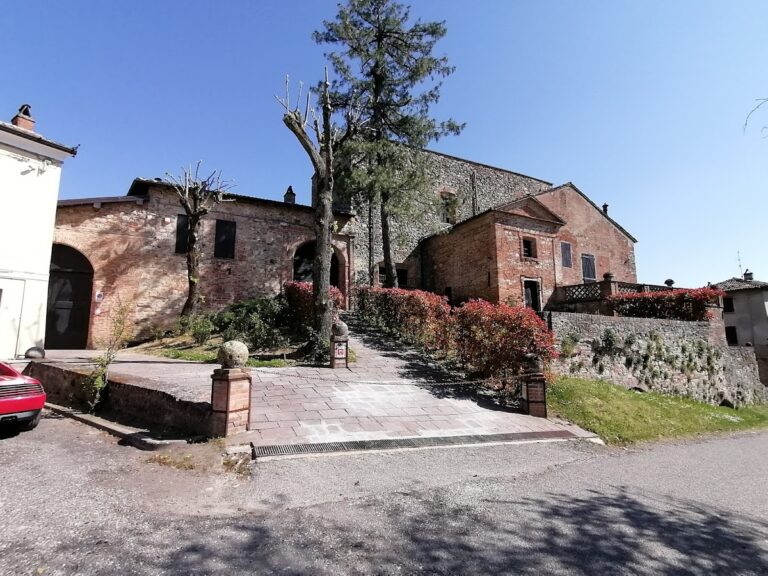
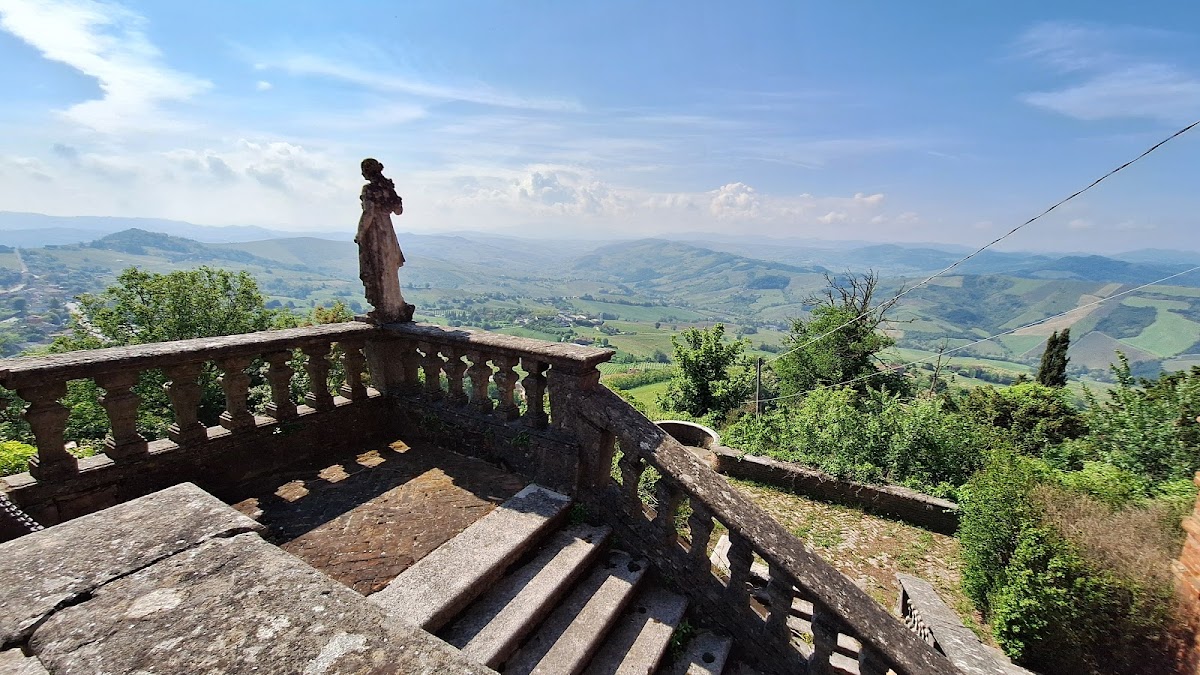
Castello di Montalto Pavese stands at approximately 350 metres above sea level on the height above the village of Montalto Pavese, in the Oltrepo Pavese. It occupies a ridge forming the watershed between the Scuropasso and Coppa valleys. Although known as a castle, the surviving complex has the regular, extensive plan of an imposing palace. Its exposed masonry combines stone and brick, while its present appearance is Baroque.
Palace and Medieval Keep
The present masonry probably incorporates material from the medieval fortification. The clearest surviving feature of that earlier defensive complex is the keep, the principal fortified tower of a castle and its strong defensive and residential core. Here it takes the form of a large square tower that dominates the building’s profile.
Gardens
Two gardens surround the palace. The Italian-style garden is arranged with regular avenues and geometrically shaped beds. The English-style garden is shaded by groves of larches, oaks, and chestnut trees.
The complex is in good condition and remains privately owned.