Castello di Castelnovo: A Medieval Castle in Italy
Site at a Glance
- Popularity
- Low
- Country
- Italy
- Primary era
- Medieval
- Eras represented
- Medieval, Early Modern, Modern
- Civilizations
- Duchy of Parma and Piacenza, Holy Roman Empire
- Site type
- Military
- Remains
- Castle
On this page12 sections
History
Castello di Castelnovo is a medieval castle in Castelnovo, Italy, built around 1300 to command the route through Val Tidone, replacing a fortress dating to the early 12th century.
From early fortress to new castle
Frederick Barbarossa, Holy Roman Emperor, probably stayed at the first fortress in 1155 while travelling from Pavia towards central Italy. In 1215, troops from Pavia crossed the Po near Arena Po and abandoned an attack on Borgonovo, whose garrison was strong. They instead assaulted Castelnovo and other settlements in the valley, burning and destroying the castle. Enzio, a prince and King of Sardinia, led forces that badly damaged the complex again in 1242.
After this damage, the original fortress was adapted into a residence with a chapel. The chapel later became a parish church, but a landslide destroyed it in spring 1898. A replacement castle was built on higher ground, and the settlement took its name from it.
Territorial grants and family ownership
In 1412, Filippo Maria Visconti, Duke of Milan, granted the County of Valtidone to the brothers Bartolomeo and Filippo Arcelli. A county was a territory governed by a count. The grant covered extensive lands along the Tidone, including Castelnovo. By the late 15th century, the Dal Pozzo family owned the castle. In 1496, they sold half of the fortress to Alessandro Marazzani while keeping the right to buy it back.
In 1575, Ottavio Farnese, Duke of Parma and Piacenza, granted the castle to Count Emilio dal Pozzo. Emilio’s father, Barnaba, had cared for the body of Duke Pier Luigi II Farnese after a conspiracy led to Pier Luigi’s death. The Dal Pozzo family was also permitted to add Farnese to its surname.
Renovation and later owners
After part of the castle passed to the Marazzani family, partial renovation began in 1683 following approval. Maria Amalia of Austria stayed at the castle in 1773. Marie-Louise of Austria visited in the early 19th century, when the avenue leading to the fortress was inaugurated.
Around the middle of the 19th century, the Marazzanis acquired the entire estate from the Dal Pozzo family, which had fallen into disgrace. The castle later belonged to Marchioness Mary O’Neil Wickersham. Her daughter Katie married Count Camillo Nasalli Rocca. Prince Gerolamo de Ferrari of Genoa acquired the property in 1932 and began restoration work in 1936, directed by engineer Giuseppe Crosa and architect Carlo Astorri.
Remains
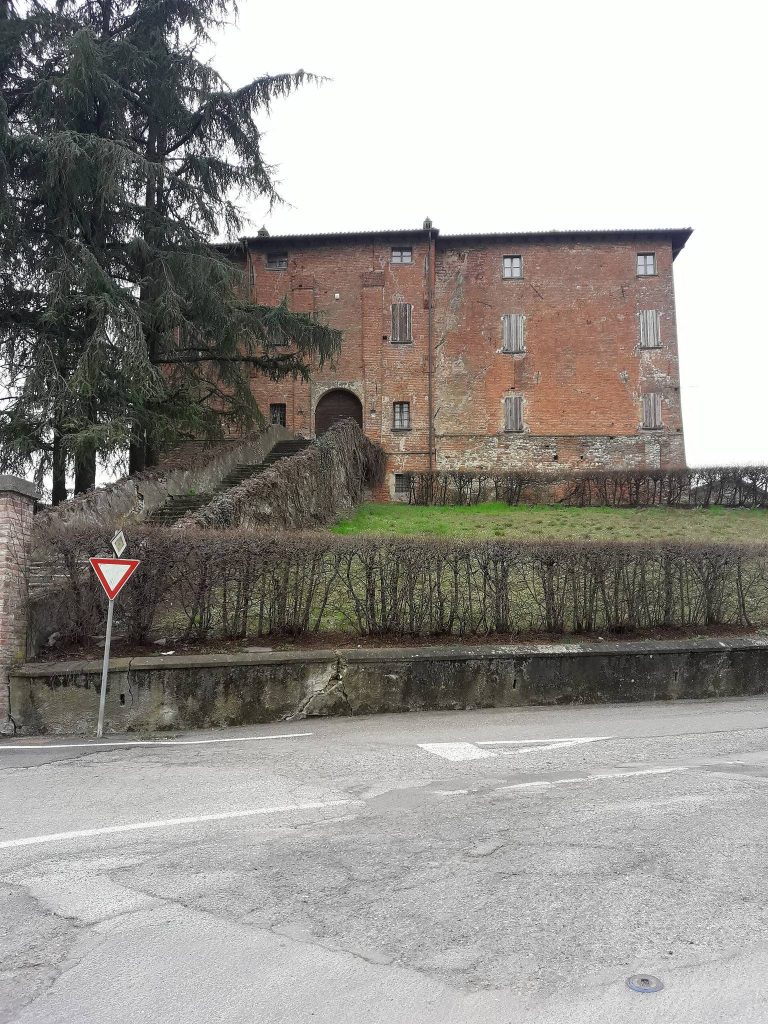
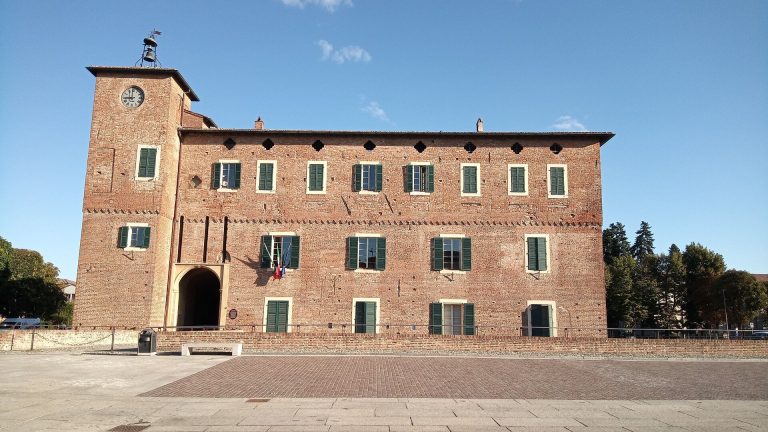
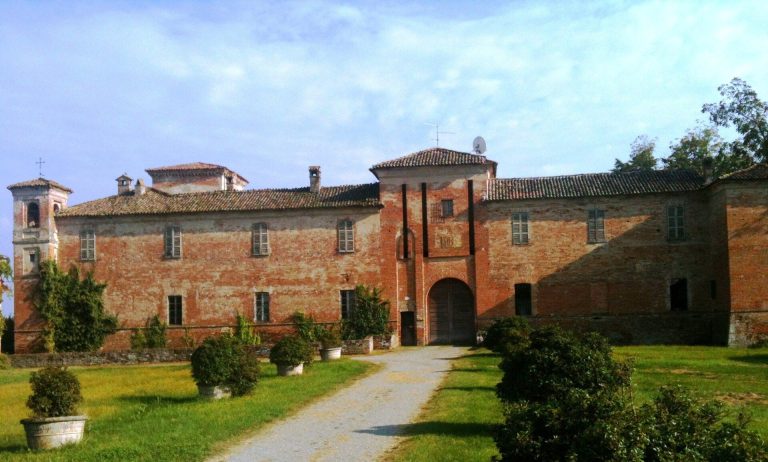
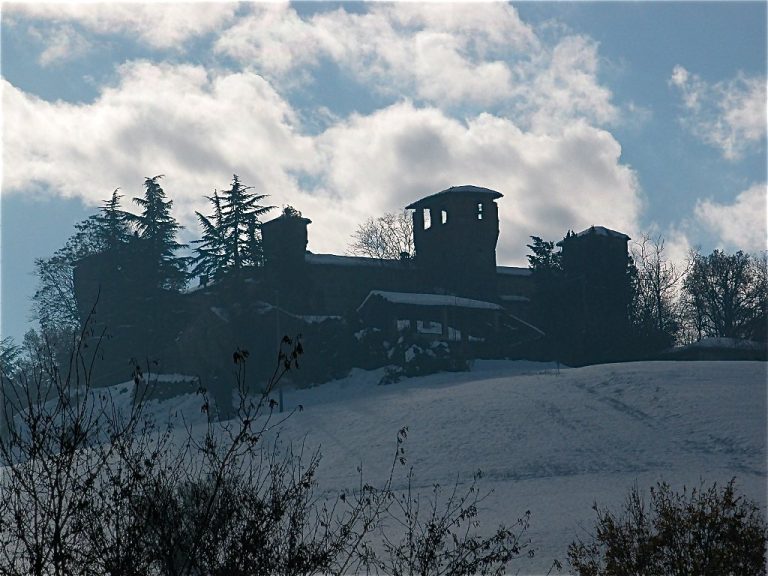
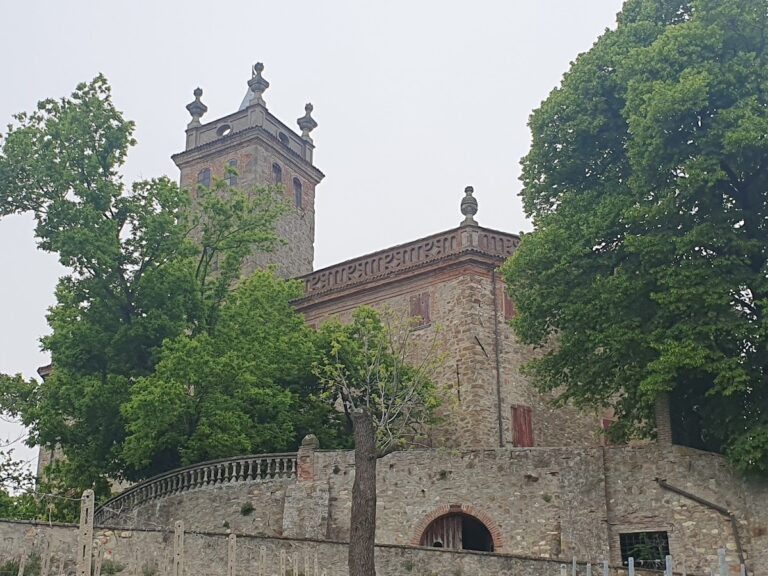
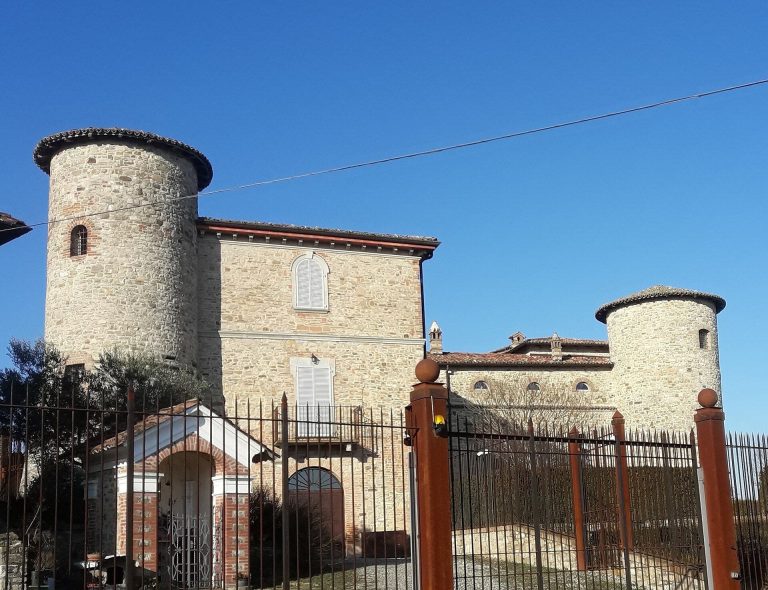
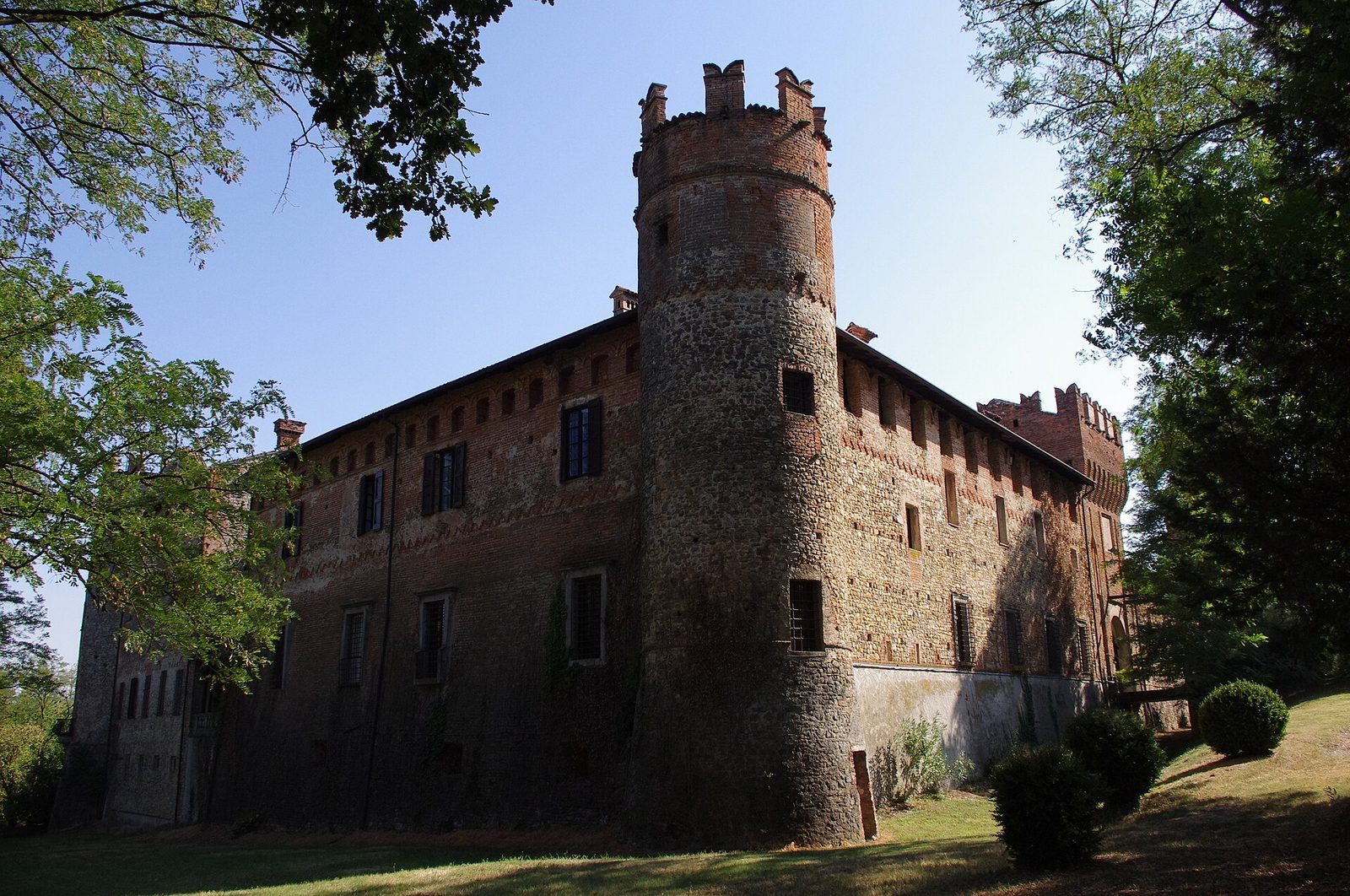
The castle occupies raised ground above Castelnovo, within a large park overlooking the settlement in lower Val Tidone. Built almost entirely of brick, it has a trapezoidal plan and a courtyard.
Defensive fabric
Walls, towers, and moat
Three round towers stand around the castle’s perimeter. The defensive walls and towers have pronounced sloping bases rising above the moat. The moat once held water and was later filled in.
Entrance and tower
A drawbridge leads to the entrance on one of the castle’s long sides. Above it rises a low rectangular tower with notched battlements. A brick gallery supported by projecting wall supports crowns the tower, with openings for defense. Its design recalls Lombard towers of the Sforza era, when the Sforza family ruled Milan.
Residential and religious features
Courtyard and interiors
A well in the courtyard combines travertine limestone and wrought iron. The castle contains numerous rooms, some with coffered ceilings divided into recessed panels and frescoes painted on wet plaster. In the north wing, work from the later phase of the Renaissance, a European movement that renewed interest in classical antiquity, includes an open-sided gallery with four arches and a large staircase leading to the principal floor.
Oratory
A small chapel near the castle contains a surviving fresco of Mary, the mother of Jesus, with Saints Roch and Sebastian. Local residents venerated the figures. Roch was associated with care for plague sufferers, while Sebastian was invoked for protection against plague.
Traces of the earlier fortress
Squared stone blocks found during agricultural work indicate that the earlier fortress stood slightly south of the present castle.