Castello di Caccamo: A Norman Castle in Sicily
Visitor Information
Google Rating: 4.5
Popularity: Medium
Official Website: www.facebook.com
Country: Italy
Civilization: Early Modern, Medieval European
Site type: Military
Remains: Castle
History
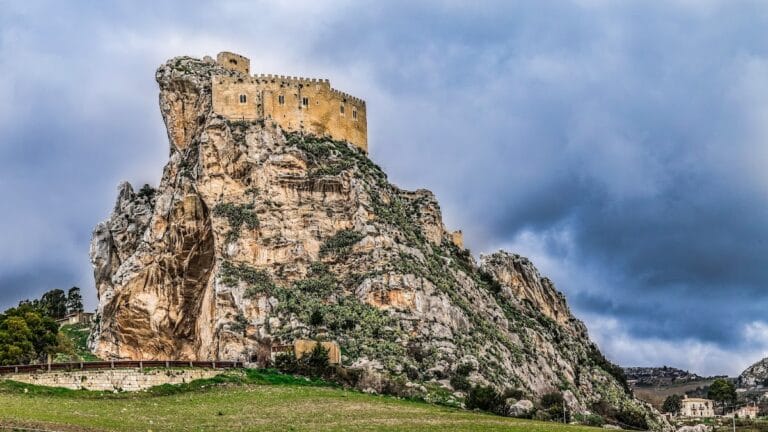
The Castello di Caccamo stands in Caccamo, Sicily, on a steep cliff overlooking the San Leonardo River valley. Its origins trace back to the 12th century when the Normans, following their reconquest of Sicily, built the castle. Matteo Bonnellus, a Norman nobleman, is credited with its initial construction. Before the Norman fortress, the site likely hosted an Arab watchtower or fortress, taking advantage of the strategic high ground.
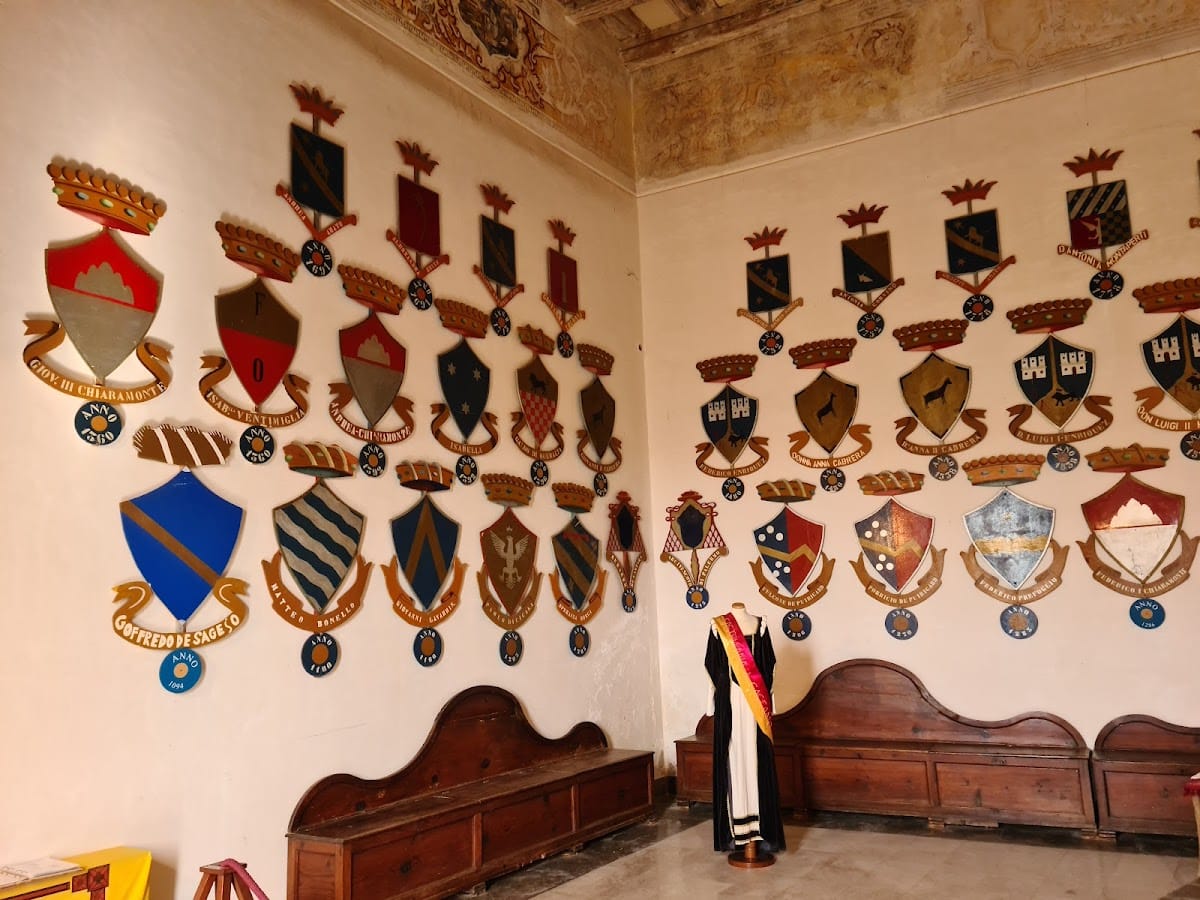
In 1160, the castle became the setting for a significant political event. The Sala della Congiura, or Conspiracy Hall, was where Norman barons gathered to plot against King William I of Sicily. Their rebellion was ultimately suppressed, but the event marked the castle as a place of political intrigue. Later, during the Sicilian Vespers uprising in the late 13th century, Giovanni di Saint-Rémy, prefect under King Charles I of Anjou, sought refuge within the castle. He was captured by local insurgents and executed, reflecting the castle’s role in regional conflicts.
The 14th century brought the powerful Chiaramonte family into possession of the castle. Manfredi I Chiaramonte initiated major structural changes, adapting the fortress to the needs of the time. Minor modifications continued through the 17th century, reflecting ongoing use and adaptation. From 1480, the castle’s fortunes declined following a marriage alliance involving Fadrique Enríquez and the Prades-Cabrera family. Eventually, the property passed to Filippo Amato, Prince of Galati.
Under the Amato family, who acquired the barony in 1646 and were elevated to dukes by King Philip III of Sicily, the castle was transformed from a military fortress into a noble residence. Many medieval defensive features were removed or altered, replaced by decorative wooden ceilings and frescoes. After 1813, ownership passed to the De Spucches family, Dukes of Caccamo, who undertook restorations that preserved the castle’s white stone and medieval architectural elements.
A major earthquake in 1823 caused the collapse of the main tower, known as Torre Mastra, marking the beginning of the castle’s gradual decline. Despite restoration efforts, the castle fell into ruin. The De Spucches family lived there until 1963, when the Sicilian Region purchased the property. Restoration work began in 1974, and in 2012, efforts started to establish a museum of ancient weapons within the castle.
Remains
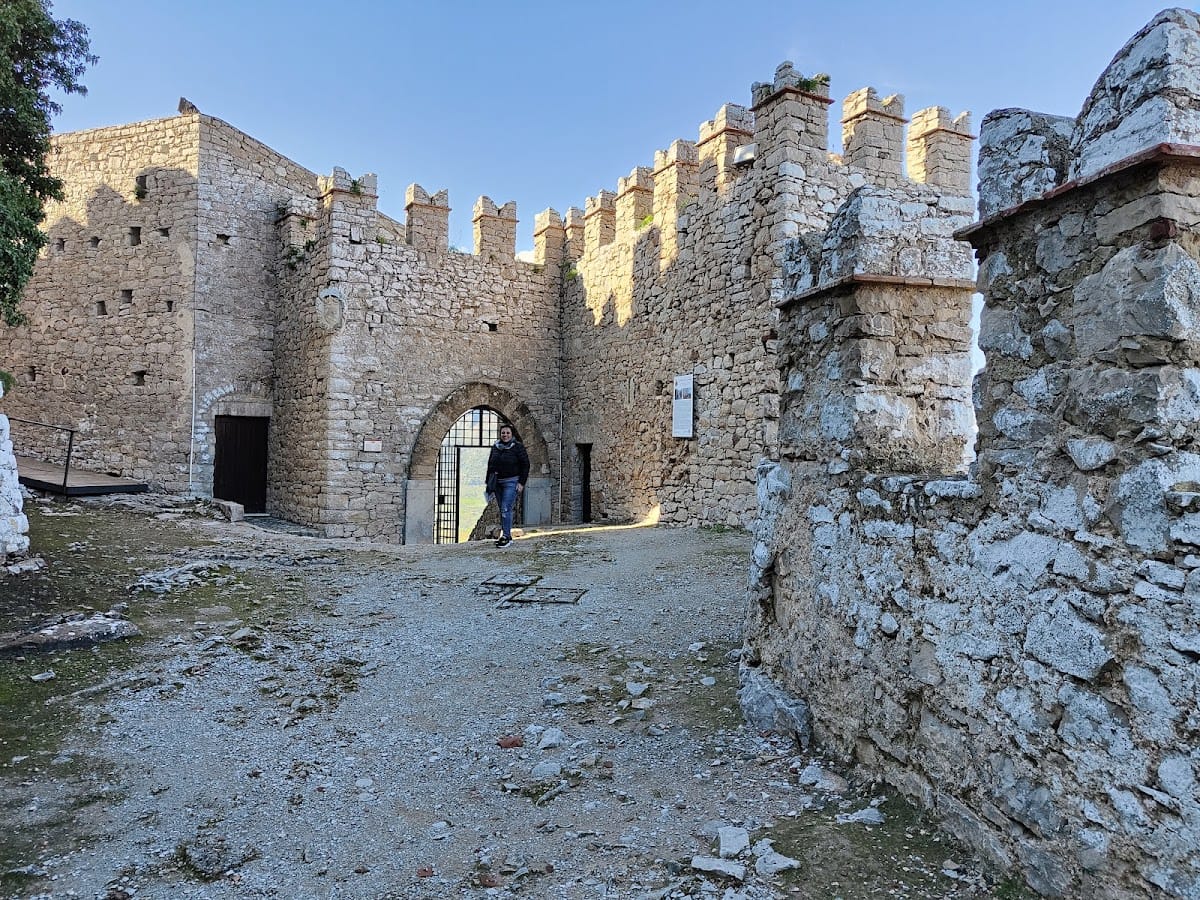
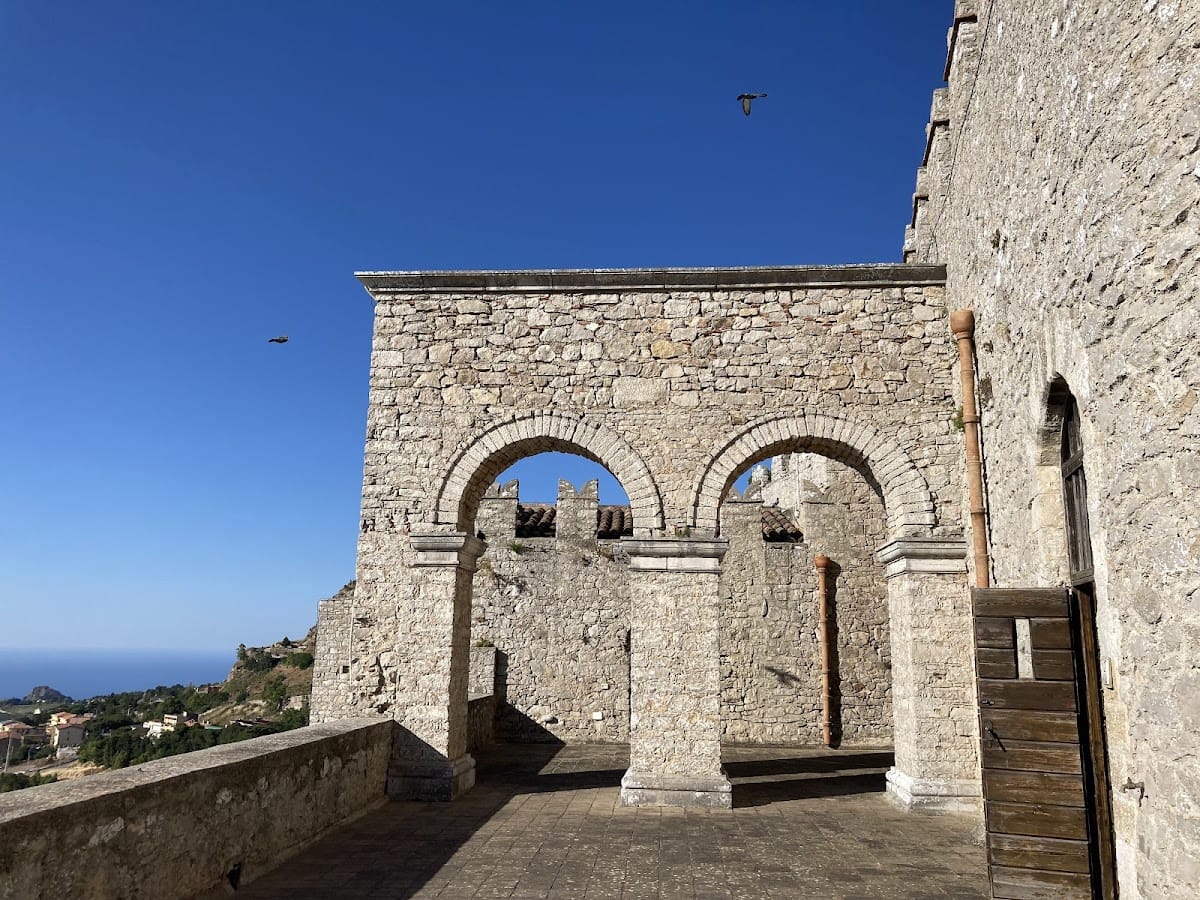
The Castello di Caccamo is built primarily of white stone and occupies a rocky outcrop about 513 to 521 meters above sea level. Its irregular floor plan follows the natural shape of the cliff, emphasizing its defensive purpose. The castle overlooks the San Leonardo River valley and the Rosmarina artificial lake, providing commanding views of the surrounding landscape.
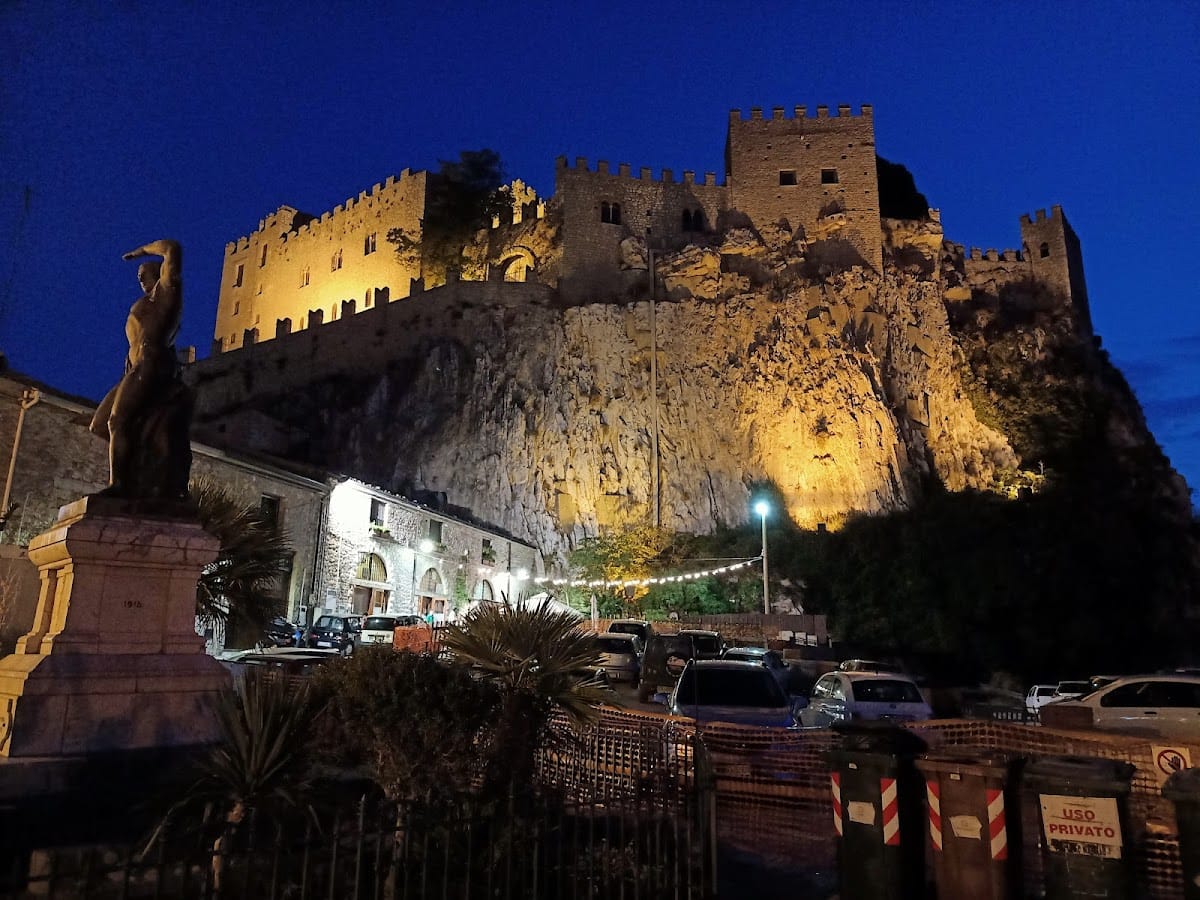
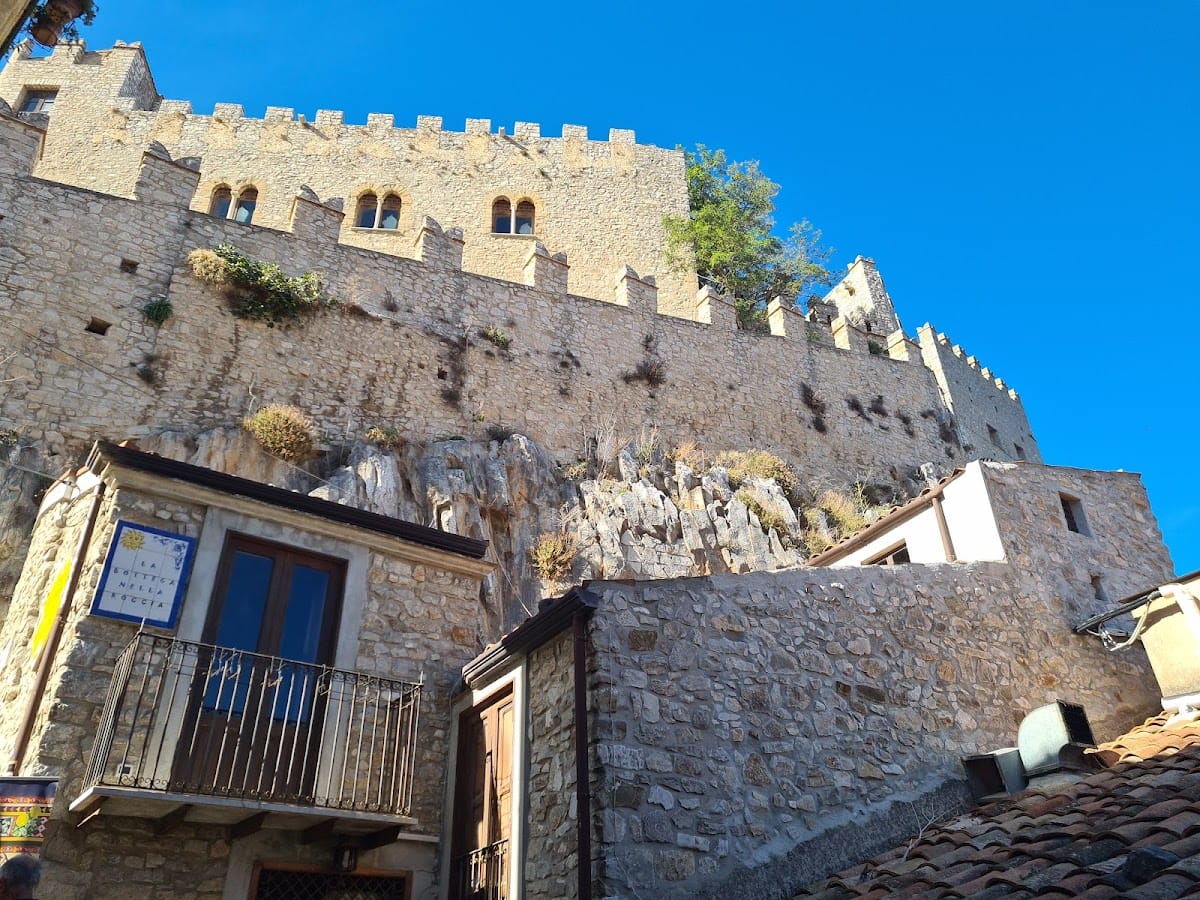
Defensive features include massive walls topped with swallowtail battlements, which are V-shaped crenellations typical of medieval fortifications. Multiple towers once guarded the perimeter, including the main tower, Torre Mastra, which collapsed in the 1823 earthquake. A moat and a central courtyard complete the defensive layout. The interior is a complex maze of rooms and staircases, reflecting centuries of modifications.
Inside, the Sala della Congiura remains a notable space, historically significant as the site of the 1160 conspiracy against King William I. Later renovations introduced richly decorated wooden ceilings and frescoed friezes, especially during the 17th century when the Amato family converted the fortress into a noble residence. Despite damage and partial collapse, many medieval architectural elements survive, such as bifora windows—paired arched windows—and crenellations.
The castle’s layout and construction clearly demonstrate its strategic defensive role, with its position atop a steep cliff and its robust fortifications designed to control the surrounding territory. Restoration efforts have preserved much of the castle’s medieval character, even as some parts remain in ruins.
Nearby sites