Castello della Fava: A Medieval Fortress in Sardinia

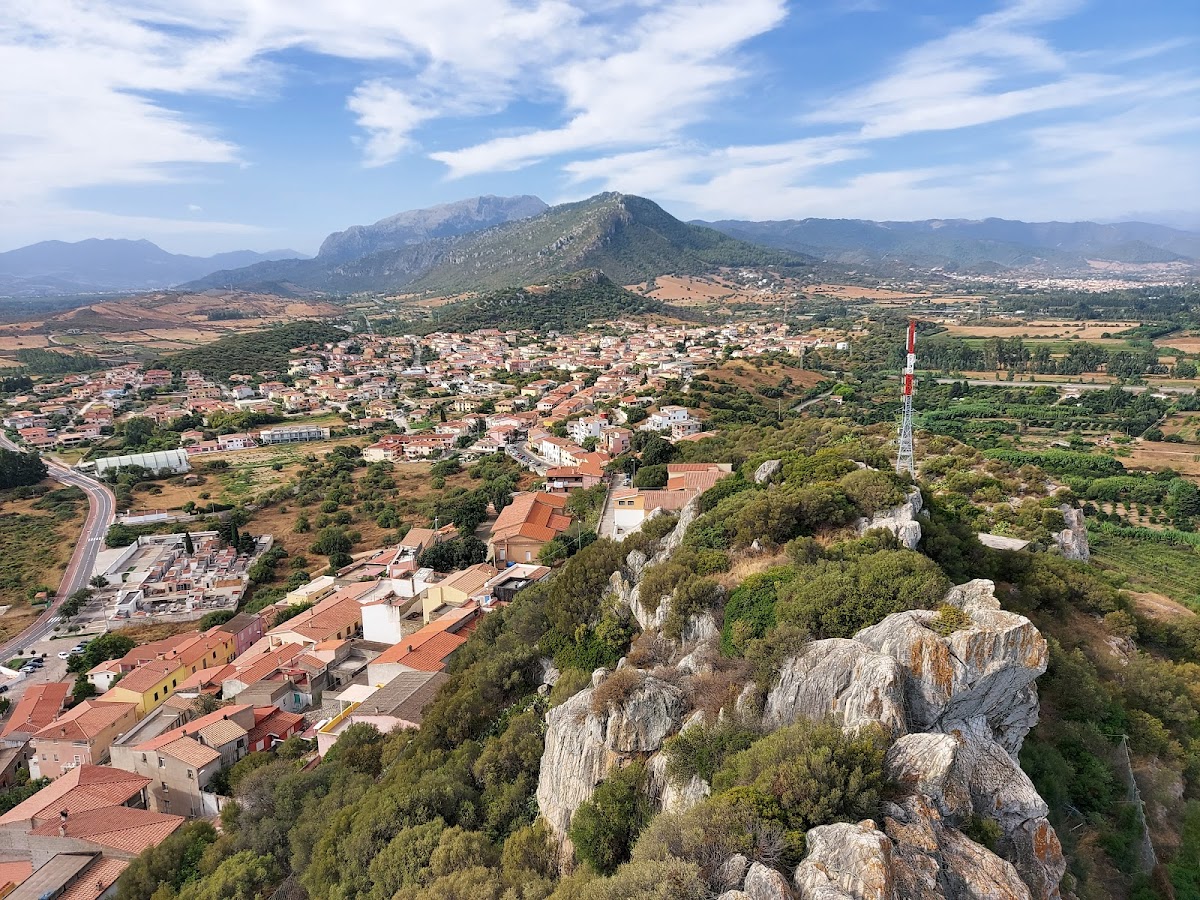
Site at a Glance
- Rating
- 4.4
- Popularity
- Medium
- Country
- Italy
- Primary era
- Medieval
- External website
- Open
- Eras represented
- Medieval
- Civilizations
- Unclassified
- Site type
- Military
- Remains
- Castle
On this page8 sections
History
Castello della Fava is a medieval fortified site in Posada, Italy, thought to have been standing by the thirteenth century. Its construction is attributed to the Pisan Visconti family, who built it on the boundary between Gallura and Arborea, two medieval Sardinian territorial states ruled by leaders known as giudici, a title often translated as “judges” or “kings.”
Gallura and Arborea
The castle changed hands between the rulers of Gallura and Arborea. It served as a residence for the rulers of Gallura and was also associated with Eleonora d’Arborea, the medieval ruler of Arborea. Its position made it part of the political and military competition between the two territories.
After the death of Nino Visconti, the last ruler of Gallura, in the early fourteenth century, Castello della Fava passed to the Republic of Pisa. During the conquest of Sardinia, it was conquered by the Catalan-Aragonese forces. In 1324, it passed to the Catalan-Aragonese, although Arborean forces temporarily regained control during the long Sardinian-Catalan War, the conflict between Arborea and the Catalan-Aragonese over control of Sardinia.
Aragonese rule and the name
After further temporary returns to Arborean control, the castle and the settlement of Posada came under Iberian rule again in 1409. In 1431, Castello della Fava was granted as a fief to the Carroz family and was raised to the status of a barony.
The name Castello della Fava, known in Sardinian as Casteddu de sa Fae, is traditionally connected with a legend set around 1300. During a siege of Posada by a Muslim or Saracen fleet, the inhabitants allegedly fed their last beans to a pigeon, wounded the bird, and released it toward the enemy camp. The besiegers supposedly mistook the bird’s swollen body for evidence of abundant food supplies and abandoned the siege.
Castello della Fava is recognized as Italian national heritage. Its history reflects the changing control of northern Sardinia from the medieval giudicati through Pisan authority and the Catalan-Aragonese conquest.
Remains
Fortified hill and terraces
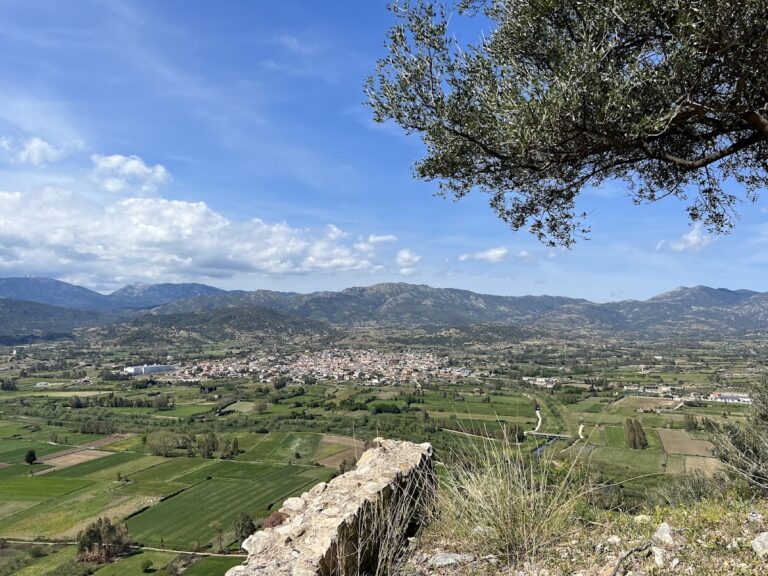
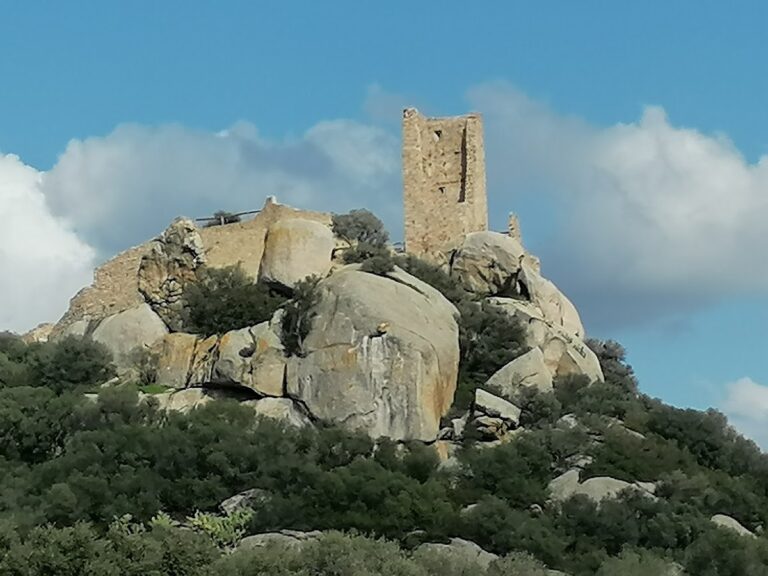
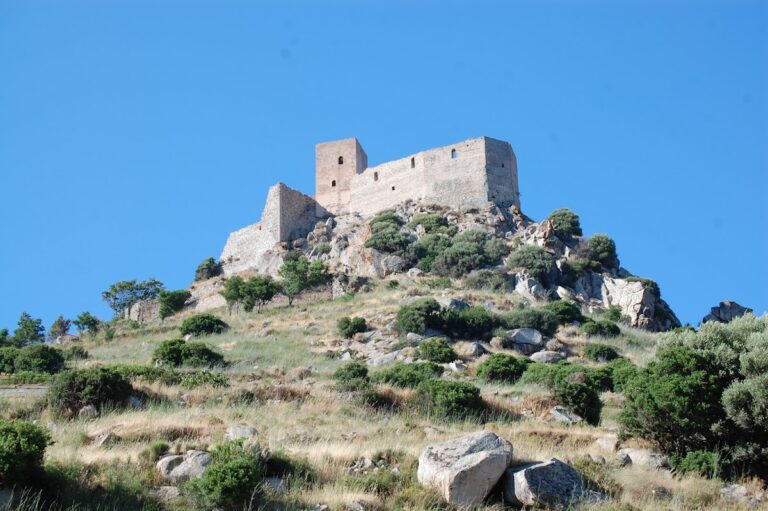
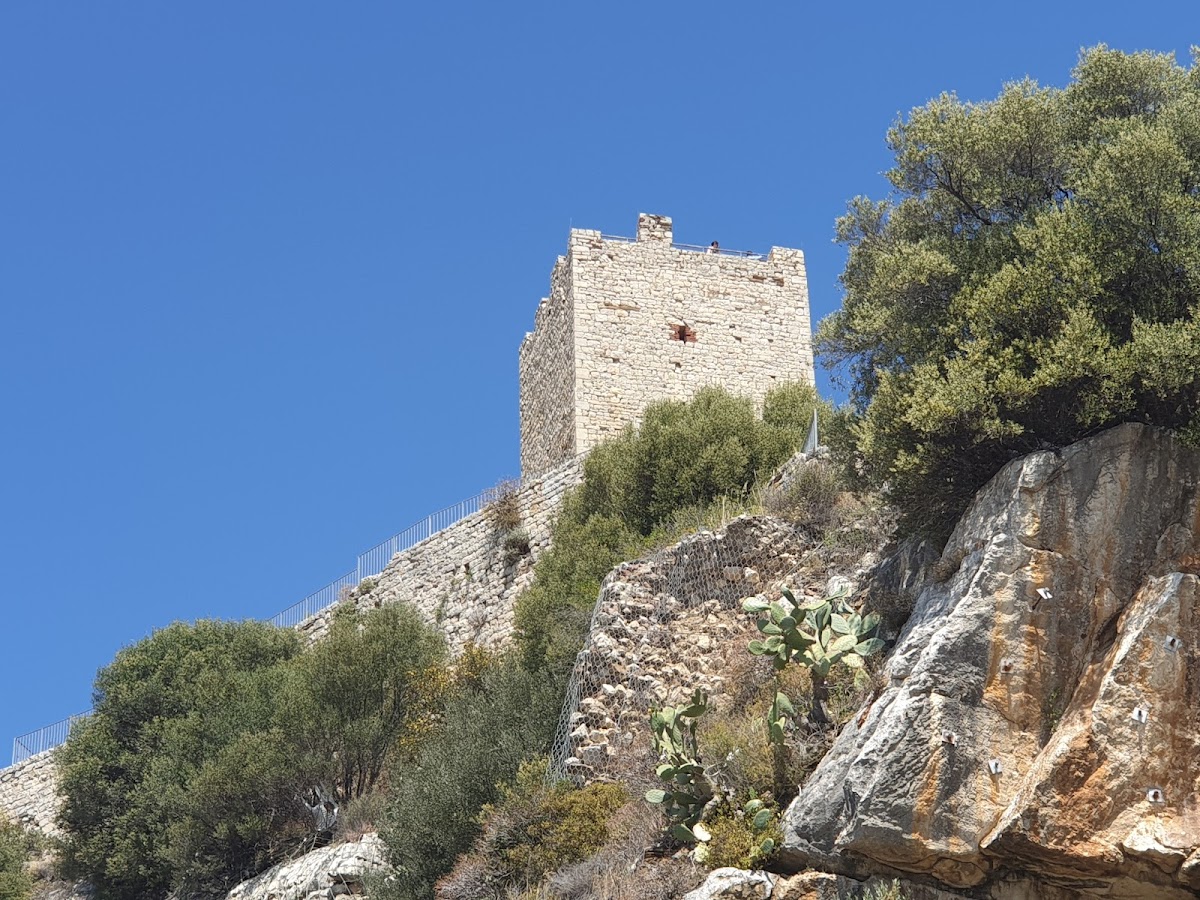
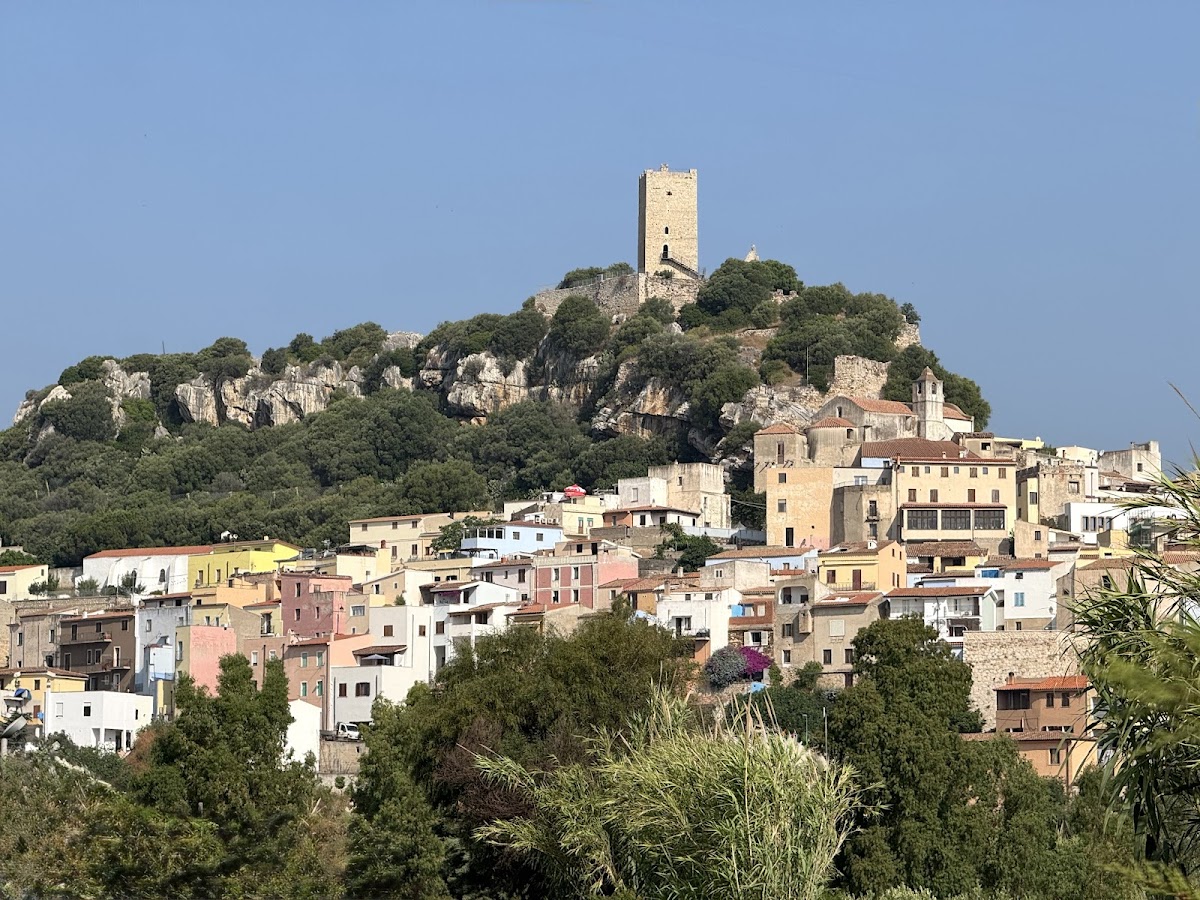
The castle occupies a small limestone hill within Posada, above the Posada River valley. From this elevated position, the fortification controlled the surrounding plain, the mouth of the Posada River, and a large part of Sardinia’s eastern coast. Roughly worked stone blocks form the fortress, whose three walls were arranged as terraces following the contours of the hill.
The surviving defensive remains include sections of these surrounding walls and a terrace protected by a low crenellated parapet, a defensive barrier with regularly spaced raised sections and openings. Together, the terraces and walls preserve the structure of the hilltop fortification.
Central structures
Parade ground and cisterns
At the center of the complex was a parade ground positioned above three large cisterns. The cisterns collected rainwater and remain in a good state of preservation, providing evidence of the systems that supported the fortress within its elevated setting.
Square tower
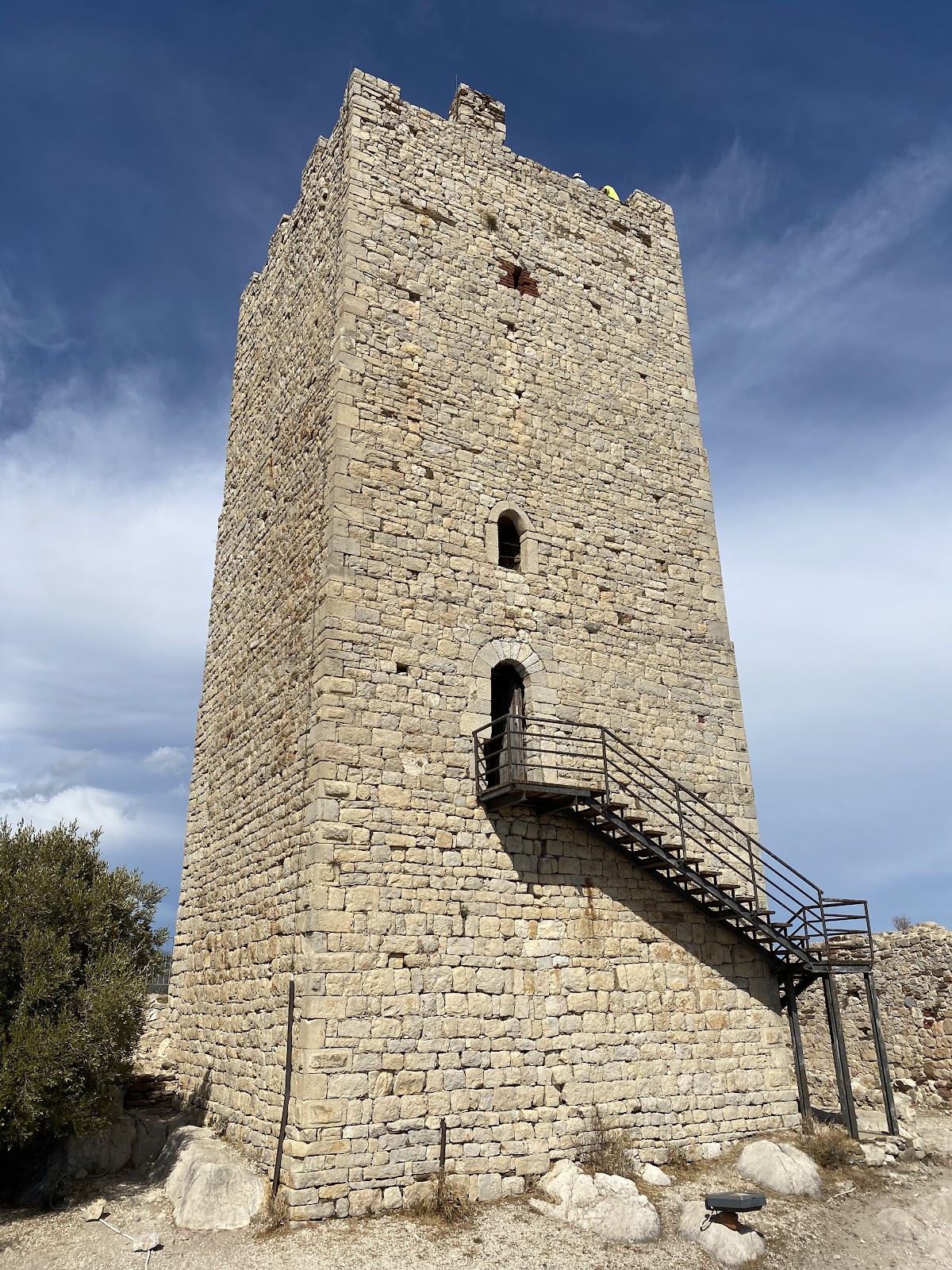
A square-plan tower formed the center of the complex and survives as its principal remaining structure. Approximately 20 metres high, it is divided into three levels. Its entrance was placed above ground level and was formerly reached by a wooden or rope ladder. An iron staircase now provides access. The upper part of the tower was crowned with battlements, completing the defensive character of the main surviving building.