Castello Belvedere: A Norman Castle in Sicily

Site at a Glance
- Rating
- 4.4
- Popularity
- Very Low
- Country
- Italy
- Primary era
- Medieval
- Eras represented
- Medieval
- Civilizations
- Kingdom of Sicily, Norman
- Site type
- Military
- Remains
- Castle
History
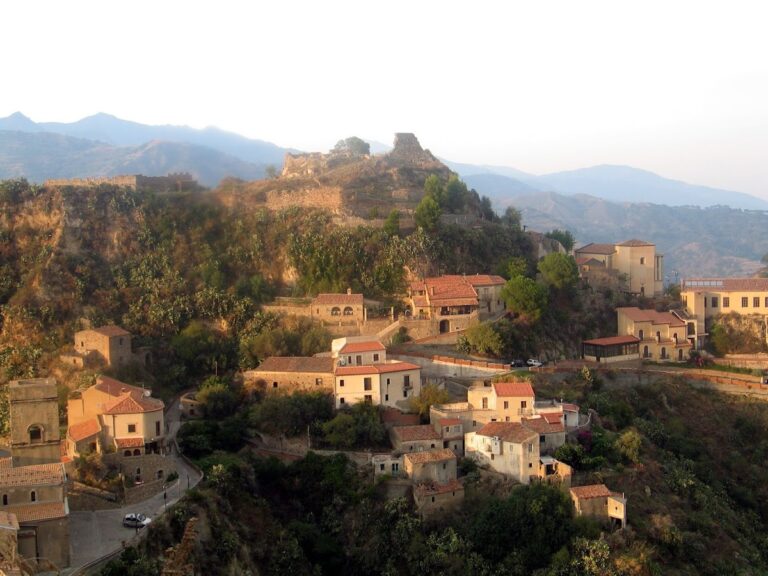
Castello Belvedere is a ruined Norman castle in Italy, above Fiumedinisi in Sicily, dating from the twelfth century, when the Normans established political power in southern Italy and Sicily and formed the Kingdom of Sicily. Built for defense, the fortress occupied a strategic position overlooking the coastal district facing the Strait of Messina.
The castle may stand on the site of the ancient acropolis, or fortified high area, of the original Sicel settlement of Fiumedinisi. This possibility has not been investigated archaeologically, while a substantial portion of the walls remains buried. Several owners held the fortress over the centuries. The last were the Colonna Romano, members of an aristocratic family who owned it from 1392 until about 1900. At that time, Duke Giovanni Antonio Colonna Romano Sonnino donated the castle to the Municipality of Fiumedinisi, which remains its owner.
Conservation and restoration work took place in 2006 and 2007. Within a few years, vandalism damaged some of the interventions, including the wooden fence beside the paved approach path and the explanatory signs.
Remains
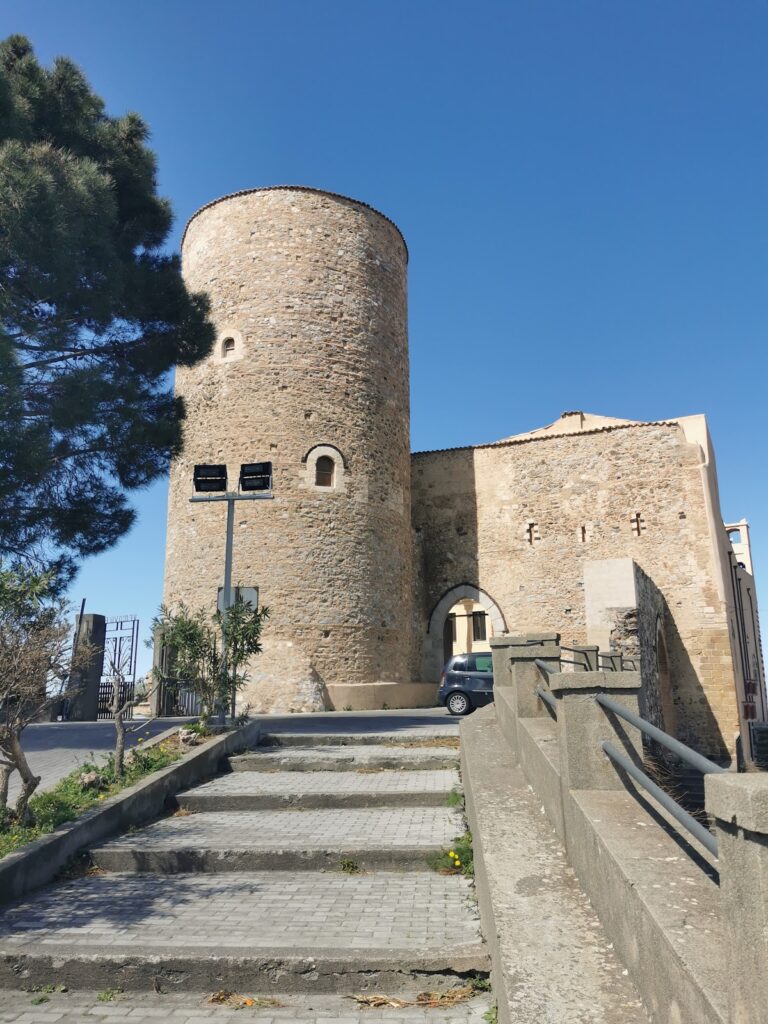
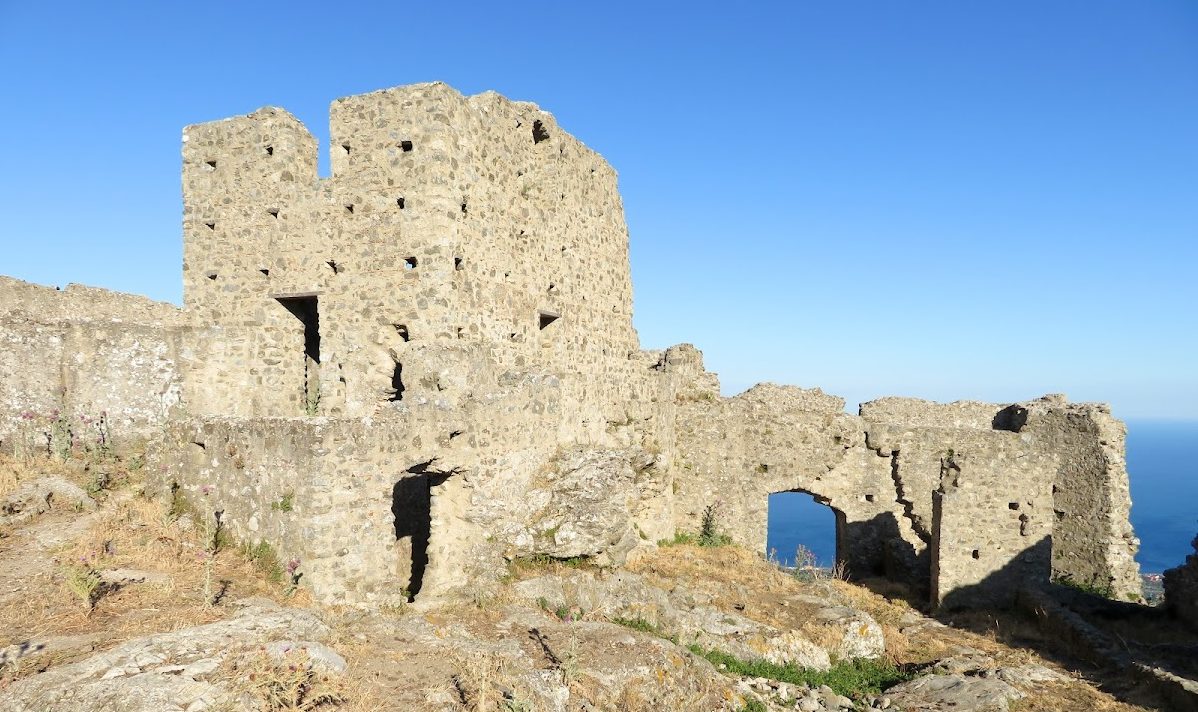
Castello Belvedere occupies a rocky crag at approximately 750 metres above sea level. Its irregular plan is pentagonal, and the surviving structure is formed by outer walls, internal dividing walls, and an imposing mastio, or principal fortified tower. The castle is now reduced to ruins, while its elevated position overlooks the coastal district extending from Scaletta Zanclea to Sant’Alessio Siculo.
Fortifications and Water Supply
The enclosure walls retain sections of patrol walks and several arrow slits, narrow openings through which archers could fire from within the defenses. A deep cistern survives inside the castle, providing a tank for collecting and storing water. Together with the keep and the wall circuit, these features preserve the defensive and practical organization of the fortress.
Nearby sites