Castell Dinas: An Iron Age Hillfort and Norman Castle in Wales
Site at a Glance
- Rating
- 4.5
- Popularity
- Very Low
- Country
- United Kingdom
- Primary era
- Medieval
- External website
- Open
- Eras represented
- Iron Age, Medieval
- Civilizations
- Celtic, English, Norman
- Site type
- Military
- Remains
- Castle
On this page8 sections
History
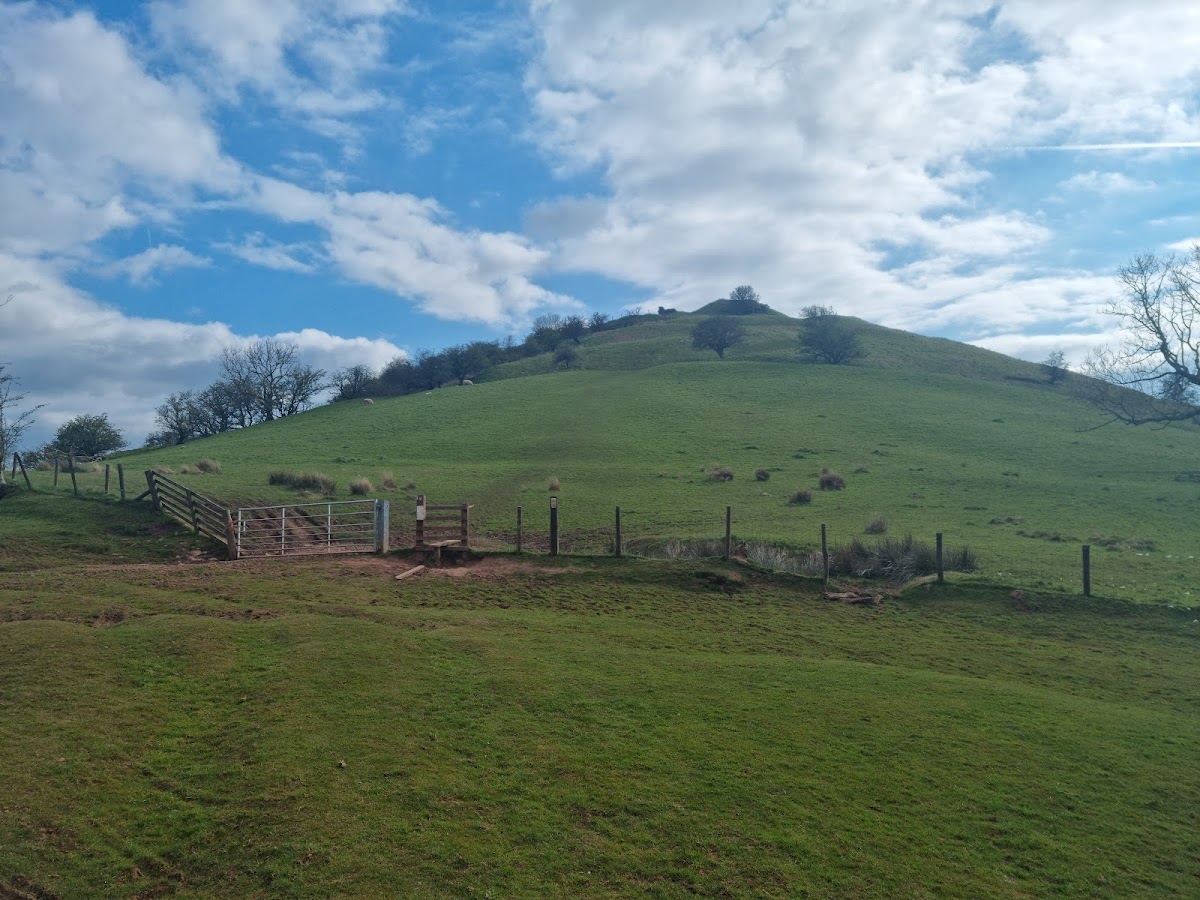
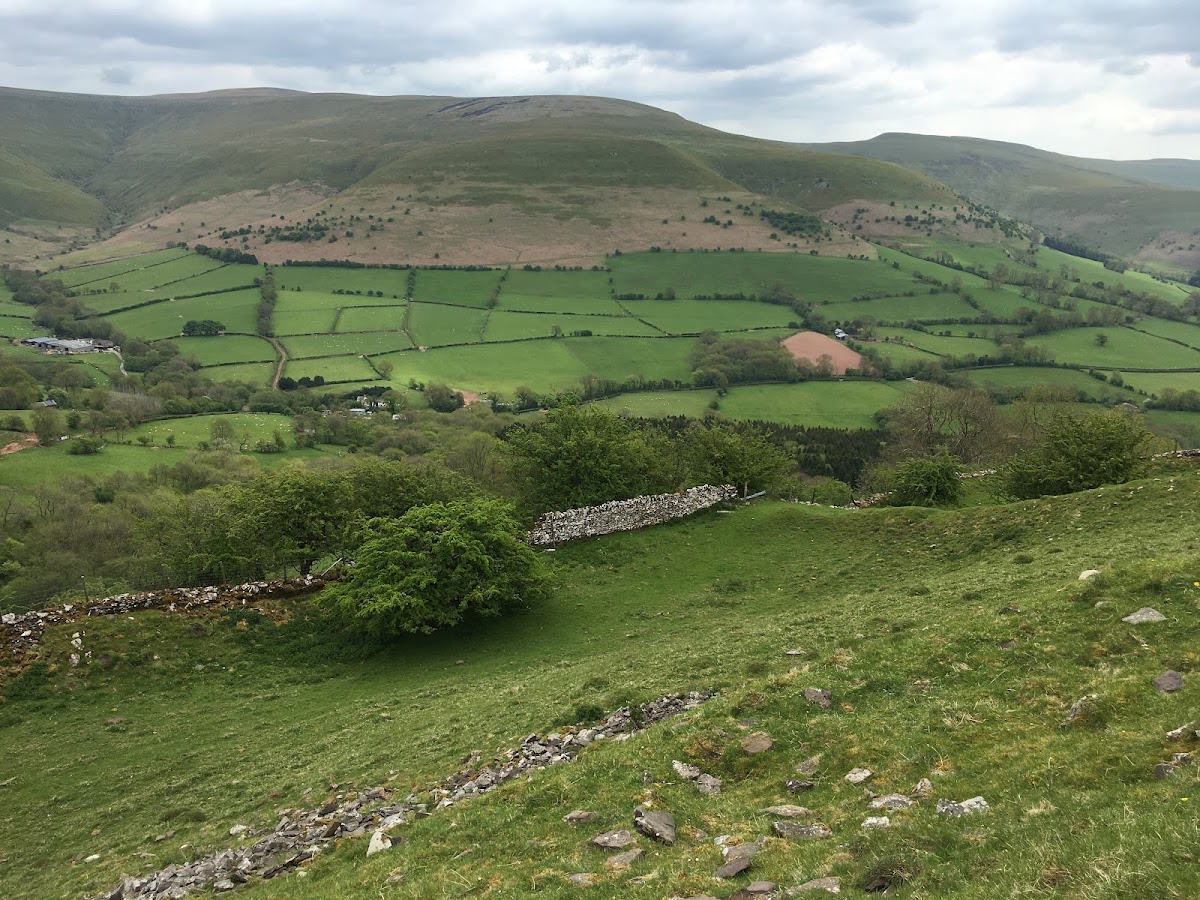
Castell Dinas is an Iron Age hillfort and later Norman stone castle in Wales, United Kingdom, above Talgarth. The hillfort originated between approximately 600 BC and AD 50, while the medieval castle belonged to the period of Norman expansion in Wales. Its position at 450 metres above sea level protected the pass between the Rhiangoll and Llynfi valleys, linking Talgarth with Crickhowell.
Iron Age origins
The earliest settlement was a multivallate hillfort, meaning a defended enclosure surrounded by several banks and ditches. An extension was added along the western rampart, creating a larger defended area on the summit. The earthworks remained important when the site was later adapted for medieval use.
Norman foundation and lordship
A Norman stone castle was probably established between about 1070 and 1075. William FitzOsbern, a Norman magnate and Earl of Hereford, or his son Roger de Breteuil, may have sponsored the work. Another interpretation places its construction with the de Braose family before 1180, so both the date and patronage remain uncertain.
The castle’s strategic value to the Normans declined after a castle was built at Brecon before 1093. Castell Dinas nevertheless remained with the Norman lords of Brycheiniog until 1207, when King John of England granted it to Peter Fitz Herbert. It then became the caput, or principal administrative and residential centre, of the lordship of Talgarth, also called Blaenllyfni.
Welsh attacks and final destruction
Llywelyn ab Iorwerth attacked and destroyed Castell Dinas in October 1233. Henry III of England rebuilt the castle and returned it to Peter Fitz Herbert. Llywelyn ap Gruffudd, the Prince of Wales commonly known as Llywelyn the Last, later captured it, and Welsh followers held the site from 1263 to 1268.
Owain Glyndŵr’s forces destroyed the castle in the mid-fifteenth century during the late-medieval Welsh revolt against English rule. Its surviving earthworks and masonry preserve the remains of both the earlier defended settlement and the later medieval stronghold. Cadw, the Welsh historic-environment service responsible for recording and protecting archaeological and historic monuments, lists the hillfort as a registered ancient monument under identifier BR015.
The name Castell Dinas is also used for a separate castle site in Pembrokeshire, about 4.8 kilometres west of Fishguard and at an elevation of 91 metres. That site is distinct from the hillfort and castle above Talgarth.
Remains
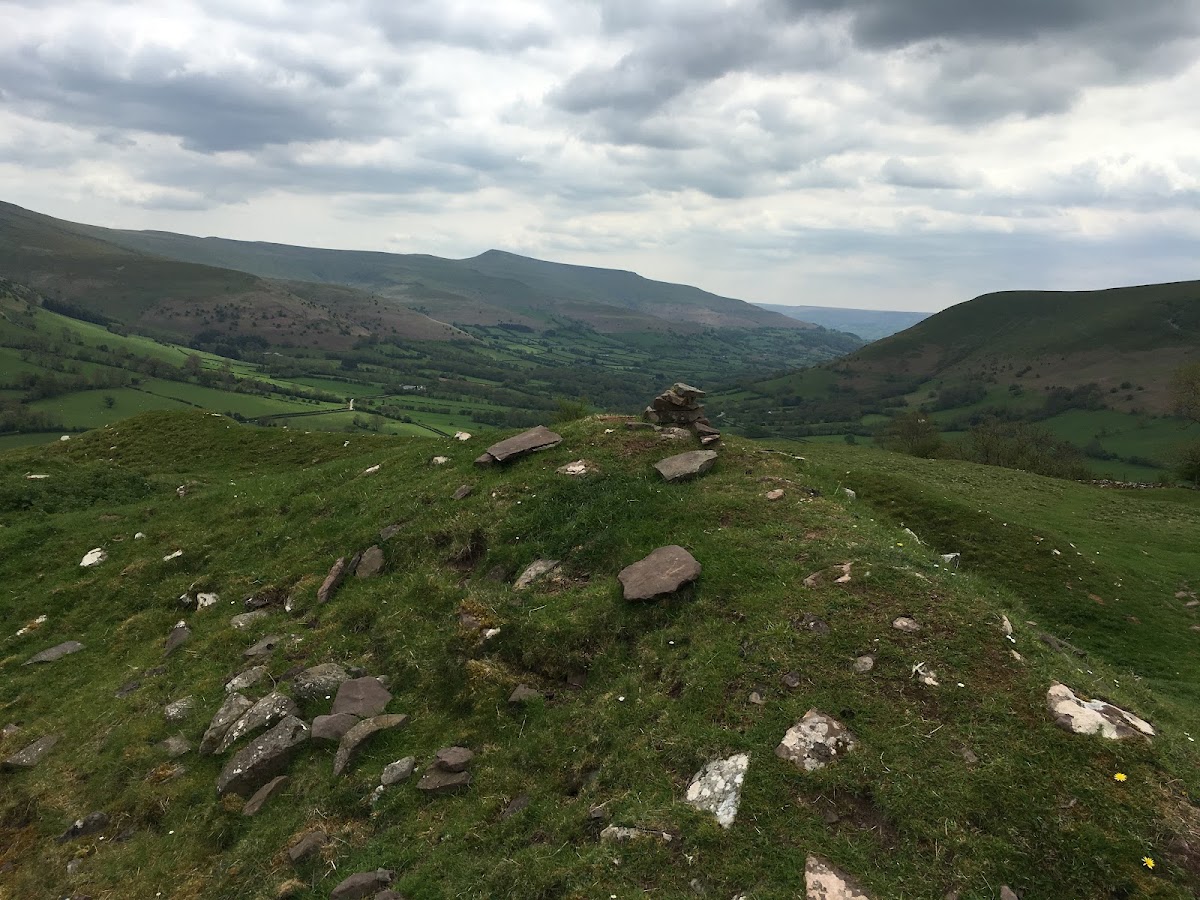
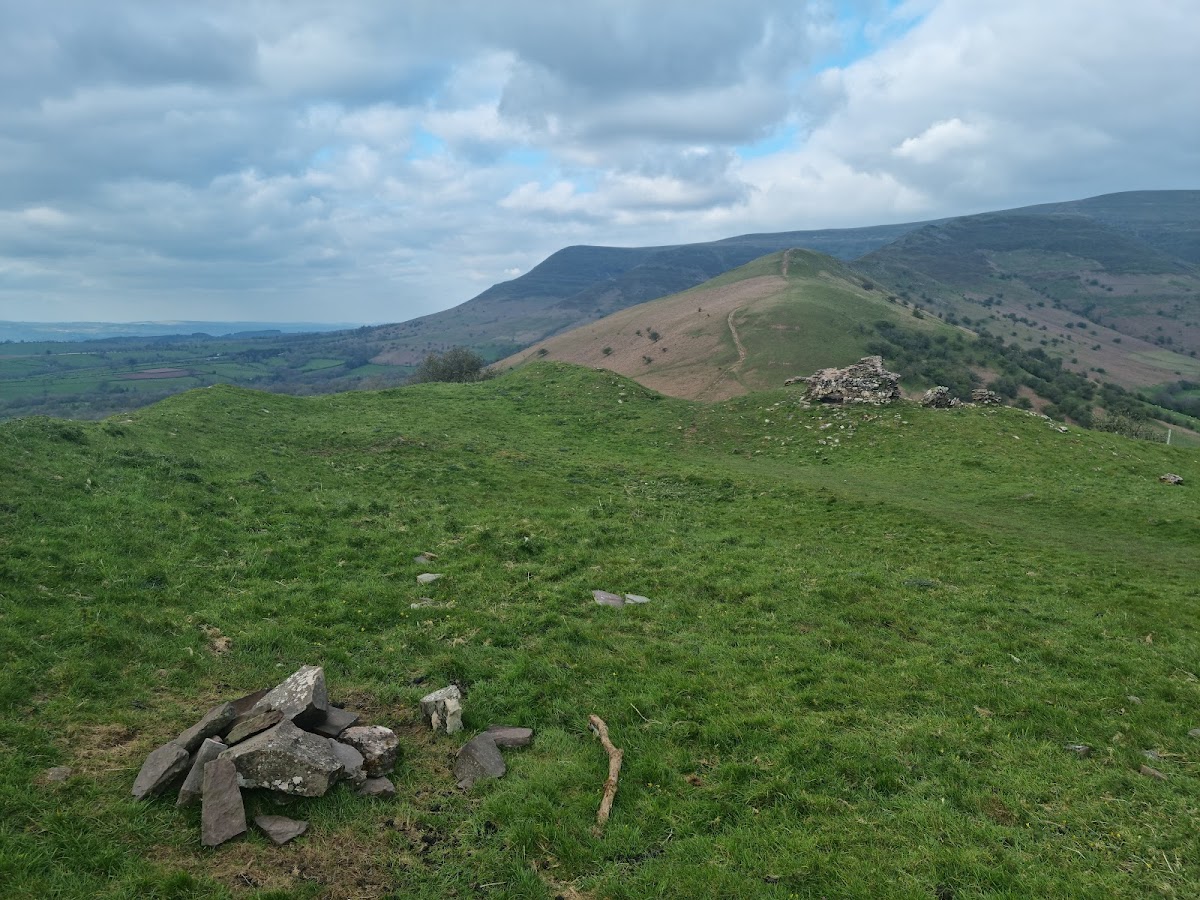
The site occupies a high position at 450 metres above sea level, with the Iron Age enclosure spread across the summit and the Norman castle built within the defended area. Several ramparts and ditches define the hillfort, while the medieval remains consist of a stone keep-hall enclosed by a curtain wall with square towers. The castle masonry now survives as ruins, with sections partly buried beneath soil.
Defended summit
Iron Age hillfort
The multivallate hillfort is formed by multiple banks and ditches, whose lines remain clearly visible across the site. Its western side included an additional enclosure or extension beside the rampart. These earthworks represent the earliest physical organization of Castell Dinas as a defended settlement or enclosure.
Norman castle
The medieval stronghold was constructed in stone from the beginning rather than as a motte-and-bailey, the form that combines a raised mound with an enclosed outer yard. Its central keep-hall was surrounded by a curtain wall carrying square towers. Ruined wall sections remain across the site, and the original well is still visible.
Nearby sites