Seguer Castle: A Medieval Fortress in Tarragona

Site at a Glance
- Rating
- 4.6
- Popularity
- Very Low
- Country
- Spain
- Primary era
- Medieval
- External website
- Open
- Eras represented
- Medieval
- Civilizations
- Crown of Aragon
- Site type
- Military
- Remains
- Castle
On this page8 sections
History
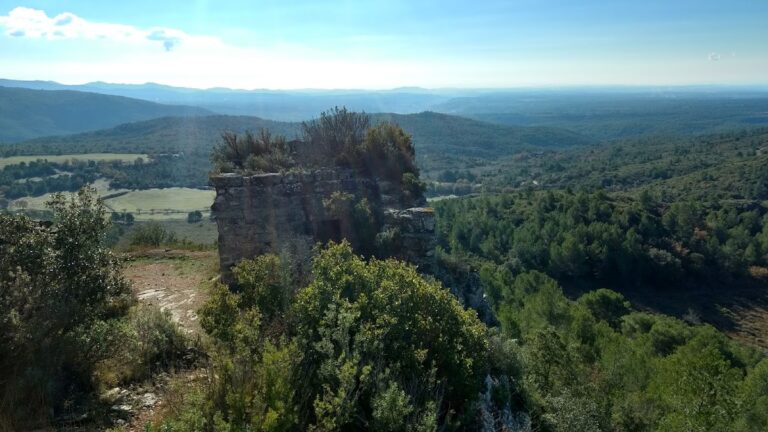
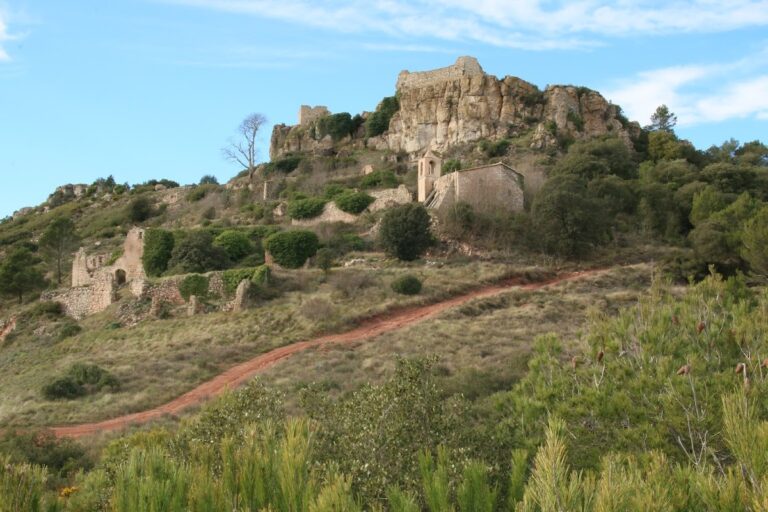
Seguer Castle is a medieval fortress in Spain, built on a rocky hill above the left bank of the Gaià River. Its position at the highest end of Seguer gave it strategic importance in controlling the lower part of the upper Gaià. The settlement grew around the castle, which continued the defensive role of a tower used against Muslim forces.
The eleventh-century frontier
A document from 1077 records a tower on the hill of Seguer, near Santa Perpètua. In that year, Guadall Guillem and Llop Sanç granted the hill to Bonfill Oliba as an allodial possession, meaning land held directly as property rather than as a feudal fief. They had acquired it through aprisió, a medieval process in which uncultivated or frontier land was occupied, settled, and cultivated. Count Ramon Berenguer I of Barcelona later confirmed their ownership. The reference to the tower indicates that colonization had begun earlier, probably through the activities of Guadall Guillem and Llop Sanç.
Medieval lordship
References to Seguer become scarce after the 1077 grant and remain limited until the fourteenth century. The hearth census of 1365–1370, which counted taxable household units, listed the castle and settlement with four households. Seguer belonged to the donzell Pere de Montagut, a member of the lower secular nobility, and lay within the vegueria of Vilafranca del Penedès, a territorial district administered by a royal official known as a veguer. The Montagut family held several castles along the Gaià as feudatories of the Cervelló family.
During the second half of the eighteenth century, Seguer belonged to the Maranyona family, which controlled the locality until the Spanish disentailments of the nineteenth century.
Heritage status
Seguer Castle is listed as a Cultural Asset of National Interest as a historic monument and has held Spanish Asset of Cultural Interest status since 1988. It is registered under heritage reference RI-51-0006725 and appears in the Catalan Architectural Heritage Inventory as number 1616.
Remains
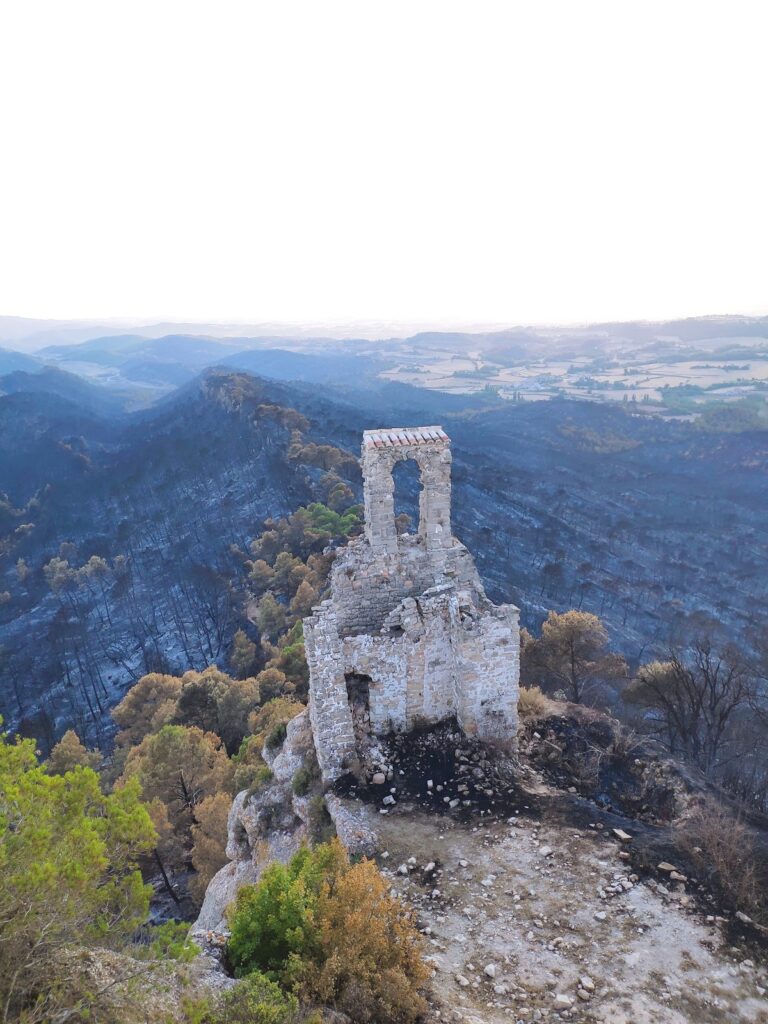
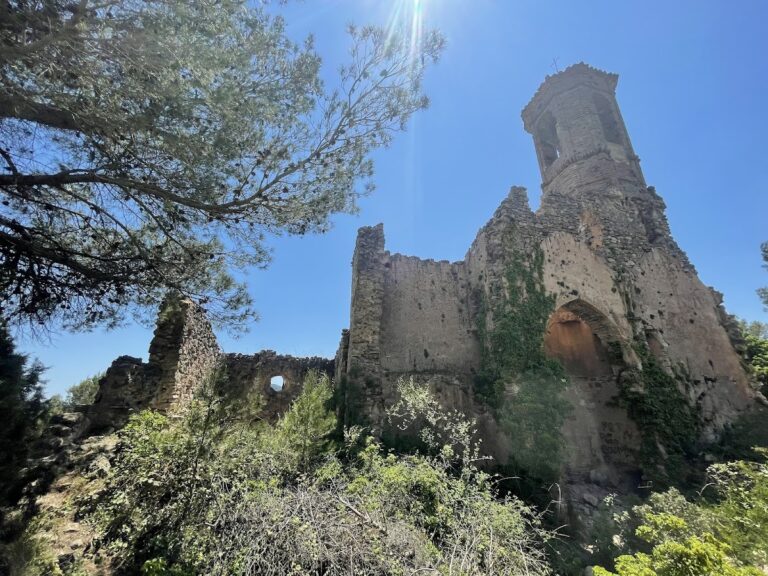
The surviving remains form part of a large rectangular building that is largely demolished. The visible structures mainly belong to a late-medieval renovation carried out over an eleventh-century fortification. The later work, undertaken during the thirteenth and fourteenth centuries, reshaped the earlier stronghold into a fortified complex containing a residential building and the Church of Sant Bartomeu, or Saint Bartholomew.
Eleventh-century fortification
The earliest defensive work survives near the central part of the north wall as the remains of a circular tower. The line of the northern wall can also be traced at foundation level. A small semicircular turret projects from it beside the northwestern enclosure of the Church of Sant Bartomeu, providing a position for observation and defense.
Fortified residence
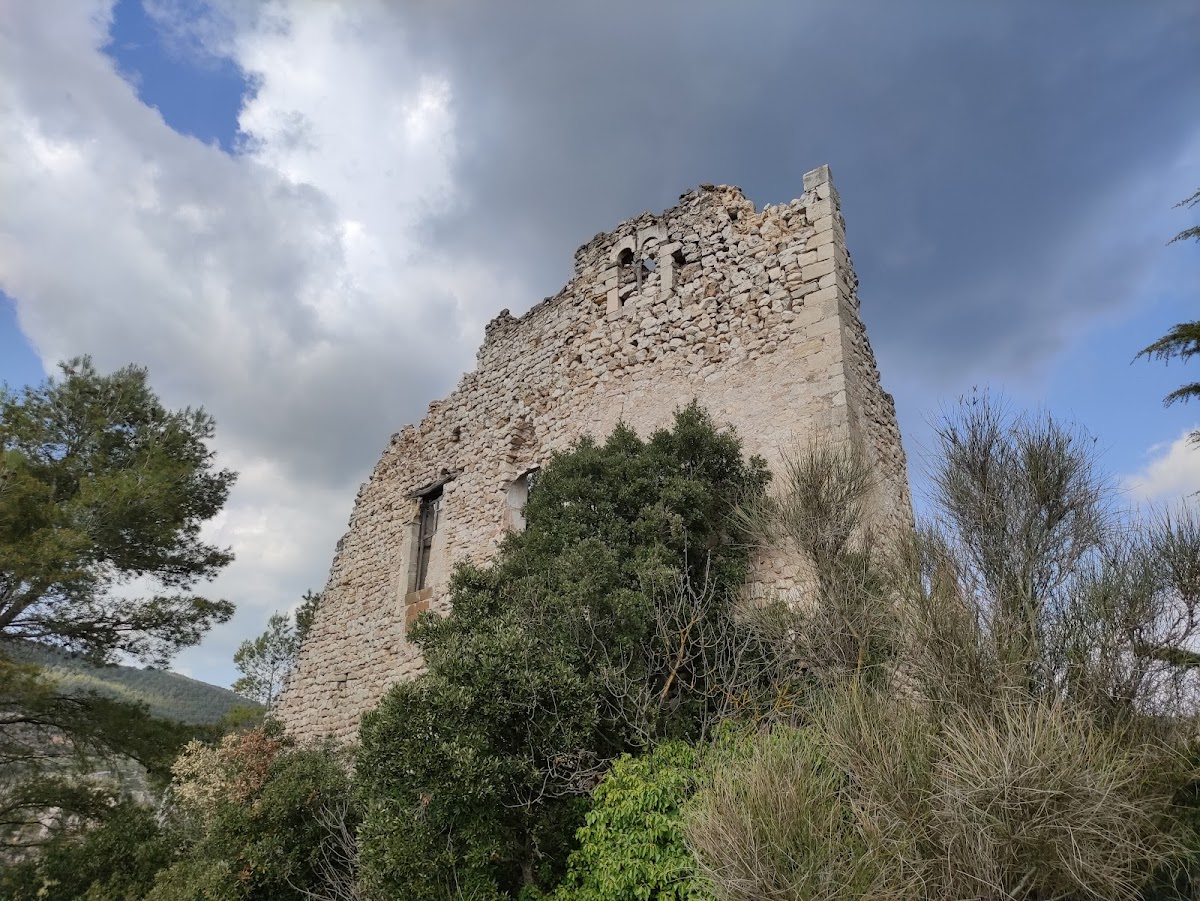
The principal later residence was a three-storey rectangular building resembling a fortified house. Its walls were made of irregular masonry, while the corners used carefully finished ashlar blocks. Entry was through a doorway in the main southern facade, which has been completely demolished.
Western facade
Much of the original line of the western wall remains. At second-floor level, it preserves a late-Gothic twin window, a Gothic opening divided into two sections by a central vertical element. A large first-floor window in the same facade belongs to a later alteration of the building.
Nearby sites