Castel Tonini: A Medieval Defensive Stronghold in Buti, Italy
Visitor Information
Google Rating: 4.2
Popularity: Very Low
Country: Italy
Civilization: Early Modern, Medieval European, Modern
Site type: Military
Remains: Castle
History
Castel Tonini is located in the municipality of Buti, in present-day Italy. It originated in the second half of the 10th century, developed by local medieval communities as a defensive stronghold designed for territorial control. The site took advantage of its commanding position atop a promontory, flanked by two streams, and was closely linked to a ridge road connecting Vicopisano with the Rocca della Verruca, emphasizing its early military significance.
During the Middle Ages, the castle became contested among the surrounding city-states of Pisa, Lucca, and Florence. In the 12th century, it was taken over by Lucca, only to return to Pisan control in the early 14th century. A historical document from 1340 underlines its military value and mentions the leadership of its garrison. The late 15th century brought conflict when Florentine forces invaded Buti in 1496, causing damage to the castle. Following Buti’s incorporation into the Florentine Republic in 1503, substantial renovations transformed the castle with Renaissance stylistic influences. The subsequent fall of Pisa to Florence in 1509 reduced the defensive role that Castel Tonini and Buti had previously played.
From the 17th century onward, the castle’s role as a military fortress declined, giving way to noble families who built grand residences within its bounds to take advantage of the attractive site. Prominent families such as the Tonini, Lorenzani, Banti, Petracchi, and Giunti established themselves here. Among these, the Villa Medicea di Buti, constructed likely in the 16th century and rebuilt in the 18th century by the Petracchi family, stood out as a distinguished home. In 1637, the Chiesa di San Rocco was erected on the ruins of the original medieval watchtower, with further funding for its renovation provided by Pier Maria di Domenico Petracchi toward the late 17th century.
The site also featured a remarkable mulberry tree planted by the Tonini brothers in 1620, which became a well-known gathering place for the community until recent times. By the early 19th century, the castle housed roughly eighty buildings owned by various influential families. However, in the late 19th and early 20th centuries, many traditional owners sold their properties as streets were renamed and ownership shifted. Around 1900, a neo-Gothic restoration introduced elements such as battlements inspired by the Guelph style and a gallery with Gothic bifora windows. The mid-20th century witnessed artisanal use of the area, notably basket weaving. Today, Castel Tonini is owned by the municipality of Buti, with recent restoration efforts focusing on the tower initiated in 2021.
Remains
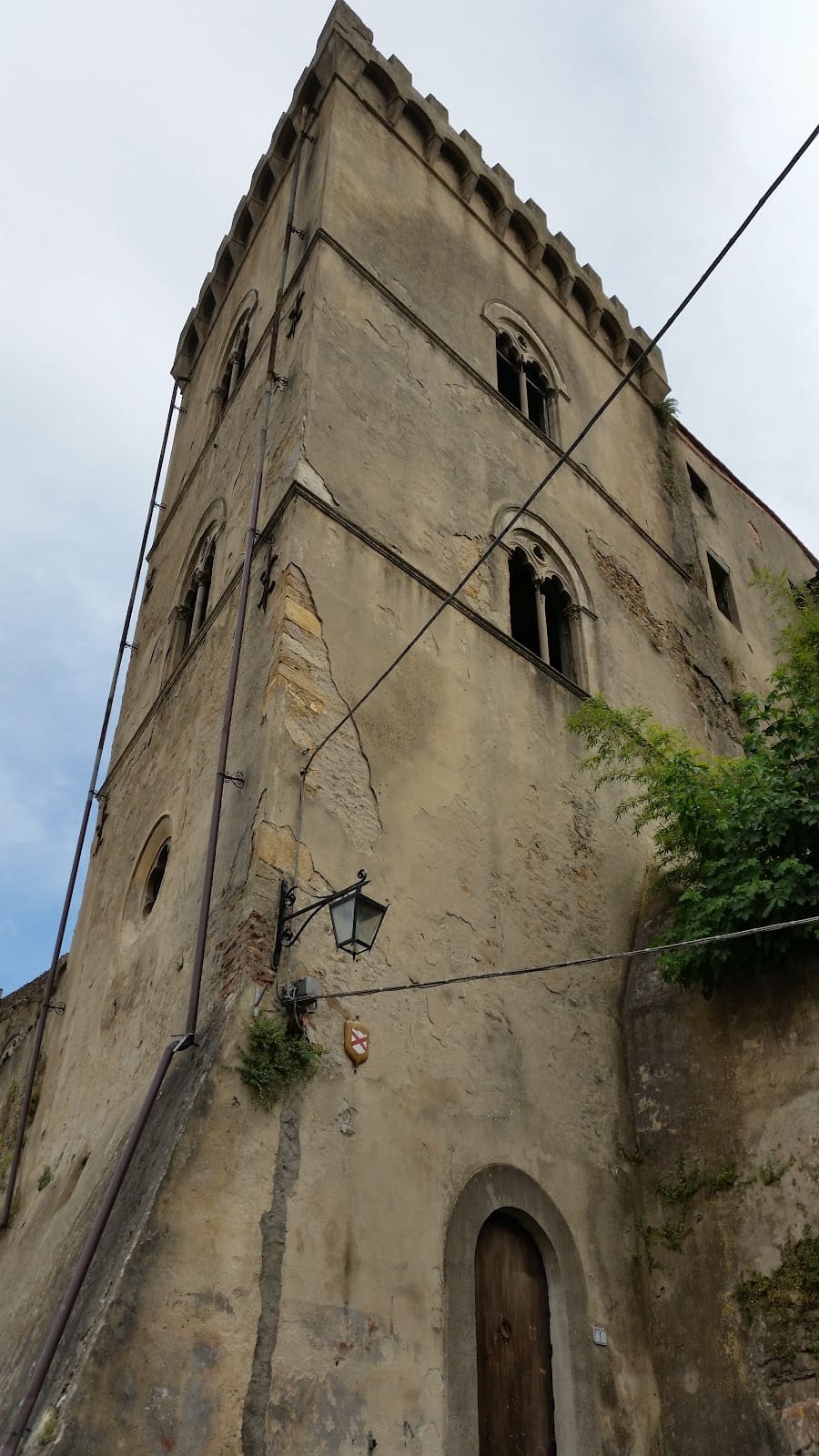
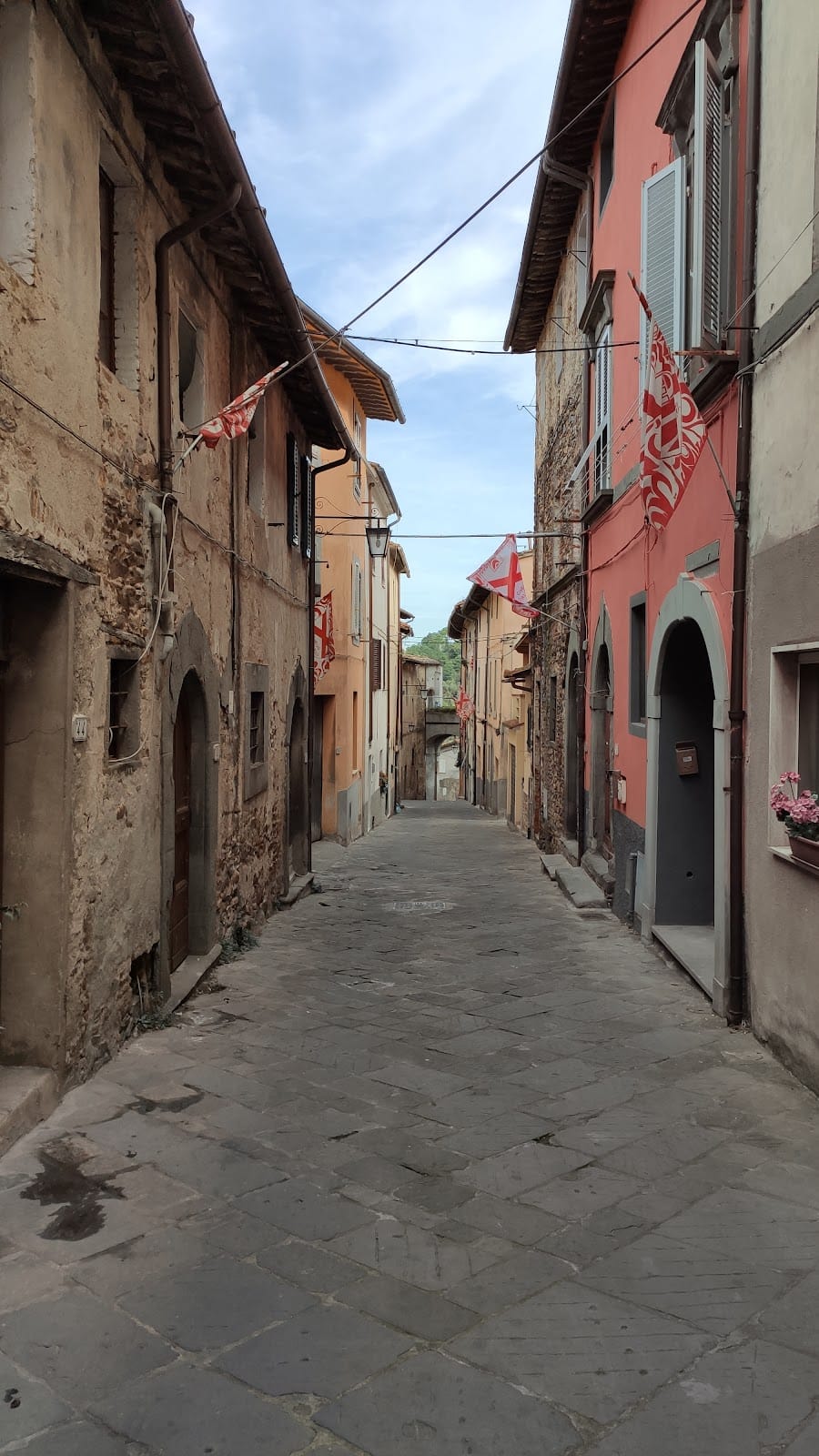
The layout of Castel Tonini centers around an originally fortified watchtower placed on a promontory bordered by two streams, which created natural defensive barriers on two sides. This vantage point enabled early long-distance observation and signaling. Over time, the site expanded into a defensive complex enclosed by walls and protected by three additional towers positioned at the main entrances. These gateways correspond to modern streets known today as Via di Castel Tonini, Via Marianini, and Via di Borgarina.
Within the castle grounds stands the Villa Medicea di Buti, a noble residence dating back to the 16th century and reconstructed in the 18th century by the Petracchi family. This four-story rectangular building features vaulted cellars beneath the ground floor, with an attic historically used for storing grain and fruit. Surrounding the villa are remnants of medieval walls, and an Italian-style garden lies at its rear. The entrance hall bears the coat of arms of the Banti family, who owned the villa in the early 19th century, while the main gate displays the 17th-century crest of the Petracchi family.
The castle’s civil architecture includes various ornamental doorways and family coats of arms crafted in terracotta, ceramic, or pietra serena—a fine-grained gray sandstone typical of the region. These decorative elements date from the 16th century and the Napoleonic period. Among them, the Tonini family emblem stands out prominently, reflecting the name the castle acquired in the 17th century.
The Chiesa di San Rocco, built in 1637 on the site of the original medieval watchtower, remains a significant religious and architectural feature within the castle area. Its façade is marked by a stone pediment and a window framed in pietra serena, with windows arranged symmetrically on either side. A turret above the main portal houses the church bell. Inside the church, statues of the Madonna della Neve (Our Lady of the Snow) and San Rocco flank the altar. A painting from 1679 depicting both San Rocco and the Madonna adds historic artistic value.
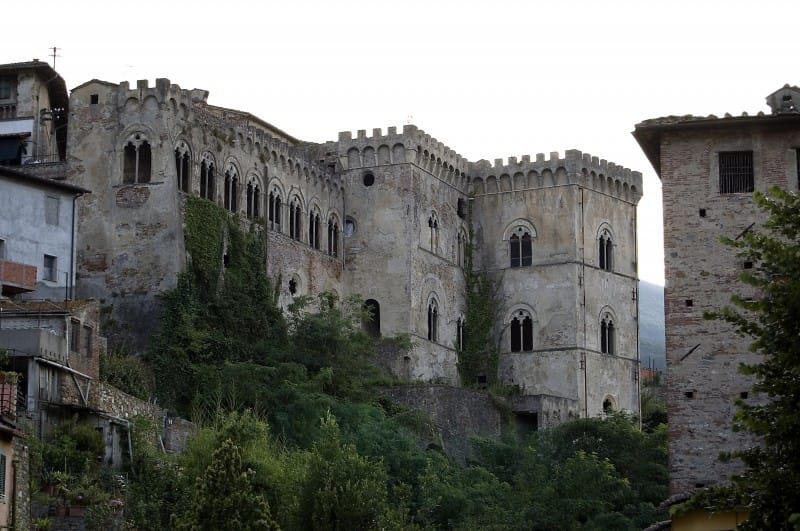
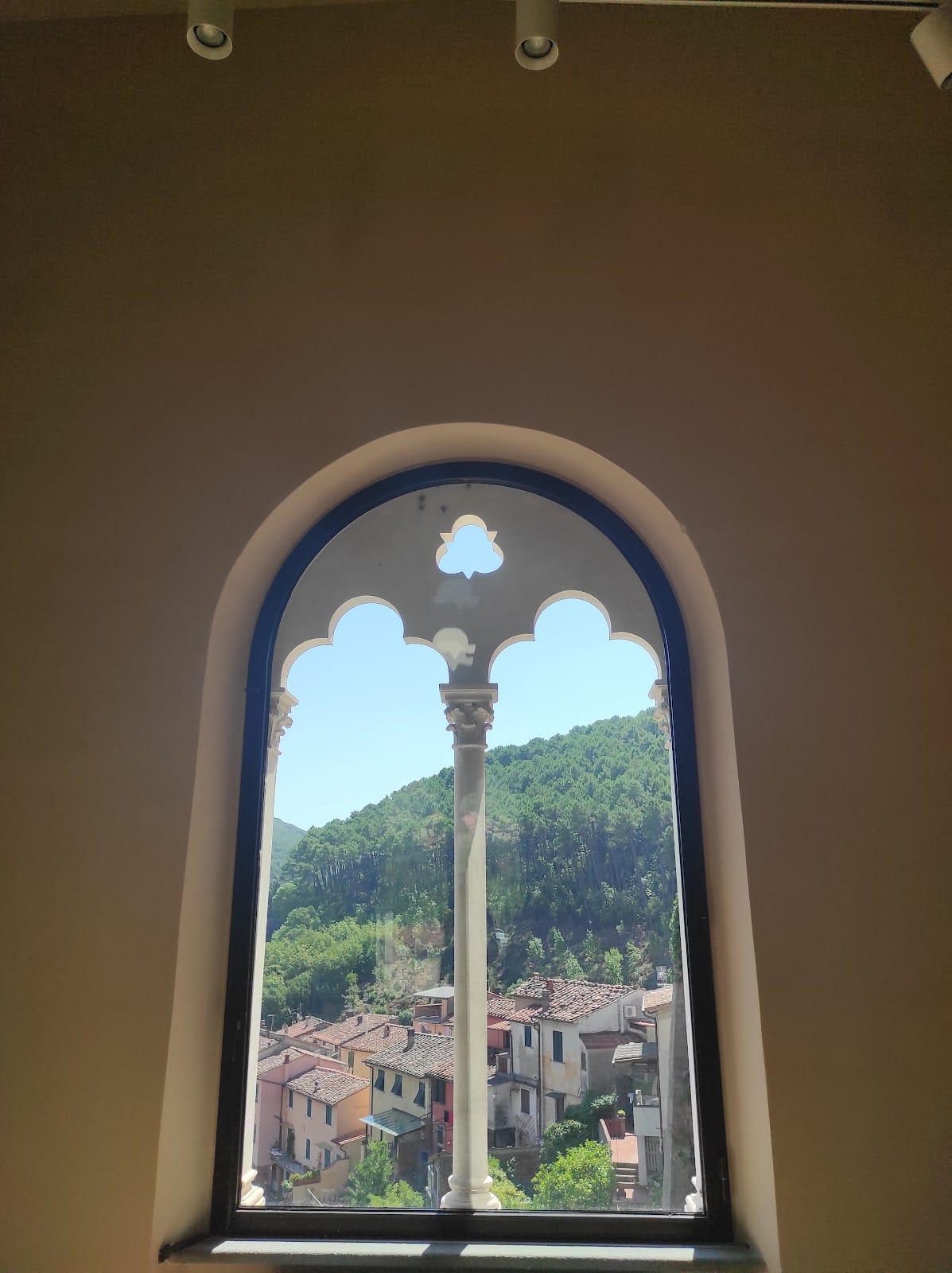
Early 20th-century restoration efforts introduced neo-Gothic elements, including battlements styled after the Guelph architectural tradition—characterized by crenellations with swallowtail shapes—and a second-floor corridor adorned with Gothic bifora windows, which are paired windows separated by a small column. A long gallery was added along the castle walls, along with an emergency exit. Additionally, the castle was connected to an aqueduct drawing water from the Mariotto spring, a historical local source.
Photographs and documented studies confirm that many original medieval walls and architectural features have been conserved or restored, particularly the watchtower, which remains a focal point of ongoing preservation work.
Nearby sites