The Cassero: Inner Stronghold of Montopoli Castle
Site at a Glance
- Popularity
- Very Low
- Country
- Italy
- Primary era
- Medieval
- Eras represented
- Medieval, Early Modern, Modern
- Civilizations
- Grand Duchy of Tuscany
- Site type
- Military
- Remains
- Castle
On this page10 sections
History
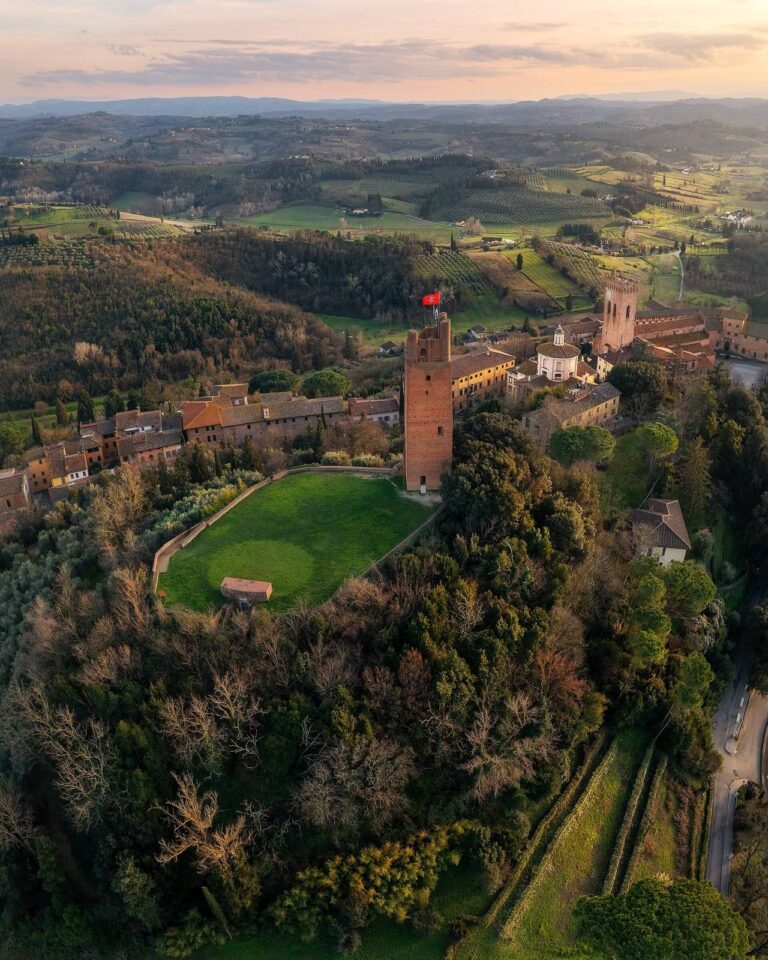
The Cassero was the inner fortified enclosure of Montopoli’s castle, on the highest part of the hill at Montopoli in Val d’Arno, Italy. Built in the 11th–12th centuries as the castle extended along the ridge, it formed the stronghold’s final defensive position and a last place of resistance during an attack. It also housed storage and service areas and quarters for the garrison.
Florentine-era changes
Montopoli came under Florentine control in the first half of the 14th century. Around the late 13th and early 14th centuries, a brick tower replaced an earlier stone building within the Cassero. A 19th-century tradition described it as a lookout tower, but later research identified it instead as the bell tower of the nearby chapel of Saint Martin of Tours, a 4th-century bishop widely venerated in western Christianity.
Industrial and civic reuse
By the late 16th century, the stronghold no longer served defensive or surveillance purposes. Its tower was put to industrial use with a glass furnace, and the site later served civic needs, including a clock and a water supply for the neighboring town. Between the late 16th and early 17th centuries, the area was also adapted to collect rainwater. The plateau subsequently became a burial ground, perhaps in memory of Saint Martin; some earth-cut graves may date to the 17th-century plague.
The tower continued in use after the stronghold’s military role ended. Bells and a clock were installed there in the 19th century, and in more recent times the Rocca’s remains also served as a local memorial park.
Wartime destruction and archaeological work
On 13 July 1944, retreating German troops mined the tower, destroying much of it during the Second World War. It was never rebuilt, and its destruction changed the historic skyline of Montopoli’s castle.
Excavations in 1993–94 traced phases of activity at the site from the 12th century to the present. The area was later arranged as an archaeological park. Studies of the fortifications also informed a 3D reconstruction of the Rocca within Montopoli’s 14th-century castle.
Remains
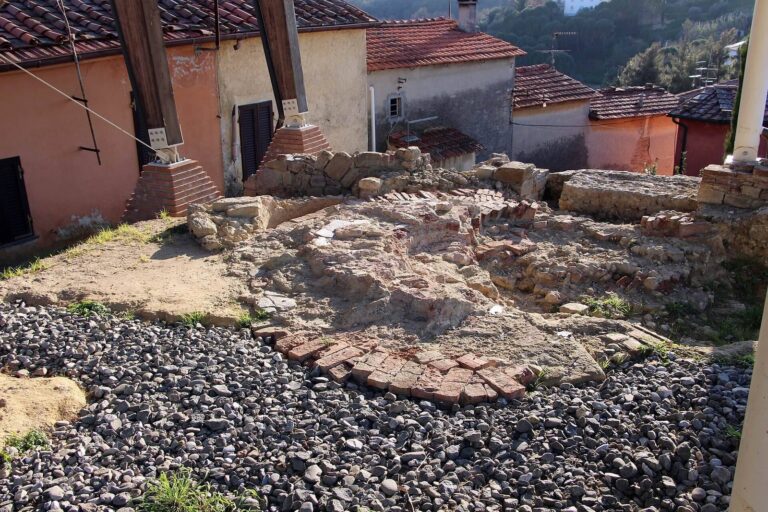
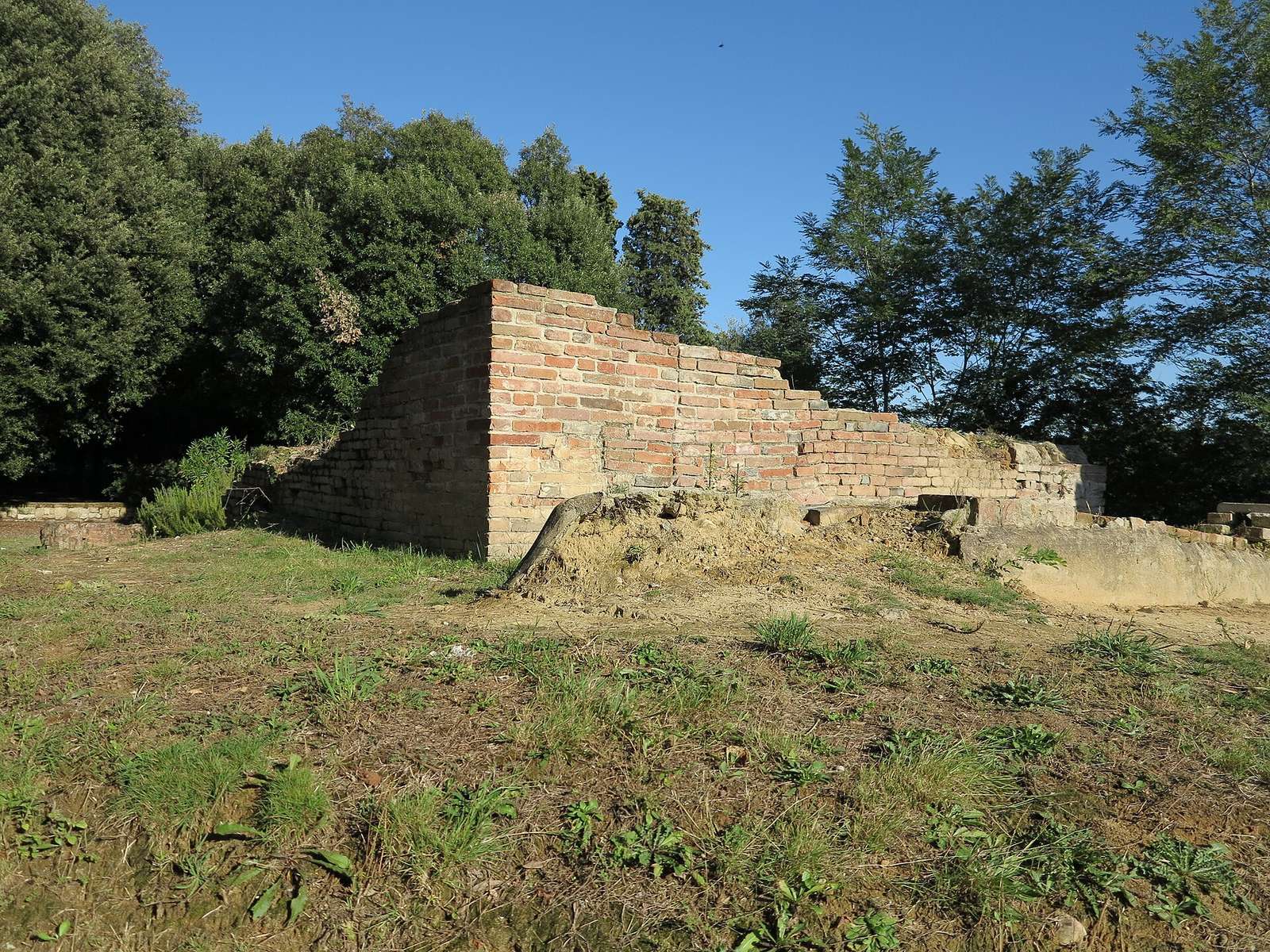
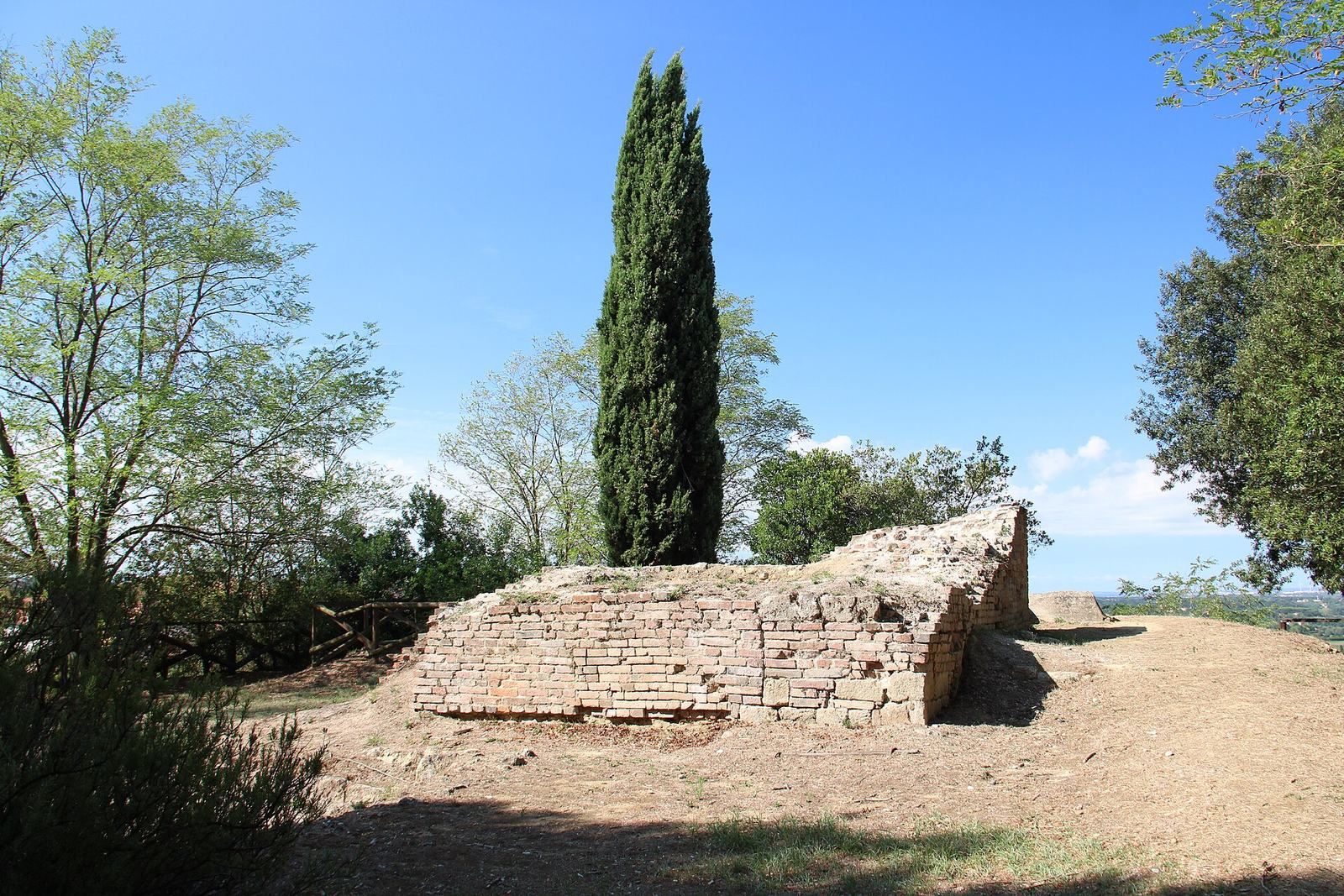
The excavated Rocca occupies the central part of the castle site. Erosion of the hillside means that the preserved area is probably only a little more than half its original extent. Its remains include medieval stonework and later brick structures, altered as the site’s uses changed.
Medieval enclosure and chapel
Defensive enclosure
A surviving stretch of the Cassero’s defensive enclosure belongs to the original hilltop fortification. Its 12th-century masonry includes roughly dressed sandstone blocks and ashlar, or carefully cut stone blocks.
Church of Saint Martin
A rectangular structure within the excavated area is identified as the small church of Saint Martin, which stood at the Rocca by at least the 13th century. It was later converted into a cistern, and its remains are visible in the archaeological park.
Tower and glass furnace
The brick tower had a square plan, with large round arches on its east and west sides. Brick infill later closed those openings. In the second half of the 16th century, its ground-floor space was adapted for a glass furnace. The furnace had three levels for burning fuel, melting glass, and tempering finished objects through controlled cooling. Only the combustion chamber survives. It stands about 40 centimetres high and consists of five courses of brick; an opening for loading wood connects to the fire channel.
Water collection, graves, and wartime remains
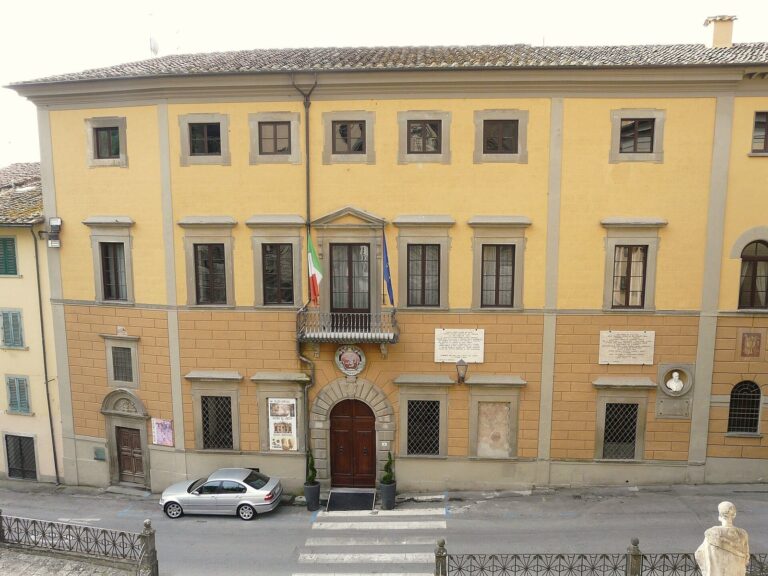
A later rainwater system around the tower included brick channels and at least two cisterns with vaulted roofs. The area also preserves several graves cut into the earth and remains of the tower’s wartime destruction. Finds from the excavations are displayed at the Civic Museum in Palazzo Guicciardini.