Kranioi: An Ancient Greek City-State on Kefalonia
Site at a Glance
- Popularity
- Medium
- Country
- Greece
- Primary era
- Classical
- Eras represented
- Classical, Medieval
- Civilizations
- Ancient Greek
- Site type
- City
On this page10 sections
History
Kranioi was an ancient Greek city-state on Kefalonia, Greece, whose peak came in the fifth century BCE. It was also known as Krane or Cranii, and Greek myth linked its name to Kranios, a son of the hero Cephalus.
Classical and Hellenistic city
In the Classical period, especially the fifth and fourth centuries BCE, and the Hellenistic period that followed Alexander the Great’s conquests and preceded Roman rule across much of the Greek world, Kranioi belonged to a union of four Kefalonian cities. Its partners were Same, Pale, and Pronnoi.
Kranioi joined the Delian League, an alliance led by Athens, in 431 BCE. Corinthian forces then mounted an unsuccessful expedition against its territory. The city’s defenders drove them back, inflicting losses.
Athenian settlement and Roman rule
In 421 BCE, Athenians settled Messenians at Kranioi after they were withdrawn from Pylos, which had surrendered to the Lacedaemonians, another name for the Spartans. Spartan helot deserters came as well. Helots were an unfree population under Spartan rule. These groups had been stationed at Pylos during the fighting there; Athenian troops relieved them and took over the garrison.
Kranioi issued its own silver and bronze coins. Its independence ended in 189 BCE, when it surrendered to Rome through negotiations and without resistance. The city is also mentioned by the Greek historian Thucydides, the geographer Strabo, and the Roman author Pliny the Elder.
Archaeological investigation
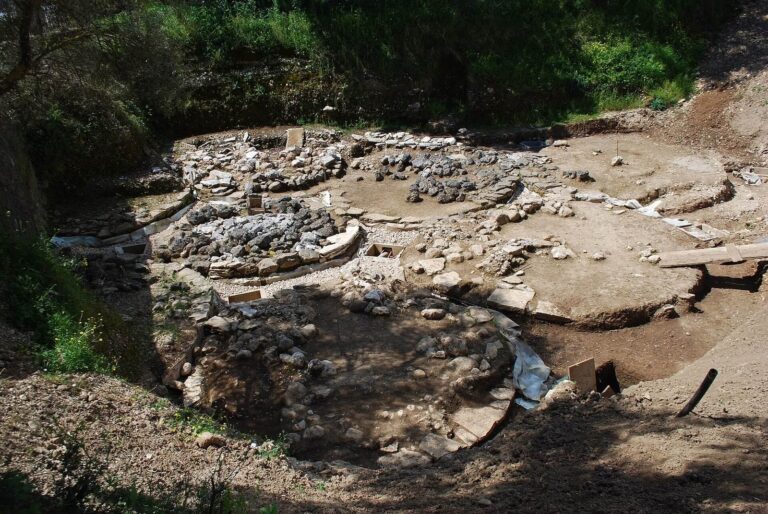
Dutch antiquarian Adriaan Goekoop funded Archaeological Society excavations in the province of Kranaia from 1908 until his death in 1914. In 1930, his widow, Johanna S. Goekoop de Jongh, supported further work assigned to archaeological official Spyridon Marinatos. His trial excavation at Ai-Grigoris produced results published in the Archaeological Ephemeris. The 35th Ephorate of Prehistoric and Classical Antiquities, a regional archaeological service, later began developing the archaeological area.
Remains
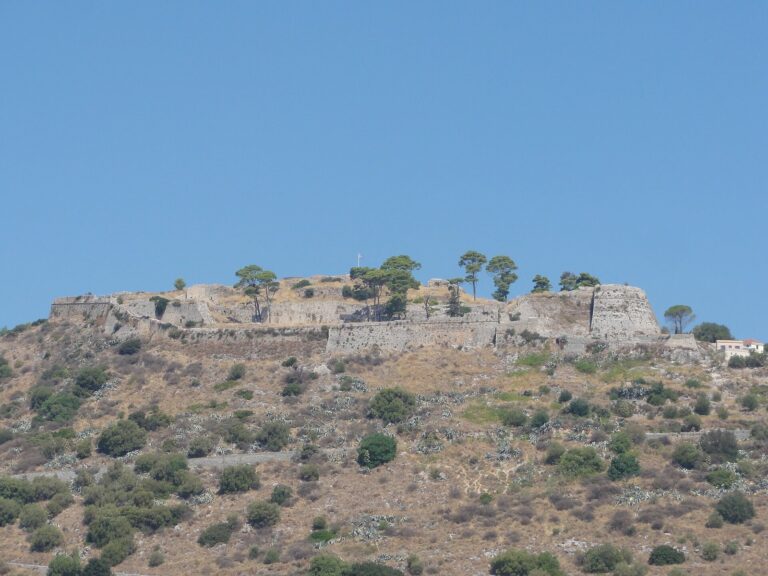
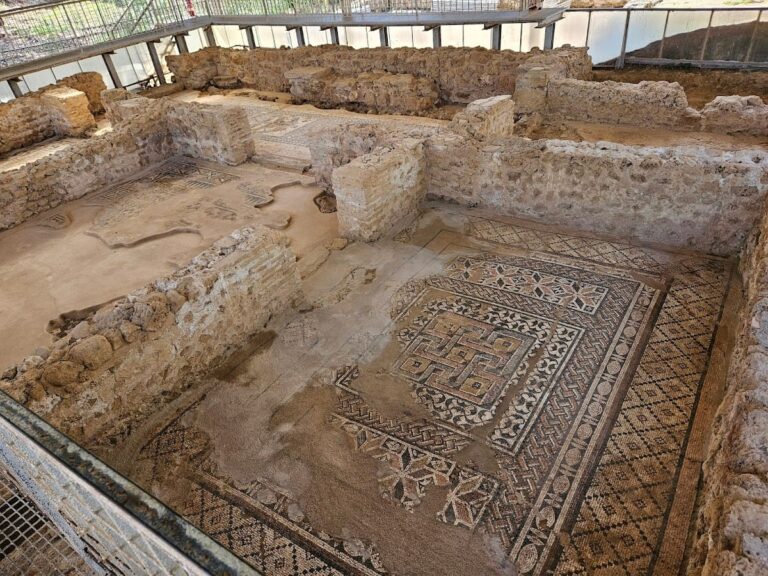
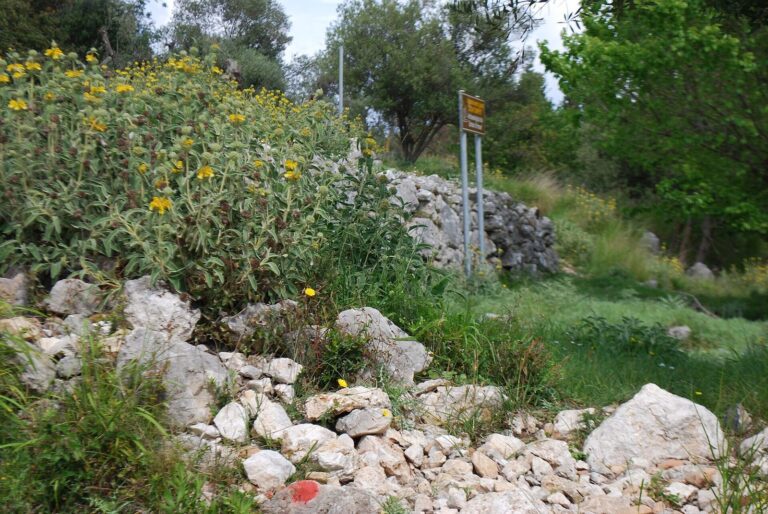
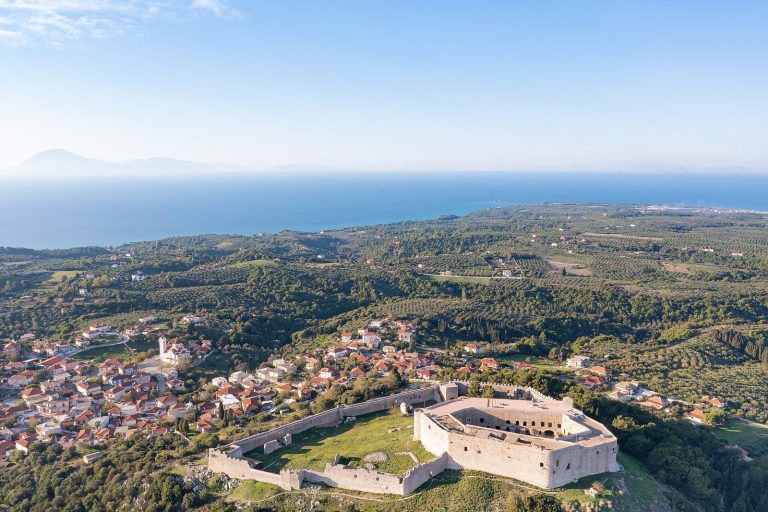
The ancient city stood at the head of a bay near Koutavos, southeast of Argostoli on Kefalonia’s western coast. Its elevated center, the acropolis (the city’s elevated center), occupied the hill now called Rachi, east of Koutavos. The surviving layout includes fortification walls and building remains on the hill, a medieval church beside the path leading to it, and a cemetery near its southern foothills. The archaeological area has abundant vegetation, and pasture borders its upper, flatter side.
Acropolis and defenses
Acropolis hill
Rachi rises about 251 metres above sea level. Its position overlooks Koutavos Bay and affords a view of ships entering it. Remains of buildings and sections of the city’s fortifications survive on the hill.
Fortification walls
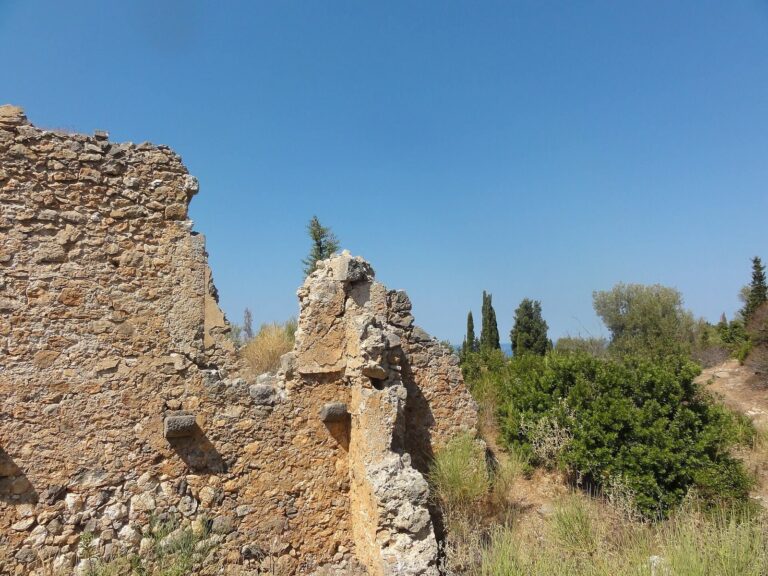
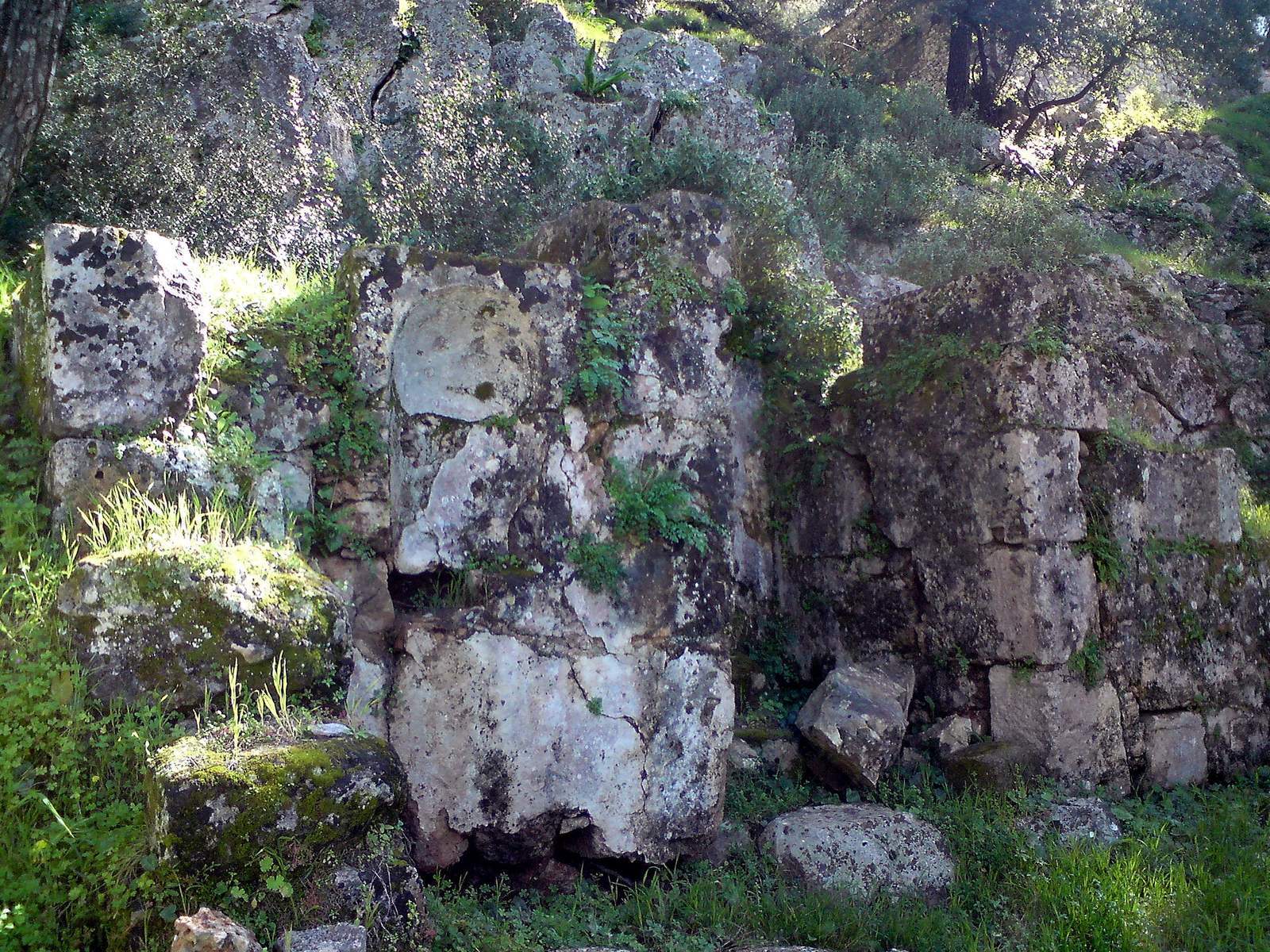
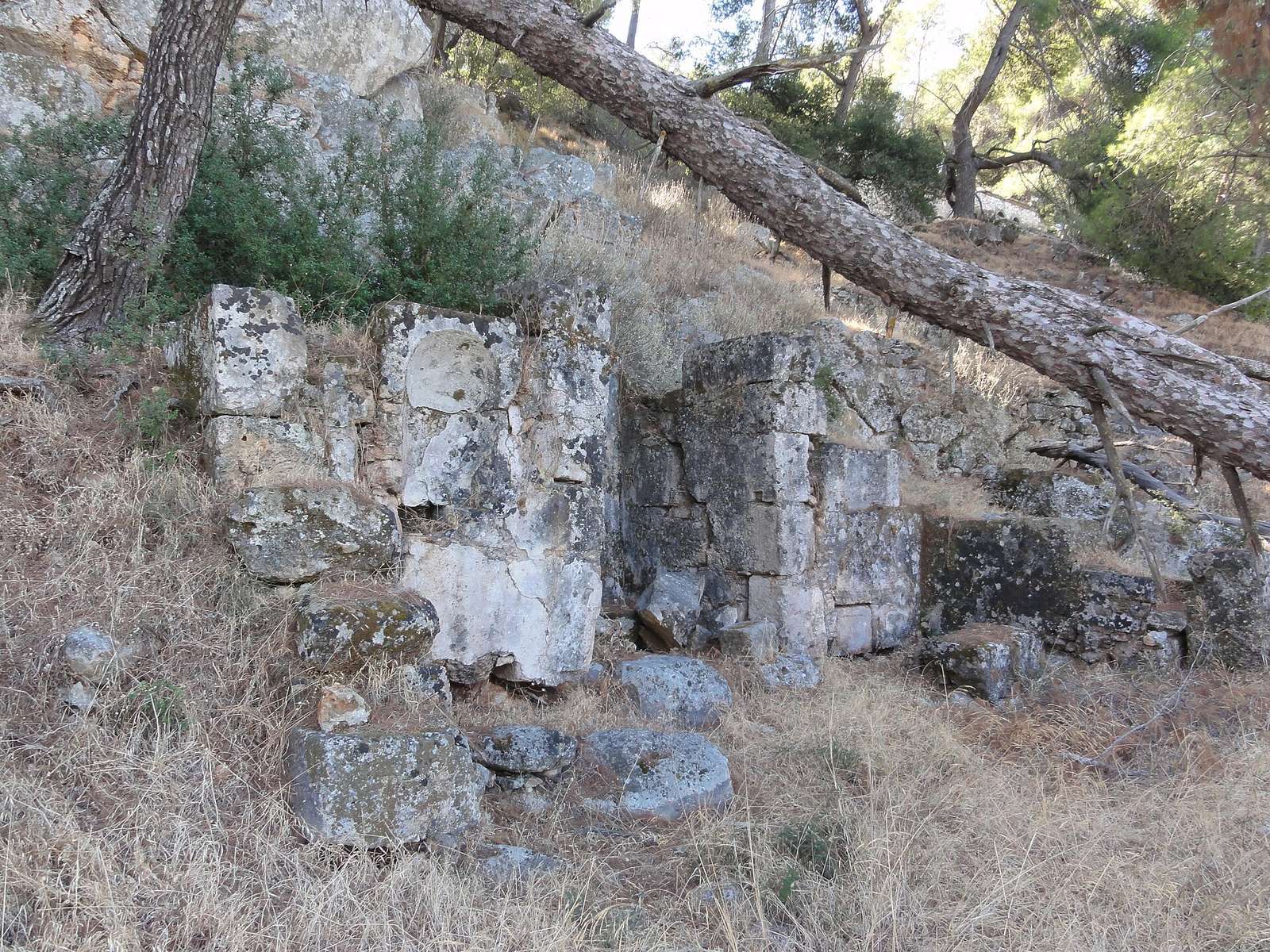
The surviving defenses comprise a southern section enclosing the acropolis and a longer, more extensive northern section. The northern wall dates to the Hellenistic period and retains remains of numerous towers. In the nineteenth century, William Martin Leake described the enclosure as roughly quadrilateral, with a circuit of about five kilometres along rocky ridges around an elevated hollow sloping toward the gulf’s southwestern end. He noted that the walls could be traced along nearly the whole circuit.
Church of the Holy Trinity
Ruins of the medieval Church of the Holy Trinity stand beside the path to the acropolis. The church was built on the site of an ancient sanctuary dedicated to Demeter, a goddess associated with agriculture, and Persephone, linked with the underworld and seasonal renewal.
Cemetery at Drakospilia and Ai-Grigoris
The city’s cemetery lay near the acropolis’s southern foothills, in the Drakospilia area, and a road connected it with the city. At Ai-Grigoris, five graves were excavated. Each was formed from three roof tiles: two joined along the long sides to make a gable-shaped cover, while a third, broken into two pieces, covered the openings at the short ends. One burial was of a child. Grave 2 contained unglazed vessels of friable clay and terracotta objects shaped like swallows. Grave 5 held a vessel possibly identified as a pelike (an ancient Greek storage vessel), decorated with two figures in cloaks; the rest of its surface was unglazed. The pottery dates to the late fifth century BCE. Remains of ancient walls suggest the graves may have been arranged in family enclosures.