Archaeological Park of Santa Maria a Monte: Etruscan Village, Medieval Church, and Fortress
Site at a Glance
- Popularity
- Very Low
- Country
- Italy
- Primary era
- Medieval
- Eras represented
- Classical, Medieval, Modern
- Civilizations
- Etruscan, Holy Roman Empire, Lombard, Republic of Florence, Republic of Lucca, Roman
- Site type
- Military
- Remains
- Castle
On this page15 sections
History
Etruscan settlement and Roman-era change
The Archaeological Park of Santa Maria a Monte in Italy preserves remains of an Etruscan village on the summit, a medieval church, and a fortress, with occupation reaching back at least to the fifth century BC. The Etruscans were an ancient people of central Italy whose civilization preceded Roman rule. Finds of varied origin and workmanship, including several coins and one from Attica in Greece, suggest that the village enjoyed some prosperity.
As Roman political, social, and cultural influence spread through the region, the summit village was abandoned and its population moved to the plain. Settlement there flourished from the first century BC through the eighth century AD. Near Santa Maria a Monte, the parish church of Sant’Ippolito developed at Anniano, a place served by important land and river routes. The church began in the fourth century, probably replacing a pagan funerary shrine that had been built over an earlier structure.
Lombard chapel and parish
Sant’Ippolito came largely under the control of a family of Lombard origin. The Lombards were a Germanic people who established a kingdom in early medieval Italy. Known as the sons of Ghisperto, the family passed the parish priest’s office from father to son for at least a century. Between 766 and 787, the priestly dynasty probably established a chapel dedicated to the Virgin at Monte, then uninhabited. The foundation may have been intended to extend the family’s influence in the area.
The chapel grew in religious importance, taking over the role of nearby Sant’Ippolito and encouraging people to return from the plain to the hill. By the tenth century the settlement had expanded enough for the chapel to serve as a parish church, a change dated to between 941 and 983.
Castle and religious community
Before 906, the bishop of Lucca, whose diocese then included Santa Maria a Monte, initiated the fortification of the upper hill as a castle. It was the oldest castle in the Lucca region. In 1025, Bishop Giovanni II da Besate, a Luccan bishop and church reformer, established the diocese’s first community of 14 canons regular, clergy who lived together under a religious rule.
At or soon after the community’s foundation, the church underwent substantial alteration. The work added an apse, a rounded church end, and an ambulatory crypt, a chamber beneath the church with a passage running around its central area. Between 1189 and 1200, another restoration rebuilt the baptismal font and bell tower and added a substantial marble pulpit.
Florentine fortress and archaeological work
The area was gradually transformed into a fortress, first by the people of Lucca and later by the Florentines. It remained in use until the beginning of the sixteenth century. During the fourteenth-century Florentine phase, the bell tower was converted into a tower.
The archaeological site was discovered in the nineteenth century. Excavations continued for roughly three decades, through 2013, first coordinated by medieval archaeology faculty at the University of Pisa and later by faculty at the University of L’Aquila, under the scientific direction of Fabio Redi. Extensive recovery work followed. The fortress’s history also explains the park’s additional name, La Rocca.
Remains
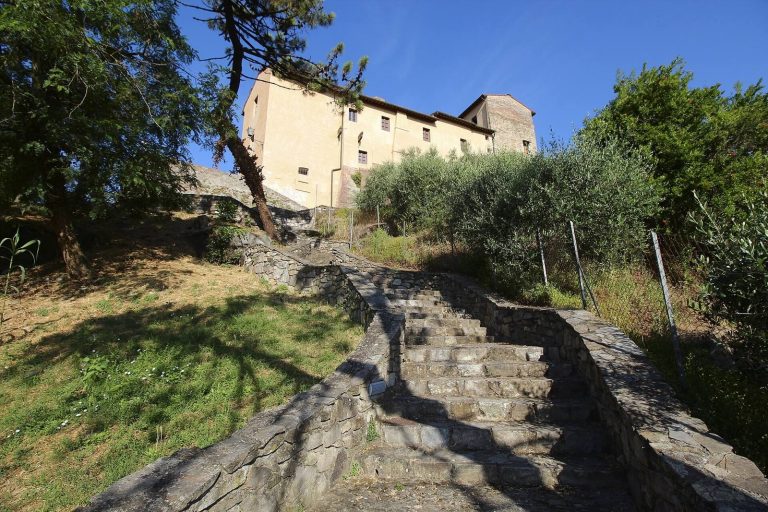
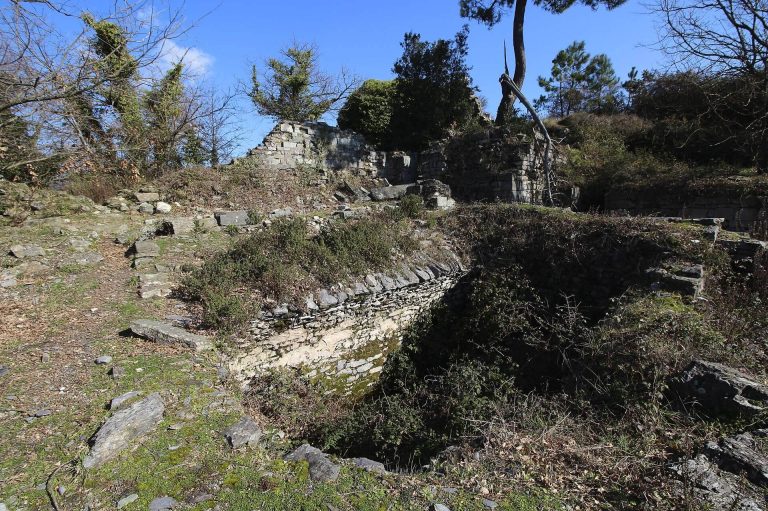
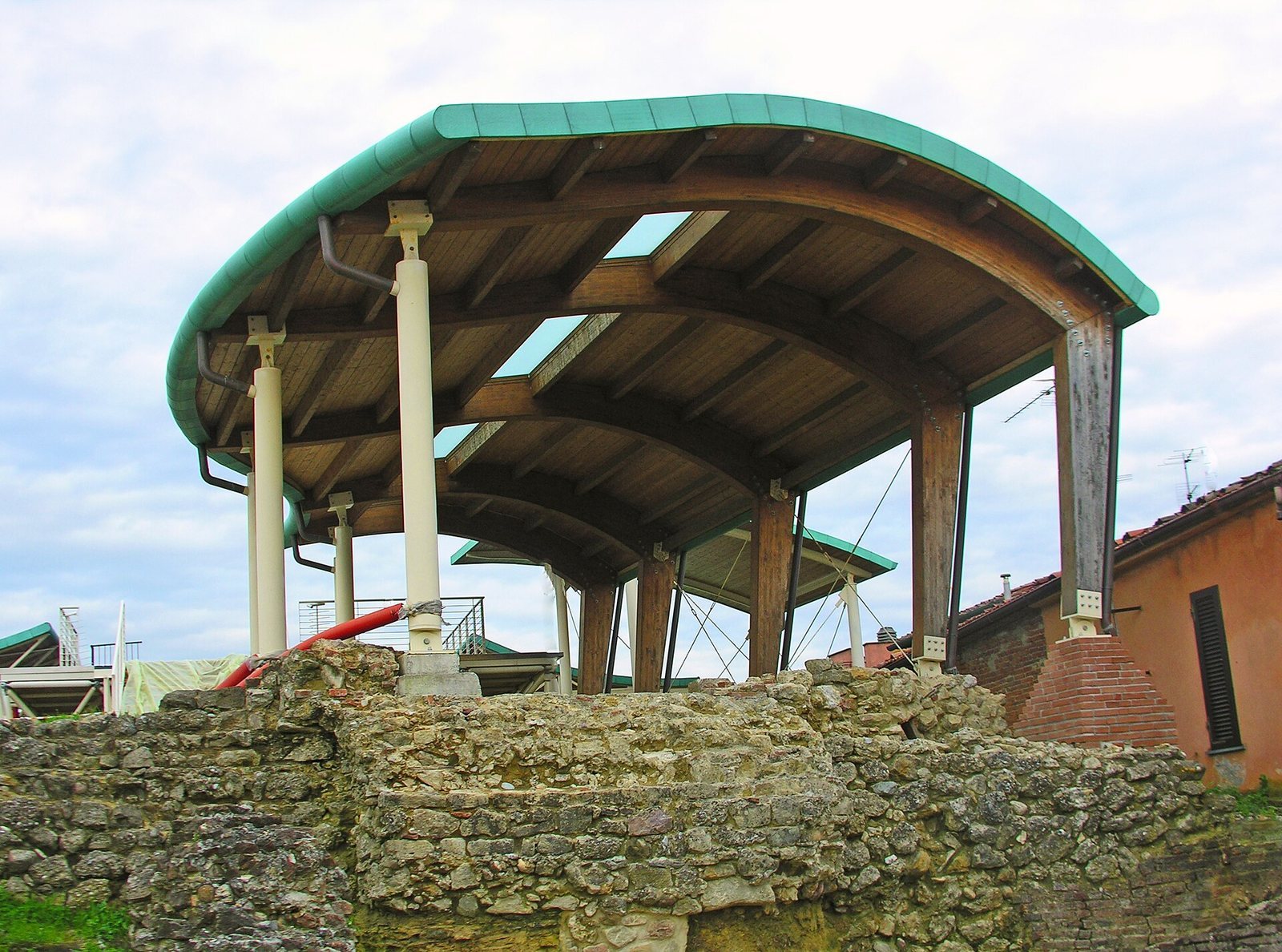
The park occupies the southern half of the former defensive complex, where surviving traces represent Etruscan, Roman, early medieval, church, and fortress phases. Modern protective roofs designed by architect Claudio Gioia cover the archaeological remains.
Settlement and church remains
Etruscan traces and funerary marker
The principal traces of the Etruscan period lie in the area between the baptismal fonts and the crypt. Eight furnaces used for casting bells are also found there. In the parish courtyard stands a finely made marble funerary marker, shaped like a club and about 70 centimetres high. It was found on the plain below the site and belonged to the cemetery of a settlement on higher ground. It may have been made for someone from the village at Santa Maria a Monte.
Chapel and baptismal fonts
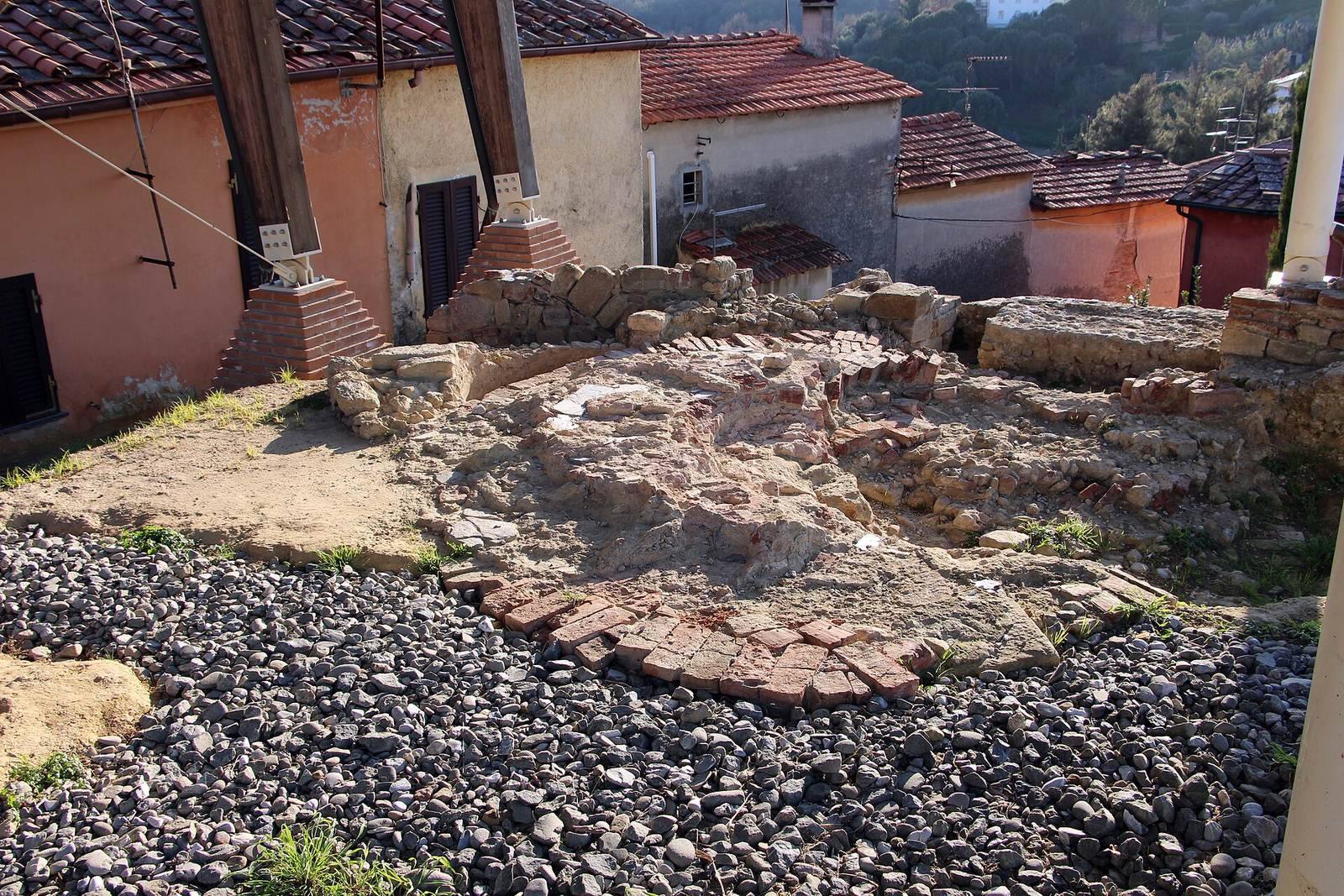
The original chapel measured approximately 23 by 11 metres. Though described as an oratory, or small building for prayer, its dimensions were unusually large for that type of structure. Beneath a broad protective roof survive remains of the original eighth-century Lombard building and two baptismal fonts. The earlier font dates to 941–983. The larger font, dating to 1189–1200, retains its complete base, built of stone and brick.
Canonical crypt
The eleventh-century crypt had an ambulatory layout and three apses, rounded recesses at the ends of the space. Its perimeter walls remain, along with the platform and bases of its three original altars. The small northern apse survives to a height of more than 1.5 metres.
Bell tower
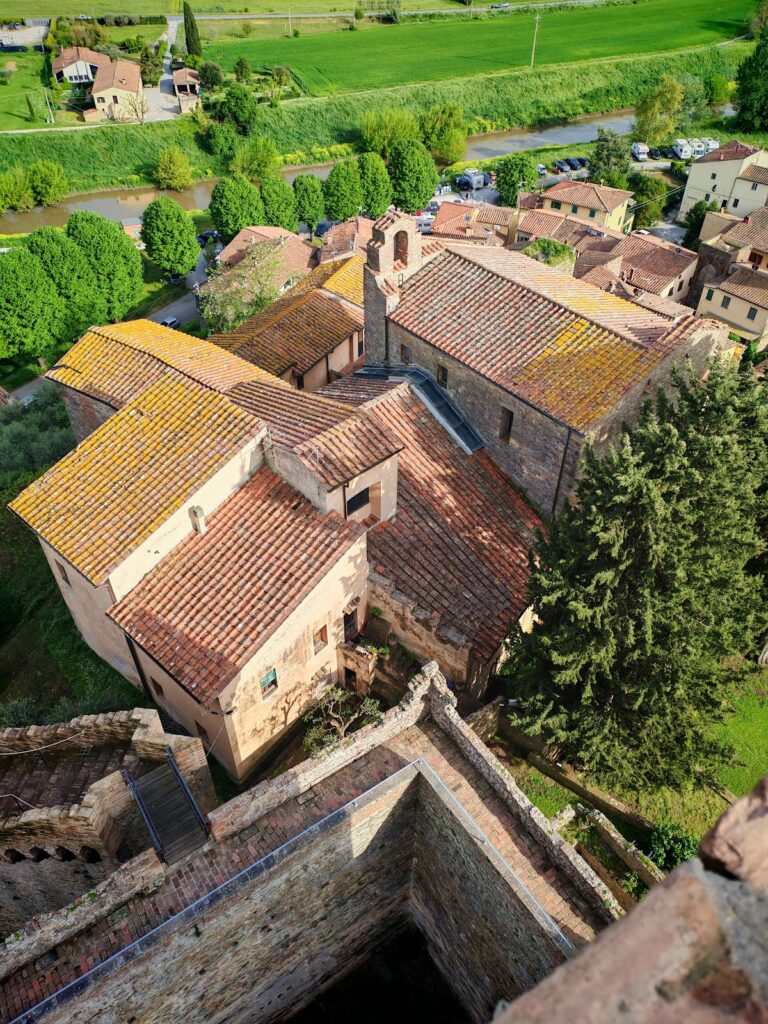
South of the crypt are well-preserved lower sections of the bell tower, built between 1189 and 1200. They include a brick pillar with an L-shaped plan. Brick infill in the tower belongs to the fourteenth-century conversion of the complex into a fortress.
Pulpit sculpture
A sculpture that originally belonged to the church’s marble pulpit was found in May 2013. It is attributed to the school of Biduino, a medieval Tuscan sculptor, meaning that it is associated with his artistic tradition rather than securely identified as his own work.
Fortress remains
Cistern
Outside the roofed archaeological area, a large cistern from the fortress’s fourteenth-century Florentine phase remains visible. It is built of brick and has a cuboid form.
Fortification walls
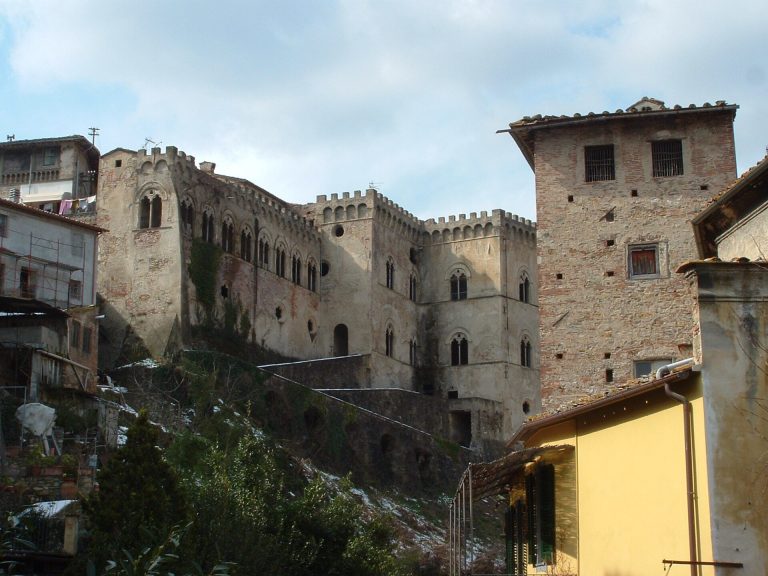
Substantial stretches of fortress brickwork survive at several points in the village. Their sloping profile distinguishes them from the surrounding buildings.