Huaca San Marcos: A Pre-Hispanic Ceremonial Monument in Lima
Site at a Glance
- Rating
- 4
- Popularity
- Low
- Country
- Peru
- Primary era
- Classical
- Eras represented
- Classical, Medieval
- Civilizations
- Unclassified
- Site type
- Religious
- Remains
- Sanctuary
On this page12 sections
History
Huaca San Marcos is a large pre-Hispanic ceremonial and funerary monument in Lima, Peru, built by the Lima culture around AD 450 during the later Early Intermediate Period. It stood within the Maranga archaeological complex and was probably its principal building. The term huaca refers to an Indigenous Andean sacred place or monument, and here it describes a monumental mound used for ceremonies and later burial.
Lima and Middle Horizon occupation
Construction began when the Lima cultural tradition had reached a high level of development on Peru’s central coast. Huaca San Marcos was occupied during the Early Intermediate Period, approximately AD 450 to 550, and continued through the first and second phases of the Middle Horizon, approximately AD 550 to 750. The Middle Horizon was a period of strong regional integration associated with Wari influence. The site’s wider chronology also includes the Late Intermediate and Late Horizon periods, the latter corresponding to Inca expansion.
From around AD 600, many buildings in Maranga were abandoned as Pachacamac, a major pre-Hispanic religious center on the central coast, gained greater importance. This change coincided with increased exchange between the central coast and the central Andes and with greater production of Nievería-style ceramics. Later activity at Huaca San Marcos included the Ichma tradition, a central-coast culture centered in the Lima region. Under the Ichma, the mound was converted into a cemetery. The Inca are also listed among its later occupants.
Changing names and the Maranga complex
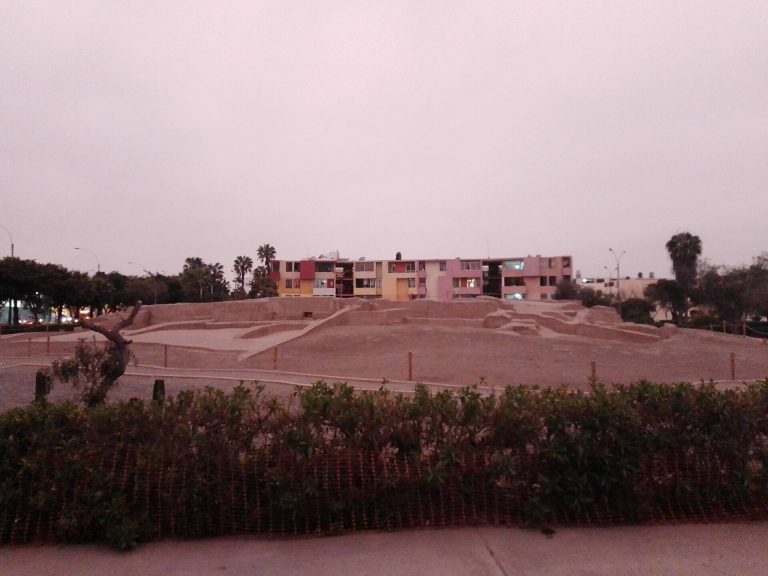
The monument was formerly called Huaca Aramburú because it stood within the former Aramburú hacienda. A smaller mound to the south, Montículo 22, now preserves the name Aramburú and distinguishes it from Huaca San Marcos. Maranga extended across an area about 1.5 kilometers from north to south and 1 kilometer from east to west. Aerial photographs taken in 1944 and 1946 recorded more than sixteen buildings, including seven within the university campus. Urbanization and inadequate protection later caused many of these structures to disappear.
Colonial and modern damage
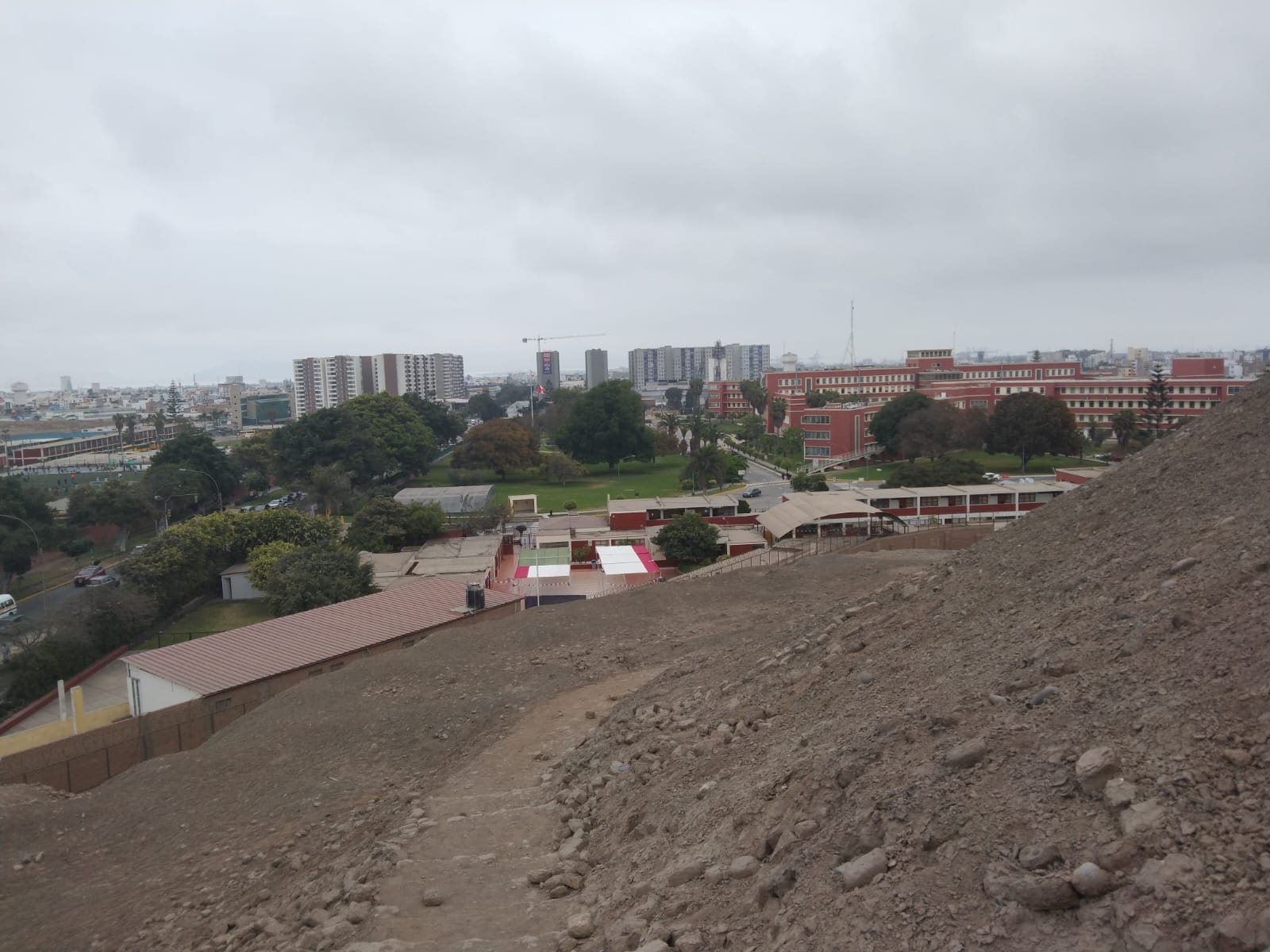
After the arrival of the Spanish and the creation of haciendas such as Concha Maranga, Pando, and Aramburú, irrigation channels damaged the mound’s sides. Hacienda owners also began huaqueo, the illicit digging of archaeological sites to obtain objects. Later urban expansion caused more extensive losses. In 1924, construction of Avenida del Progreso, now Avenida Venezuela, cut away the southern platform and separated Huaca San Marcos from Huaca 22.
In 1943, construction of a new National Stadium destroyed the summit. Five other Maranga pyramids were later destroyed for the construction of the San Marcos university city. The Naval Hospital cut back the western platform, and remodeling of the University Stadium caused further damage. Parts of the monument were also used for rubble and garbage, while cutting, erosion, and neglect continued to affect its surviving fabric.
Study and protection
Travelers and archaeologists described and studied the remains over several generations, including Hutchinson in 1873, Middendorf in 1984, Max Uhle in 1905, and Jijón y Caamaño in 1925. Later archaeological research included work associated with Ruth Shady in 2000. Archaeologists and researchers at the National University of San Marcos continue to study and guard the site. The Institute of National Culture declared Huaca San Marcos Cultural Heritage of the Nation in 1972.
Remains
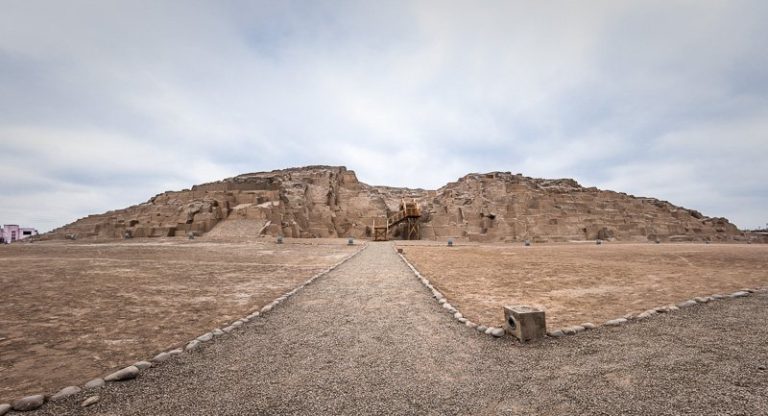
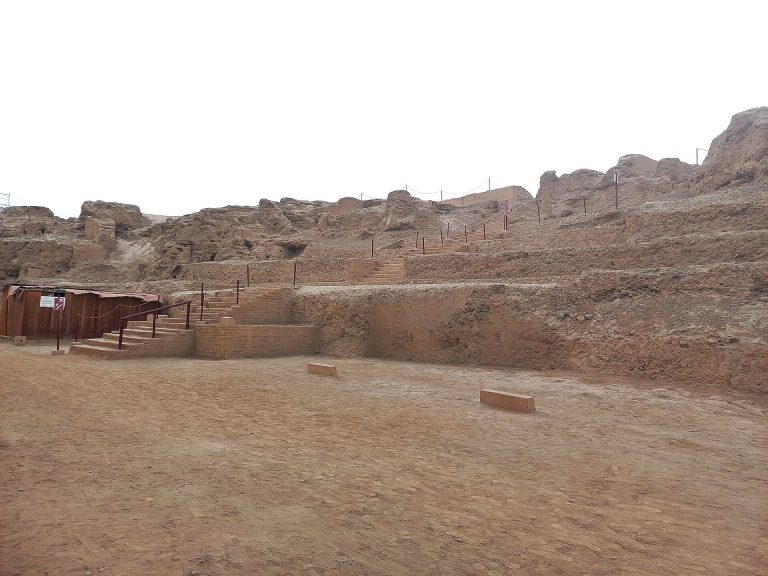
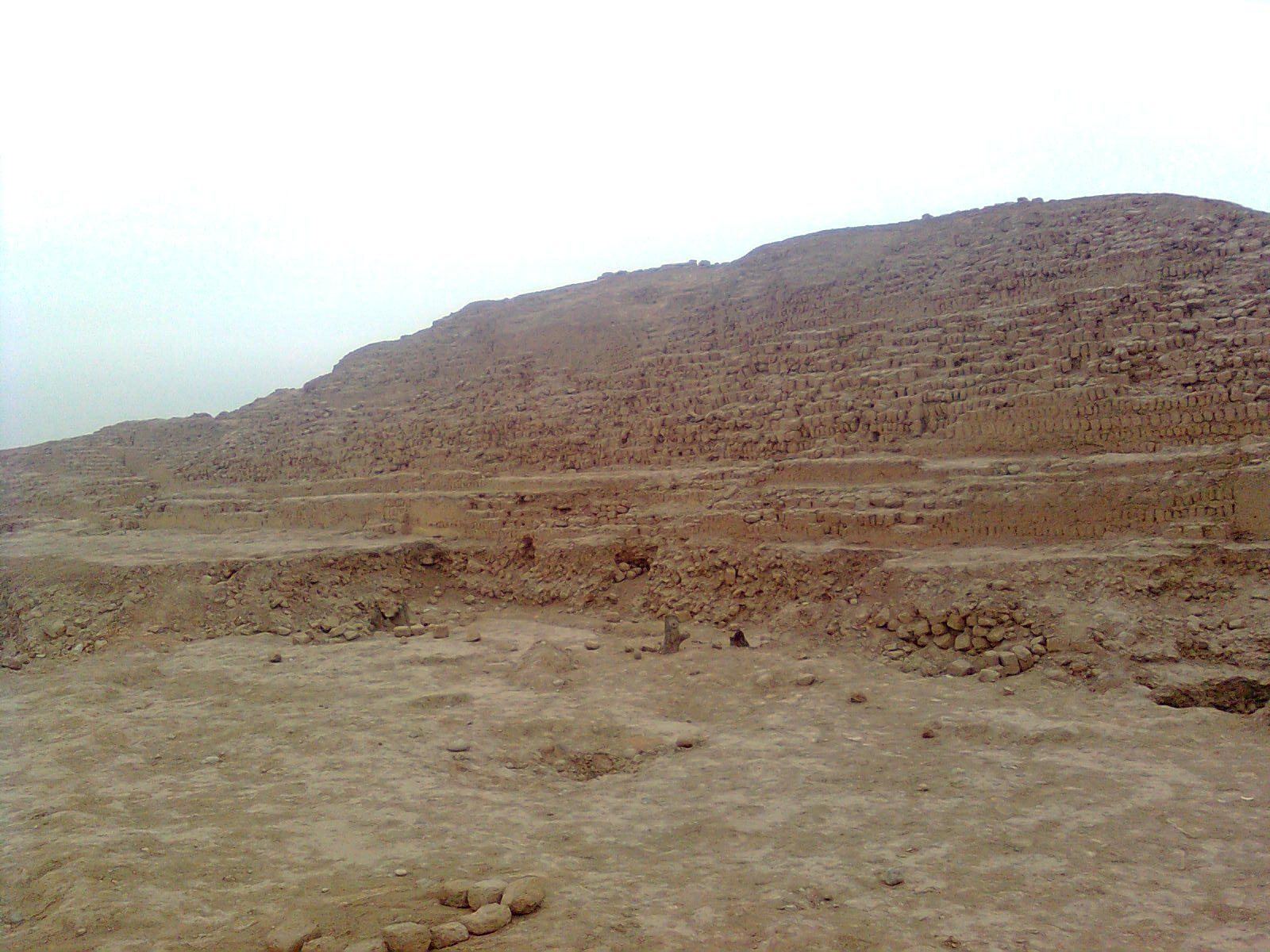
Huaca San Marcos is a large terraced pyramid measuring approximately 300 meters in length, 120 meters in width, and 30 meters in height, with a recorded area of about 62,732.83 square meters. It is the largest huaca in the Maranga complex and among the largest monuments of ancient Peru. Five superimposed platforms form the main structure. Enclosures, retaining walls, rooms, passageways, ramps, stairways, and benches were arranged across them.
Main pyramid and construction
Platforms and retaining walls
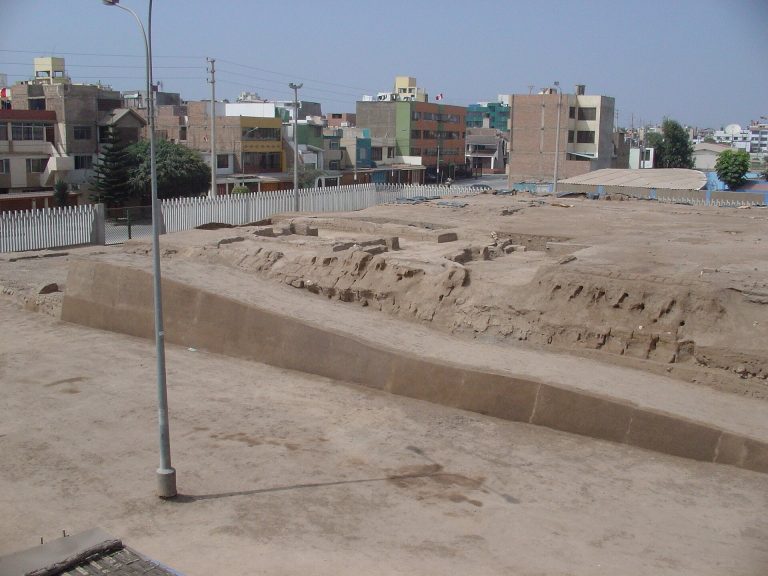
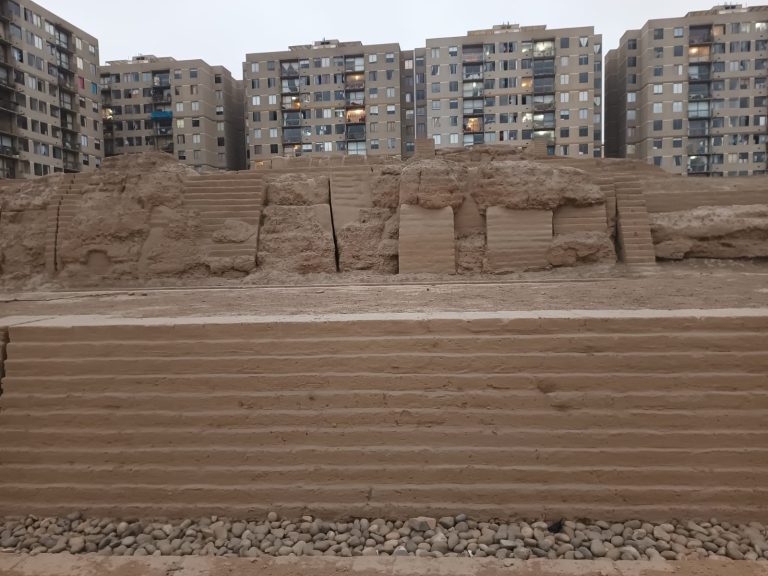
The retaining walls were built mainly from small hand-formed adobe blocks called adobitos. They were originally plastered and painted yellow. Other Lima-period construction used rounded stones, earth, and sand, while adobe and clay formed floors and walls. Toward the end of the Early Intermediate Period, builders introduced tapial, a technique in which earth is compacted inside formwork. Upper and lateral platform structures, stairways linking the levels, and other enclosures remain part of the archaeological layout, although some adobito structures are degraded.
Southern subsidiary platform
A small subsidiary platform was attached to the southern side of the main pyramid. Construction of Avenida Venezuela cut through it in 1924, and the road now separates Huaca San Marcos from Huaca 22. The platforms and other architectural elements have also been damaged by later construction and cutting.
Complex layout and internal spaces
Maranga was planned in relation to three pyramids on its western side, which also helped define the complex’s boundaries. Other buildings extended eastward. Huaca San Marcos itself consists of three large structures arranged in a generally linear sequence from northwest to southwest. An annex platform and a path leading toward it form part of the surviving archaeological evidence.
Post enclosure
A post enclosure associated with approximately AD 600 is among the spaces identified within the monument. Its position belongs to the later development of the pyramid and provides physical evidence for activity during the period when the Maranga complex was undergoing change.
Archaeological finds
Excavations and investigations at Huaca San Marcos have produced ceramics, funerary bundles, textiles, offerings that include spondylus shells, quipus, and pyroengraved gourds. A quipu is a system of knotted cords used in the Andes to record information. Spondylus, a large brightly colored shell, was valued in Andean ritual and exchange networks. Together, these finds reflect the monument’s ceremonial, funerary, and later cultural activity.