Cappella Sansevero: A Baroque Family Chapel and Mausoleum in Naples
Site at a Glance
- Rating
- 4.7
- Popularity
- Very High
- Country
- Italy
- Primary era
- Early Modern
- External website
- Open
- Eras represented
- Early Modern, Modern
- Civilizations
- Italian, Kingdom of Naples, Spanish
- Site type
- Religious
- Remains
- Chapel
On this page16 sections
History
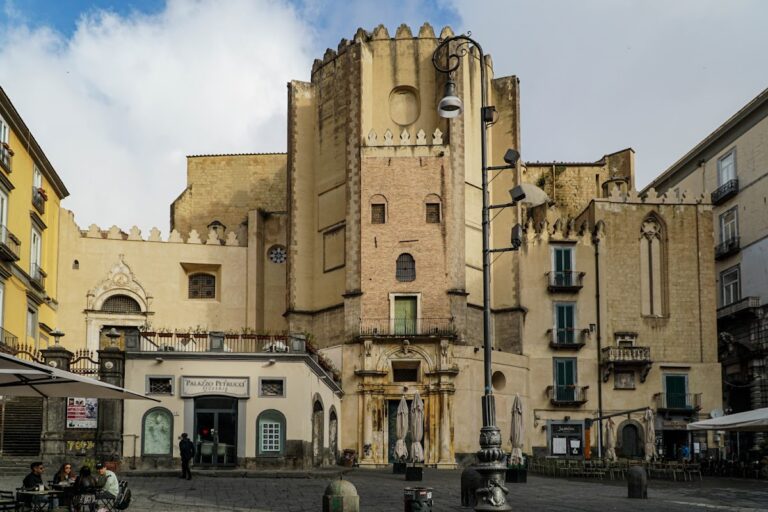
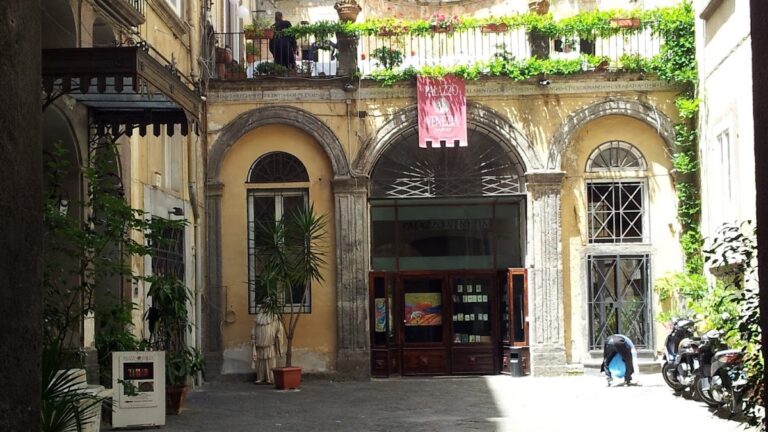
Cappella Sansevero in Naples, Italy, is a former private Catholic chapel and mausoleum of the princes of Sansevero, begun in the late sixteenth century and transformed into a major eighteenth-century Neapolitan Baroque ensemble. It stands beside the former Sansevero family palace and is now a deconsecrated museum. A suspended bridge once gave the family private access between the two buildings.
Origins and seventeenth-century development
The chapel’s origin is surrounded by several traditions. One tells of an unjustly imprisoned man who saw an image of the Virgin Mary appear when part of the Sansevero property wall collapsed. After his release, he restored the image and provided a perpetual silver lamp. Another tradition credits Giovan Francesco di Sangro, Duke of Torremaggiore and first Prince of Sansevero, with building a small chapel after recovering from a serious illness through the Virgin’s intercession. A further tradition places an ancient temple of Isis on the site.
Historical interpretation also connects the foundation with the murder of Maria d’Avalos and Fabrizio Carafa during the night of 16 to 17 October 1590. Fabrizio’s mother, Adriana Carafa della Spina, may have established the chapel as a votive foundation for her son’s soul. The possible connection is reflected in the inscription Mater Pietatis, meaning Mother of Mercy, on the vault. The chapel’s familiar name, Pietatella, derives from its dedication to Santa Maria della Pietà, or Saint Mary of Pity, an image of the Virgin mourning over the dead Christ.
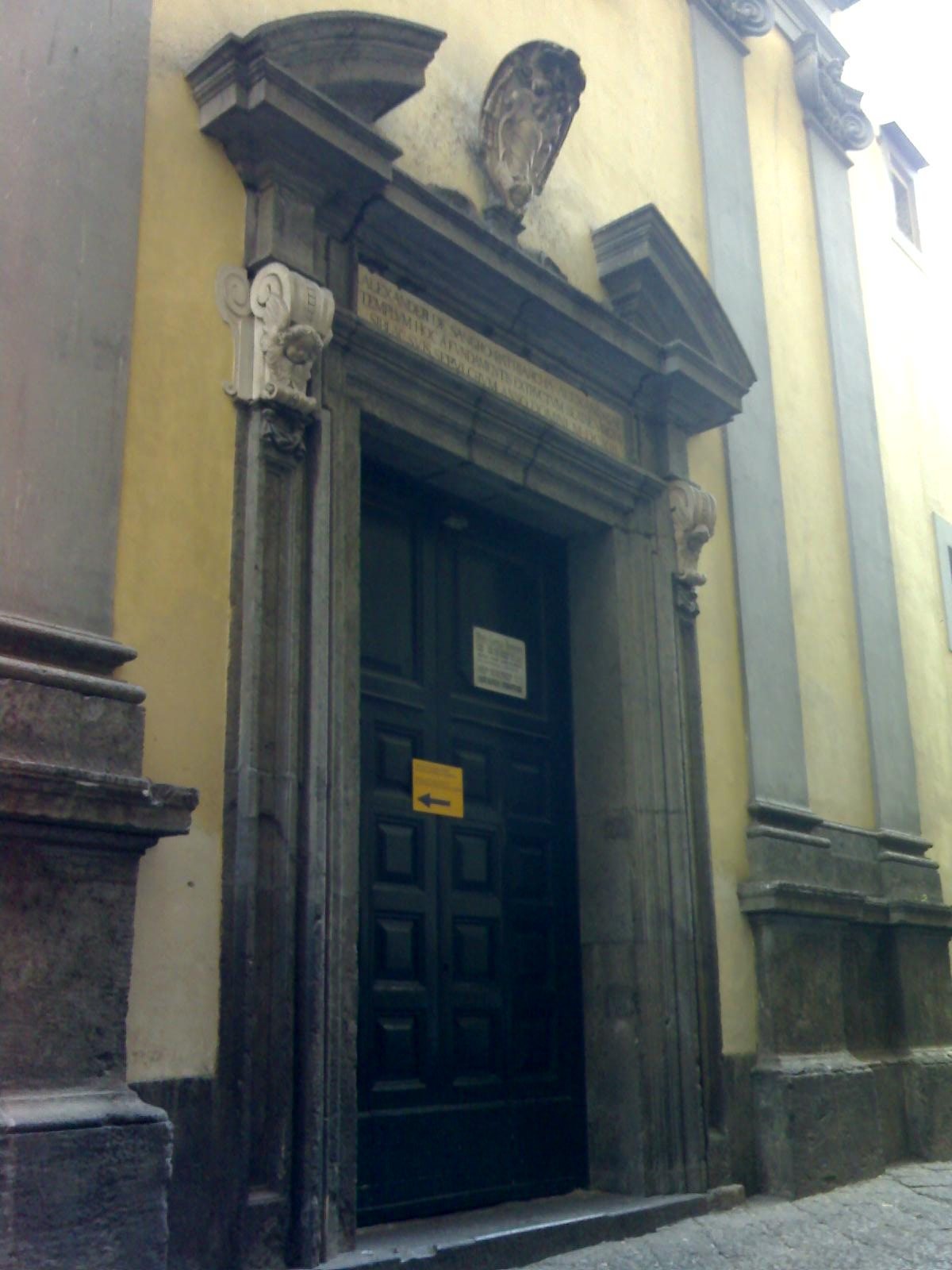
Building work on the small family chapel is documented from 1593. In 1613, Alessandro di Sangro, Patriarch of Alexandria and Archbishop of Benevento, enlarged it as a burial chapel for the di Sangro family. A marble inscription above the main entrance commemorates his intervention. The seventeenth-century building already served as a family mausoleum and contained important artistic works, although the later reconstruction retained its perimeter, four earlier family monuments, the polychrome apse decoration, and four earlier statues while replacing or rearranging much of the interior.
Raimondo di Sangro and the eighteenth-century transformation
In the 1740s, Raimondo di Sangro, the seventh Prince of Sansevero, reorganized the chapel’s decoration into a unified program intended to glorify his family. Raimondo was an eighteenth-century Neapolitan nobleman known for scientific experimentation, artistic patronage, and Freemasonry, a fraternal organization whose symbolic language shaped his ideas about knowledge, moral discipline, spiritual progress, and resurrection. He commissioned Giuseppe Sanmartino, Antonio Corradini, Francesco Queirolo, Francesco Celebrano, Paolo Persico, Fortunato Onelli, and Francesco Maria Russo, directed much of the work himself, and sometimes devised materials for the cornice and painted decoration.
Raimondo conceived the chapel as both a place of worship and burial and a symbolic temple incorporating Masonic ideas. The ten Virtues represented stages of spiritual and moral advancement, while the former labyrinth floor expressed the difficult path toward knowledge. He devoted much of his fortune to the project and repeatedly borrowed money to complete it. Records from the Banco di Napoli show that his creditors at times numbered more than one hundred, with some loans carrying interest of five or six percent. Many debts were settled from the dowry connected with the marriage of his son Vincenzo.
The eighteenth-century project was substantially complete by 1766 to 1767, and a plaque outside the side door bears the date 1767. Raimondo planned additional work in the underground crypt, including later family burials and the relocation of the Veiled Christ, but neither he nor Vincenzo completed those plans. The chapel remained principally a burial place for the di Sangro family. Raimondo arranged monuments for earlier relatives, planned places for himself, Vincenzo, and later descendants, and had his own tomb made in 1759 while he was still alive.
Damage, museum formation, and later conservation
During the night of 22 to 23 September 1889, water infiltration caused the bridge between the chapel and the family palace to collapse. The destruction damaged parts of both buildings, destroyed the bridge and the frescoes beneath it, and ruined the chapel’s labyrinthine floor. Since the original pavement could not be restored, it was replaced with Neapolitan terracotta in 1901. The central di Sangro arms were reconstructed in yellow and blue enamel, the family colors.
The chapel was transformed into a museum during the nineteenth century and later became an established cultural venue. Restoration between 1987 and 1990 uncovered laboratory instruments probably belonging to Raimondo. A portrait of Vincenzo di Sangro stolen during the work was recovered in July 1991 and returned to its original position. The first scientific digital catalogue of Raimondo’s artistic project was presented at the chapel on 27 May 2025.
Remains
Layout and principal decoration
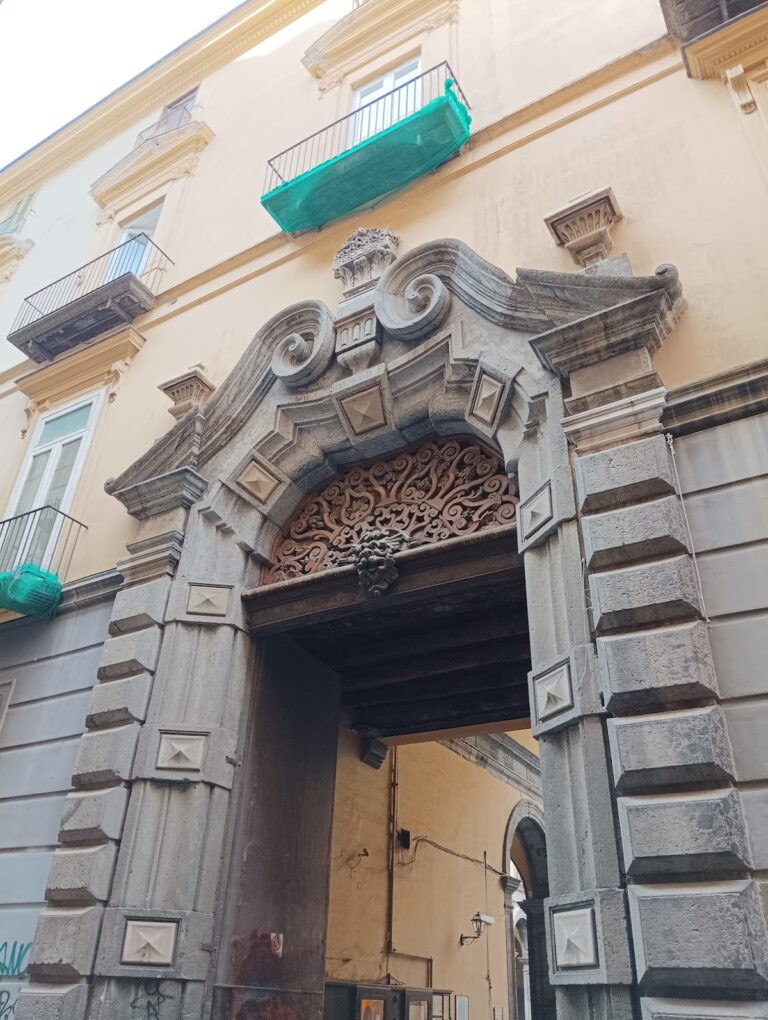
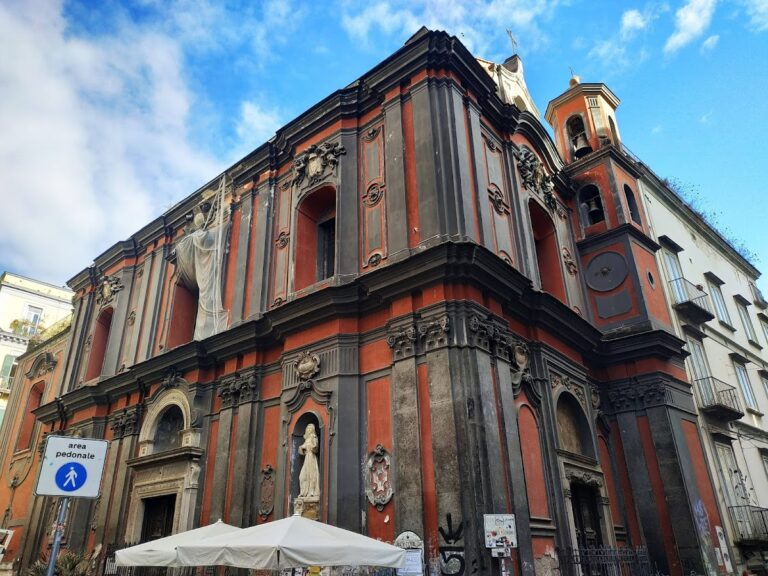
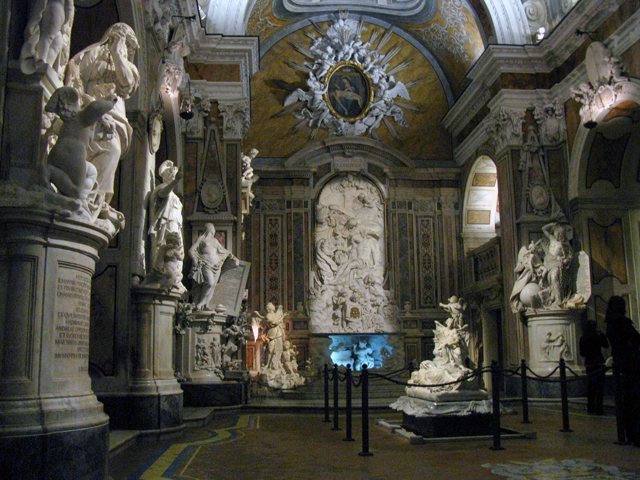
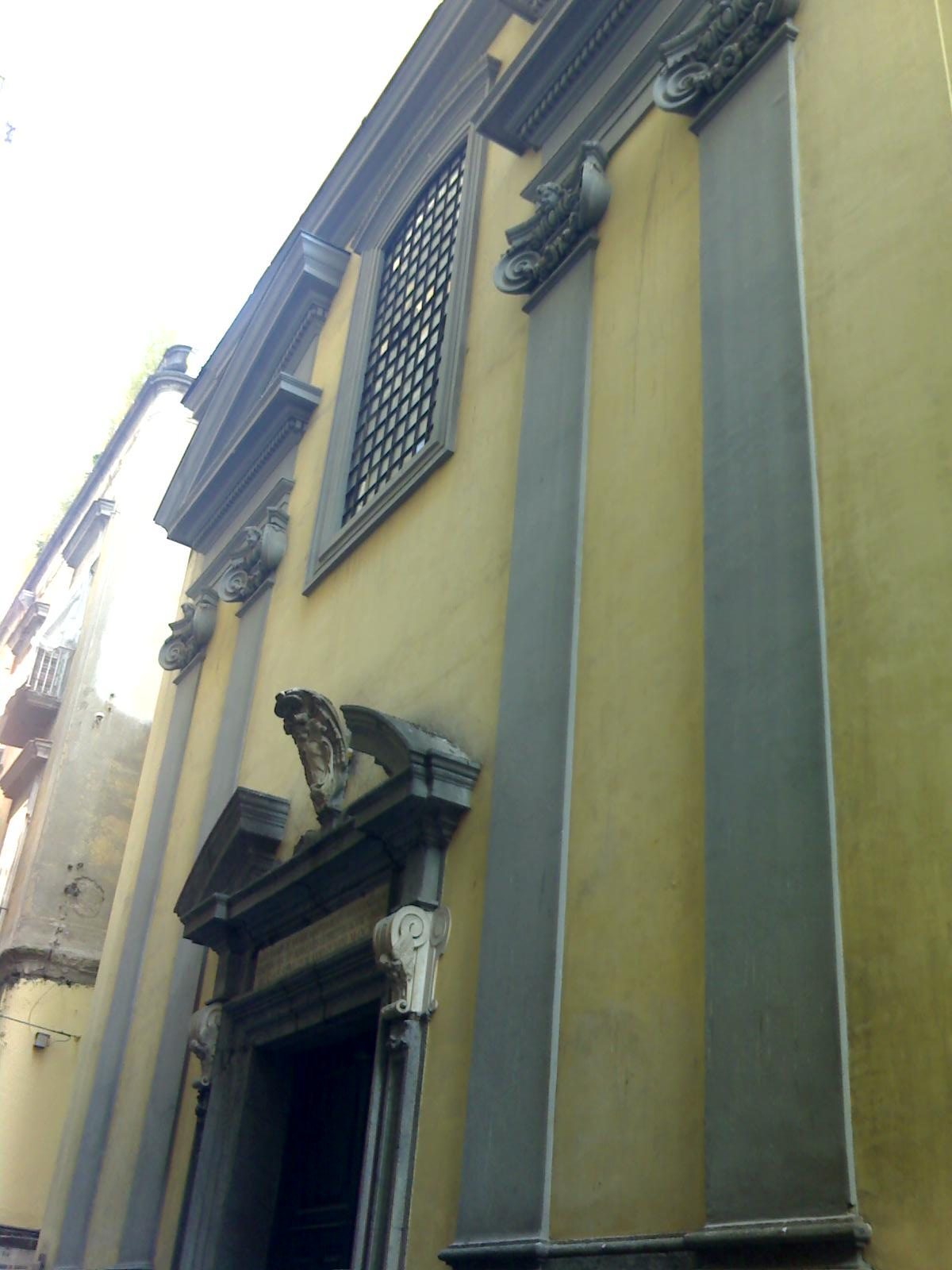
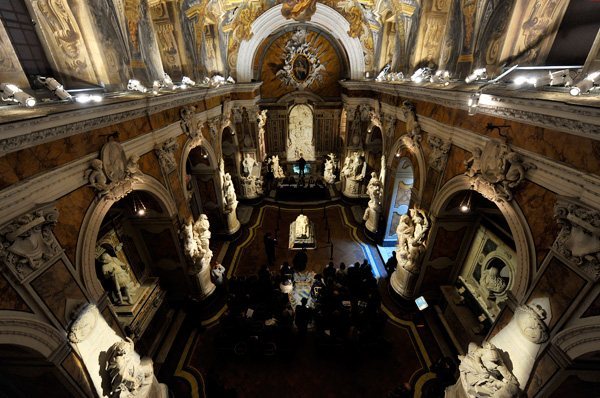
The chapel has a sober early-seventeenth-century facade on narrow Via Francesco De Sanctis. Its central portal is surmounted by the di Sangro arms and the marble inscription commemorating Alessandro di Sangro, while a smaller side door opens onto Calata San Severo. Inside, the rectangular single nave follows the basic structure begun in 1593. Four round arches on each long wall create eight side bays for family monuments and altars. A larger triumphal arch separates the presbytery from the nave, with the high altar at the far end.
A continuous cornice runs along the long walls and is made from a compound devised by Raimondo di Sangro. Six splayed windows immediately above it illuminate the interior. Above the main entrance, a small gallery once connected with the passage to Palazzo Sansevero. The finely stuccoed passage and the bridge were destroyed in the collapse of 1889.
Ceiling fresco and painted decoration
Francesco Maria Russo painted the ceiling fresco Glory of Paradise, also called the Paradise of the di Sangro, in 1749. Its central image is the dove of the Holy Spirit, surrounded by angels and other figures. Six green monochrome medallions show the family’s patron saints, Berardo of Teramo, Cardinal Berardo of the Marsi, Filippa Mareri, Oderisio, Randisio, and Rosalia. The colors, apparently prepared with Raimondo’s assistance, remain vivid and have never been restored.
Above the presbytery, the ceiling gives the impression of a small dome through a trompe-l’oeil, an illusionistic technique that creates apparent architectural depth on a flat surface. The attribution of this part of the decoration remains uncertain between Francesco Maria Russo and Francesco Celebrano. The original floor consisted of black-and-white marble inlay arranged as a labyrinth of connected swastika-like motifs and concentric squares. Its design carried Masonic and cosmological symbolism. The 1889 collapse destroyed most of it, but fragments and a nineteenth-century lithographic image survive. The present terracotta pavement and central yellow-and-blue arms belong mainly to the 1901 replacement.
Central sculptures and high altar
Giuseppe Sanmartino’s Veiled Christ, dated 1753, stands at the center of the nave. The dead Christ lies on a mattress with his head on two pillows and is covered by a transparent-looking shroud carved from the same marble block as the body. The veil follows the face and wounds, while a crown of thorns, pincers, and nails lies beside the figure. The belief that Raimondo turned a real cloth into marble is contradicted by the statue’s entirely marble construction.
Antonio Corradini’s Modesty, also called Veiled Truth or Veiled Modesty, was completed in 1752 as a funerary monument to Cecilia Gaetani dell’Aquila d’Aragona, Raimondo’s mother. The veiled woman stands beside a broken tablet and a tree of life. A relief of the Noli me tangere episode appears on the supporting pillar. The veil, rose girdle, broken tablet, and tree refer to Cecilia’s early death, while the figure may also evoke the veiled Isis tradition associated with the site.
Francesco Queirolo’s Release from Deception, completed around 1753 to 1754, commemorates Antonio di Sangro. A man breaks from a finely carved marble net representing sin, assisted by a putto symbolizing human intellect. A globe, an open Bible, and a relief of Christ healing the blind develop themes of worldly illusion, faith, and spiritual enlightenment. The net is carved entirely from marble.
The high altar combines Paolo Persico’s stucco angels, Francesco Celebrano’s marble high relief The Deposition, and a Pietà by an unknown artist. Made between 1762 and 1768, The Deposition shows the dead Christ being lowered from the cross while Mary, Mary Magdalene, angels, and putti open an empty tomb. A metallic image of Christ’s face is set into the shroud. The Pietà, probably painted by a Neapolitan Mannerist before 1590, was later placed above the relief within Persico’s frame of angels. Its uncertainly dated image is the one associated with the tradition of the collapsing wall and the wrongly imprisoned man.
Family monuments and Virtues
The side bays contain family tombs and commemorative monuments, while ten statues of Virtues are attached to the pillars. Nine honor the consorts of members of the Sansevero family, and one, Release from Deception, honors Antonio di Sangro, Raimondo’s father. The ensemble combines portraits, symbolic figures, inscriptions, colored marble, sarcophagi, and sculpted emblems.
Earlier family monuments
The monument to Alessandro di Sangro, made by an unknown artist around the middle of the seventeenth century, stands to the left of the high altar. It includes a bust of Alessandro in ecclesiastical dress, a sarcophagus, colored-marble columns, an architrave with two angels, and an inscription recalling his ecclesiastical career. Other seventeenth-century works include the tomb of Giovan Francesco di Sangro, probably by Giacomo Lazzari; the statue of Paolo di Sangro, second prince, whose authorship is uncertain; the 1642 monument to Paolo di Sangro, fourth prince, by Bernardo Landini and Giulio Mencaglia; and the monument to Alessandro di Sangro. Their materials include armor, swords, helmets, polychrome marble, sarcophagi, masks, lions, skulls, and hourglasses.
The monument to Paolo di Sangro, sixth prince, was commissioned by Raimondo and made by Corradini in 1742. It presents the prince in a marble bust with a prominent wig and the insignia of his political offices. The monument to Paolo di Sangro, second prince, shows him as a Roman centurion holding a broken spear, with a plumed helmet at his feet. Its attribution, possibly to Giacomo Lazzari, remains unconfirmed.
Monuments to women and moral virtues
Corradini’s Decoro, made in 1751 to 1752 for Isabella Tolfa and Laudomia Milano, shows a seminude youth in a lion skin beside a column topped by a lion’s severed head. The imagery represents the human spirit’s mastery over untamed nature. A relief of Susanna and the Elders was removed from the base in 1755 and replaced by an inscription.
Queirolo’s Liberalità commemorates Giulia Gaetani dell’Aquila d’Aragona. The draped woman holds a cornucopia spilling wealth, a compass, and coins, while an eagle and a pyramid reinforce ideas of generosity, balance, and strength. A medallion above the pyramid bears the dedicatory portrait. His Sincerità commemorates Carlotta Gaetani with a woman holding a heart and a caduceus, accompanied by a putto with two doves and attached to a pyramid carrying a portrait medallion.
Zelo della Religione, begun by Fortunato Onelli and completed or corrected with assistance from other artists, commemorates Ippolita del Carretto and Adriana Carafa della Spina. An elderly figure holds a lamp and whip while trampling serpents emerging from a book. Putti hold the dedicatory portrait and burn books associated with heresy. Educazione, by Queirolo and dated 1753, shows a woman instructing a boy who holds Cicero’s De officiis. It commemorates Girolama Caracciolo and Clarice Carafa di Stigliano, the wives of Paolo di Sangro, second prince.
Soavità del giogo coniugale, by Paolo Persico, commemorates Gaetana Mirelli, wife of Raimondo’s son Vincenzo. A pregnant woman holds two flaming hearts and a feathered yoke, while a putto carries a pelican. A pyramid and unfinished portrait medallion reflect the fact that the dedicatee was still alive. Amor divino, of uncertain authorship, commemorates Giovanna di Sangro with a partially draped youth raising a flaming heart toward heaven. An inscription identifies the heart as divine love.
Later family portraits and memorials
The portrait of Vincenzo di Sangro is an oil painting on copper by Carlo Amalfi. It was long mistaken for a portrait of Raimondo. Vincenzo appears in a wig and redingote with a red sash, books, and a helmet. The surrounding coffin and stucco putti predate 1766, while the portrait itself probably dates from the mid-1770s or later, after Vincenzo received the Order of Saint Januarius in 1776.
Dominio di se stessi, based on an earlier design by Queirolo and executed by Francesco Celebrano in 1767, commemorates Geronima Loffredo. A man dressed as a Roman controls a lion on a leash, expressing reason and moral strength over passion and instinct. Two putti and the dedicatory medallion complete the monument. The monument to Giovan Francesco di Sangro, fifth prince, is attributed mainly to Celebrano, although Queirolo has also been proposed. A mourning winged angel holds an inverted torch above a shell-shaped holy-water basin. Its inscription incorrectly gives the prince’s death as 1618, although he died in 1698.
Celebrano’s 1766 monument to Cecco de’ Sangro stands above the main entrance. An armored warrior emerges from a coffin, recalling the family tradition that Cecco feigned death for two days during the campaign in Flanders and used the ruse to capture Amiens. An eagle, thunderbolts, and two winged hippogriffs complete the composition. Raimondo’s own tomb, made by Francesco Maria Russo in 1759, occupies a niche at the entrance to the passage toward the sacristy. It consists of a pink-marble slab with a raised epitaph, a portrait in a marble frame, and an arch decorated with weapons, books, scientific instruments, and other emblems. The relief inscription and plant decoration have faded, and Raimondo’s damaged oil portrait on copper by Carlo Amalfi may have suffered from exposure beneath a skylight.
Altars and the crypt
Side altars
The altar of Saint Rosalia, by Francesco Queirolo, stands on the left between Modesty and Soavità del giogo coniugale. The kneeling saint wears a crown of roses and rests on a pedestal with a red-marble commemorative plaque and two angels. Opposite it, the altar of Saint Oderisio, also by Queirolo and dated 1756, shows the kneeling saint on a porphyry cushion beside his cardinal’s hat.
Underground cavea
The underground cavea is an unfinished elliptical crypt at an intermediate level beneath the nave. Raimondo intended it to resemble a rock-cut temple with a dome, windows, eight arches, and marble family tombs. He planned to place the Veiled Christ at its center and illuminate it with perpetual lamps, but the statue probably never entered the crypt.
The crypt contains two anatomical machines, prepared displays combining human skeletons with detailed representations of the vascular system. The upright skeletons of a man and a woman have reconstructed vessels extending over their bones. They are traditionally associated with Giuseppe Salerno and a process directed by Raimondo around 1763, although another interpretation holds that Raimondo acquired them after Salerno had completed them. Recent analysis identifies the vessels as constructions of beeswax, iron wire, silk, and coloring materials rather than injected or naturally preserved tissue. A third display, described in an eighteenth-century guide as a fetus with its placenta, was visible until the late twentieth century but was later stolen. The two surviving machines were originally shown in the Apartment of the Phoenix in Palazzo Sansevero and were moved to the crypt after Raimondo’s death.
Former sacristy
The former sacristy, connected to the chapel by a corridor, forms part of the museum route. It contains nineteenth-century family monuments, surviving fragments of the labyrinth pavement, and laboratory instruments found during the restoration of 1987 to 1990. A copy of an eighteenth-century engraving depicts Raimondo’s water carriage. The room also houses Giuseppe Pesce’s Madonna and Child, painted in 1757 with wax-based tempera reportedly invented by Raimondo, and a portrait of Raimondo by Francesco De Mura acquired in 2020.
Since 2005, the sacristy has housed Pesce’s painting, which was made for presentation to Charles of Bourbon. The room’s surviving floor fragments and scientific objects connect the later museum displays with the chapel’s earlier decorative program and Raimondo’s experimental interests.