Chapel of the Assumption: A Fifteenth-Century Fresco Cycle in Prato Cathedral
Site at a Glance
- Popularity
- Medium
- Country
- Italy
- Primary era
- Medieval
- Eras represented
- Medieval
- Civilizations
- Republic of Florence
- Site type
- Religious
- Remains
- Chapel
On this page16 sections
History
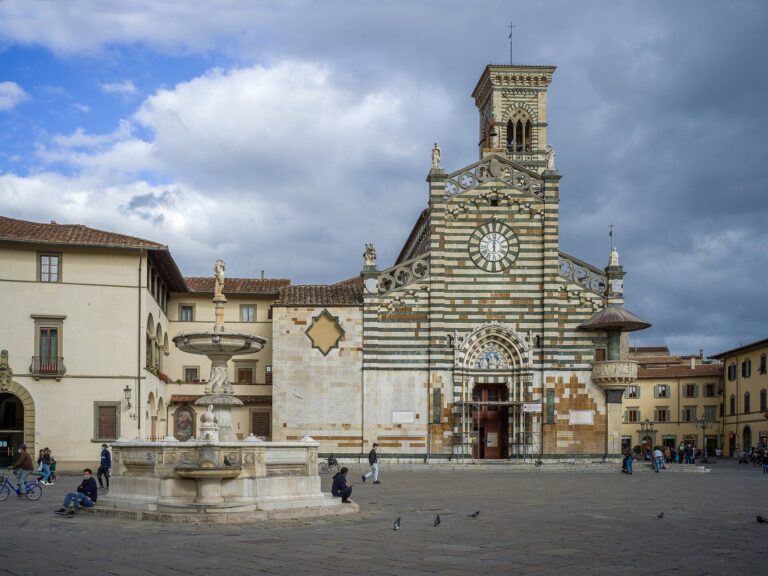
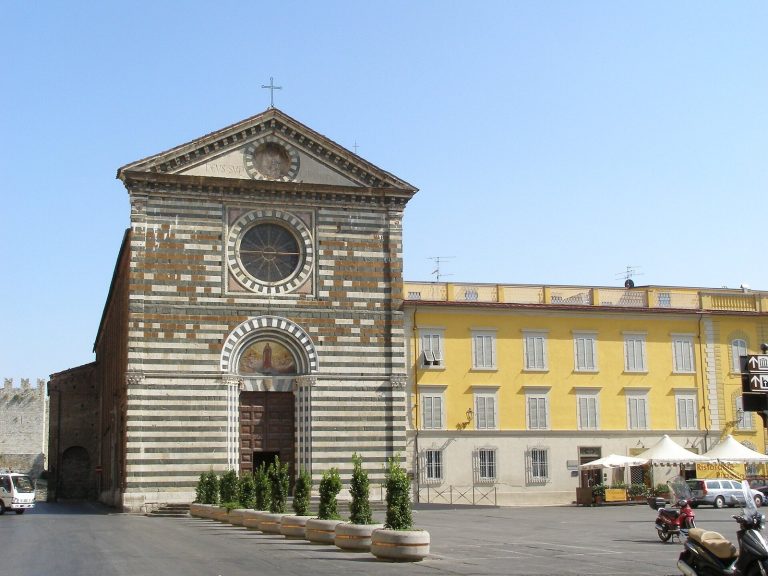
The Chapel of the Assumption, or Cappella dell’Assunta, is inside Prato Cathedral in Prato, Italy, to the right of the main chapel. Its fresco cycle, depicting episodes from the lives of the Virgin Mary and Saint Stephen, is generally dated to 1430–1450. Work began in 1435, commissioned by Michele di Giovannino di Sandro, a wool manufacturer and merchant. Mary is the chapel’s dedicatee, and Stephen is the patron saint of Prato.
Paolo Uccello appears to have begun the paintings, but Andrea di Giusto took over the following year, after Uccello returned to Florence for important commissions in the city’s cathedral. Andrea probably completed his contribution by the end of the decade. Uccello’s direct role in the cycle was disputed: some critics assigned the paintings to an unidentified artist, while others supported Uccello’s authorship, pointing to the perspective, spatial arrangement, and expressive figures. The authorship of the vault paintings has also been questioned.
Remains
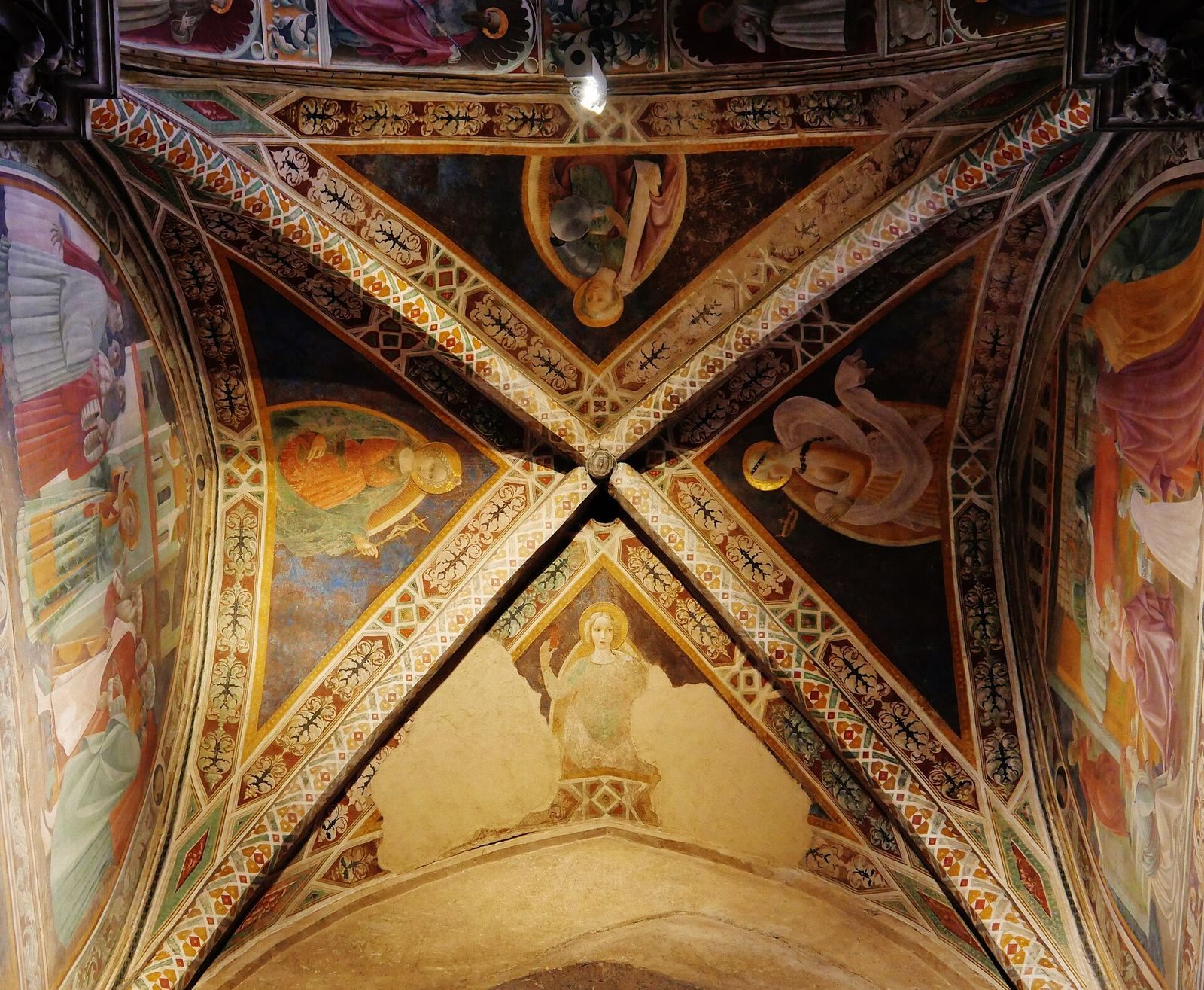
The painted decoration is arranged across the chapel’s side walls, ceiling, and entrance arch. Scenes occupy lower and middle horizontal bands, with a crescent-shaped upper lunette (a curved architectural space) above them. Decorative bands between scenes contain fifteen heads. Other paintings cover the groin vault (a ceiling formed by intersecting vaults) and the underside of the entrance arch.
Left wall: Saint Stephen
The Dispute of Saint Stephen
Attributed to Uccello and measuring 300 × 360 cm, The Dispute of Saint Stephen shows the saint confronting two balanced groups of people associated with the Temple of Jerusalem. Their rich clothing includes red cloaks and fur-trimmed hats, while the carefully depicted cobbled floor anchors the gathering. Animated expressions sharpen the exchange: one man gestures toward Stephen as a companion grasps him by the belt. Stephen’s pale aquamarine robe bears large plant patterns, and its deep folds give the figure weight. The scene’s setting is a circular domed building. Slender flying buttresses, exterior arches that transfer structural thrust, rise from its drum, the circular wall supporting the dome; a lantern crowns it and echoes the dome’s shape. The building has been interpreted as recalling Brunelleschi’s original design for the dome of Florence Cathedral. Light and shadow are carefully differentiated, with the imagined light coming from the left, toward the nave.
The Stoning of Saint Stephen
The Stoning of Saint Stephen measures 310 × 420 cm. Uccello is credited with its architectural background, while Andrea di Giusto is associated with the executioners in the foreground. Beyond the high city walls, the painted skyline includes a tower house, a pointed bell tower, a spiral column, additional towers, another bell-tower spire, and a domed building topped by a lantern. The dome recalls buildings associated with Brunelleschi, particularly the Pazzi Chapel or the Old Sacristy. The spiral column may refer to Trajan’s Column, a Roman monument commemorating the emperor’s military campaigns, or to Uccello’s journey to Rome in the 1430s.
The Finding of Saint Stephen’s Body
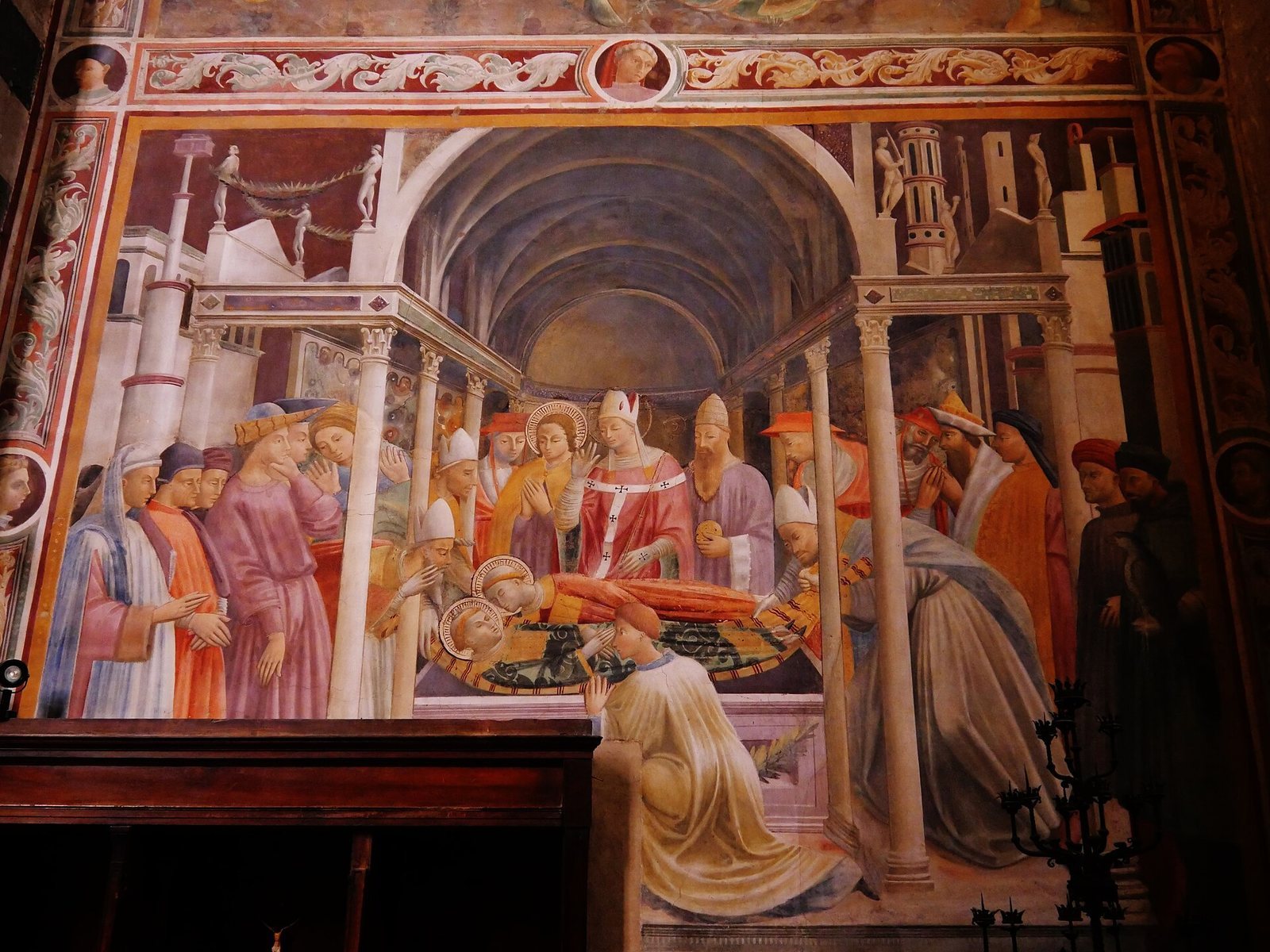
Attributed to Andrea di Giusto, The Finding of Saint Stephen’s Body unfolds inside a cathedral. Darkened areas in the distance, a compressed view of the upper space, and garlands supported by figural statues shape the scene’s depth. A bishop leads Stephen’s funeral rites, and Stephen appears together with the body of Saint Lawrence. On the right, two noblemen dressed as contemporaries watch with a falcon among the crowd. Vivid color and closely observed details give the composition its character.
Right wall: The Virgin Mary
The Birth of the Virgin
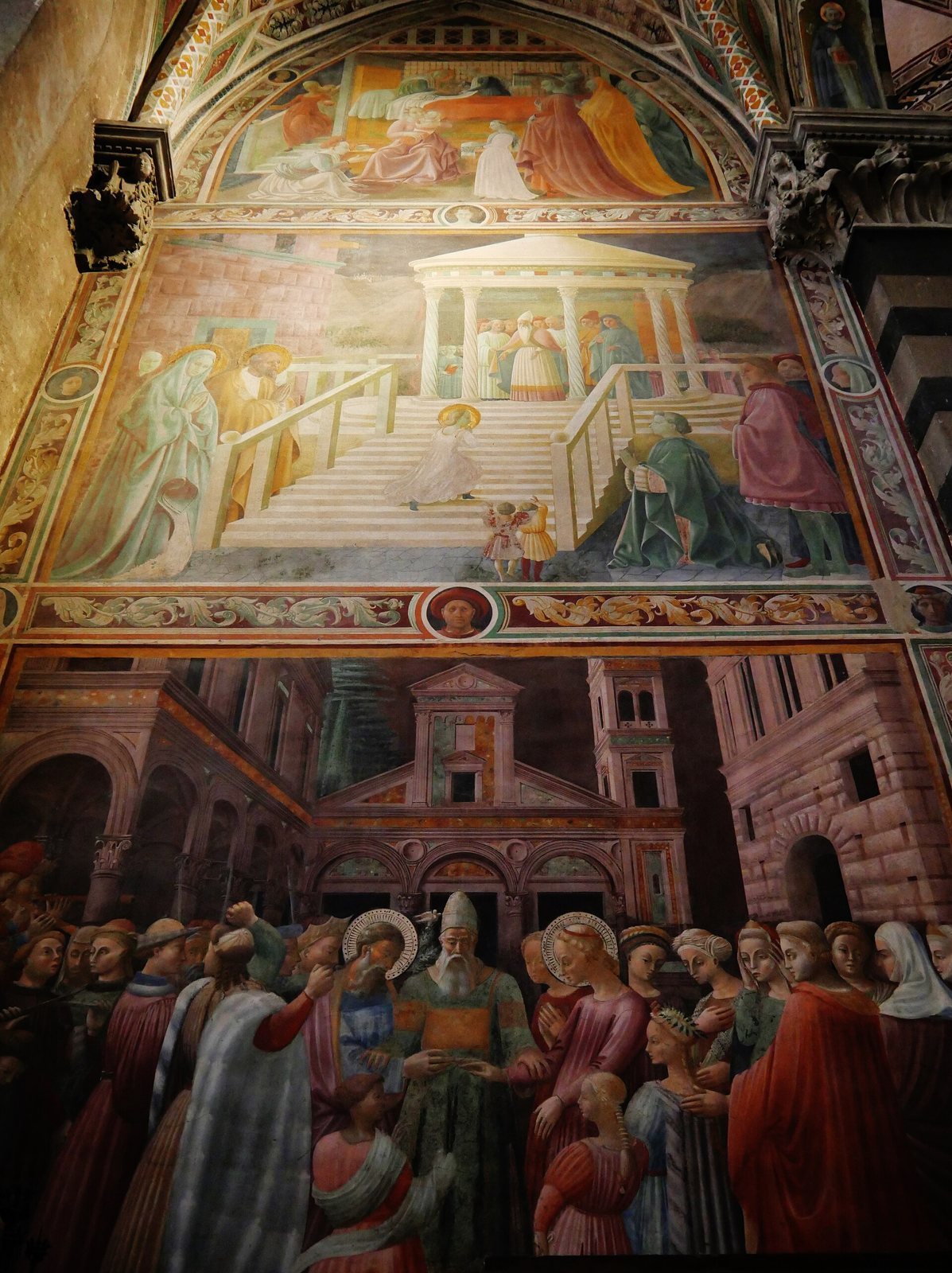
Attributed to Uccello, The Birth of the Virgin measures 302 × 361 cm. Its room is shown as though opened at the front, revealing Saint Anne’s bed, a large chest-like piece surrounded by fur hangings. Two attendants bring Anne water and food, while another comes down the stairs carrying more. In front, two women wash the newborn as a girl holds a towel; three visiting noblewomen look on. Their red, yellow, and aquamarine cloaks establish the main colors. The crowded room is constructed with a vanishing point, where receding lines seem to meet, outside the scene at the right. Recessed ceiling panels and an upper balcony add to the perspective. The visiting women and one attendant have flowing forms associated with late Gothic painting, while the compact servants in the foreground, with deeply folded garments, show an interest in Masaccio. Bold expressions stand out against greenish underpainting and vivid, deliberately unnatural color. Glass and metal vessels appear transparent or gleaming, an effect linked to an early influence from Flemish painting.
The Presentation of the Virgin in the Temple
Measuring 335 × 420 cm and attributed to Uccello, The Presentation of the Virgin in the Temple centers on a sharply receding staircase that leads Mary toward a circular temple, where a priest waits. The lines converge at the extreme right. Fluted, twisted columns carry Corinthian capitals, or ornate column tops, beneath a horizontal entablature (the structure above the columns) with a multicolored marble frieze. A partly abraded curtain curves around part of the temple and reinforces its circular form. The scene presents Mary as living in the temple in a nun-like manner until her marriage, preserving her virginity.
Other women appear inside the temple. At the left, Anna and Joachim grieve before a palace of rough-faced masonry painted pink and turquoise. Mary’s curled hem has a late Gothic character, while the deep ridges in Anna’s clothing give it a sculptural quality. Two small children below may be Mary’s playmates. Nearby, a kneeling and a standing figure in donor-like profile may represent Michele di Giovannino and one of his nephews; another figure looking outward may be a self-portrait. Towers and spires crown a distant peak. The firm geometric arrangement recalls Brunelleschi’s models, and the staircase has also been compared with the stair and parapet in Donatello’s Feast of Herod.
The Marriage of the Virgin
Andrea di Giusto’s Marriage of the Virgin completes the Marian scenes. The ceremony takes place in a square before a church with a Renaissance façade, between a loggia and a palace of rough-faced masonry. A priest officiates. At the left, rejected suitors angrily break their staffs, which have not flowered as Joseph’s did; the women stand to the right. The colors are soft, and the figures’ faces and poses are comparatively conventional.
Vault and entrance arch
The Virtues
The vault carries Faith, Hope, Charity, and Fortitude, each identified by attributes and enclosed in an almond-shaped frame. Flexible outlines and flowing garments create a strong linear rhythm. Some figures have sharply characterized faces and geometric forms, while their colors remain pale and subdued. The paintings are associated with Uccello and collaborators.
The Four Saints
Jerome, Dominic, Paul, and Francis appear on the underside of the entrance arch. Each figure measures 120 × 46 cm and is generally attributed to Uccello. Their drapery is adjusted to the intended viewing angle: in some figures, perspective exposes the hems and ankles, while in others the garments conceal those details, especially where a more frontal view is intended.
Medallions and a related fresco fragment
Painted heads
Circular medallions between the scenes place heads at the corners and at the centers of the longer sides. The upper examples are attributed to Uccello and the lower ones to Andrea di Giusto. Their men and women have varied, individualized expressions. Notable details include a fur-hatted man at the lower right of The Presentation of the Virgin in the Temple, a man in a red ring-shaped headdress looking upward, a frowning bald man, and several women. The careful modeling and treatment of light distinguish these portraits.
Jacopone da Todi
A fresco depicting Blessed Jacopone da Todi, a medieval religious poet and Franciscan friar, is attributed to Uccello and associated with the wall behind the altar. Its surviving detached fragment is preserved in the Museo dell’Opera del Duomo.