Candi Kethek: A Hindu Terraced Temple on Mount Lawu
Site at a Glance
- Rating
- 4.7
- Popularity
- Low
- Country
- Indonesia
- Primary era
- Medieval
- Eras represented
- Medieval, Early Modern
- Civilizations
- Unclassified
- Site type
- Religious
- Remains
- Temple
On this page7 sections
History
Candi Kethek is a Hindu temple on the northwest slope of Mount Lawu in Central Java, Indonesia, dating approximately from the fifteenth or sixteenth century. Its terraced megalithic form places it within the religious and architectural traditions of late Hindu Java, although its dynastic affiliation remains uncertain.
Construction and cultural setting
Candi Kethek lies northeast of Ceto Temple, which dates from the fifteenth century, and shares architectural similarities with both Ceto and Sukuh temples. These comparisons support the estimated construction period and connect the site with the region’s megalithic cultural heritage. The name Kethek means “monkey” in Javanese. Local residents gave the temple this name because monkeys were formerly abundant in the surrounding area.
Archaeological investigation and ritual interpretation
The temple’s existence was documented in 1842. Excavation in 2005 was carried out by the Central Java Archaeological Heritage Preservation Agency in cooperation with the Department of Archaeology at Gadjah Mada University and the Karanganyar Regency Government. The discovery of a tortoise statue on the lowest terrace identified the site as Hindu. The tortoise represents Vishnu, a major Hindu deity associated with preservation, and relates to the Samudramanthana myth, in which gods and demons churn the cosmic ocean to obtain an elixir of immortality.
This connection has led to the interpretation that Candi Kethek may have served as a place of ritual purification, intended to cleanse people or release them from wrongdoing. That interpretation remains qualified. Further study of inscriptions and artifacts continues to clarify the temple’s history and original layout.
Remains
Terraced layout
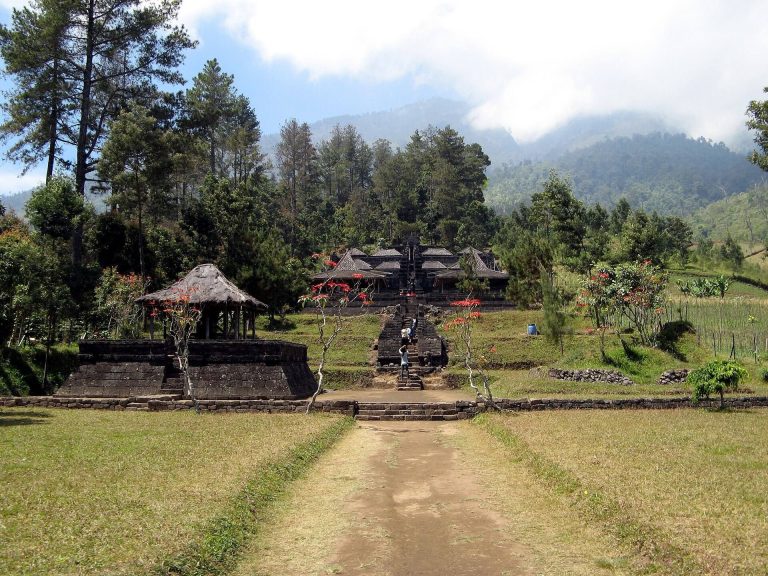
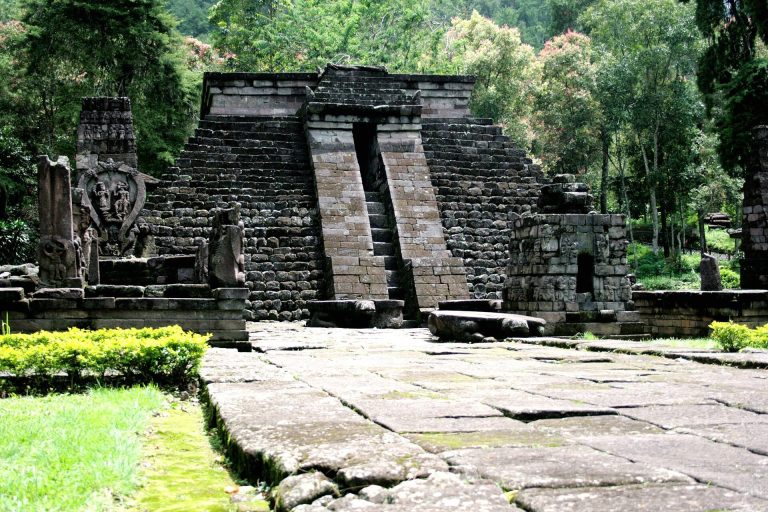
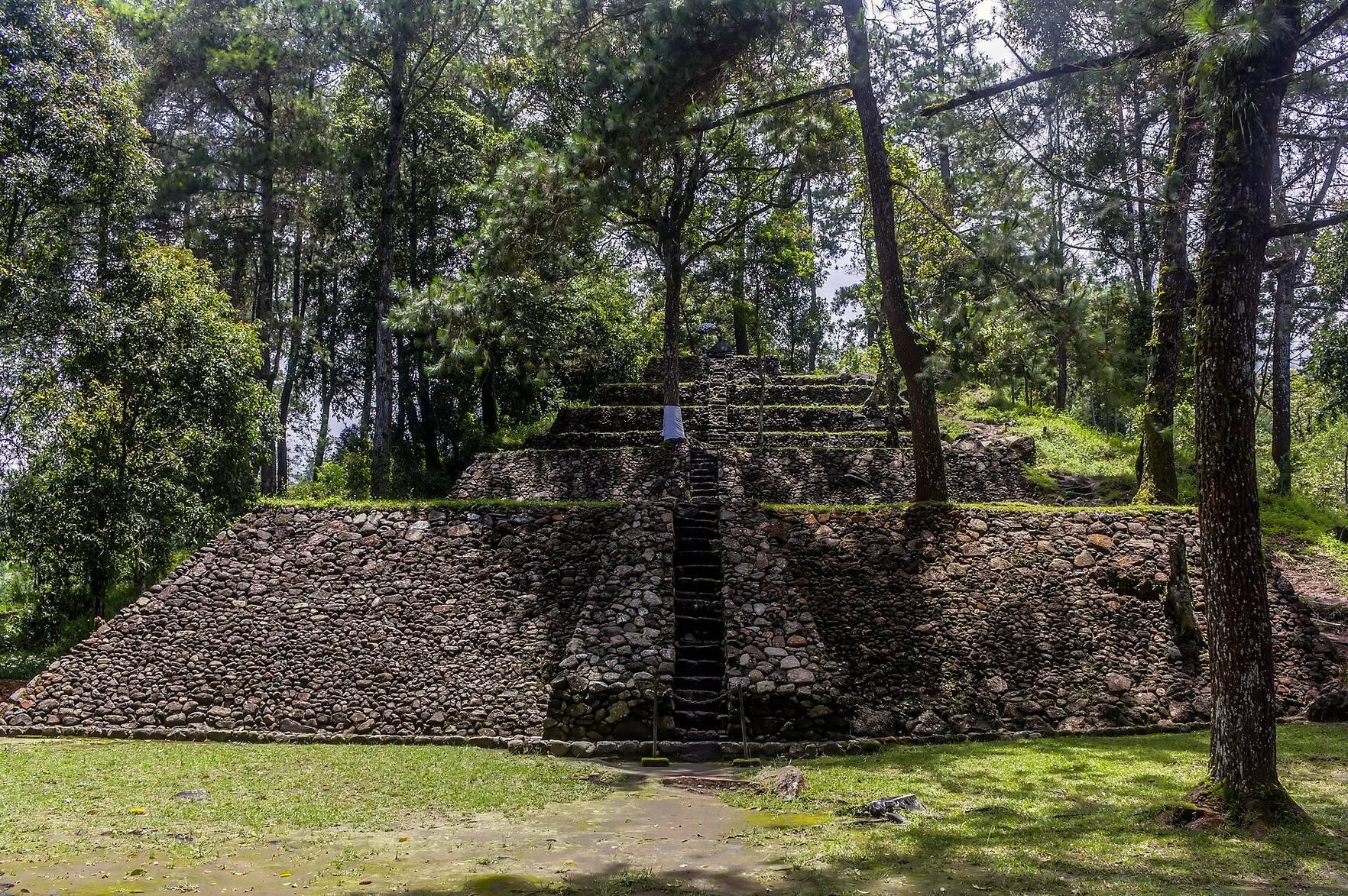
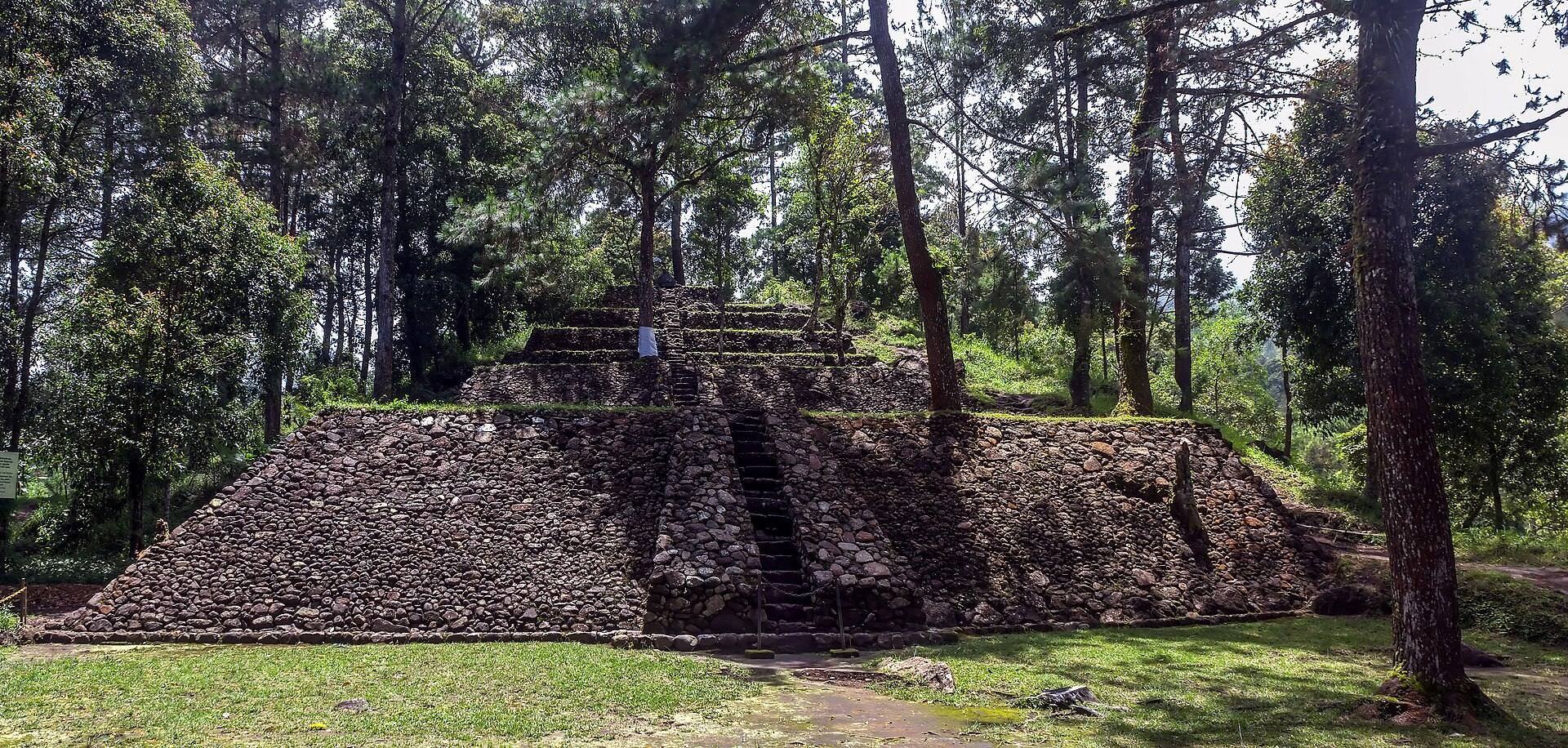
Candi Kethek is a west-facing, pyramid-shaped monument arranged as four terraces. Each level is linked by stone steps, while an alternative route to the highest terrace runs along the southern side. This stepped form is known as a punden berundak, a terraced monument tradition associated with megalithic architecture in the Indonesian archipelago.
Terraces and structures
The first terrace contains a building structure on its northeastern side. Two structures stand on each of the second and third terraces, positioned on their northern and southern sides. The uppermost terrace is thought to have carried the principal temple building. A small stana, or sacred seat or shrine structure, now occupies this area. Its golden-crowned finial, the crowning element of a shrine, is covered with Balinese Poleng cloth, a traditionally checkered textile.
Tortoise statue and setting
A tortoise statue was found on the lowest terrace of the first level. Its association with Vishnu and the Samudramanthana narrative provides the principal archaeological evidence for the temple’s Hindu character. The monument stands at approximately 1,486 metres above sea level within a pine forest managed by Indonesia’s state forestry enterprise. It is about 500 metres from a stream northeast of Ceto Temple, a watercourse that flows during the rainy season and dries during the dry season.