Merak Temple: A Tenth-Century Shaivite Temple Complex in Central Java
Site at a Glance
- Rating
- 4.4
- Popularity
- Low
- Country
- Indonesia
- Primary era
- Medieval
- Eras represented
- Medieval
- Civilizations
- Unclassified
- Site type
- Religious
- Remains
- Temple
On this page6 sections
History
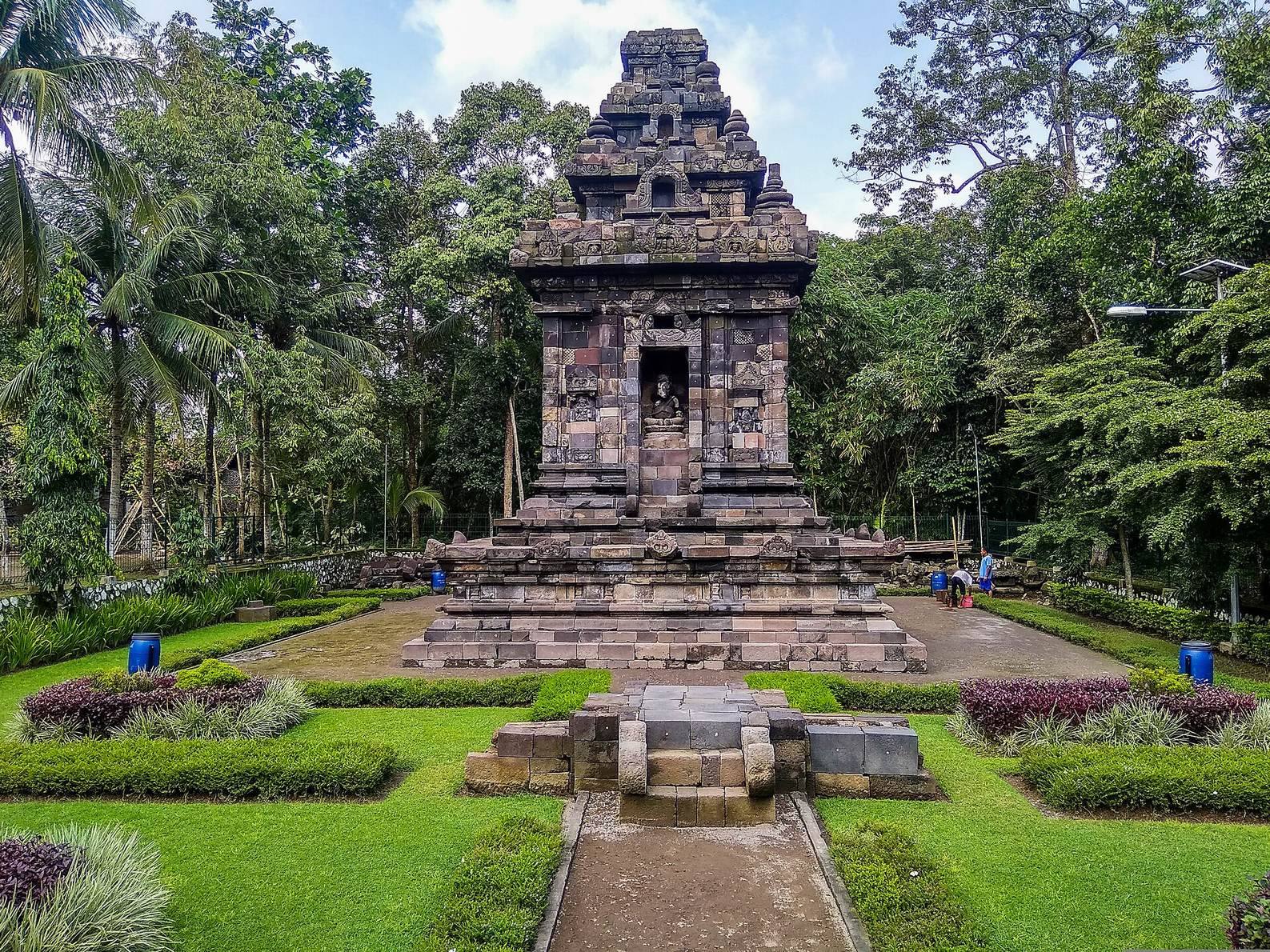
Merak Temple is a tenth-century Javanese Shaivite Hindu temple complex in Karangnongko, Klaten Regency, Central Java, Indonesia. Built in the period of the Mataram Kingdom, an early medieval Javanese polity that supported Hindu and Buddhist religious architecture, it stands on the southeastern slopes of Mount Merapi, northwest of Klaten town. Its architecture, sculptures, deities, and ritual stone support a dedication to Shiva, a principal Hindu deity associated with creation, destruction, transformation, and asceticism.
The Mataram period
The complex is broadly dated to the ninth or tenth century, although construction most probably took place in the tenth century. Its Shaivite character is indicated by the imagery of the temple and by the yoni in the main chamber. A yoni represents the feminine principle in Hindu ritual and is commonly paired with a lingam, a stone symbol associated with Shiva. The lingam that once stood on Merak Temple’s yoni is no longer present.
Discovery and reconstruction
Merak Temple was discovered in the early twentieth century. Preliminary research took place in 1925 and 1926 under the archaeological authority of the Dutch East Indies. Reconstruction proceeded gradually and was completed in 2011, although the upper ratna pinnacle remains missing.
Remains
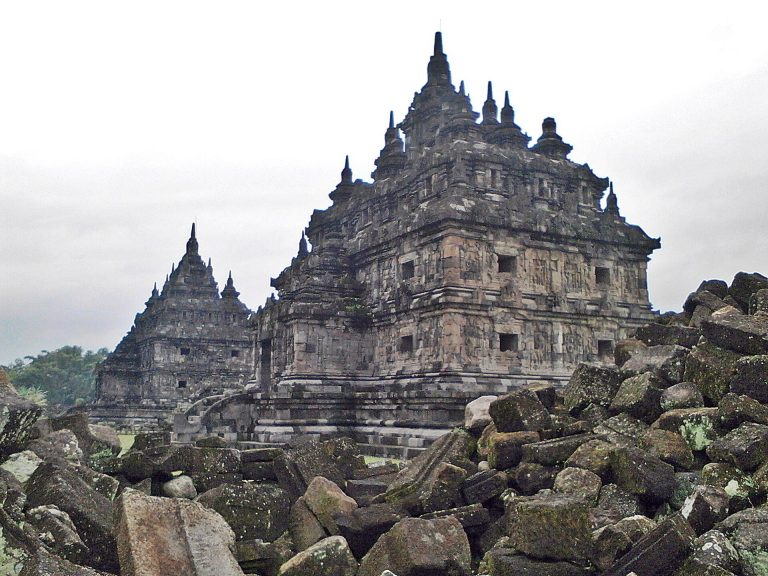
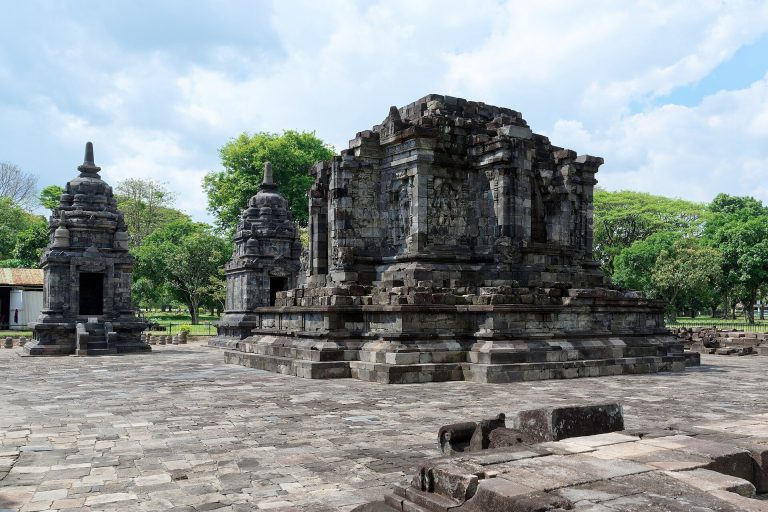
The complex covers approximately 1,480 square metres. It is arranged around a reconstructed main temple, with the ruins of three subsidiary shrines placed in front of it. These subsidiary buildings are called perwara, a term for ancillary temples arranged in relation to a principal shrine.
Main temple
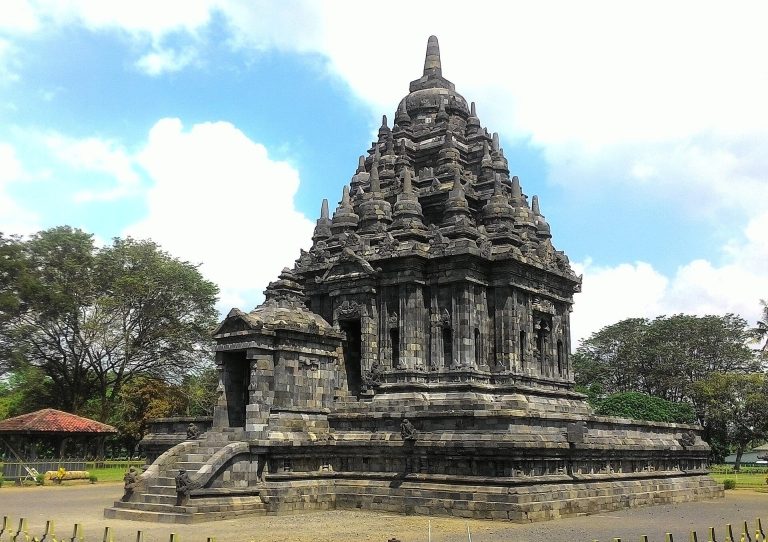
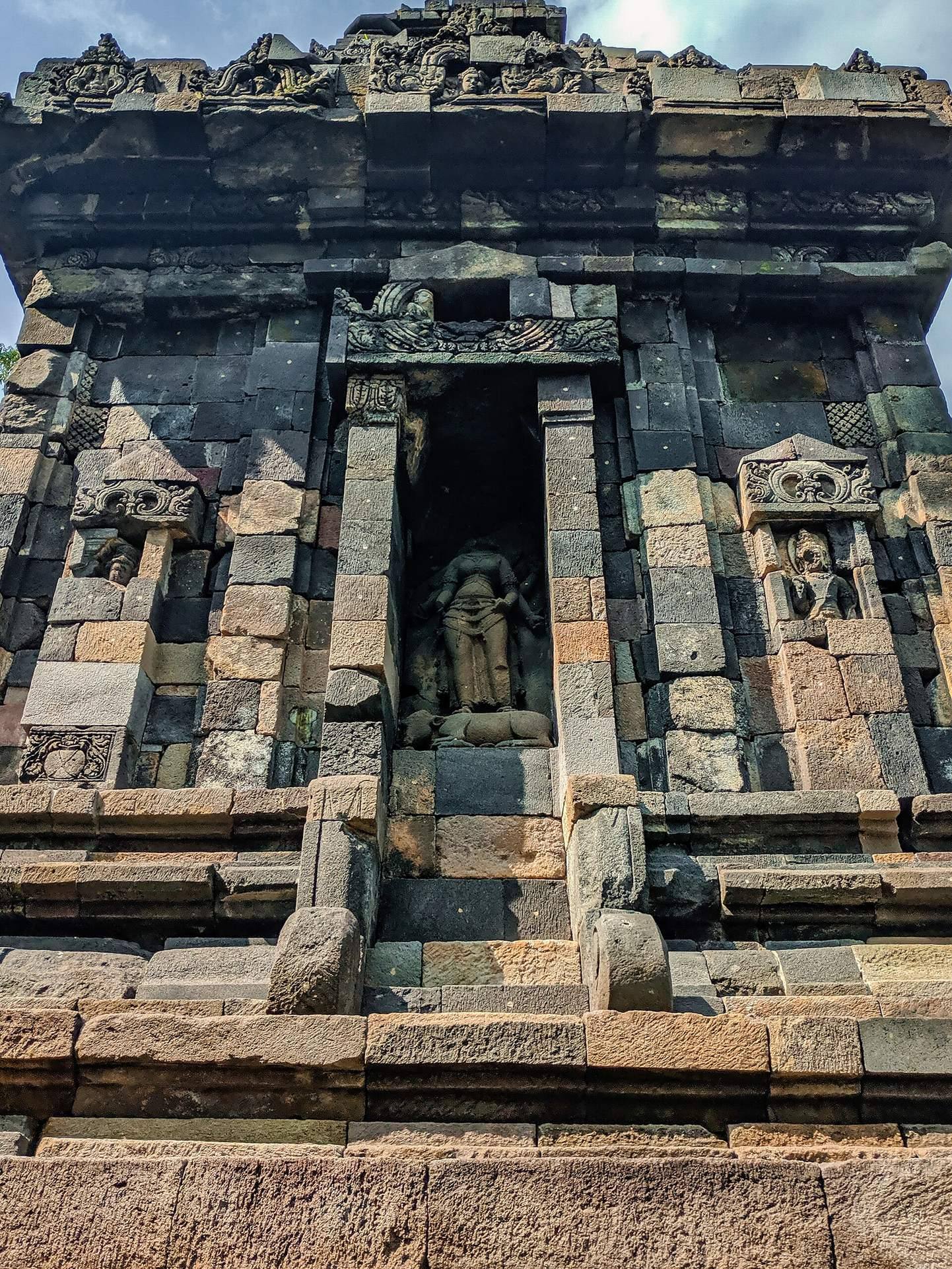
The main building follows the Central Javanese candi style, an Indonesian form of ancient religious monument, and faces east. An eastern staircase leads to the entrance. Two well-preserved makaras, mythological aquatic creatures used in temple ornament, flank the stairs. Their trunk-like projections take the form of cobra-like nagas, or serpent beings, creating a combined makara-naga design. Above the entrance is a Kala head, a protective mythological face commonly placed over temple doorways.
The inner chamber contains a yoni carved with a naga head on its northern side. The outer walls have three niche-like recesses on each cardinal side. A damaged but substantially complete statue of Ganesha occupies the western niche. The northern niche holds a slightly damaged statue of Durga Mahishasuramardini, the goddess Durga defeating the buffalo demon Mahishasura; its head is missing, probably because of looting. The southern niche is empty and probably once contained Agastya, a Hindu sage traditionally associated with the southern side of Shiva temples.
The roof rises in three receding pyramidal terraces. Each level carries a row of ratna pinnacles, small ornamental roof finials, while deity-headed antefixes, decorative elements attached along roof edges, project around the stepped forms. The shapes of the ratna elements and the style of the deity-headed antefixes resemble those at Gebang Temple in northern Yogyakarta.
Subsidiary shrines
Three subsidiary temple ruins stand in front of the main building. Their surviving remains form the secondary part of the complex, while the principal temple has been completely reconstructed. Nearby archaeological sites include Karangnongko, Kriyan, and Bekelan, most of which survive in ruined or incomplete condition.