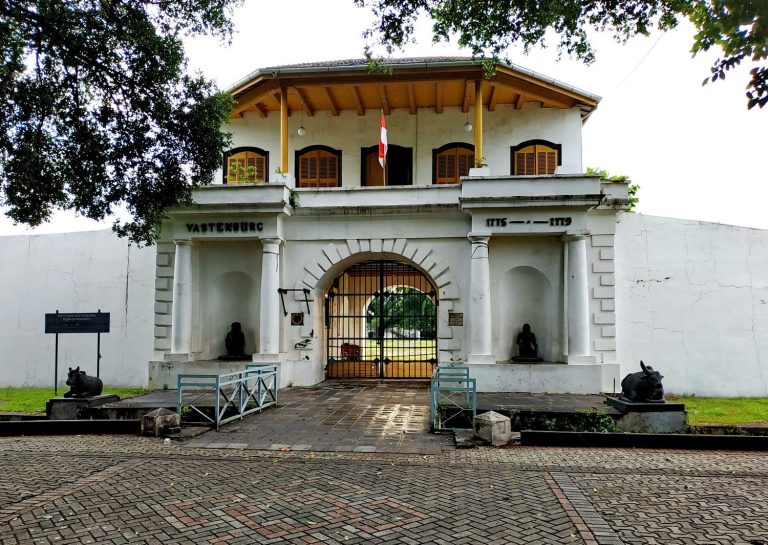
Fort van den Bosch: A Dutch Colonial Fortress in Indonesia
Site at a Glance
- Rating
- 5
- Popularity
- Very Low
- Country
- Indonesia
- Primary era
- Modern
- Eras represented
- Modern
- Civilizations
- Dutch
- Site type
- Military
- Remains
- Fort
On this page9 sections
History
Fort van den Bosch is a nineteenth-century Dutch fort in Indonesia, located at Ngawi in East Java. Completed in 1845 during the Dutch colonial period, it was built after the Dutch captured Ngawi during the Java War, a major anti-Dutch conflict in Java led by Prince Diponegoro from 1825 to 1830. Positioned at the meeting point of the Bengawan Solo and Madiun rivers, the fort helped secure Dutch control and oversee a regional trade route. It was named after Johannes van den Bosch, a Dutch colonial administrator and governor-general of the Dutch East Indies.
The Java War and Dutch construction
During the Java War, Ngawi was part of a wider area of resistance. Opposition in the region was associated with Regent Kerto Dirjo in Madiun and with Adipati Judodiningrat, Raden Tumenggung Surodirjo, and Wirotani in Ngawi. After Dutch forces took Ngawi in 1825, the Dutch East Indies government ordered a new defense center to consolidate its position. Construction at the river confluence was completed in 1845, creating Fort van den Bosch as part of the colonial effort to control the area and its shipping connections.
Internment during the Japanese occupation
During the Japanese occupation, the fort was converted into a civilian internment camp for men and boys. From February 1943 to 12 February 1944, about 1,580 internees, including British and American men, were held there. Nakamura served as commandant, while local residents worked as guards. On 12 February 1944, the internees were transferred to the camp of the Fourth and Ninth Battalions at Tjimahi.
From 21 January to 30 August 1945, Fort van den Bosch again operated as a civilian camp. Approximately 737 Indo-European men and boys, people of mixed European and Indonesian ancestry in the colonial social context, were detained after refusing to swear loyalty to the Japanese authorities. They endured a harsh regime. Following Japan’s departure from Indonesia, the internees were released, taken by truck to Ngawi station, and transported by train to destinations including Yogyakarta.
Later use and decline
After the transfer of sovereignty, the Indonesian Army used the fort briefly. It later deteriorated into its present dilapidated condition. A tomb inside the fort is identified by local tradition as that of Kyai Haji Muhammad Nursalim, a Muslim religious scholar and follower of Prince Diponegoro. The tradition holds that he helped spread Islam in Ngawi and that the Dutch buried him alive after believing he could not be killed by gunfire.
Remains
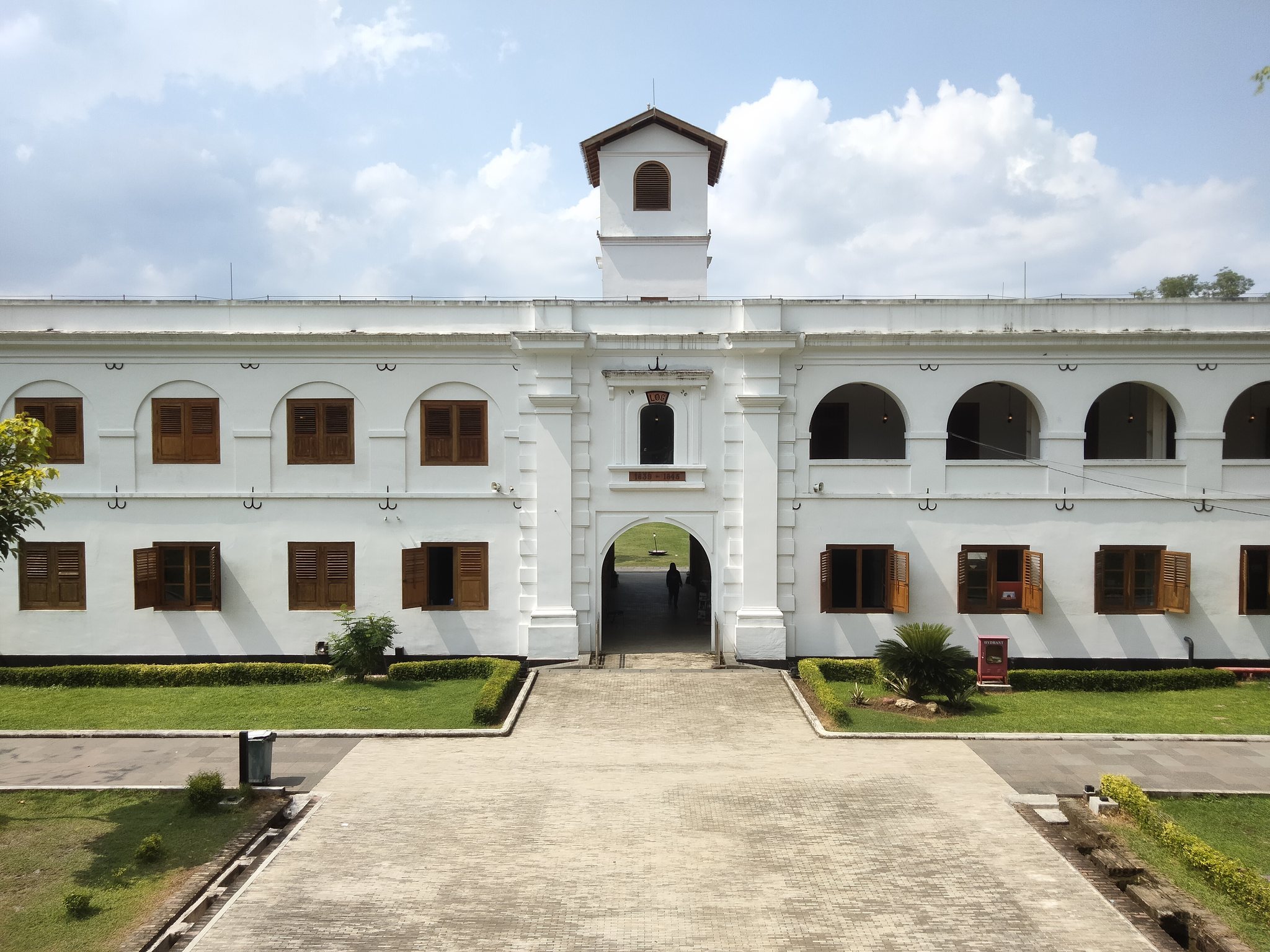
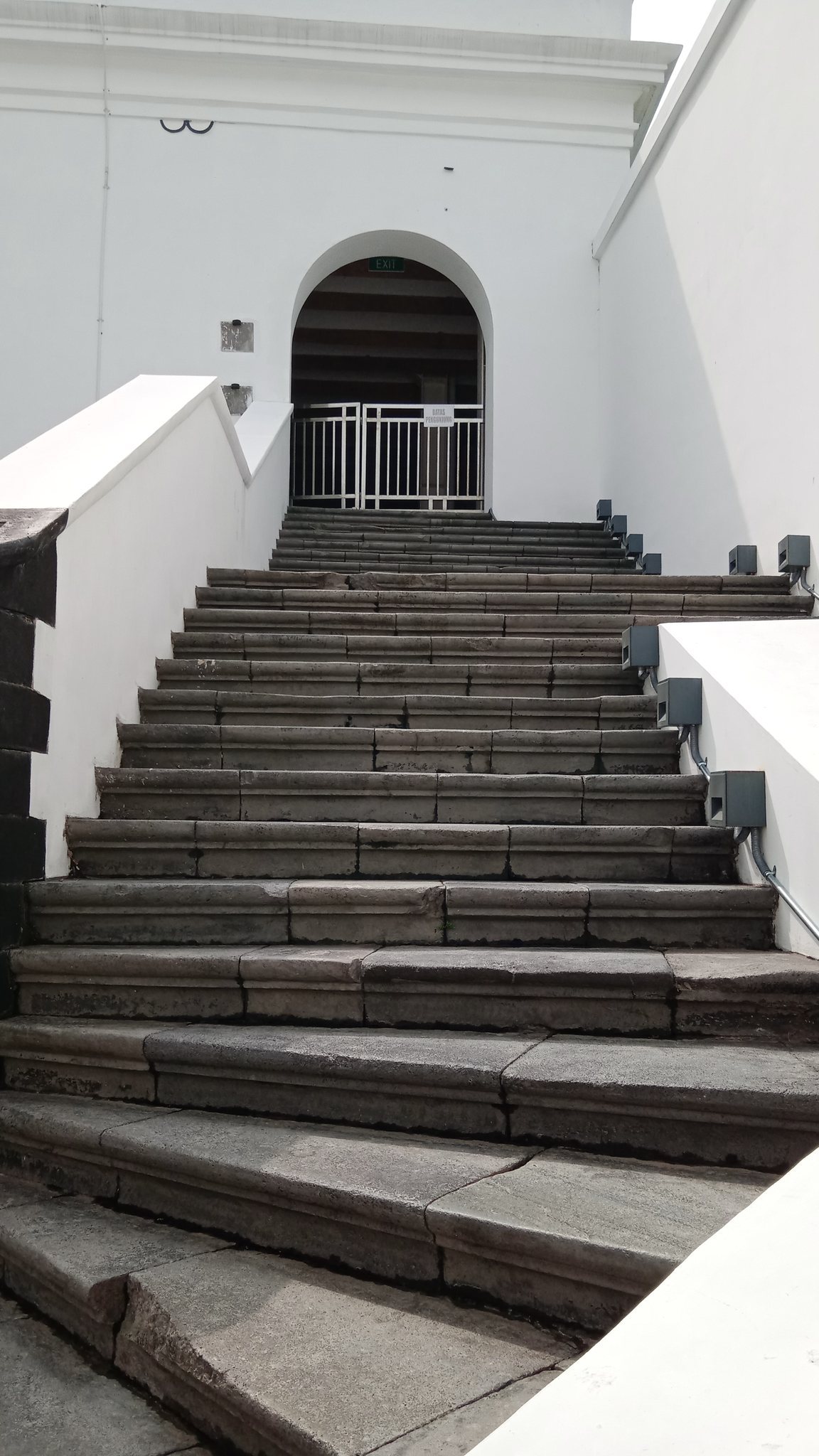
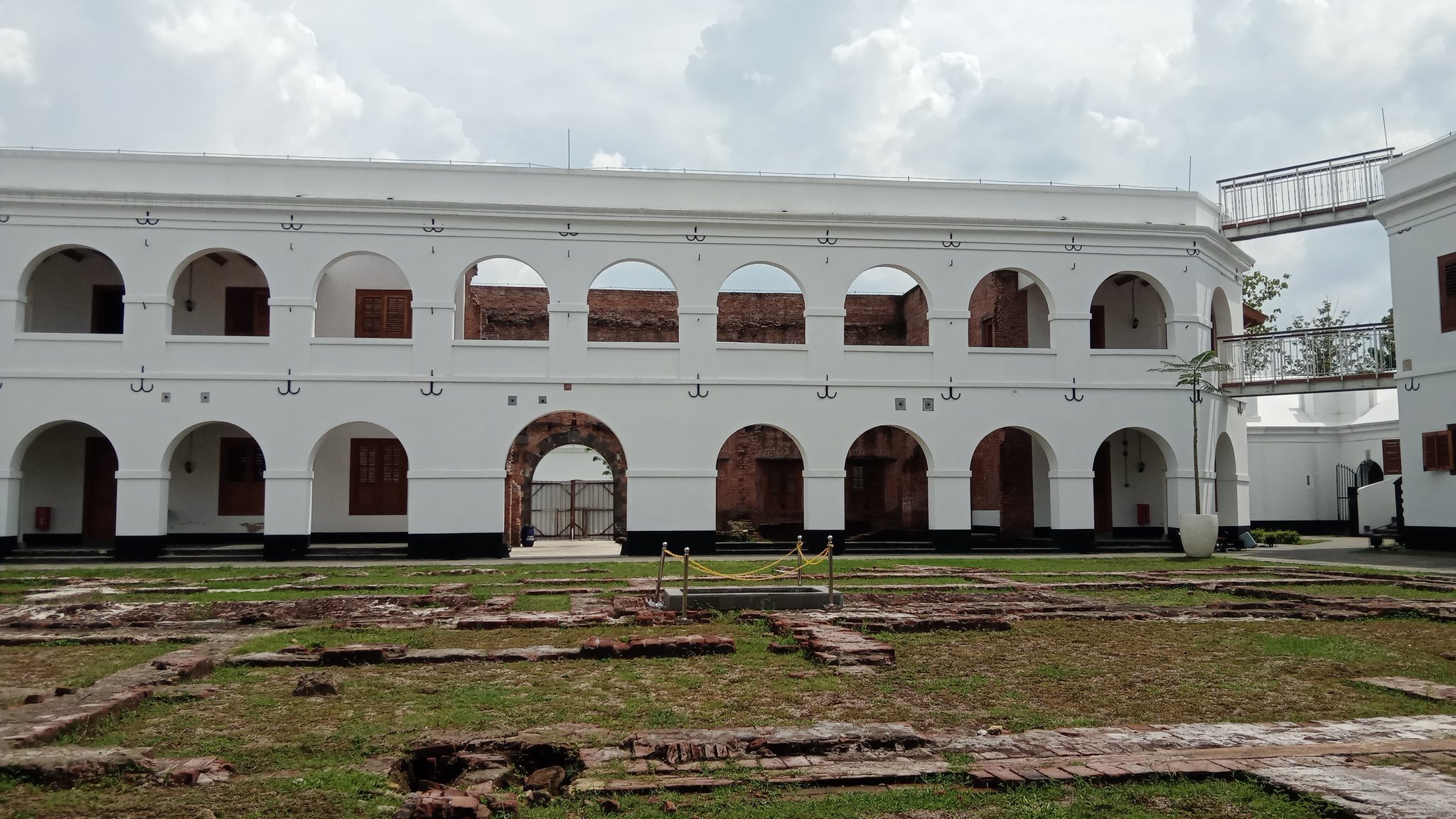
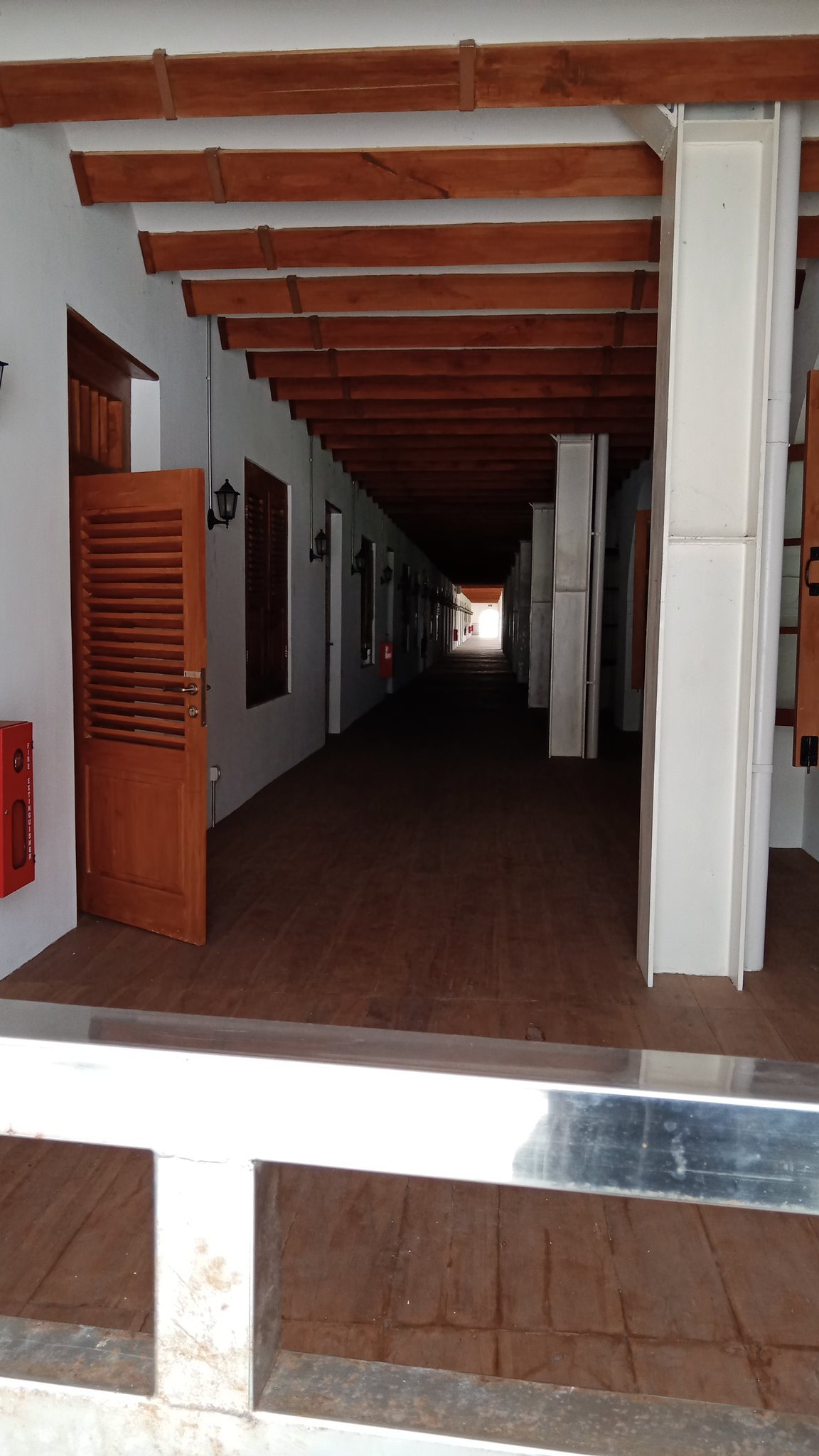
Fort van den Bosch stands in Pelem administrative village at the confluence of the Bengawan Solo and Madiun rivers. The complex measures about 165 by 80 metres and covers approximately 15 hectares. Built below the surrounding ground, it gave rise to the local name Benteng Pendem, meaning “sunken fort.” Its surviving multistory structure contains hundreds of rooms associated with its original military function.
Fortification and internal spaces
Military facilities
The fort was designed to accommodate 250 soldiers and was equipped with six cannons and 60 cavalry troops. Its large, multistory arrangement provided numerous rooms for military use within the sunken enclosure. The surviving buildings are now in a dilapidated state.
Internment areas
During the first period of Japanese internment, prisoners were divided between the fort prison and barracks positioned at the front of the grounds. These two areas formed the principal accommodation spaces used for the civilian camp between February 1943 and February 1944.
Tomb of Kyai Haji Muhammad Nursalim
A tomb identified locally with Kyai Haji Muhammad Nursalim lies inside the fort. Its association with a follower of Prince Diponegoro and an early spread of Islam in Ngawi forms part of the local historical tradition surrounding the complex.