Bystré Castle: A Renaissance Castle in Czechia
Site at a Glance
- Rating
- 4.1
- Popularity
- Very Low
- Country
- Czechia
- Primary era
- Early Modern
- External website
- Open
- Eras represented
- Early Modern
- Civilizations
- Habsburg, Holy Roman Empire, Kingdom of Bohemia
- Site type
- Domestic
- Remains
- Castle
On this page12 sections
History
Bystré Castle is a Renaissance castle in Czechia, in the town of Bystré, built by the Bohemian nobleman Jan Bezdružický of Kolovrat between 1586 and 1590. It developed from an earlier fortified manor and remained an important estate residence through successive periods of noble, imperial, and state ownership.
Early settlement and the Renaissance castle
A tradition places a hunting fortress and a village near the present castle as early as the beginning of the eleventh century. This story entered written literature through the historian and cleric Tomáš Pešina of Čechorod. František Palacký later attributed the construction to the nobleman Bedřich of Mokošín in 1095. The origin of the surviving estate is instead placed around 1533, when the property belonged to the Žehušický family of Nestajov. After the estate was divided among several heirs, a manor house was recorded, probably a fortress on the site of the present castle.
Under Charles IV, the fourteenth-century king of Bohemia and Holy Roman Emperor, and subsequently, Bystré belonged to the Svojanov estate. The burgrave Michálek of Vlašim administered the property, and during his tenure Bystré was raised to the status of a market town. By marriage, the estate later passed to Jan Bezdružický of Kolovrat, who commissioned the construction of the Renaissance castle. The succession of owners included the Mokošín, Žehušický of Nestajov, Kolovrat, Martinic, Valderode, Liechtenstein, Hohenems, and Habsburg families.
The new castle was the birthplace of Vilém Jindřich Bezdružický of Kolovrat, who lived from 1589 to 1642. His rule was marked by repeated disputes with the townspeople of Bystré. When he died without children, the estate passed to his distant relative Oldřich František Libštejnský of Kolovrat, a nobleman who held senior state offices in Prague and Vienna while also supporting the development of the town.
War damage and aristocratic expansion
Swedish troops severely damaged Bystré, including the castle, in 1641 during the conflicts of the Thirty Years’ War, the seventeenth-century struggle that involved the major political and religious powers of Europe. In 1650 the estate passed by inheritance to the Martinic family. Under Maxmilián Valentin of Martinic, the castle was substantially enlarged in 1654 and 1655. The earlier fortress was incorporated into the expanding complex, which also acquired additional farm buildings.
After Maxmilián Valentin’s death, four heirs sold Bystré in 1686 to Count Jan Pavel of Valderode for 175,000 gulden. Financial difficulties led to a public auction in 1694, when Prince Jan Adam I of Liechtenstein bought the estate for 234,000 gulden. The Liechtenstein family was a princely Central European dynasty. Between 1707 and 1712, Jan Adam exchanged Bystré with Count Jakub Hanibal of Hohenems for the imperial estate of Vaduz, which soon became the centre of the Principality of Liechtenstein.
The Hohenems family shaped Bystré through major building activity in the town, including the parish church of Saint John the Baptist and the town hall. They also introduced Baroque changes to the castle. Under Field Marshal František Rudolf of Hohenems, a chapel was established, rooms in the main building were altered, and a large hall received stucco ceiling decoration.
The Hohenems inheritance and cultural life
When the Hohenems family became extinct in 1759, it was determined that Bystré would revert to the Habsburg dynasty if the later heirs died without children. Escheat was the legal return of an estate to the sovereign when no eligible heir remained. The property nevertheless continued through female descendants for more than a century. Marie Rebeka of Hohenems, Countess of Harrach, inherited it first, and the pond below the castle known as Rebeka Pond commemorates her name.
During Marie Rebeka’s ownership, a large Hohenems family picture gallery and library were moved to Bystré. The library was said to include two manuscripts of the Nibelungenlied, a medieval German heroic epic about Siegfried, Kriemhild, and the Burgundian court. Marie Rebeka’s daughter Maria Walburga, Countess of Truchsess-Zeil, inherited the estate but lived principally at Kunín Castle near Nový Jičín rather than at Bystré. At the beginning of the nineteenth century, the family picture gallery from Hohenems Castle in Austria was also transferred to Bystré, although part of the collection was later sold to meet debts.
After Maria Walburga died in 1828, the estate became the subject of a prolonged legal dispute. In 1848 it passed to the last Hohenems heiress, Baroness Ernestina of Langet. The castle had stood empty for years, so Ernestina refurnished it and established an English-style park, a landscaped garden arranged with informal lawns, plantings, and naturalistic scenery. During her tenure, Bystré became a cultural centre for theatrical performances and concerts, attracting Czech artists including J. Mánes, J. Neruda, and J. L. Lukes.
Habsburg ownership and modern institutional use
After Ernestina died in 1868, the Liechtenstein, Harrach, Truchsess-Zeil, and other distantly related families claimed the estate. The Higher Provincial Court in Prague rejected their claims, and Bystré passed by escheat into the private property of Emperor Franz Joseph I. Franz Joseph was the Habsburg ruler of Austria-Hungary from 1848 to 1916. He adopted the title of Count of Hohenems in his extended titulature, while Empress Elisabeth used the same name when travelling incognito.
The poet Jaroslav Vrchlický lived at the castle from 1904 to 1906. His son-in-law Gabriel Čáp worked there as an official in the estate administration. After Czechoslovakia was established, Habsburg properties were confiscated and Bystré became a state estate, with its administrative headquarters in the castle. After 1945 the building served as a storage facility, and from 1953 it successively housed several boarding schools.
After 1953, the Hohenems family picture gallery was removed from Bystré. During the Protectorate period, the Reichsgau Tyrol-Vorarlberg had claimed the collection. Its 92 paintings were first distributed among several buildings and are now held by the municipal museum and gallery in Polička. The castle was reconstructed in 1963 and 1964, and the park was restored ten years later. Two fires damaged the interiors in 1978, leading to another reconstruction. Since the 1970s, the complex has housed Domov na zámku Bystré, a social-care institution for people with intellectual disabilities operated by the Pardubice Region, which is the castle’s current owner. Bystré Castle is protected as a cultural monument of the Czech Republic.
Remains
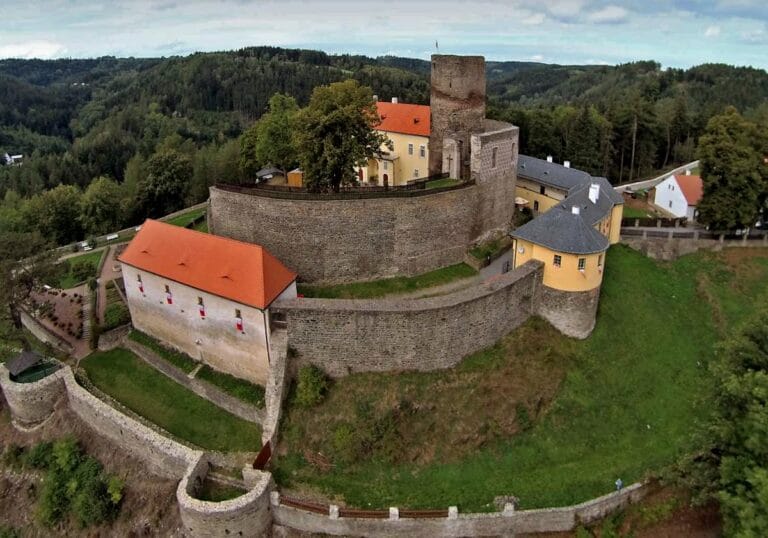
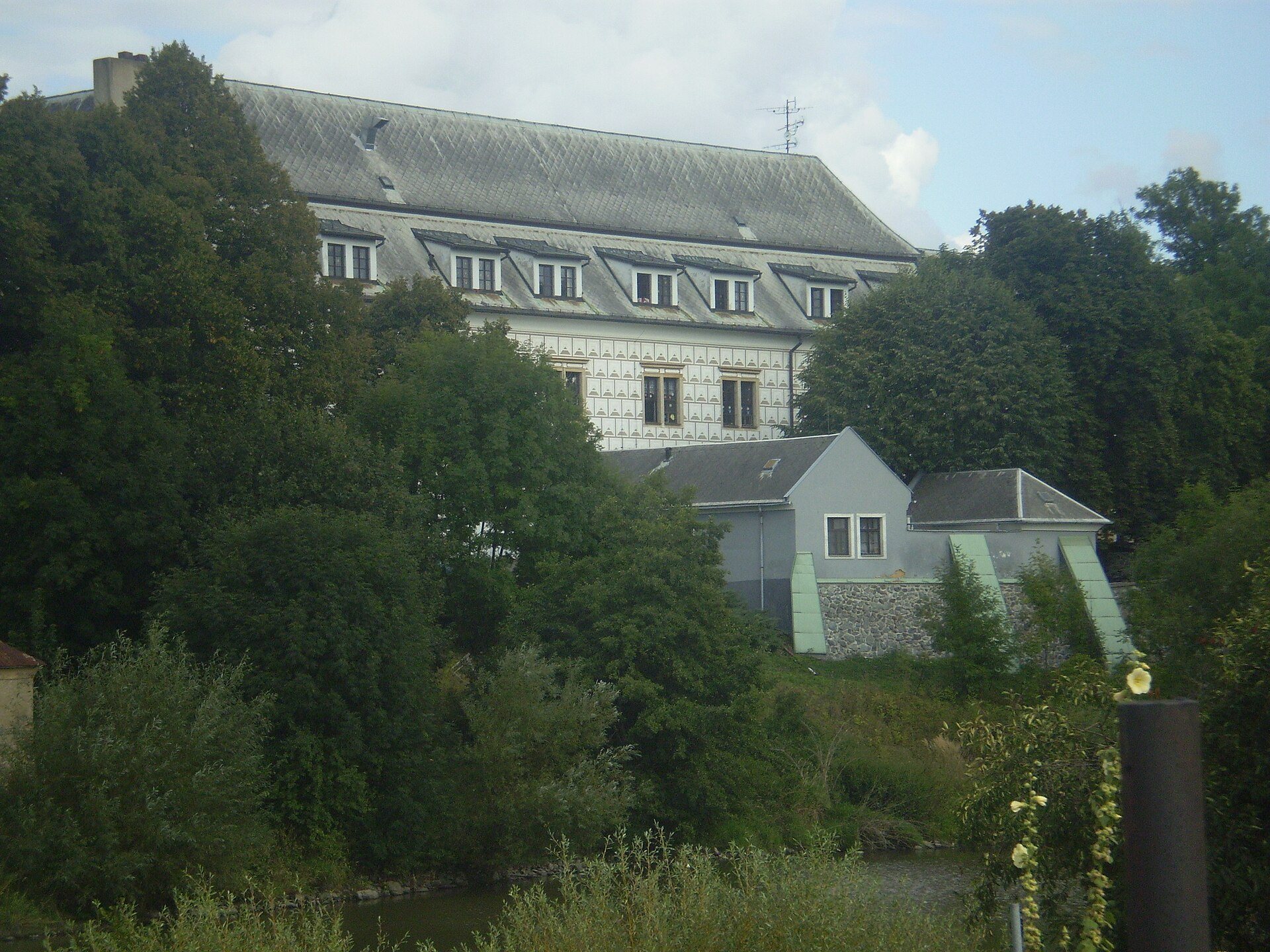
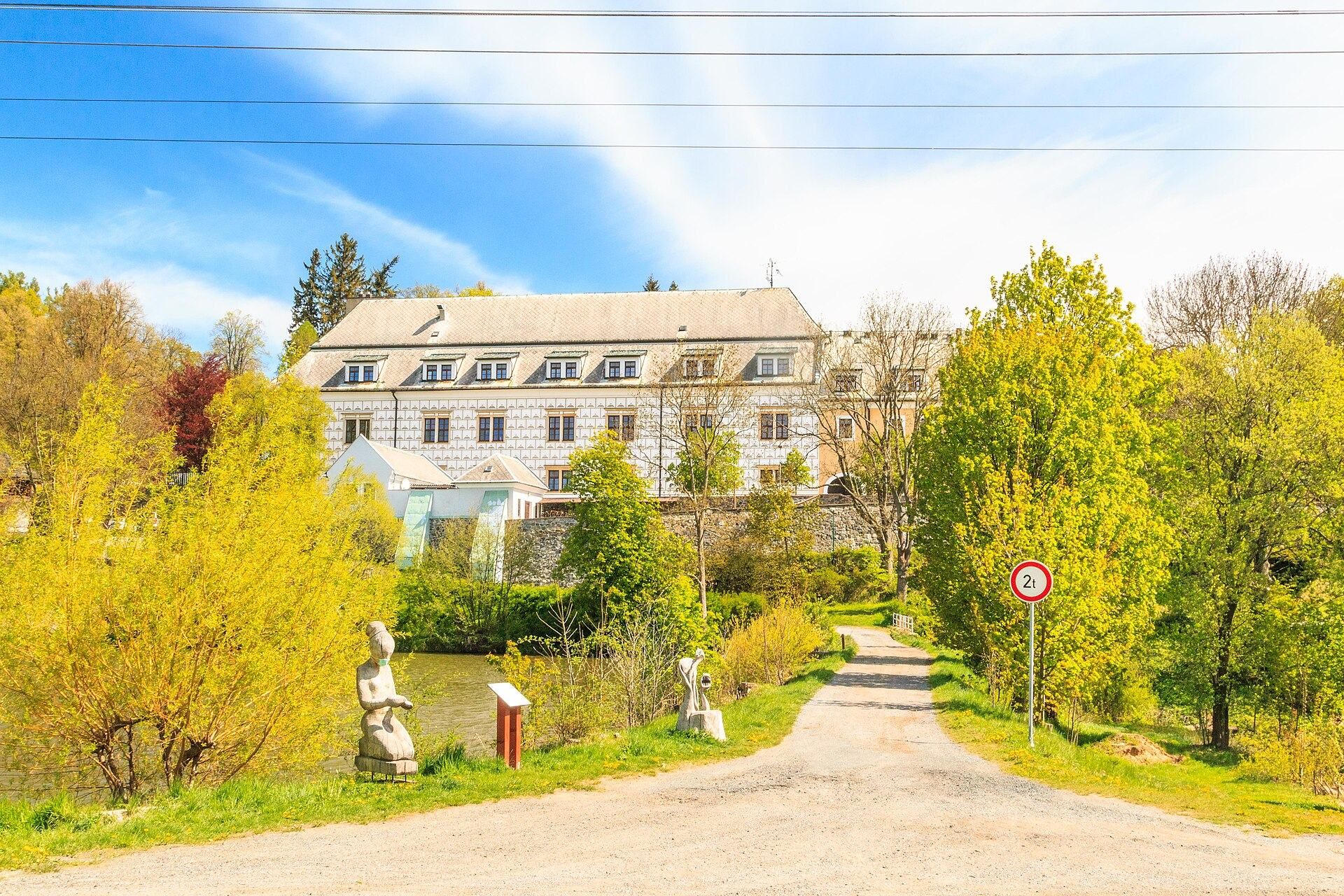
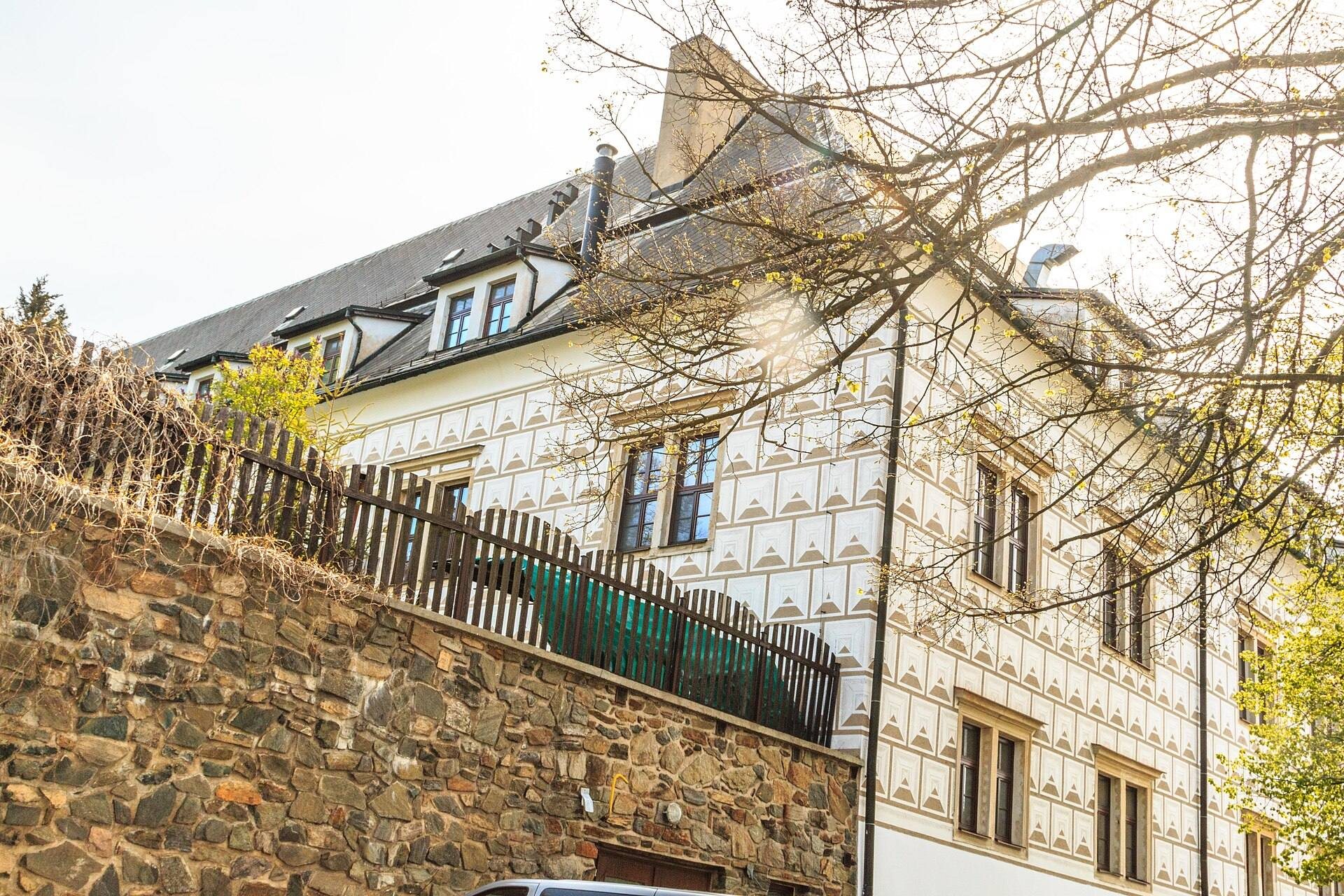
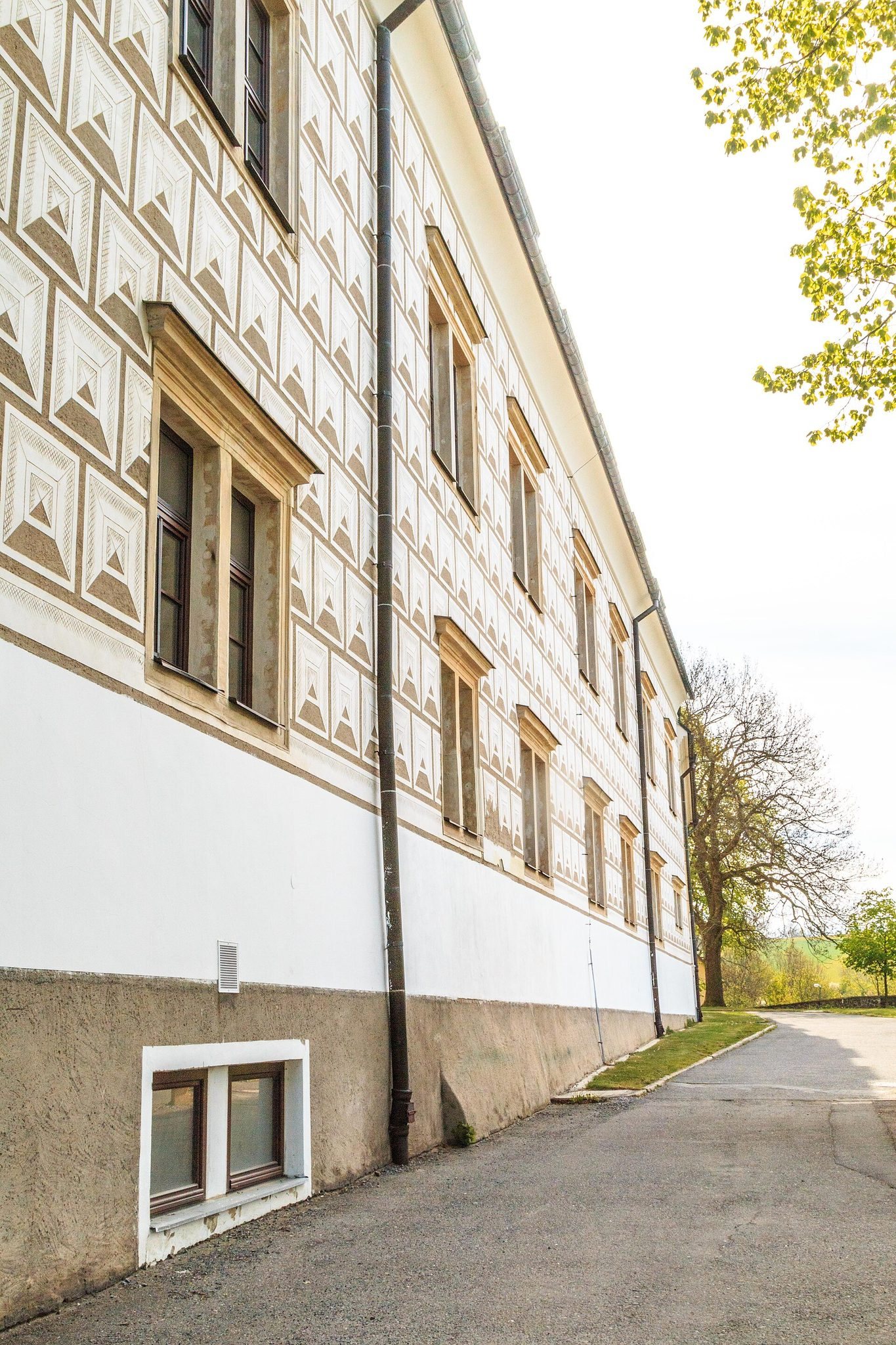
Bystré Castle is a three-wing Renaissance complex surrounded by a park and accompanied by farm buildings. Its present form combines the castle built between 1586 and 1590 with a major seventeenth-century enlargement, the incorporation of the earlier fortress, Baroque interior alterations, and later reconstruction after fire damage.
Castle and farm buildings
Renaissance wings
The north wing dates from the end of the sixteenth century and belongs to the original Renaissance phase. The south wing was added in the middle of the seventeenth century as part of the enlargement carried out in 1654 and 1655. Together with the third wing, these buildings form the castle’s three-wing plan. The farm buildings belong to the expanded complex and preserve the connection between the residential castle and the estate’s agricultural functions.
Earlier fortress and Baroque interiors
The sixteenth-century fortress was incorporated into the castle complex when the farm buildings were constructed in 1654 and 1655. Later Baroque work introduced a chapel and changed rooms in the main building. A large hall retains stucco decoration on its ceilings. The castle courtyard was reconstructed after the two fires that damaged the interiors in 1978.
Park and collections
English-style park
The park forms part of the castle setting. It was laid out in the nineteenth century in the English style on the site of an earlier orchard and vegetable garden. Rebeka Pond lies below the castle and preserves the association with Marie Rebeka of Hohenems, Countess of Harrach.
Picture gallery and library
The castle once housed the Hohenems family picture gallery and library. The picture gallery was removed after 1953, and its 92 paintings are now held by the municipal museum and gallery in Polička rather than at Bystré. The library was also associated with the castle during the Hohenems period and was said to include two manuscripts of the Nibelungenlied.