Lindenkirche: A Historic Marian Church at St. Georgenberg, Austria
Site at a Glance
- Rating
- 4.7
- Popularity
- Very Low
- Country
- Austria
- Primary era
- Medieval
- Eras represented
- Medieval, Early Modern, Modern
- Civilizations
- Habsburg, Holy Roman Empire
- Site type
- Religious
- Remains
- Church
On this page7 sections
History
Lindenkirche is a historic church in Austria, at St. Georgenberg, the Benedictine monastery and pilgrimage site in Tyrol. Originating in the late thirteenth century, it is the older of the two churches at St. Georgenberg in its surviving core structure. Its history is closely connected with the Vesperbild, a carved Pietà showing the Virgin Mary mourning over the dead body of Jesus.
Medieval origins and expansion
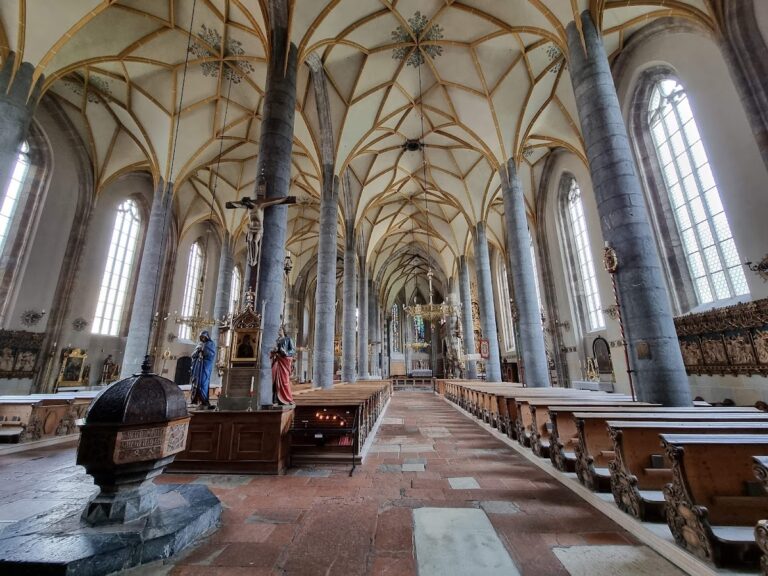
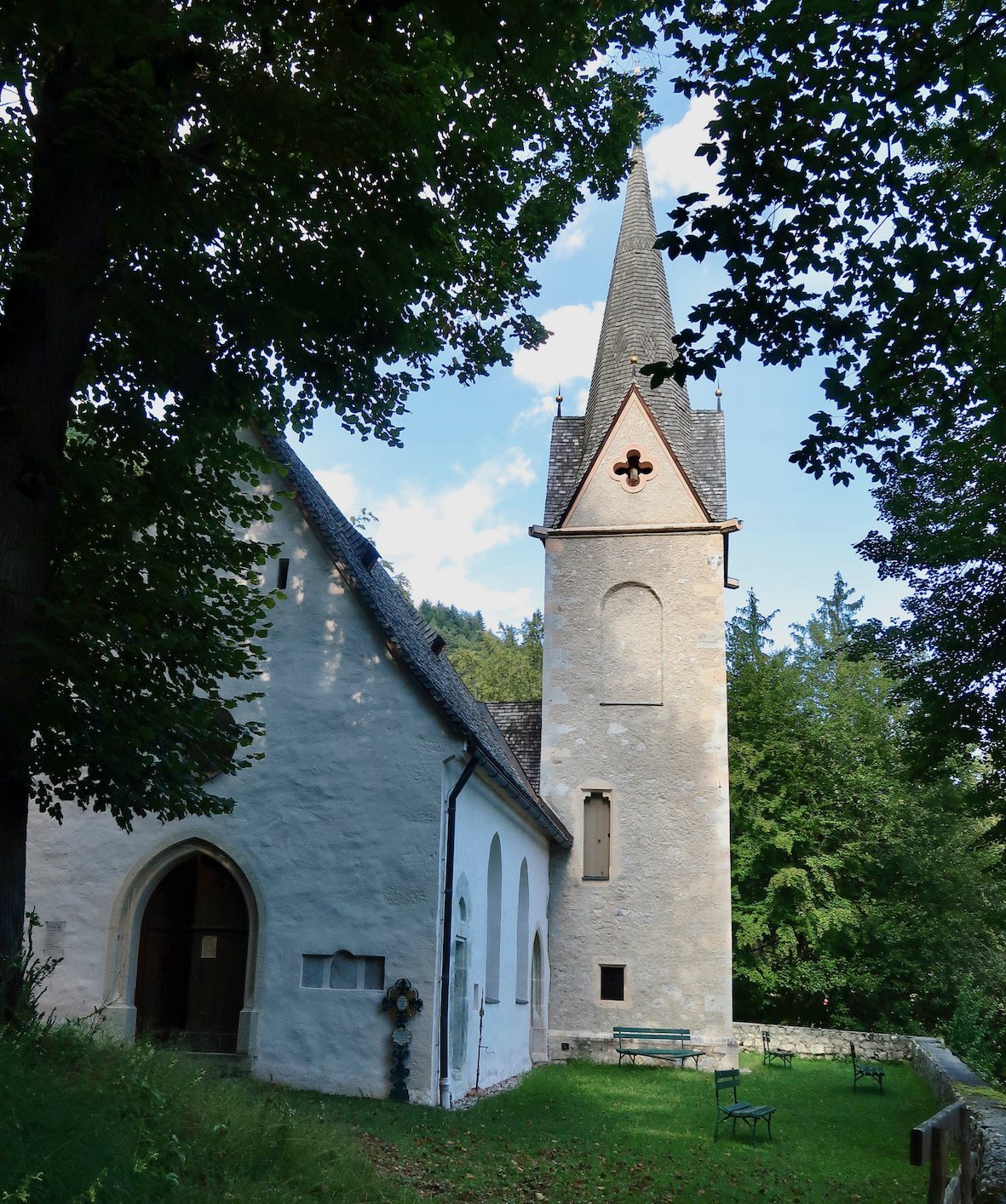
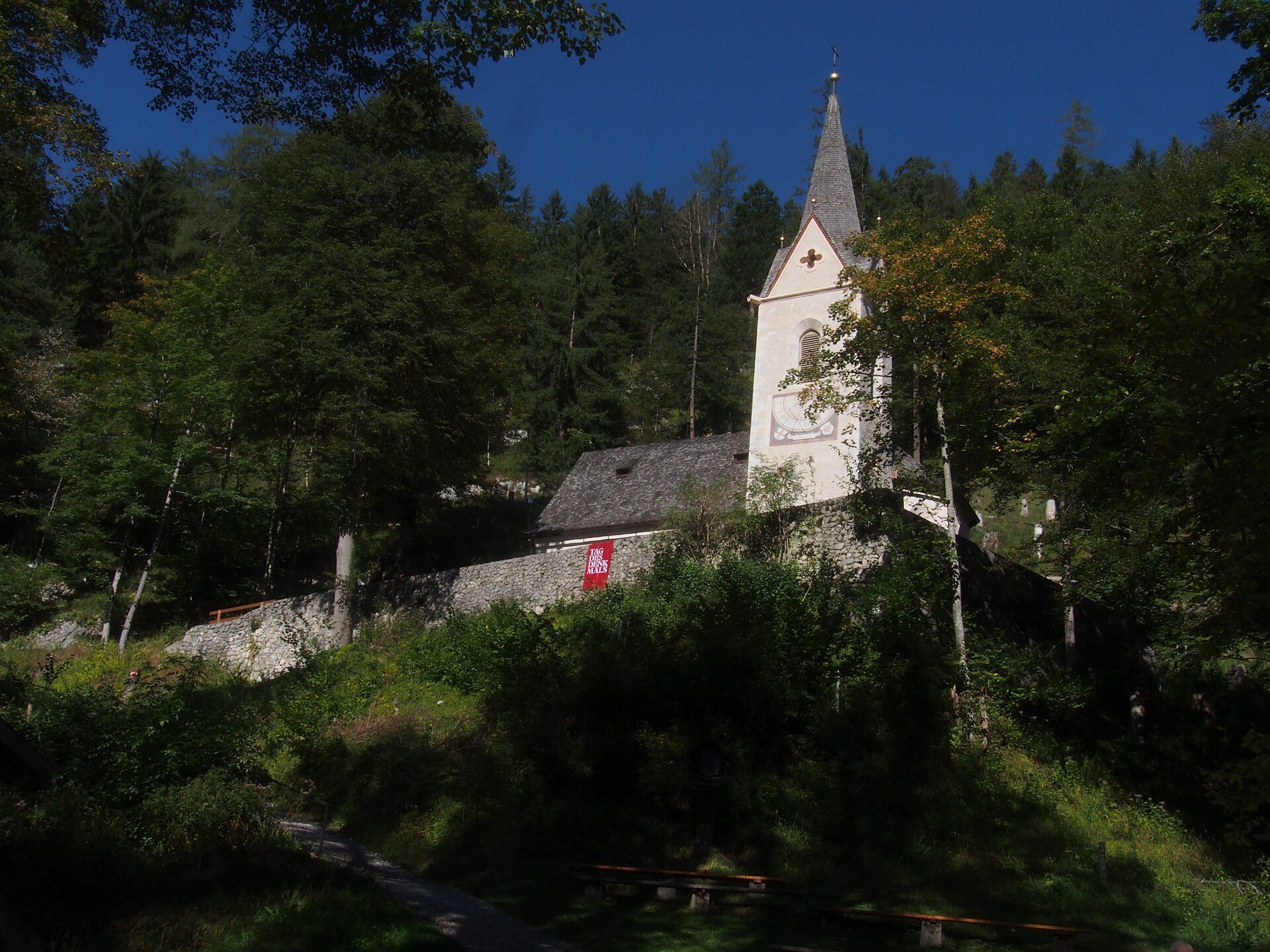
The church was enlarged in 1475, when its present polygonal choir was built and a Gothic star-rib vault was added. A polygonal choir ends in several angled sides rather than a semicircle or a flat wall. The stone tower followed in either 1515 or 1525, completing an important phase in the church’s medieval development.
The Vesperbild and changing dedication
Lindenkirche was associated with the carved Vesperbild, made about 1415. The image was originally housed in the church before it was moved to the larger Georgskirche. Lindenkirche was dedicated to the Holy Trinity from 1736. After the devotional image was transferred to the newly built pilgrimage church, the church received the Holy Trinity dedication again in 1755. It is now once more regarded as a Marian church.
Restoration and later interpretation
The church underwent a Baroque remodeling in 1754, followed by a Neo-Gothic restoration in 1881–1882. A comprehensive repair carried out between 1969 and 1971 rejected the approach of Historicism, the practice of reviving earlier historical styles in later architecture. Extensive architectural and archaeological investigations preceded a further restoration between 2011 and 2014. Jürgen Lenssen supplemented the furnishings in 2019.
Remains
Medieval structure and interior
The surviving church combines its late-thirteenth-century origins with later medieval and modern alterations. Its polygonal choir dates from the enlargement of 1475, while the stone tower was built in either 1515 or 1525. The Gothic star-rib vault added in 1475 was altered during the Baroque remodeling of 1754, when the rib network was removed, the vault was plastered, and frescoes were applied by Chr. A. Mayr, a painter from Schwaz. The church received a new rib network during the Neo-Gothic work of 1881–1882.
Furnishings and devotional features
The church’s furnishings include a tabernacle made by Josef Priemetshofer in 1971. Windows installed in 1975 contain stained-glass designs by the contemporary artist Fred Hochschwarzer. The church’s devotional history is represented by its connection with the approximately 1415 Vesperbild, the carved image of Mary with the body of Jesus that was later transferred to the Georgskirche and then to the newly built pilgrimage church.