Hie Shrine: Takayama’s Shinto Guardian Shrine


Site at a Glance
- Rating
- 4.5
- Popularity
- Medium
- Country
- Japan
- Primary era
- Early Modern
- External website
- Open
- Eras represented
- Early Modern
- Civilizations
- Tokugawa
- Site type
- Religious
- Remains
- Sanctuary
On this page8 sections
History
Hie Shrine is a Shinto shrine in Takayama, Japan, traditionally founded in 1141 by the Hida governor and Sanbukuji Castle lord Taira no Tokisuke. Dedicated to Oyamakui-no-kami, a Shinto deity associated with mountain protection, it became the tutelary shrine of the southern half of the former castle town, south of Yasukawa-dori.
Foundation and early history
The shrine’s foundation tradition links its origin to an encounter during a hunt. Taira no Tokisuke is said to have shot at an old wolf, which disappeared as the arrow struck deeply into a great cedar. He understood the event as a sign of protection from the wolf messenger of Oyamakui-no-kami and established a guardian shrine near Sanbukuji Castle. The cedar remained associated with Hie Shrine.
In 1181, Sanbukuji Castle fell to Minamoto no Yoshinaka and the shrine was burned. Its sacred object survived and was moved to Sugigahira in Katano Village, where it continued to be worshipped as the village’s tutelary deity.
Castle and administrative guardian
Kanamori Nagachika entered Hida Province and took possession of Takayama Castle in 1586. Hie Shrine was moved to its present site in 1605 and became the castle’s guardian shrine. After Hida became a shogunal domain and Takayama Castle was abandoned in 1692, the shrine continued in that role for Takayama Jinya, the administrative office of the Hida governor.
Religious transformation
Around this period, a Buddhist institution was established at the shrine under Ryobu Shinto and Sanno Ichijitsu Shinto, religious traditions that combined Shinto practices with Buddhist doctrines. The institution became known as Sanno Gongen Shrine, referring to a Buddhist-influenced manifestation of a Shinto mountain deity, and may also have been connected with Hida Kokubunji. The main sanctuary was rebuilt in 1748, and in 1826 the shrine became affiliated with Ninnaji as a branch institution of the Shingon Buddhist temple.
Following the separation of Shinto and Buddhism in 1869, the institution was renamed Hie Shrine. A landslide caused by rain from the rear mountain brought down the main sanctuary in 1935. The present sanctuary was rebuilt in 1938. In 1952, the shrine received Kinpeisha designation from the Gifu Prefectural Shrine Association, a formal category of prefectural recognition.
Hie Shrine’s spring annual festival, the Sanno Festival, takes place on April 14 and 15. Together with the autumn festival of Sakurayama Hachimangu, it forms the Takayama Festival.
Remains
Main sanctuary
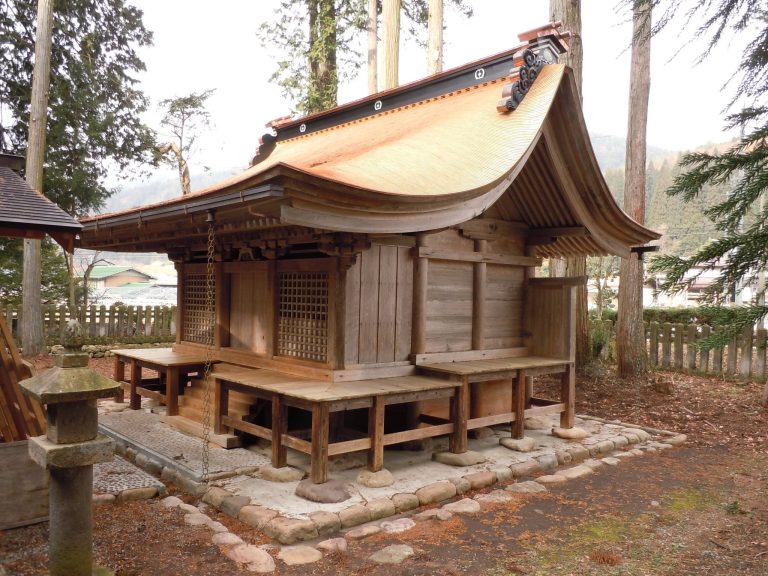
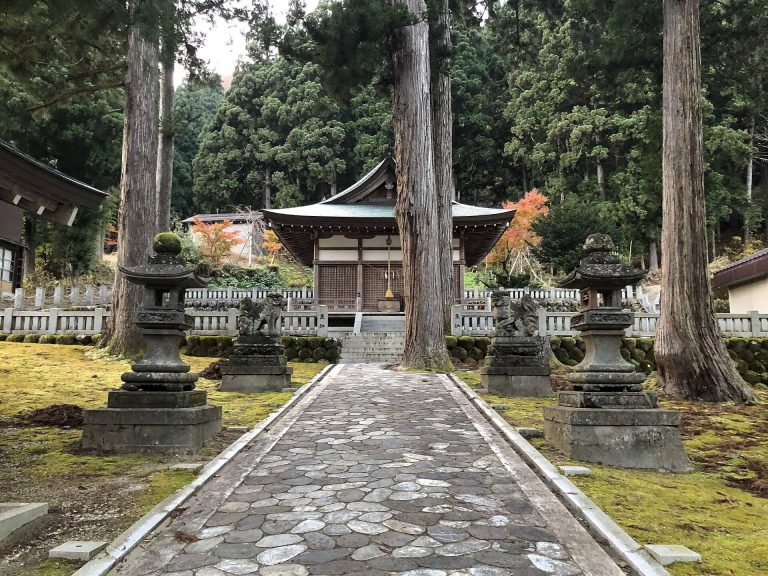
The main sanctuary is built in the nagare-zukuri style, whose gracefully curved gabled roof projects over the front entrance. The current building dates from the 1938 reconstruction that followed the landslide collapse of 1935. The former sanctuary, rebuilt in 1748, was later relocated and repaired; it now serves as the shrine building of the subsidiary Fuji Shrine.
Sacred cedar and shrine buildings
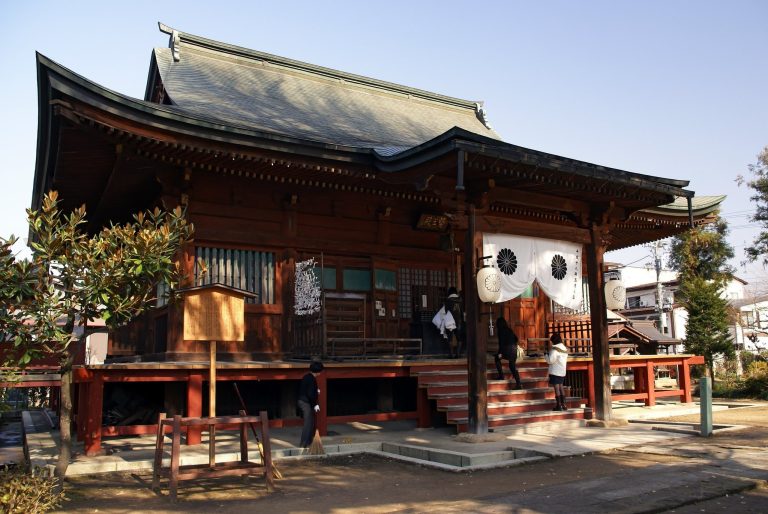
A great cedar associated with the foundation tradition stands within the shrine complex. Tradition connects it with the arrow said to have been shot by Taira no Tokisuke during his encounter with the old wolf. The grounds also include a worship hall, subsidiary shrine buildings, and a ridge plaque associated with the worship hall.
Festival sanctuary
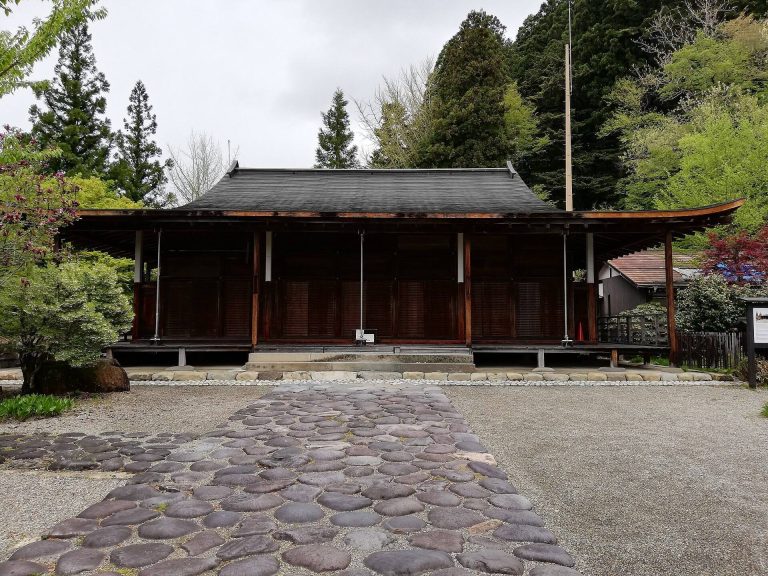
The shrine’s temporary festival sanctuary, or otabisho, stands beside Takayama Jinya in Kawaramachi. An otabisho is a temporary stopping place for a deity during a festival procession.