Bylis Archaeological Park: The Illyrian Civic Centre in Albania


Site at a Glance
- Rating
- 4.7
- Popularity
- Low
- Country
- Albania
- Primary era
- Classical
- External website
- Open
- Eras represented
- Classical, Medieval
- Civilizations
- Ancient Greek, Byzantine, Illyrian, Roman
- Site type
- City
On this page19 sections
History
Bylis Archaeological Park in Albania preserves the remains of Bylis, an Illyrian city at Hekal founded around 350 BC on an earlier proto-urban settlement. It became the chief settlement of the Bylliones and developed into the political and cultural centre of their league during the Hellenistic period.
Foundation and the Bylliones
Bylis was established in territory belonging to the Bylliones, an Illyrian tribe traditionally associated with southern Illyria. The wider region formed part of Atintania, an Illyrian state extending through the lower and middle valley of the Aoos, now known as the Vjosa. Atintania’s recovery of independence in 385 BC encouraged rapid urban development, which contributed to the foundation of Bylis. Its position may also have been connected with nearby bitumen mines at Selenica.
At first, Bylis was one of several fortified hilltop settlements controlling the highlands of Mallakastër. It stood close to the spheres of influence of Apollonia, Epidamnos, and Epirus. During the Hellenistic period, however, it became the principal urban centre of the Bylliones and the seat of their koinon, a political league that united several settlements under shared institutions.
Hellenistic political development
The koinon included Bylis and Nicaea, with settlements such as Margellic, Gurëzezë, Kalivac, and Rabie also associated with its wider territory. Nicaea was treated as one of Bylis’s demes, or constituent communities. Around 270 BC, the inhabitants formed a clearly defined league controlling roughly 20 square kilometres. Its institutions included a citizen assembly, a council of representatives, an annually elected chief magistrate, and commanders responsible for the infantry and cavalry. The league also issued bronze coins, apparently until Rome dissolved it in 167 BC.
Bylis followed a Greek civic model while retaining its Illyrian identity. Its inscriptions, institutions, official titles, and political organization used Greek and reflected a north-western Greek dialect. The population was probably bilingual, and the city gradually adopted Hellenic cultural and religious forms rather than originating as a Greek colony. In the early second century BC, Delphi sent sacred envoys known as theoroi, representatives dispatched to cities recognized as participating in the Greek religious and civic world. Their arrival indicates that Bylis had acquired Greek civic or linguistic status by that time.
Macedonian, Epirote, and Roman conflicts
Bylis was repeatedly drawn into the struggles between Illyrian, Macedonian, Epirote, and Roman powers. Cassander of Macedon occupied the city and much of the surrounding region in 314 BC. About two years later, Glaucias, the Illyrian king of the Taulantii, expelled the Macedonians. Bylis then came under the control of Pyrrhus of Epirus and his son Alexander II, before the Illyrian king Mytilos restored Illyrian control sometime after 270 BC.
In 229 and 228 BC, Bylis and Atintania became involved in Rome’s first interventions east of the Adriatic, serving as bases in campaigns against the Illyrians led by Queen Teuta. The city also took part in the Second Illyrian War against Demetrius of Pharos in 219 BC. Philip V of Macedon captured Bylis and Atintania in 213 BC, intending to use the city as a base against Apollonia and Roman possessions on the coast. After Rome defeated Philip near the Aoos narrows in 198 BC, Bylis received autonomy in return for its allegiance to Rome.
During the Roman-Illyrian war of 169 to 168 BC, the Bylliones fought alongside Rome against the Illyrian king Gentius. Their later alignment with the Molossians and Macedonians led to Roman punishment in 167 BC. Bylis was damaged and many nearby settlements were destroyed, but the city subsequently rebuilt its damaged areas, apparently with Roman consent. The surrounding settlements declined or were abandoned, while Bylis retained its urban importance. Under Roman control, it continued to use the status of a koinon and to mint bronze coins, although its coin legend changed from “Bylliones” to “Byllis.”
Roman colony
Bylis remained involved in Roman political conflicts during the first century BC. It was in dispute with the Illyrian proconsul in 54 BC, and Cicero accused Brutus in 44 BC of invading Bylis, Apollonia, and Amantia. During the civil war between Caesar and Pompey, the city supported Caesar after his forces captured Apollonia and accepted a garrison of Caesar’s guards.
Around 30 BC, during the reign of Augustus, Bylis became a Roman colony. Inscriptions identify it as Colonia Iulia Augusta, while Pliny the Elder called it Colonia Bullidensis. Roman veterans settled there, and its position on the road between Apollonia, Epirus, and Macedonia encouraged renewed development. Roman colonization increased the city’s economic importance. Workshops linked with firms from northern Italy produced goods for local use and export, and other settlements grew within its territory during the first century AD.
Late-antique transformation and abandonment
In late antiquity, Bylis belonged to Epirus Nova, a Roman imperial province in the western Balkans, and became a bishopric. It remained an important settlement during the early Christian period, although the inhabited area became smaller. Visigothic assaults between 383 and 392 caused extensive destruction and radically altered the city’s civic structure. Bylis then served as a refuge for rural inhabitants and for some people leaving nearby Apollonia.
Reconstruction began during the reign of Theodosius II, from 408 to 450 onward. The defensive walls were rebuilt, but the later settlement no longer followed the earlier urban plan. Churches were constructed inside and outside the fortifications, and more than 20 late-antique church sites have been identified in the surrounding region. A further invasion brought destruction between 547 and 551. The authorities rebuilt Bylis across only about one-third of its former area, and the city declined during the second half of the sixth century. Slavs sacked Bylis in 586, after which it became uninhabitable.
After the abandonment of Bylis, its episcopal centre moved to nearby Ballsh. A Christian basilica had existed there since the mid-sixth century, and Ballsh inherited Bylis’s toponym. Archaeological excavations took place from 1978 to 1991 and resumed from 2000 onward. The Albanian government designated the site an archaeological park on 7 April 2003, and it is protected as a Cultural Monument of Albania.
Remains
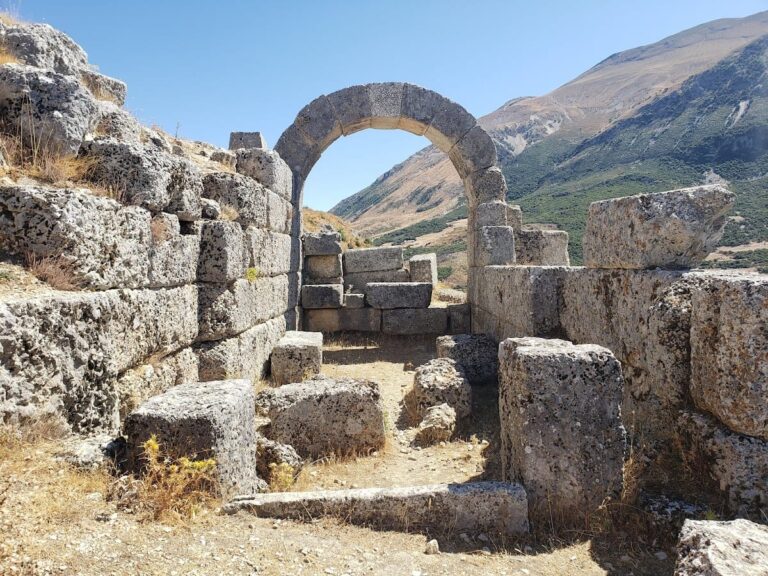
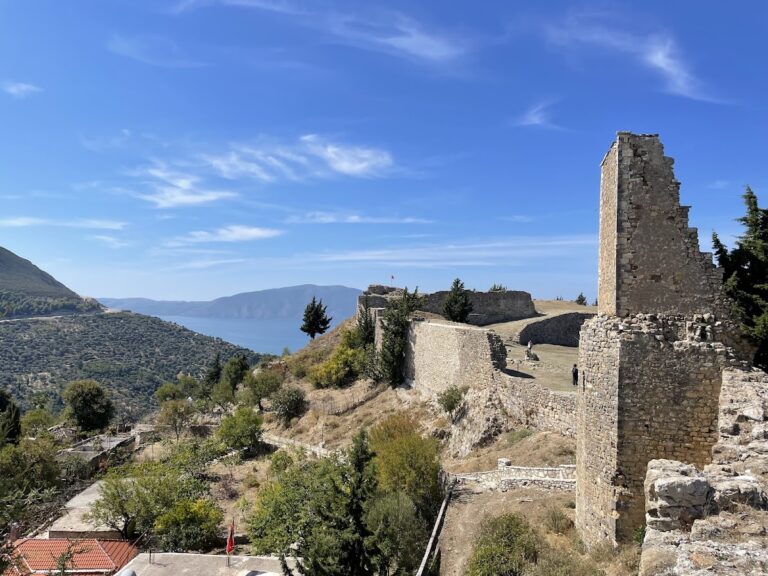
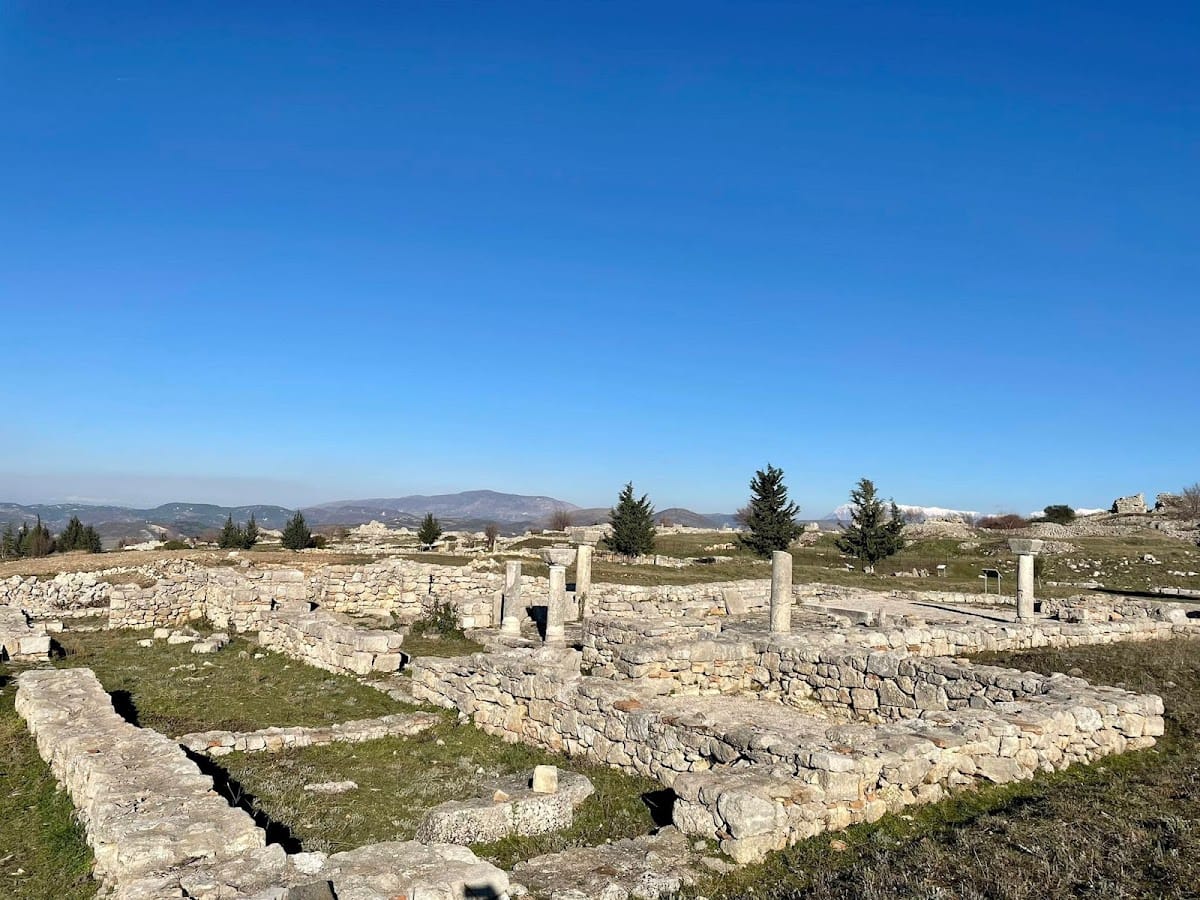
The remains occupy a steep hilltop enclosed by fortification walls about 2.25 kilometres long and 3.5 metres wide. Built around the middle of the fourth century BC with regularly coursed ashlar masonry, the walls enclosed approximately 30 hectares. Six gates connected the city with its surrounding routes. A road from Apollonia entered through two gates and crossed Bylis towards the gorges of the Vjosa, with routes continuing towards Macedonia or Epirus. Inside the walls, the urban quarters followed a Hippodamian plan, a regular layout of intersecting streets and organized blocks.
Hellenistic civic centre
Agora and public buildings
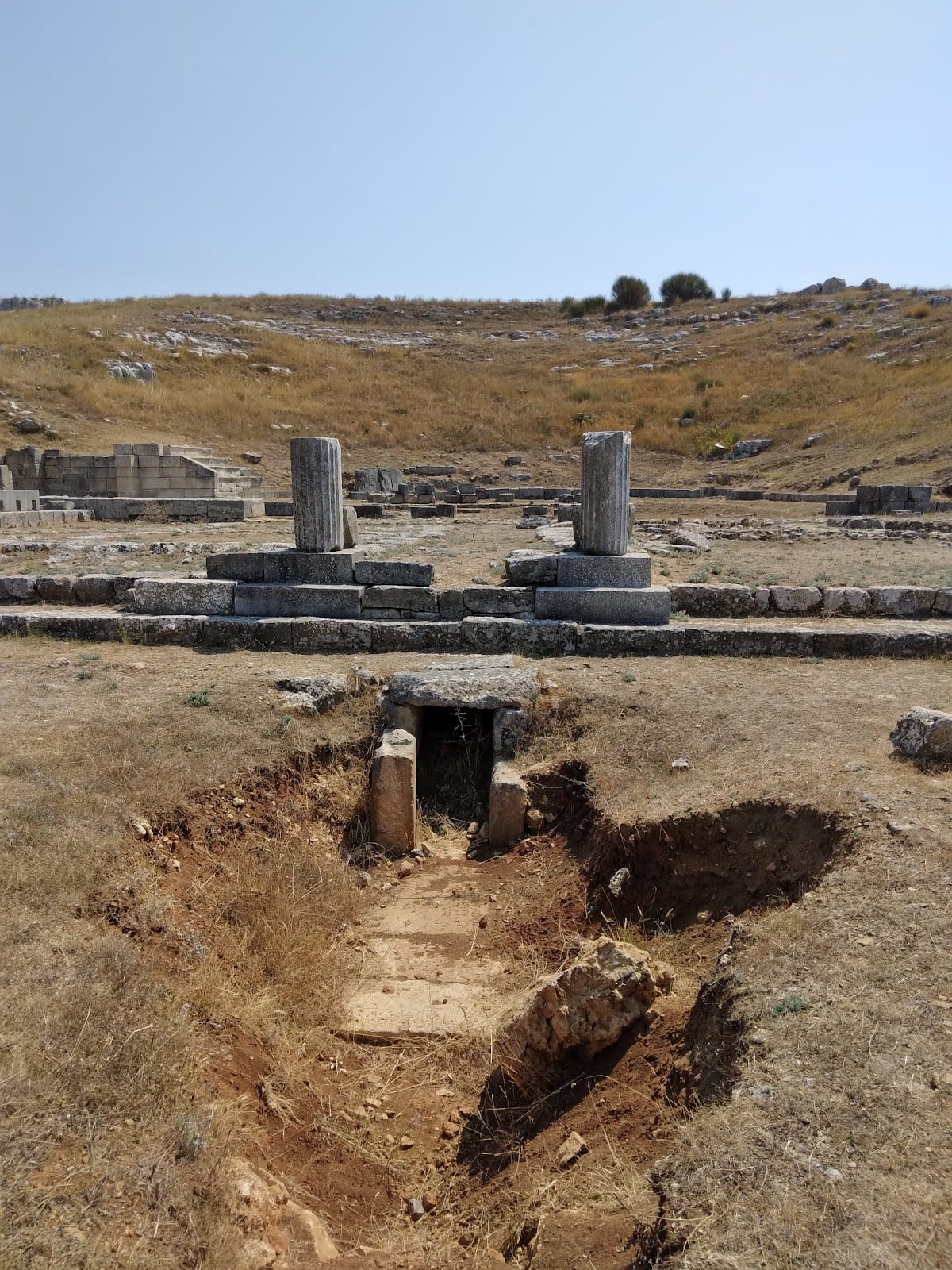
The Hellenistic agora, or civic public square, took shape especially during the middle of the third century BC. It was surrounded by public buildings that included a theatre, stadium, gymnasium, porticoes, and stoas, which were covered colonnaded walkways or public buildings. Together, these structures formed the principal civic centre of the Bylliones.
Theatre and stadium
The theatre and stadium were constructed during the third century BC. A reconstruction of the theatre gives it 40 rows and a capacity of approximately 7,500 spectators. The same period also saw the construction of two stoas, a cistern, and a peristyle temple, a temple arranged around an internal colonnade.
Water installations
A cistern and other water-related installations formed part of the city’s infrastructure. A public bath was built at the expense of a Roman citizen from the Saleni family, although its remains have not been discovered.
Roman urban fabric
Houses and workshops
Rich Roman houses had mosaic-paved floors, reflecting the wealth of the Roman colonists, many of whom were military veterans. Roman rebuilding also affected the surrounding walls, theatre, and a stoa, while additional monuments were added to the city.
Road to Astacia
Marcus Lolianus, a Roman veteran, financed a road linking Bylis with Astacia, apparently the nearby settlement of Nicaea. A bridge over a river called the Argia stood along this route. The river may correspond to the modern Povla or Gjanica.
Late-antique Christian settlement
Fortifications
Late-antique rebuilding changed the earlier urban form. The walls were reconstructed under the direction of the engineer Victorinus by order of Emperor Justinian I. More than four Greek inscriptions on the fortifications preserve details of this work.
Cathedral and episcopal complex
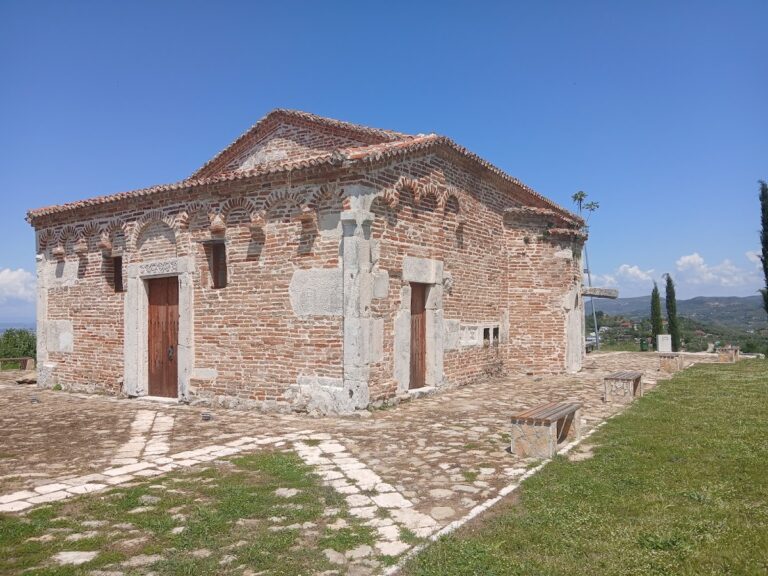
A large cathedral and episcopal complex occupied an area comparable to that of the earlier agora. Basilica B, also called the Cathedral, was the largest early Christian church at Bylis. Its exonarthex, an outer entrance hall, was built in three phases between the fourth and sixth centuries.
Basilicas and mosaics
Several basilicas have been excavated within the late-antique settlement. They contained mosaic floors and carved architectural elements. Two may have had attached diaconicon chambers, auxiliary spaces used to prepare and store materials for church services, while Basilica B had a baptistery for Christian baptism. A mosaic from Basilica B depicts a pastoral scene.
Religious and movable remains
Inscriptions preserve evidence for cults associated with Zeus, Hera, Dionysus, Artemis, Poseidon, and Parthenos, including the forms Zeus Tropaios and Hera Teleia. The territory of the Bylliones also included the fire sanctuary of Nymphaion, known in ancient Greek historical tradition for its oracle. It stood near the bitumen mines and on the border with Apollonia. Its fire symbol appears on Bylis coins of the third and second centuries BC, while a relief found near Bylis depicts nymphs and a cloth wrapped around the fire.
A fourth-century BC lead tablet deposited at Dodona records the Bylliones asking which deity they should sacrifice to protect their possessions. Hellenistic coins preserve the names and political identity of Bylis and the Bylliones. A statue found during road reconstruction near the archaeological park in 2011 dates to the Hellenistic period. Its subject is uncertain, but it may represent an Illyrian soldier or a war deity.