Lezhë Castle: Fortress on the Site of Ancient Lissus in Albania

Site at a Glance
- Rating
- 4.6
- Popularity
- Low
- Country
- Albania
- Primary era
- Medieval
- Eras represented
- Classical, Medieval, Early Modern
- Civilizations
- Byzantine, Illyrian, Ottoman, Roman, Venetian
- Site type
- Military
- Remains
- Castle
On this page13 sections
History
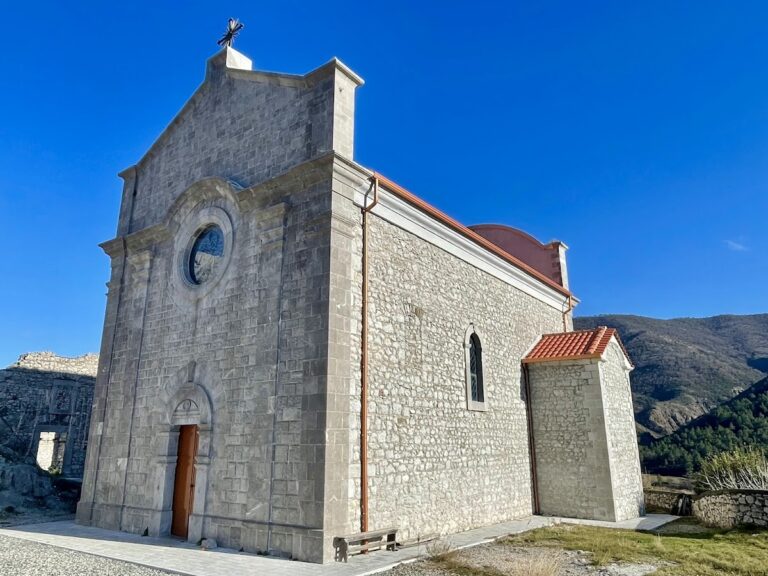
Lezhë Castle is a historic fortress in Albania, rising above the city of Lezhë on the site of ancient Lissus, an Illyrian settlement that developed into an urban and strongly fortified center in the early fourth century BCE. Its position linked the Drin valley with the Adriatic coast and surrounding territories, giving the settlement a lasting military and administrative importance.
Illyrian Foundation and Ardiaean Rule
The hill was inhabited by an Illyrian community from the sixth century BCE. Lissus emerged as a major fortified city in the early fourth century BCE, when its defensive system expanded substantially. The city was principally a military base, positioned to control movement between the inland valley, the coast, and neighboring lands.
Between 250 and 231 BCE, Lissus was conquered and incorporated into the Ardiaean kingdom under King Agron. After the First Illyrian War, Agron’s successor, Queen Teuta, accepted a treaty with Rome that restricted Ardiaean naval movement south of Lissus. Around 220 BCE, Demetrius of Pharos and the Illyrian general Scerdilaidas sailed beyond the city with a combined force of 90 ships. Their action helped bring about the Second Illyrian War in 219 BCE.
In 213 BCE, Philip V of Macedon captured Lissus and the separate higher stronghold of Acrolissus through a diversionary stratagem. Ardiaean forces recovered both strongholds and the surrounding territory in 208 BCE under Scerdilaidas and his son Pleuratus. Their control was confirmed three years later by the Peace of Phoenice.
Gentius and the Roman Conquest
Lissus remained an important Ardiaean settlement during the reign of King Gentius. In 170 BCE, Gentius received envoys from King Perseus of Macedon at the city and later used it as an operational center. He gathered 15,000 troops there for the war against Rome. After Rome defeated Gentius in 168 BCE, Lissus and the Ardiaean territories became part of Rome’s possessions.
Under Roman rule, Lissus successively served as an administrative center, a municipium, or Roman town with an organized civic government, and later a colonia, the highest rank in the Roman urban hierarchy. Roman settlers, particularly merchants, formed a community called the conventus civium Romanorum. Latin influence shaped the city’s public administration. The ordo decurionum, the municipal council, held the highest civic authority, while two senior magistrates, the duoviri quinquennales, exercised executive power. An aedile supervised public construction and supplies, and a quaestor managed the treasury.
Lissus was drawn into the civil war between Julius Caesar and Pompey, the Roman military and political leaders who fought for control of the Roman state. The citizens expelled Pompey’s garrison and opened the city to Marc Antony after Caesar’s commander and ally arrived with his fleet at the harbor of Nymphaeum. Lissus then supplied Caesar’s troops, and Caesar stationed a cohort there.
Late Antique and Byzantine Transformation
During the fourth and fifth centuries CE, Lissus contracted into its upper areas, while the lower section beside the river was abandoned. Changes in the Drin River reduced the watercourse connecting the city with Nymphaeum and the Adriatic harbor, weakening the city’s direct relationship with the coast.
Under Byzantine control, Lissus became part of the Theme of Dyrrachion, a provincial military and administrative district centered on ancient Dyrrachium, modern Durrës. The city remained an important coastal center in the seventh and eighth centuries, although its importance gradually declined. In 592, Lissus was associated with an episcopal center under Bishop John and with a Slavic conquest that destroyed most of the city.
Medieval, Venetian, and Ottoman Phases
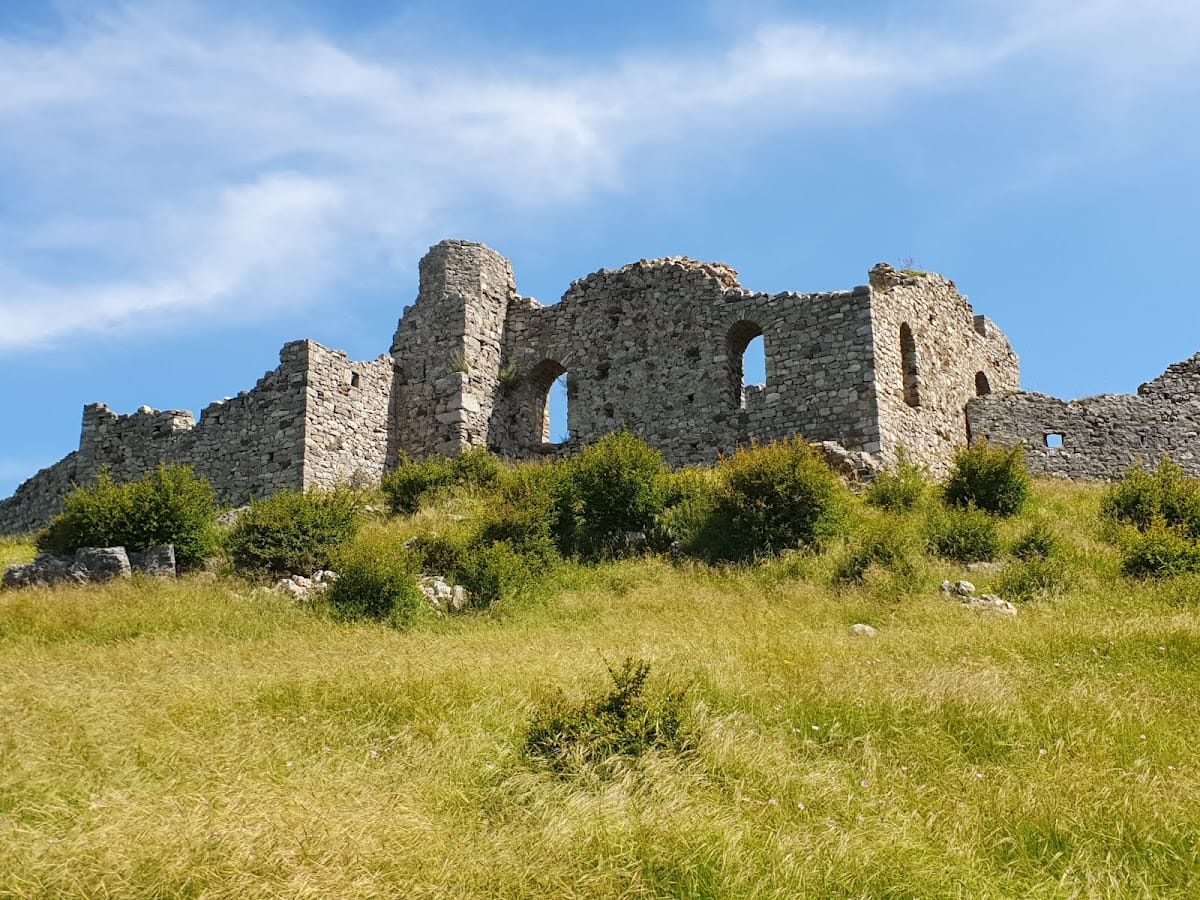
The medieval castle was established in the acropolis area during the eleventh or twelfth century. Its defenses were strengthened against incursions by early Slavic states from the north. The surviving fortress incorporates architectural phases from the Illyrian, Roman, Byzantine, and Ottoman periods.
Lezhë came under Venetian sovereignty in 1393 and returned to Venetian control after the death of Gjergj Kastrioti Skanderbeg in 1468. The city was also the meeting place of the League of Lezhë, convened in 1444 under Skanderbeg’s leadership. The Venetians rebuilt the castle in 1440, and after the Ottoman conquest it was rebuilt again in 1522.
Earthquake Damage and Conservation
The castle suffered serious damage in the 1979 earthquake. Restoration and conservation began in August 2002, and the Regional Directorate of Cultural Monuments in Tirana subsequently consolidated the fortress and completed the restoration works. Lezhë Castle is protected as a cultural monument.
Remains
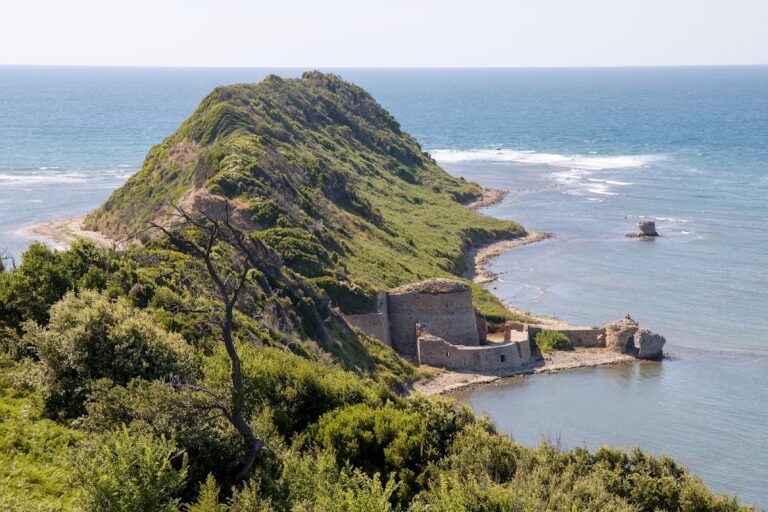
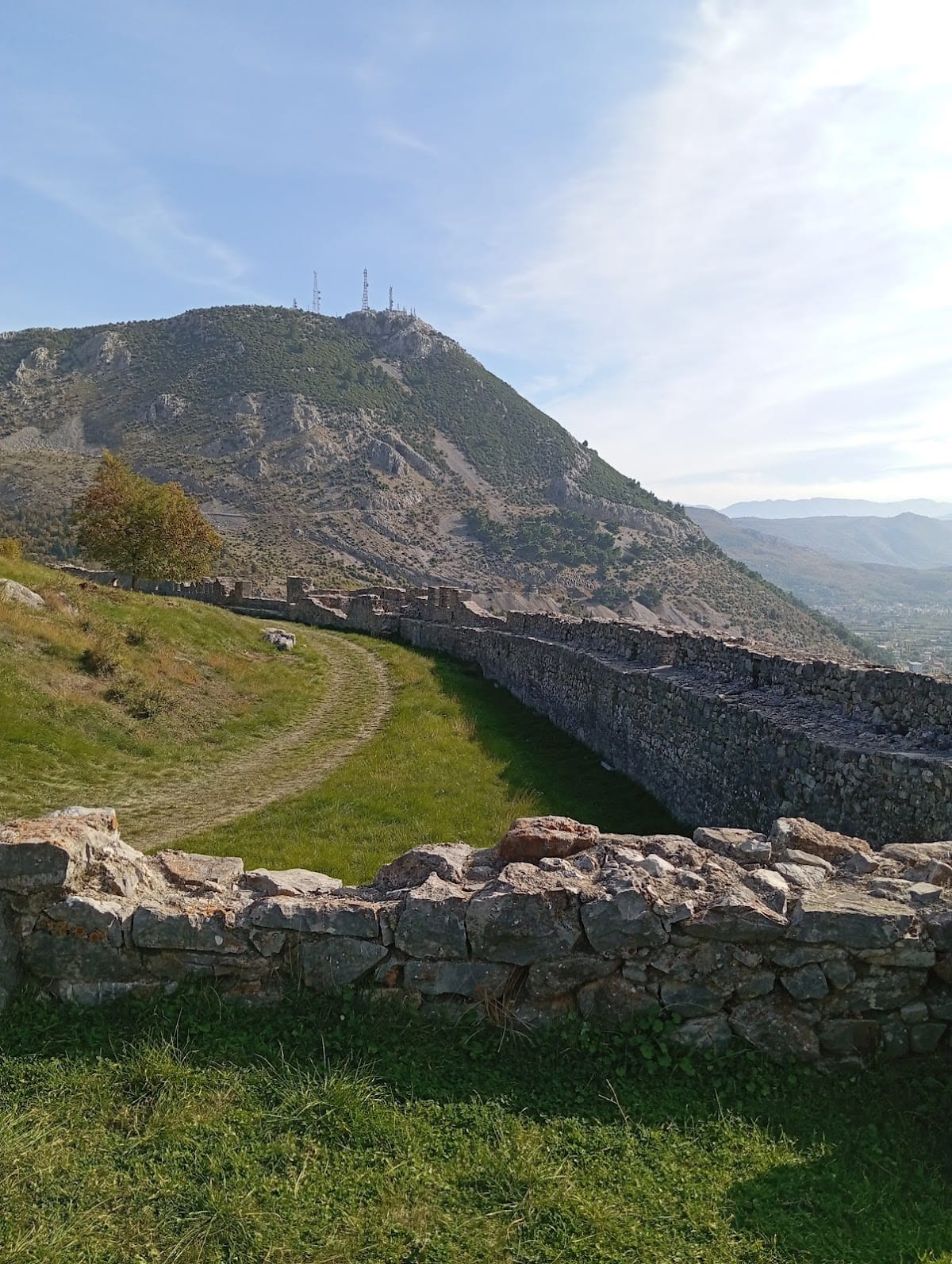
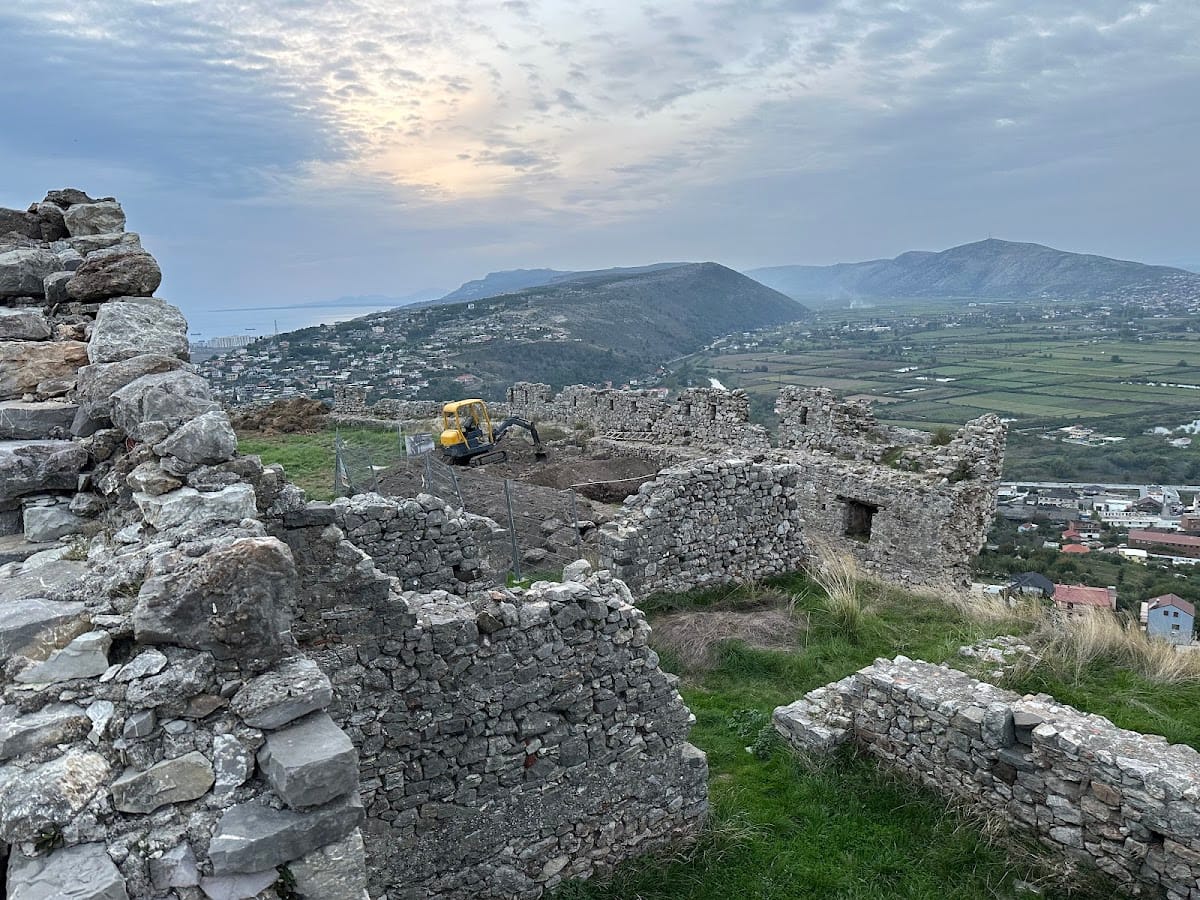
Lezhë Castle occupies the summit of a hill 186 meters high east of Lezhë. From this position, the fortified site commands the Drin valley toward the Bay of Saint John on the Adriatic and overlooks the Lezhë plain and the Adriatic Sea. The remains combine the medieval fortress on the acropolis with the traces of ancient Lissus and later Ottoman construction.
Ancient Lissus and Its Fortifications
City Walls and Divisions
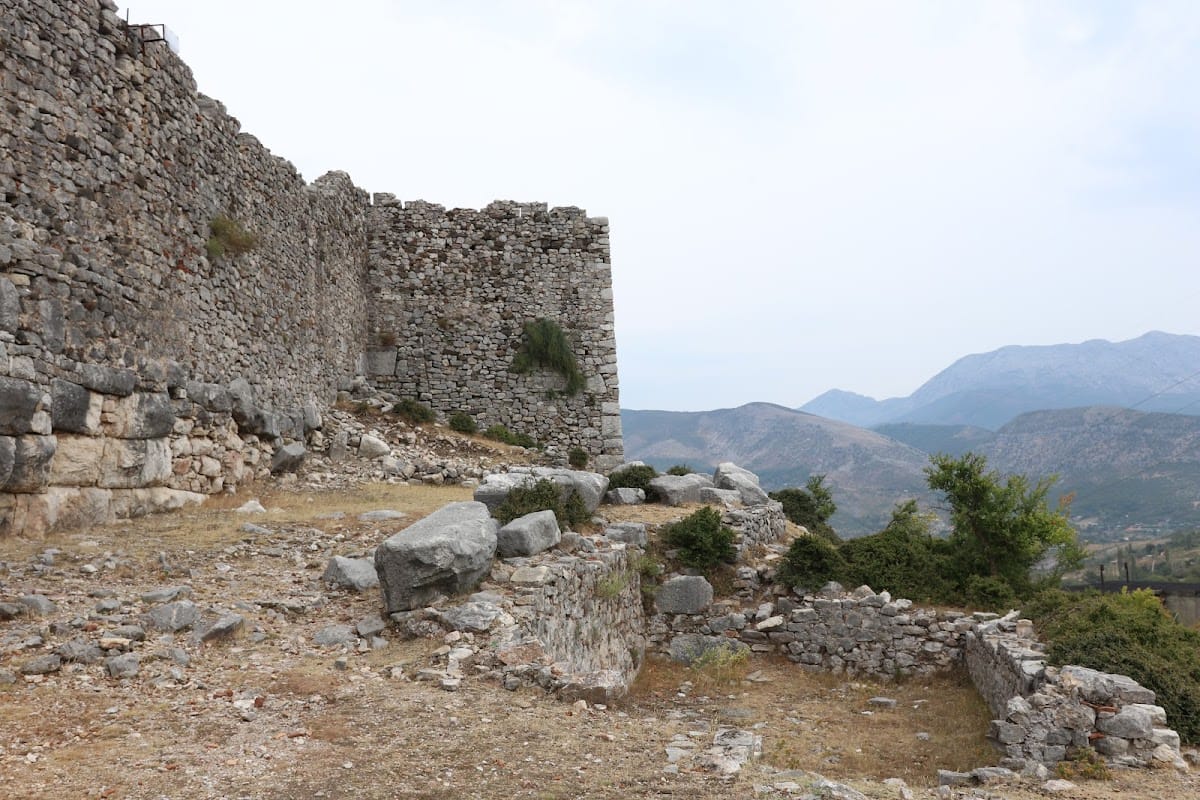
Ancient Lissus was protected by powerful walls built from large stone blocks. In the fourth and third centuries BCE, the surrounding fortifications extended for approximately 2,200 meters and enclosed about 20 hectares. Nearby quarries supplied the stone. The walls measured about 3.20 to 3.80 meters in width, reached roughly 8 meters in height, and incorporated 18 towers.
The settlement was divided into an acropolis of approximately 1.8 hectares, an upper city covering about 12.8 hectares, a lower city of about 9 hectares, and a riverside fortification of approximately 1.5 hectares. More than 12 gates connected the city with the exterior and linked its internal sections. The earliest rebuilding of the fortifications is dated to the first century BCE, while the walls, gates, and towers were reconstructed during the Roman period.
Riverside Defenses
The lower riverside section formed part of the ancient city’s defensive system. It was abandoned during late antiquity as changes in the Drin reduced the watercourse connecting Lissus with Nymphaeum and the sea. During Caesar’s conflict with Pompey, 30 flat-bottomed Gallic transport ships, or pontoons, were stationed on the riverbank at Lissus. Pompey’s son later burned them.
Medieval Fortress
Walls, Gates, and Towers
The medieval castle has an oval plan oriented from east to west. Its walls reveal several clearly distinguishable construction phases, and the fortress has three gates. Two of these gates were built at the locations of earlier entrances in the ancient city of Lissus.
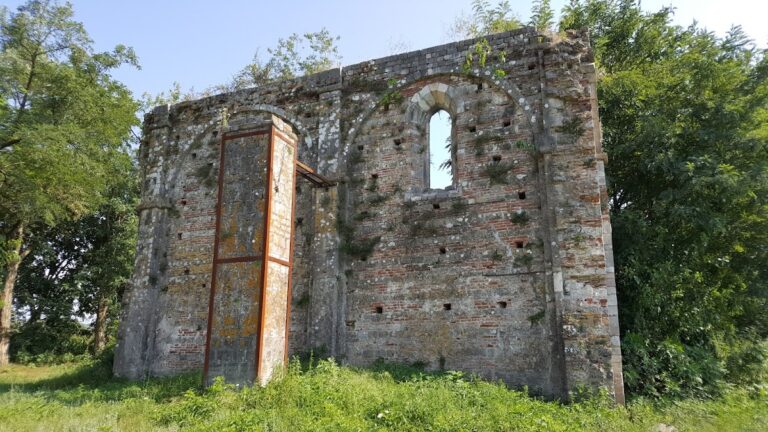
The fortress in the acropolis was constructed with small dressed stones set in mortar. Its defenses were adapted and reinforced to resist incursions from the north. The southern wall includes an Illyrian tower, while a tower in the southeastern wall incorporates a Roman arch. These elements preserve the relationship between the medieval fortification and the earlier defensive and civic structures on the hill.
Later Architectural Traces
Visible remains from the Ottoman period include buildings and a mosque within the castle. Together with the Illyrian tower, Roman arch, and medieval walls, these structures reflect the successive rebuilding and reuse of the fortified acropolis.
Stone blocks bearing tabula ansata-type inscriptions are associated with rebuilding during the Roman civil-war period. A tabula ansata is a rectangular stone inscription panel with projecting triangular handles at its sides. The blocks provide evidence for Roman-era work on the fortifications.
The 1979 earthquake damaged the surviving fabric of the castle. Consolidation, restoration, and conservation carried out after 2002 stabilized the fortress and preserved its visible remains from the ancient, medieval, and Ottoman phases.